studio / on-this-day / Mar 22
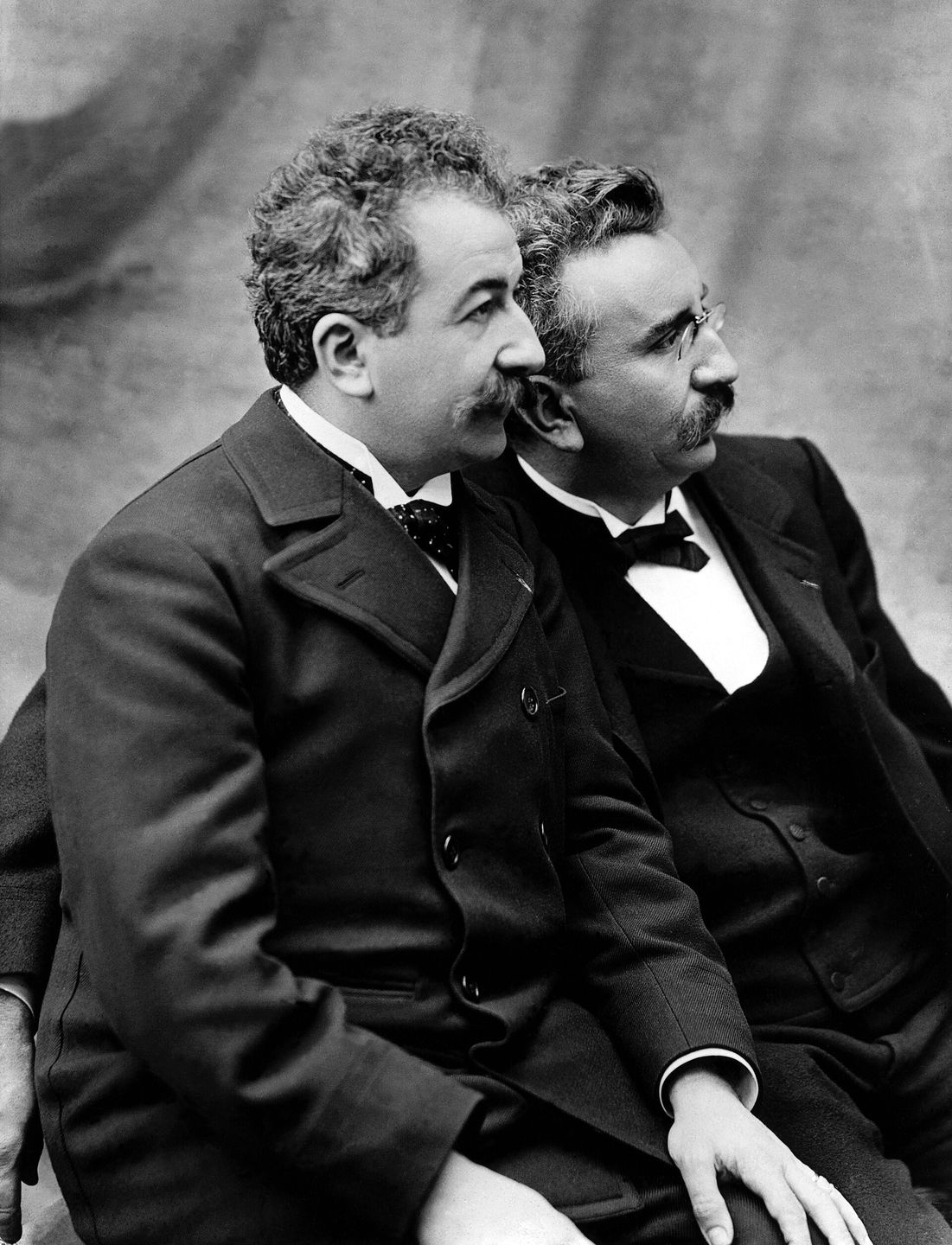
Auguste and Louis Lumière, inventors of the cinematograph and the first motion picture screening. Public domain, via Wikimedia Commons
The First Moving Pictures
On this day in 1895 — the Lumière brothers privately screened moving pictures in Paris, months before the paying public got its first shock.
3 min read
On March 22, 1895, Auguste and Louis Lumière held a private demonstration of their cinématographe at the Société d'encouragement pour l'industrie nationale in Paris. They showed a single short film: workers leaving the Lumière factory in Lyon. The footage lasted less than a minute. The camera was stationary. There were no cuts, no effects, no narrative structure. It was simply documentation of reality captured on celluloid and projected onto a screen. The audience watched people walk through a gate, and they were astonished.
The Lumière brothers were not the first to capture moving images. Thomas Edison had already demonstrated his kinetoscope, a device that allowed individuals to view short films through a peephole. But Edison's system was designed for single viewers, and the films could only be seen one person at a time. The Lumières' innovation was projection. Their cinématographe was camera, projector, and printer all in one, lightweight enough to be portable and efficient enough to be practical. It could film a scene, develop the negative, and project the result for a room full of people. It turned cinema into a shared experience.
The public premiere came later that year, on December 28, 1895, at the Grand Café in Paris. The Lumières showed ten short films, each about 50 seconds long. Workers leaving a factory. A train arriving at a station. A baby being fed. A gardener getting sprayed with water. The subjects were mundane, but the medium was revolutionary. Watching projected images that moved felt like watching life itself, captured and replayed. The story that audiences fled in terror when a train appeared to rush toward them is likely apocryphal, but it reflects the visceral impact of seeing motion reproduced at scale.
What the Lumières created was not just a device but a format. The cinématographe used 35mm film, a standard that would dominate cinema for over a century. It ran at 16 frames per second, which was enough to create the illusion of continuous motion. The films were short because the film reels were small, but that limitation became a design constraint that shaped early cinema. Filmmakers had to tell stories or capture moments within the span of a single reel. Economy became necessity, and necessity produced a visual language.
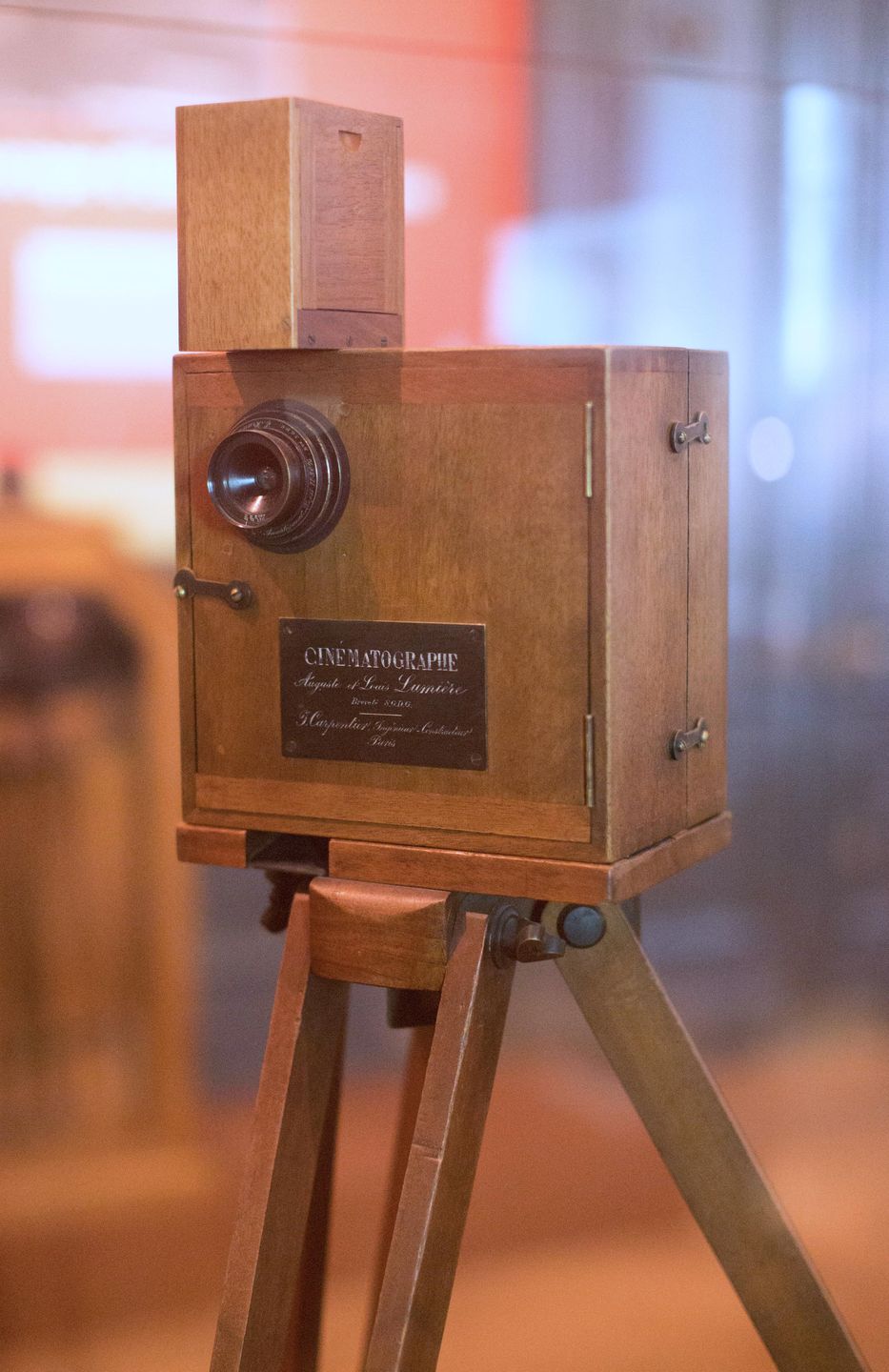
The Lumière cinematograph camera — camera, projector, and film printer in a single portable device. Victorgrigas, CC BY-SA 4.0, via Wikimedia Commons
The Lumières sent operators around the world to film and screen their cinématographe. They documented everyday life in cities across Europe, Asia, Africa, and the Americas. These early films are the first moving images of places and people from that era, capturing gestures, clothing, architecture, and street scenes that would otherwise exist only in still photographs and written descriptions. They are historical artifacts as much as entertainment.
The Lumière brothers considered cinema a novelty, a passing fad. They were industrialists, not artists. Their family business manufactured photographic plates, and the cinématographe was a sideline. When other inventors and entrepreneurs began to explore narrative filmmaking, building studios, hiring actors, and constructing sets, the Lumières stepped back. They had invented the medium but chose not to shape its future. Cinema would develop through others, but it would always bear the marks of their original design: projected light, synchronized motion, shared viewing.
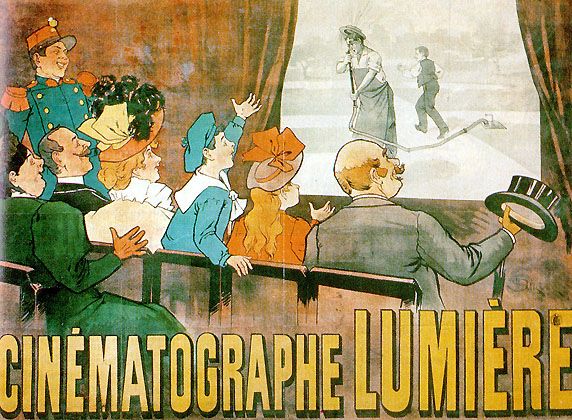
Poster advertising the Lumière cinématographe, depicting the comedy l'arroseur arrosé and a crowd at a projected screening. Marcellin Auzolle, Public domain, via Wikimedia Commons
The significance of the Lumière brothers' work is not in the content of their films but in the infrastructure they established. They proved that moving images could be projected at scale, that cinema could be a public event rather than a private curiosity. That shift made film a mass medium, capable of reaching audiences in the hundreds and eventually millions. Every movie theater, every film festival, every screening room exists because the Lumières figured out how to make light move on a wall.
The lineage from the cinématographe to modern streaming is direct. The technology has changed, but the principle remains: capture motion, store it, replay it. Film gave way to video, video gave way to digital, but the core idea of recording and distributing moving images persists. The Lumière brothers designed the first practical system for doing so. Everything since has been iteration.
studio / on-this-day / Mar 22