studio / on-this-day / Mar 21
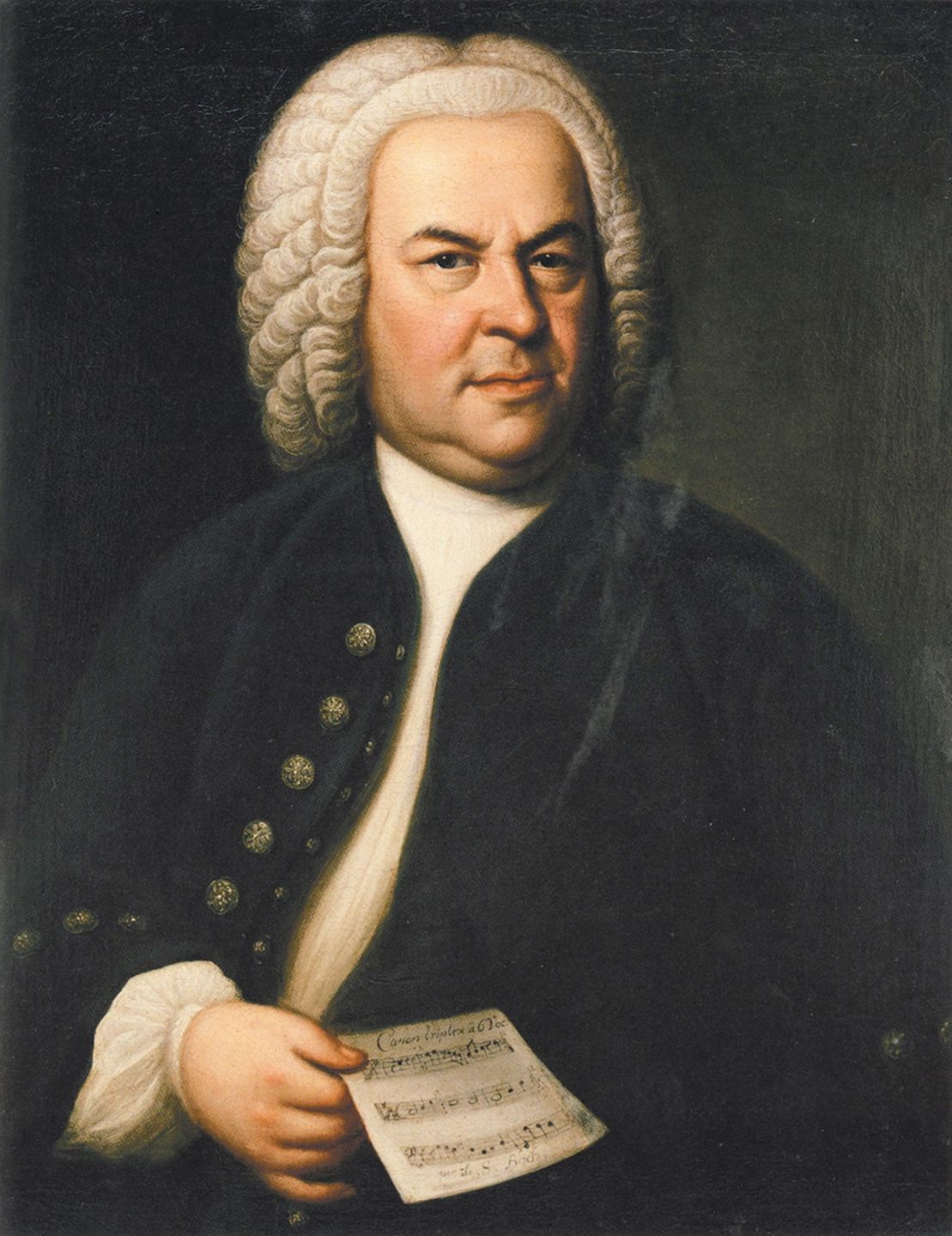
Portrait of johann Sebastian Bach by elias gottlob haussmann, 1748. Elias Gottlob Haussmann, Public domain, via Wikimedia Commons
Music as Architecture
On this day in 1685 — Johann Sebastian Bach was born, and would build music the way an architect builds a cathedral, part fitted to part.
3 min read
Johann Sebastian Bach was born on March 21, 1685, in Eisenach, Germany, into a family of musicians. His father was a town musician. His uncles were professional instrumentalists. Music was the family trade, passed down like carpentry or metalwork. Bach learned violin from his father and organ from his older brother. By his twenties, he was writing fugues, cantatas, and preludes with a structural complexity that felt less like composition and more like engineering.
A fugue is a particular kind of musical structure. It begins with a single melodic line, the subject, which is then imitated by other voices entering one at a time. Each voice plays the same melody but starts at different times and pitches, creating a web of interlocking lines that remain distinct yet harmonically unified. The challenge is to keep all the voices independent while making them fit together. It is counterpoint as design problem, where the constraints are harmony, rhythm, and the limits of human performance.
Bach wrote hundreds of fugues. His "Well-Tempered Clavier," a collection of preludes and fugues in all 24 major and minor keys, is both a technical exercise and a demonstration of equal temperament tuning, a system that allows keyboard instruments to play in any key without retuning. The work is pedagogical, but it is also proof that structure and beauty are not opposed. The fugues are mathematically rigorous and emotionally resonant. They sound like logic feels.
What makes Bach's music architectural is its use of recurring patterns, motifs, and symmetrical forms. The "Goldberg Variations" are built on a single bass line that repeats 30 times, each variation exploring different rhythmic, harmonic, and melodic possibilities. The "Art of Fugue" is an unfinished work that systematically explores every possible contrapuntal transformation of a single theme. It is music as systematic investigation, each piece a variation on a theme in the way that different floor plans can explore the same structural module.
Bach's role was not that of a composer in the modern sense. He was a court musician, an organist, and a church music director. Much of his work was written for specific occasions: weekly church services, weddings, funerals, civic celebrations. He composed under deadline, often producing a new cantata every week. The output was prodigious. He wrote over 1,000 compositions, many of which were lost or destroyed. What survives is a fraction of the total, but it is enough to establish him as one of the most technically skilled composers in Western music.
During his lifetime, Bach was respected but not famous. His music was considered old-fashioned even by contemporary standards. The Baroque style, with its emphasis on counterpoint and ornamentation, was giving way to the lighter, more melodic Classical style. By the time Bach died in 1750, his work was largely forgotten. It was not until the 19th century, when Felix Mendelssohn revived the "St. Matthew Passion," that Bach's music reentered public consciousness. Since then, his influence has been continuous and profound.
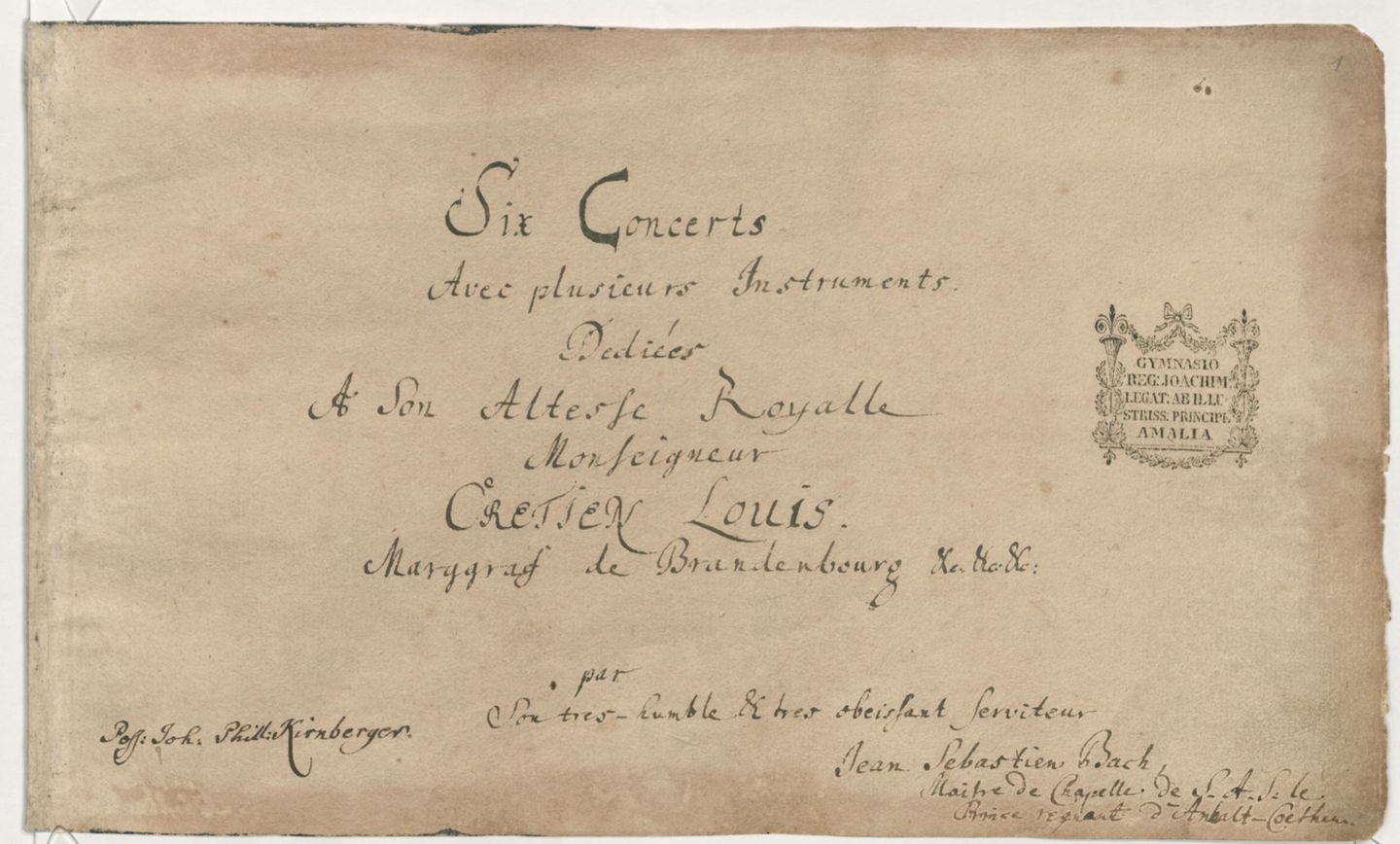
Title page of the brandenburg concertos, dedicated to margrave christian ludwig of brandenburg, 1721. J.S. Bach or his writer, CC0, via Wikimedia Commons
Modern musicians, mathematicians, and computer scientists study Bach for different reasons. Musicians admire the craft, the way every note serves a structural purpose. Mathematicians see patterns and transformations that resemble group theory and formal systems. Computer scientists hear recursive structures and self-similar forms that anticipate algorithmic composition. The music works on multiple levels simultaneously, which is why it endures. It can be appreciated for its emotional impact, its technical virtuosity, or its structural elegance.
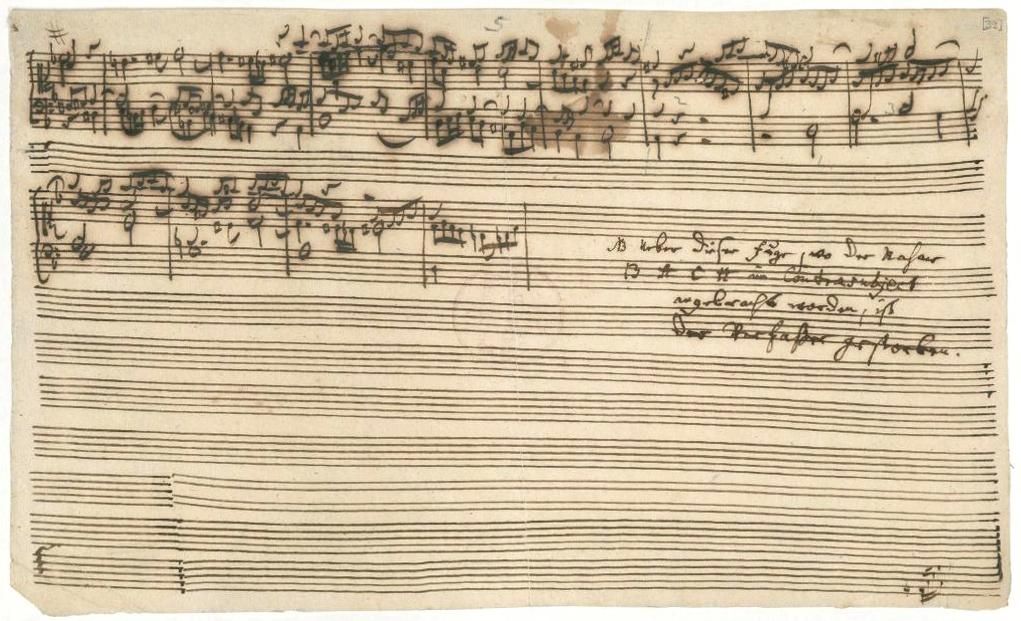
The autograph of Bach's unfinished final Fugue from the Art of Fugue, breaking off mid-phrase. Johann Sebastian Bach., Public domain, via Wikimedia Commons
The connection between Bach's fugues and the kind of systems thinking that powers modern design is not metaphorical. Both involve finding the right constraints, establishing a set of rules, and exploring what becomes possible within those limits. A well-designed system, like a well-crafted fugue, reveals complexity through simplicity. The rules are clear, but the results are surprising. Structure does not constrain creativity. It enables it.
studio / on-this-day / Mar 21