studio / on-this-day / Mar 23
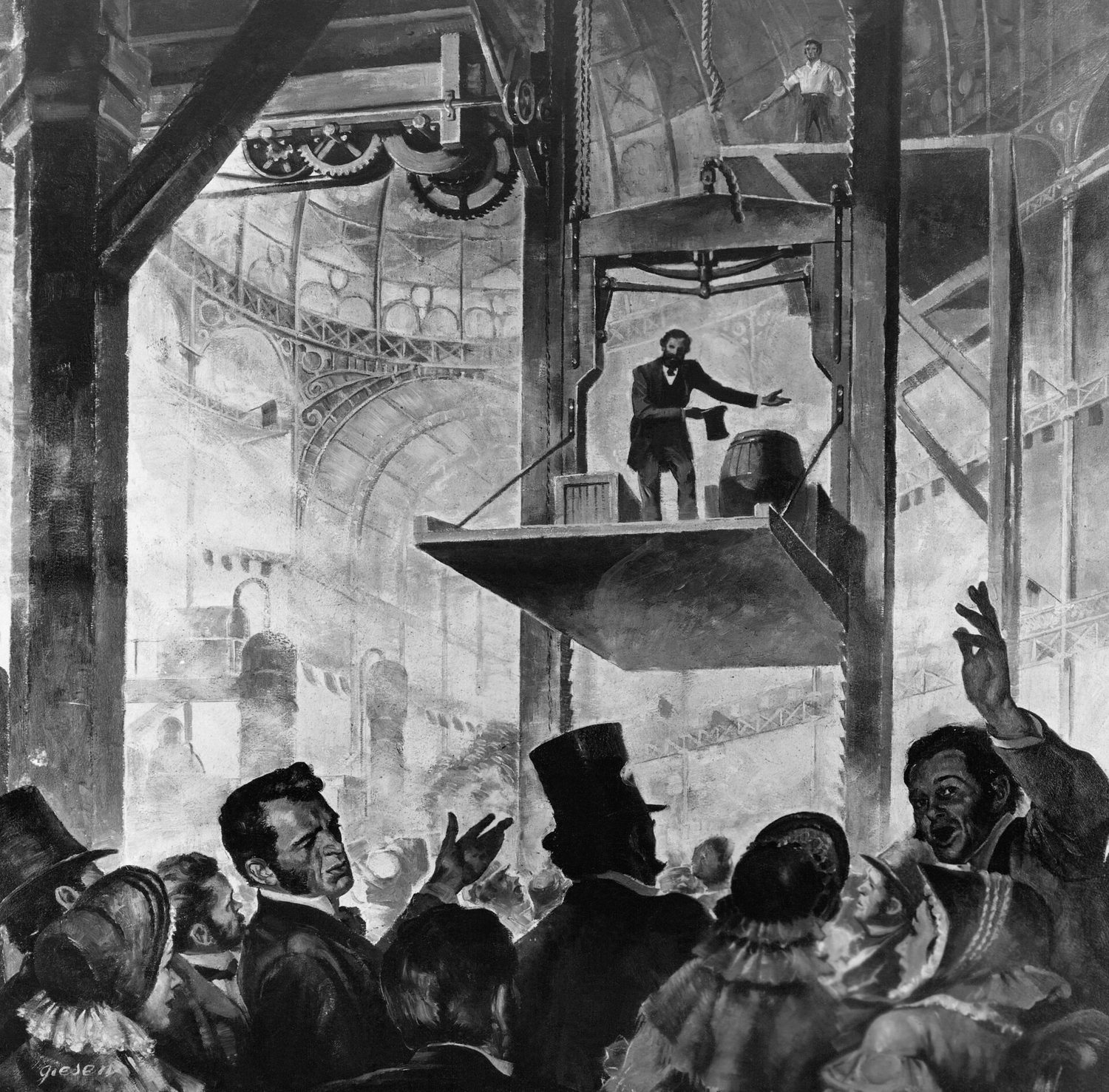
Elisha Otis, whose safety brake made passenger elevators, and tall buildings, possible. Public domain, via Wikimedia Commons
The Safety Brake
On this day in 1857 — Elisha Otis installed the first passenger elevator, and it was the safety brake, not the lift, that let cities grow upward.
3 min read
On March 23, 1857, the first passenger elevator designed by Elisha Graves Otis was installed in the E.V. Haughwout & Company department store at 488 Broadway in New York City. The building was five stories tall, which by contemporary standards was unremarkable. What made it significant was not its height but the mechanism that made height practical. Otis had solved the problem that had kept elevators dangerous: cable failure. His safety brake meant that if the lifting cable snapped, the elevator would lock in place rather than plunge to the ground. Trust in that mechanism changed the shape of cities.
Elevators had existed for decades, but they were used almost exclusively for freight. Hoisting platforms powered by steam engines moved goods between floors in warehouses and factories. No one trusted them with human passengers because the cables sometimes broke. When they did, the platform fell. Otis, a mechanic and inventor working at a bedstead factory in Yonkers, designed a spring-loaded safety mechanism that would engage if tension on the cable was lost. Ratcheted guide rails on either side of the shaft would catch the platform and hold it in place. The principle was simple: failure triggers the brake, not the other way around.
In 1854, Otis demonstrated his invention at the Crystal Palace Exposition in New York. He stood on a platform suspended high above the exhibition floor, had an assistant cut the cable with an ax, and remained safely in place as the crowd gasped. It was theater, but it was also proof. The safety elevator worked not because it prevented cables from breaking, but because it made cable failure survivable. That shift from preventing failure to designing for it is a hallmark of robust systems. You cannot eliminate risk entirely, but you can contain it.
The Haughwout Building elevator was steam-powered and moved slowly, about 40 feet per minute. It had an attendant who operated the controls and announced each floor. Passengers could reach the upper floors without climbing stairs, which made those floors as valuable as the ground level. That economic shift was subtle at first but became profound. Buildings could be taller because all floors were equally accessible. Real estate value decoupled from stair-climbing endurance. The vertical city became possible.
By the 1870s, buildings in New York and Chicago were reaching ten, fifteen, twenty stories. The invention of steel-frame construction removed the height limits imposed by load-bearing masonry walls, and the electric elevator, introduced in the 1880s, made vertical transportation faster and more reliable. Skyscrapers emerged not because architects suddenly wanted tall buildings, but because technology made them economically viable. Otis's safety brake was the first piece of that puzzle.
The cultural impact was less visible but equally significant. Before elevators, the upper floors of buildings were the least desirable. They required effort to reach and were farther from street-level commerce. After elevators, the top floors became penthouse spaces with better light and views. The social geography of buildings inverted. Elevators also changed time perception. Waiting for an elevator introduced a new kind of dead time, a pause in motion that had no equivalent in stair-climbing. Elevator music, mirrors in elevator cars, and floor indicator displays all emerged as design responses to that discomfort.
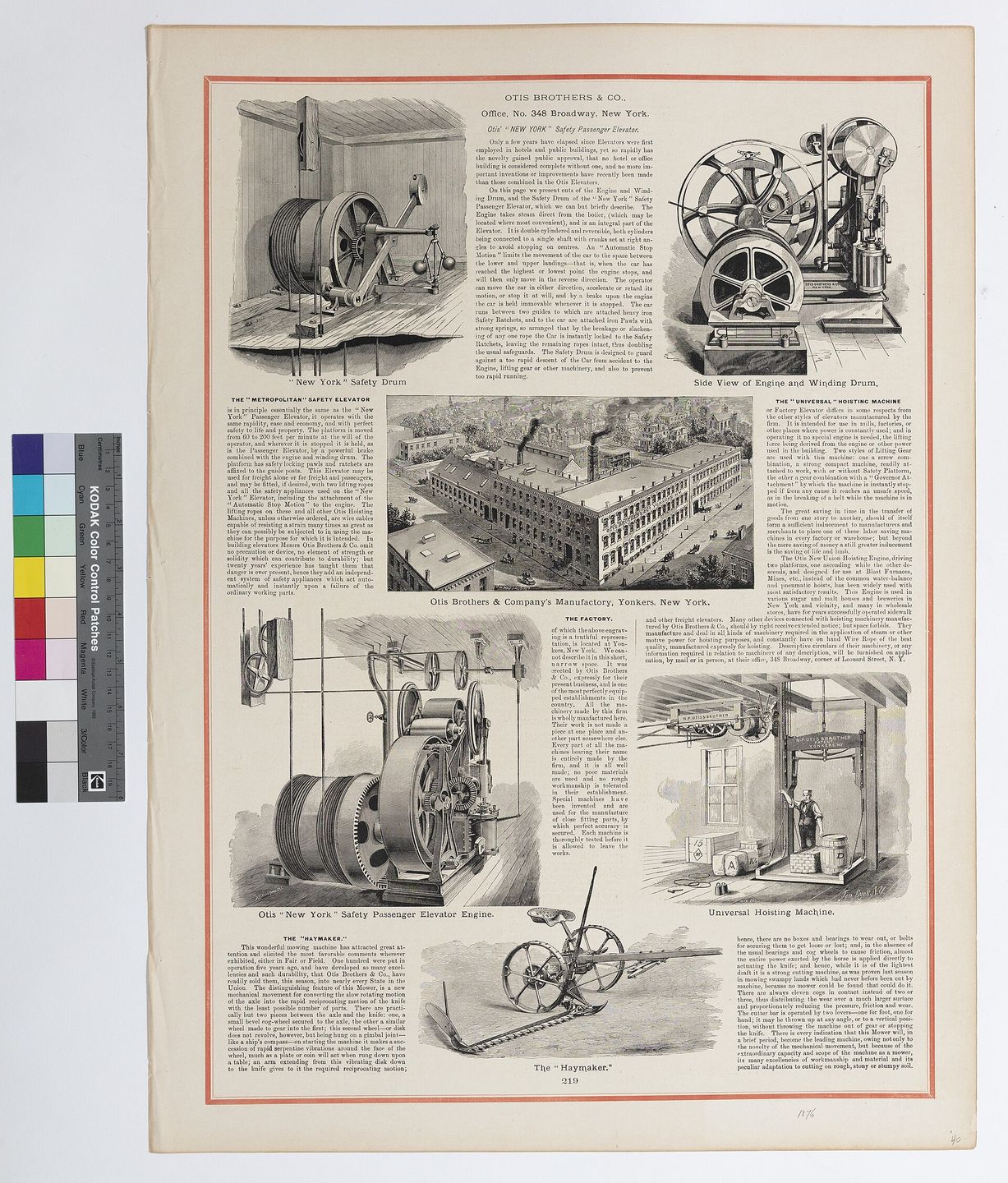
Otis Company advertisement for safety passenger and freight elevators, late 19th century. Public domain, via Wikimedia Commons
Otis's company, now Otis Worldwide Corporation, still manufactures elevators. The fundamental design of the safety brake has not changed much since 1857. Modern elevators use more sophisticated materials and control systems, but the principle remains: if the cable fails, the brake engages. The mechanism is invisible to passengers, but it is the reason they trust the system. Good design often works by being unnoticed until it is needed.
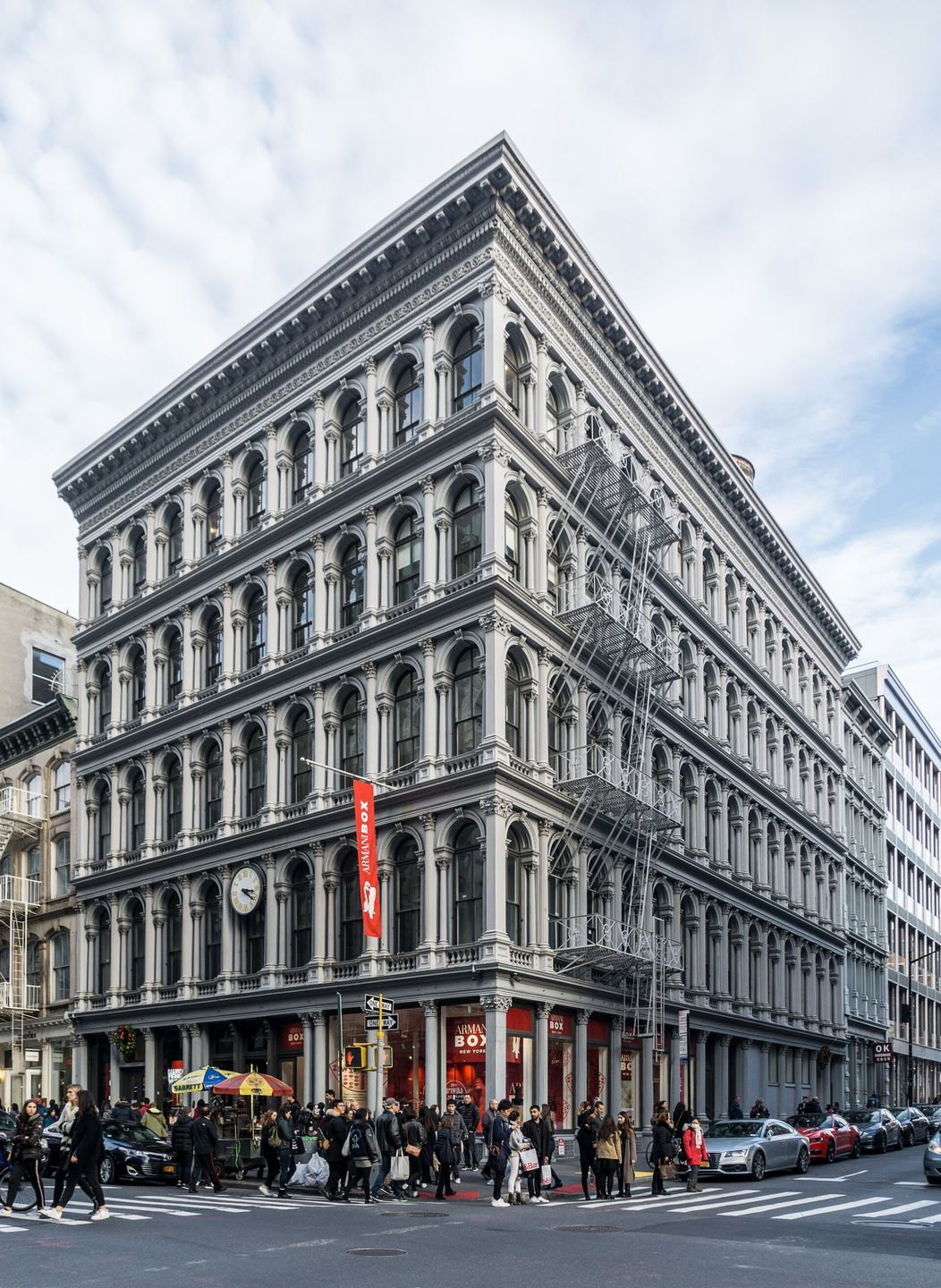
The e.v. Haughwout Building at 488 Broadway, where Otis installed the first passenger elevator in 1857. Kenneth C. Zirkel, CC BY-SA 4.0, via Wikimedia Commons
The elevator is infrastructure that enables other forms of design. Without it, cities would sprawl horizontally rather than stacking vertically. Office towers, residential high-rises, and mixed-use developments all depend on the assumption that people can move between floors quickly and safely. That assumption rests on a spring-loaded brake invented by a mechanic in Yonkers who understood that preventing failure is harder than designing for it.
studio / on-this-day / Mar 23