studio / on-this-day / Mar 18
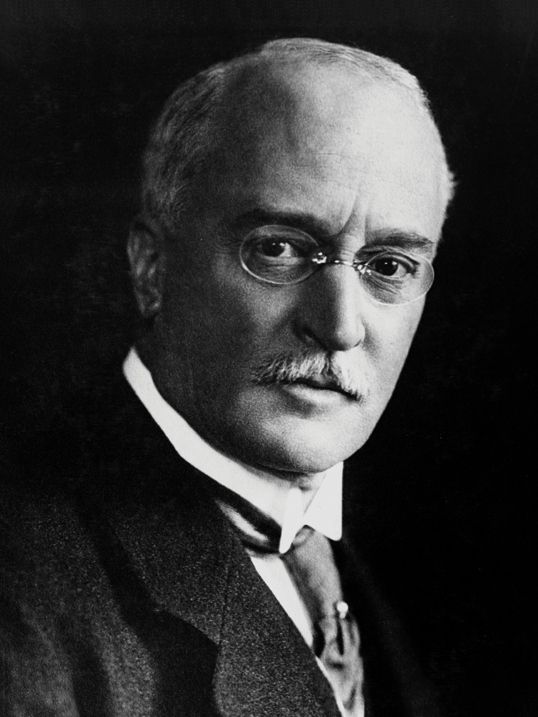
Rudolf Diesel, engineer and inventor of the compression-ignition engine. Public domain, via Wikimedia Commons
The Engine That Needs No Spark
On this day in 1858 — Rudolf Diesel was born, and would design an engine that ignites its fuel by sheer compression, with no spark at all.
3 min read
Rudolf Diesel was born in Paris on March 18, 1858, to Bavarian immigrant parents who ran a small leather goods shop. He grew up bilingual, technically minded, and acutely aware of inefficiency. The steam engines of his era wasted most of their fuel as heat. They were loud, bulky, and required constant tending. Diesel believed there had to be a better way to convert thermal energy into mechanical work, and he spent most of his adult life trying to prove it.
His education gave him the tools. He studied at the Royal Bavarian Polytechnic in Munich under Carl von Linde, a pioneer in refrigeration engineering. Linde taught him thermodynamics, the science of heat and energy transfer. Diesel graduated with the highest marks in the school's history and went to work for Linde's refrigeration company. But engines, not ice machines, occupied his thoughts. He read Sadi Carnot's work on the theoretical limits of heat engines and became obsessed with the idea of building an engine that approached those limits.
The gasoline engines of the 1880s used a spark plug to ignite a fuel-air mixture inside a cylinder. The explosion pushed a piston, which turned a crankshaft, which did useful work. But the process was inefficient. Much of the energy escaped as waste heat, and the engines required external ignition systems that added complexity and failure points. Diesel imagined something simpler: compress air until it gets hot enough to ignite fuel on contact. No spark plug. No carburetor. Just compression, combustion, and expansion.
The idea was sound in theory. In practice, it nearly killed him. His first prototype, built in 1893, exploded during testing and left him bedridden for months. But he refined the design, strengthened the materials, and adjusted the fuel injection timing. By 1897, he had a working engine that achieved 26 percent thermal efficiency, roughly double that of contemporary steam engines. It ran on peanut oil, a detail that would become significant a century later when biofuels reentered the conversation.
Diesel's engine was heavier and more expensive than gasoline engines, but it extracted more work from each unit of fuel. That made it ideal for applications where fuel economy mattered more than weight: ships, trains, trucks, and industrial machinery. Within a decade, diesel engines were powering submarines and ocean liners. By the mid-20th century, they dominated heavy transport. Today, nearly every large vehicle on the planet runs on a diesel cycle.
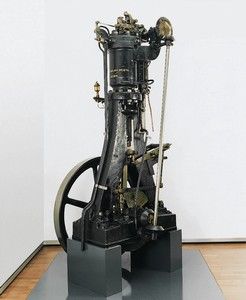
Historical documentation of the Diesel engine — the story of compression ignition. MAN SE, CC BY 3.0, via Wikimedia Commons
Diesel himself did not live to see the full scope of his invention's impact. In 1913, while crossing the English Channel on a steamship bound for London, he disappeared. His body was found days later in the water. Whether it was suicide, accident, or something more sinister remains unclear. He had been struggling financially despite his patents, embroiled in legal battles, and reportedly depressed. Some speculated that he was murdered by competitors or foreign agents interested in his engine designs. No conclusive evidence ever emerged.
What he left behind was a machine that redefined efficiency. The diesel engine is not flashy. It doesn't rev like a sports car or hum like an electric motor. It clatters and rumbles, a sound born of high compression ratios and the violent ignition of fuel under pressure. But it works, reliably and efficiently, turning chemical energy into motion with less waste than almost any other combustion technology. That efficiency comes from Diesel's insight: let physics do the work. Compress air until it's hot enough to ignite fuel, and the rest takes care of itself.
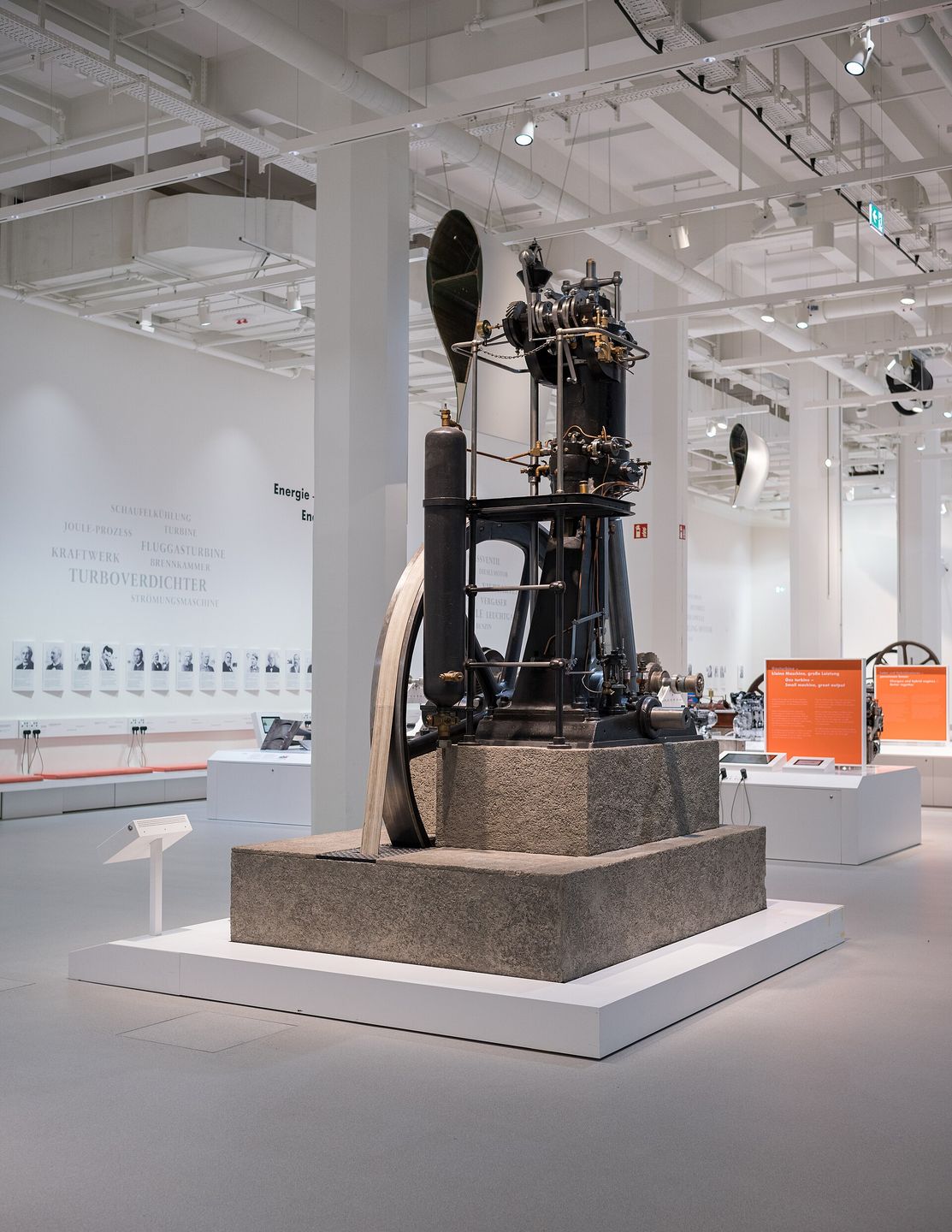
Diesel's 1897 prototype engine, preserved at the deutsches museum in Munich — the first working compression-ignition engine. Frank Schulenburg, CC BY-SA 4.0, via Wikimedia Commons
The diesel engine shares a philosophical lineage with other designs that prioritize simplicity and thermodynamic rigor. Just as Einstein's general relativity described gravity as geometry rather than force, Diesel's engine replaced ignition systems with compression. The elegance is in what you remove, not what you add. Modern engineering still chases that ideal: fewer parts, fewer failure points, better efficiency. Diesel got there first.
studio / on-this-day / Mar 18