studio / on-this-day / Mar 19
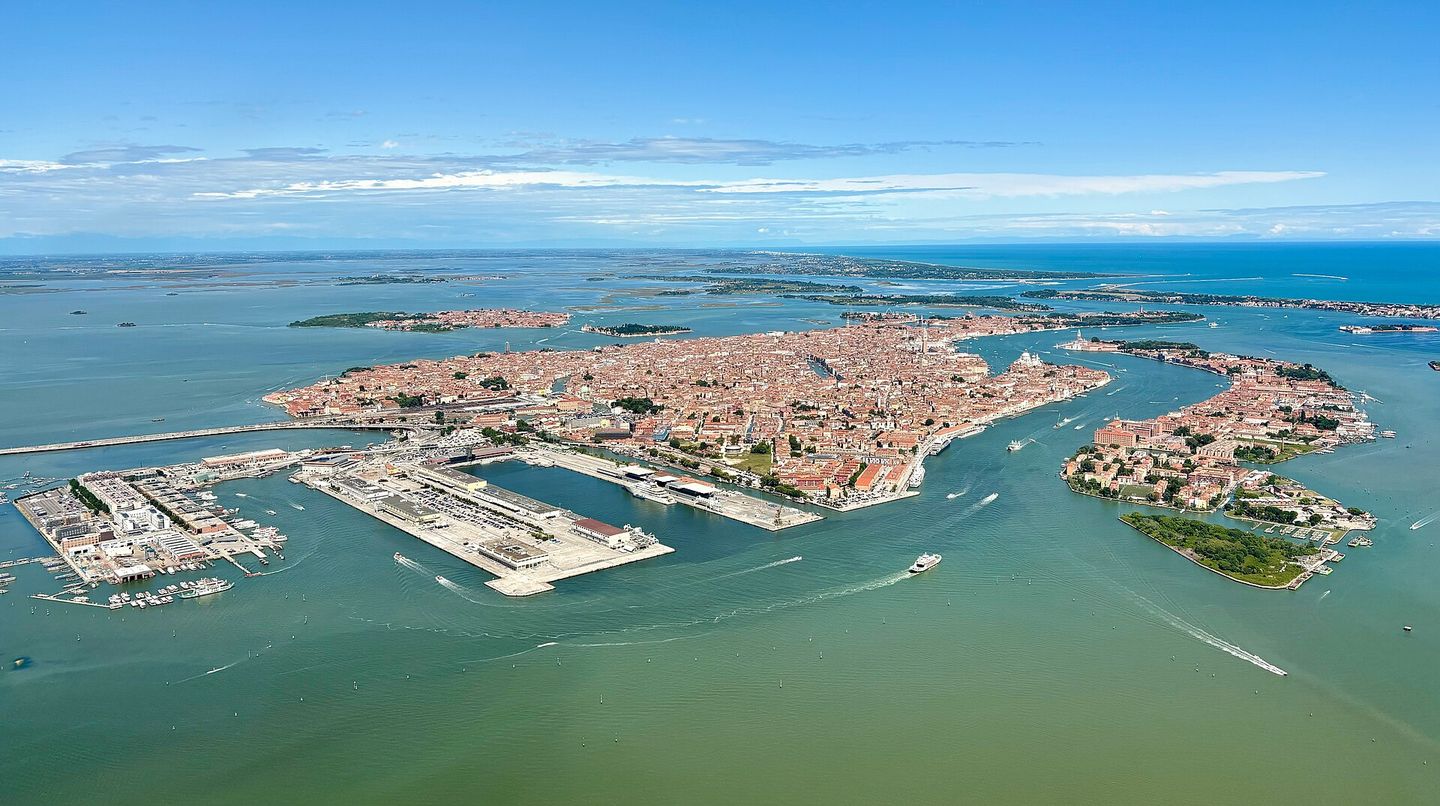
Venice, italy — birthplace of the world's first patent law, 1474. kallerna, CC BY-SA 4.0, via Wikimedia Commons
The Right to an Idea
On this day in 1474 — Venice passed the first real patent law, granting inventors a temporary monopoly and inventing intellectual property.
3 min read
In 1474, the Venetian Senate passed a decree that changed the relationship between invention and ownership. The law granted inventors the exclusive right to profit from their creations for a period of ten years, provided the invention was novel, useful, and disclosed to the public. Anyone who copied a patented device without permission faced fines and the destruction of their counterfeit goods. It was the first systematic recognition that ideas could be property, that innovation deserved legal protection, and that the state had an interest in encouraging both.
Venice was an ideal place for such a law. The city was a commercial powerhouse, a hub of trade and manufacturing where glassblowers, shipbuilders, and textile workers competed fiercely for market advantage. Techniques were guarded secrets, passed down through guilds and families. But secrets are fragile. A skilled artisan could defect to a rival city and take critical knowledge with them. Venice needed a way to encourage disclosure without sacrificing competitive advantage. The patent law offered a deal: share your invention, and we will protect your monopoly for a decade. After that, the knowledge becomes public.
The Venetian system was not perfect. Enforcement was uneven, and many inventors still preferred secrecy to disclosure. But the framework was sound, and it spread. By the 17th century, England had adopted a similar system. By the 18th, patent offices were appearing across Europe. The United States enshrined patent rights in its Constitution, authorizing Congress to promote the progress of science and useful arts by securing exclusive rights to inventors for limited times. The Venetian model had become global infrastructure.
What makes the patent system interesting is not the monopoly it grants, but the transparency it demands. To receive protection, an inventor must describe their invention in sufficient detail that someone skilled in the field could reproduce it. This disclosure requirement turns private knowledge into public knowledge, with a time delay. The inventor gets a decade of exclusive profit. Society gets a detailed blueprint that anyone can use once the patent expires. It is a designed exchange, a formalized trade between individual incentive and collective progress.
The patent system has always been controversial. Critics argue that it stifles innovation by creating barriers to entry and enabling legal warfare over incremental improvements. Defenders argue that without patents, inventors would have no incentive to disclose their work, and technological progress would slow. Both sides have evidence. The pharmaceutical industry relies on patents to recoup research costs. The software industry often treats them as weapons. Open-source advocates reject the entire premise, arguing that collaboration and shared knowledge produce better results than competitive hoarding.
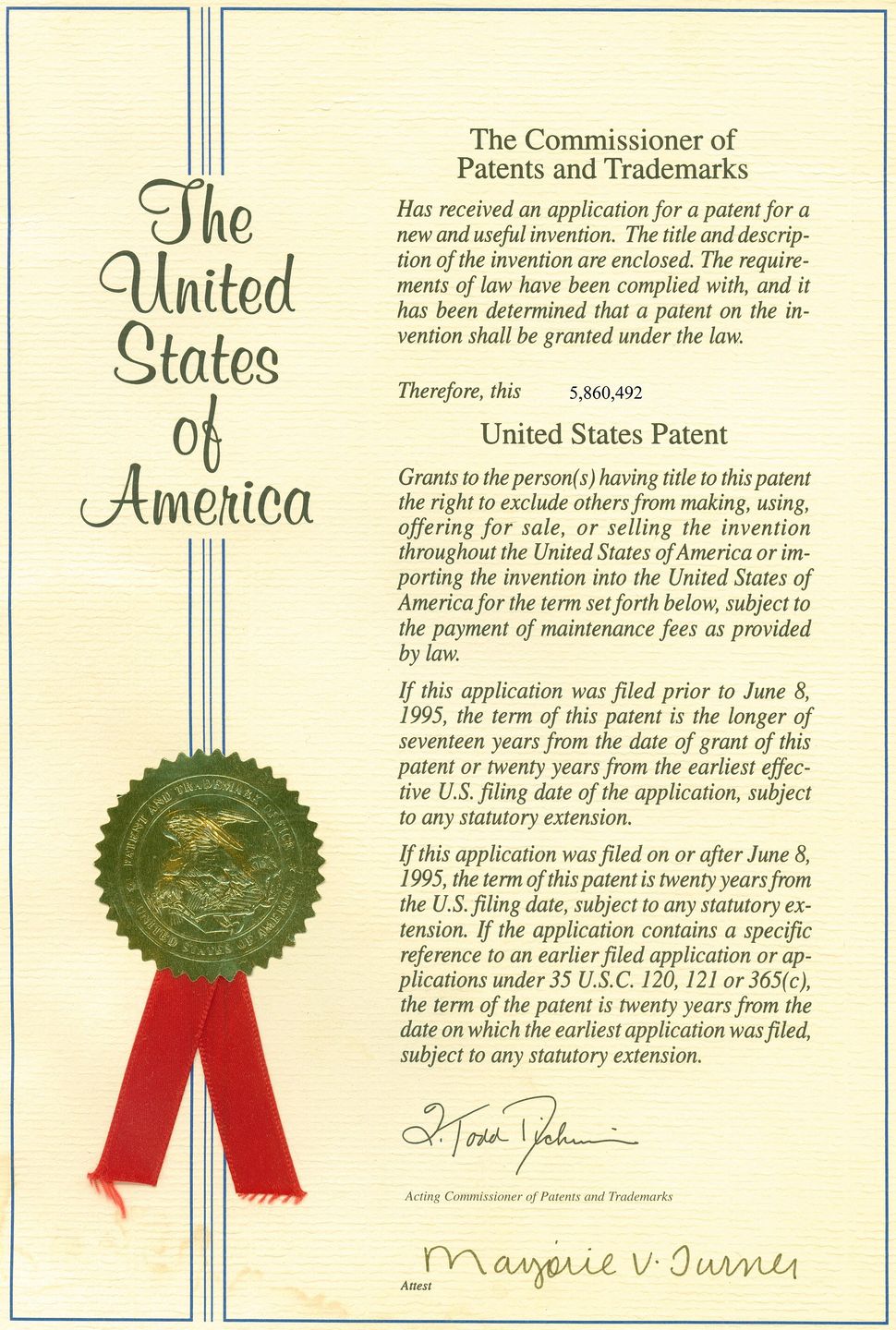
A United States patent — direct descendant of the Venetian system established in 1474. USPTO, Public domain, via Wikimedia Commons
What is clear is that the patent system shaped how we think about creativity and ownership. Before Venice's 1474 law, an invention belonged to whoever could keep it secret or whoever could copy it successfully. After the law, an invention could belong to its creator in a formal, enforceable sense. This shift had philosophical implications. If ideas could be owned, then ideas had value independent of their physical embodiment. A design for a new type of watermill was worth protecting even if no mill had been built yet. The abstraction itself, the pattern of thought that enabled the design, was the asset.
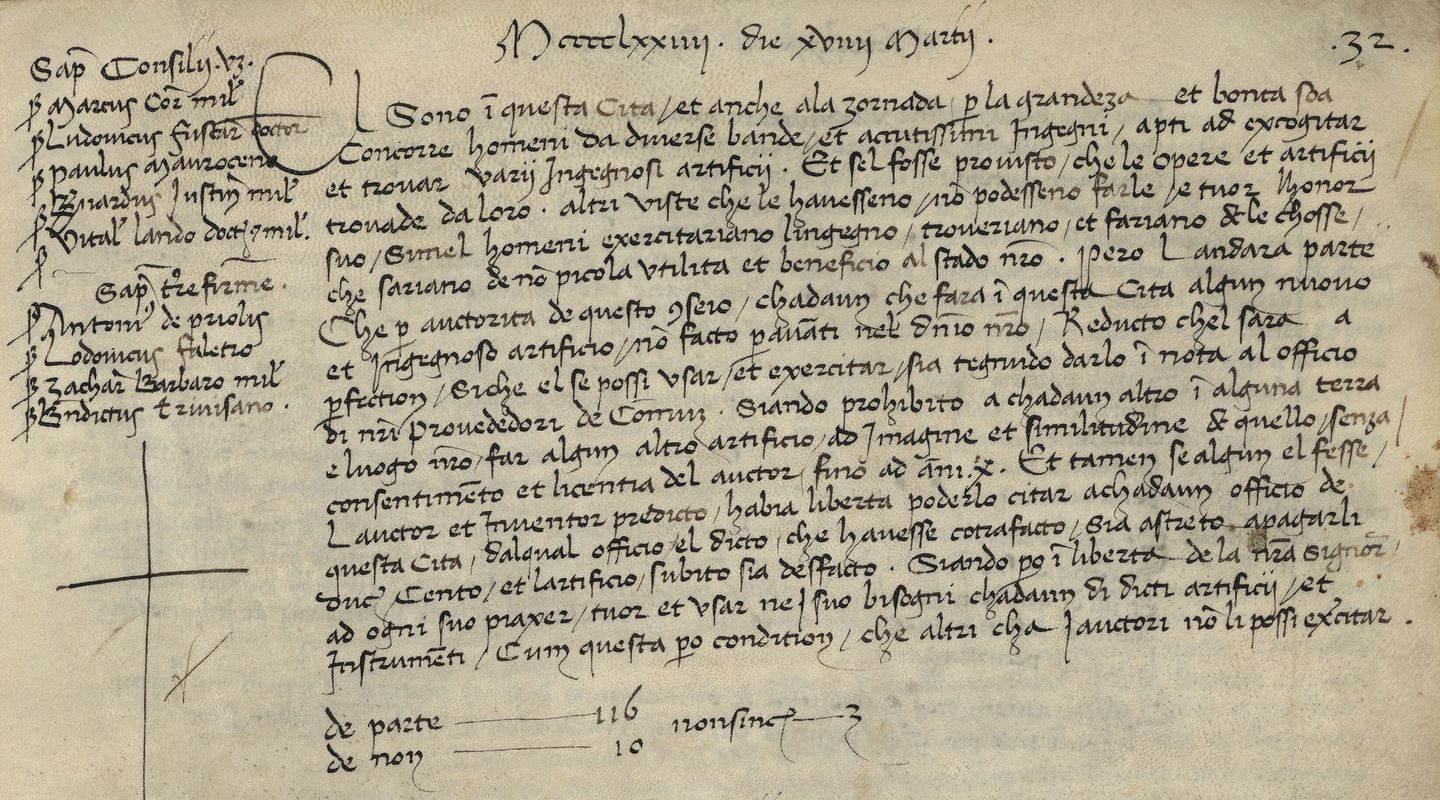
The Venetian patent statute of 1474 — the original text of the world's first patent law. Senate of Venice, Public domain, via Wikimedia Commons
This concept underlies much of modern intellectual property law, from copyrights on creative works to trademarks on brand identities. The Venetian patent law was the prototype. It recognized that human ingenuity produces artifacts that exist in two forms: the physical object and the idea behind it. Protecting the idea, even temporarily, incentivizes the disclosure that makes collective progress possible. It is a designed system for managing knowledge, balancing private reward with public benefit.
The tension between openness and ownership persists. Every software license, every patent filing, every debate over fair use is a renegotiation of the terms Venice set in 1474. We still argue about how long a monopoly should last, what counts as novel, and whether certain kinds of knowledge should ever be privatized. The answers change, but the framework endures. Ideas can be owned, but only for a while. After that, they belong to everyone.
studio / on-this-day / Mar 19