studio / on-this-day / Mar 16
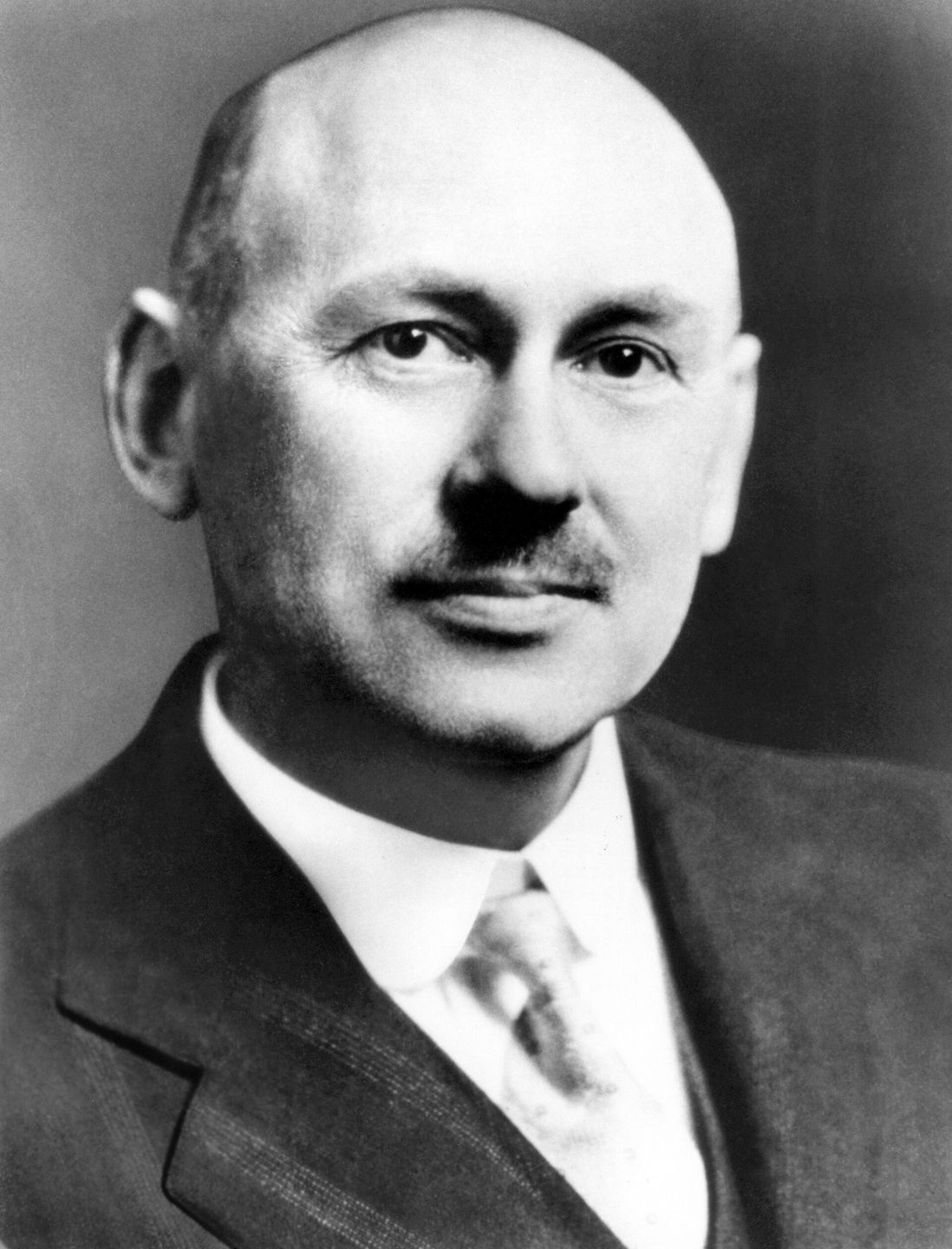
Robert Goddard with his first liquid-fueled rocket, Auburn, Massachusetts, March 16, 1926. NASA, Public domain, via Wikimedia Commons
Two and a Half Seconds
On this day in 1926 — Robert Goddard's first liquid-fueled rocket flew for two and a half seconds and rose forty-one feet, and the space age started.
3 min read
On March 16, 1926, in a cabbage patch on his Aunt Effie's farm near Auburn, Massachusetts, Robert Goddard lit a blowtorch and stepped back. The contraption in front of him looked more like a piece of laboratory equipment than a rocket. It stood ten feet tall, a skeletal frame of thin pipes with the engine mounted on top and the fuel tanks below, an inverted design that seemed to defy logic. The whole assembly weighed about ten pounds.
Goddard had been thinking about rockets since he was seventeen, when he climbed a cherry tree behind his house and imagined a vehicle that could reach Mars. That daydream became an obsession. By 1919, he had published a paper titled "A Method of Reaching Extreme Altitudes," laying out the mathematics of rocket propulsion in a vacuum. The Smithsonian gave him a grant. The press mocked him. The New York Times ran an editorial suggesting he lacked basic knowledge of physics, claiming a rocket could never work in the vacuum of space because it would have nothing to push against.
What Goddard understood, and what much of the public did not, was Newton's third law. A rocket doesn't push against air. It pushes against itself. The expelled mass accelerates the vehicle in the opposite direction. Solid-fuel rockets had existed for centuries, from Chinese fireworks to military flares, but they were limited by chemistry. To reach space, a rocket would need more power, more control, and better fuel economy. Liquid fuel offered all three, along with the ability to throttle and restart the engine.
The challenge was keeping the combustion stable. Liquid oxygen and gasoline, the propellants Goddard chose, are violently reactive. The engine had to mix them in precise ratios, ignite them continuously, and withstand temperatures that could melt steel. Goddard designed a regeneratively cooled combustion chamber, circulating the cold fuel around the engine walls before injecting it into the fire. It was elegant engineering built from salvaged parts and hand-machined components.
On that cold March afternoon, Goddard's wife Esther filmed the event with a handheld camera. The rocket hissed, sputtered, and then lifted off with a sound like tearing fabric. It rose for two and a half seconds, reached an altitude of 41 feet, and traveled 184 feet horizontally before crashing into the frozen ground. The entire flight took less time than it takes to read this sentence.
By most measures, it was unimpressive. A century earlier, William Herschel built a telescope that discovered a planet with his own hands. By comparison, Goddard's rocket barely cleared the treeline. But the principle was proven. Liquid fuel worked. The engine could be controlled. The flight was short, but the trajectory was infinite.
Goddard kept the launch secret for a decade. In 1936, when the Smithsonian and his benefactor Harry Guggenheim convinced him to publish a report, the world finally learned what had happened in that Massachusetts field. By then, Goddard had refined his designs considerably. His later rockets reached altitudes over 9,000 feet and speeds exceeding 500 miles per hour. He pioneered gyroscopic guidance, parachute recovery systems, and variable-thrust engines. He filed more than 200 patents.
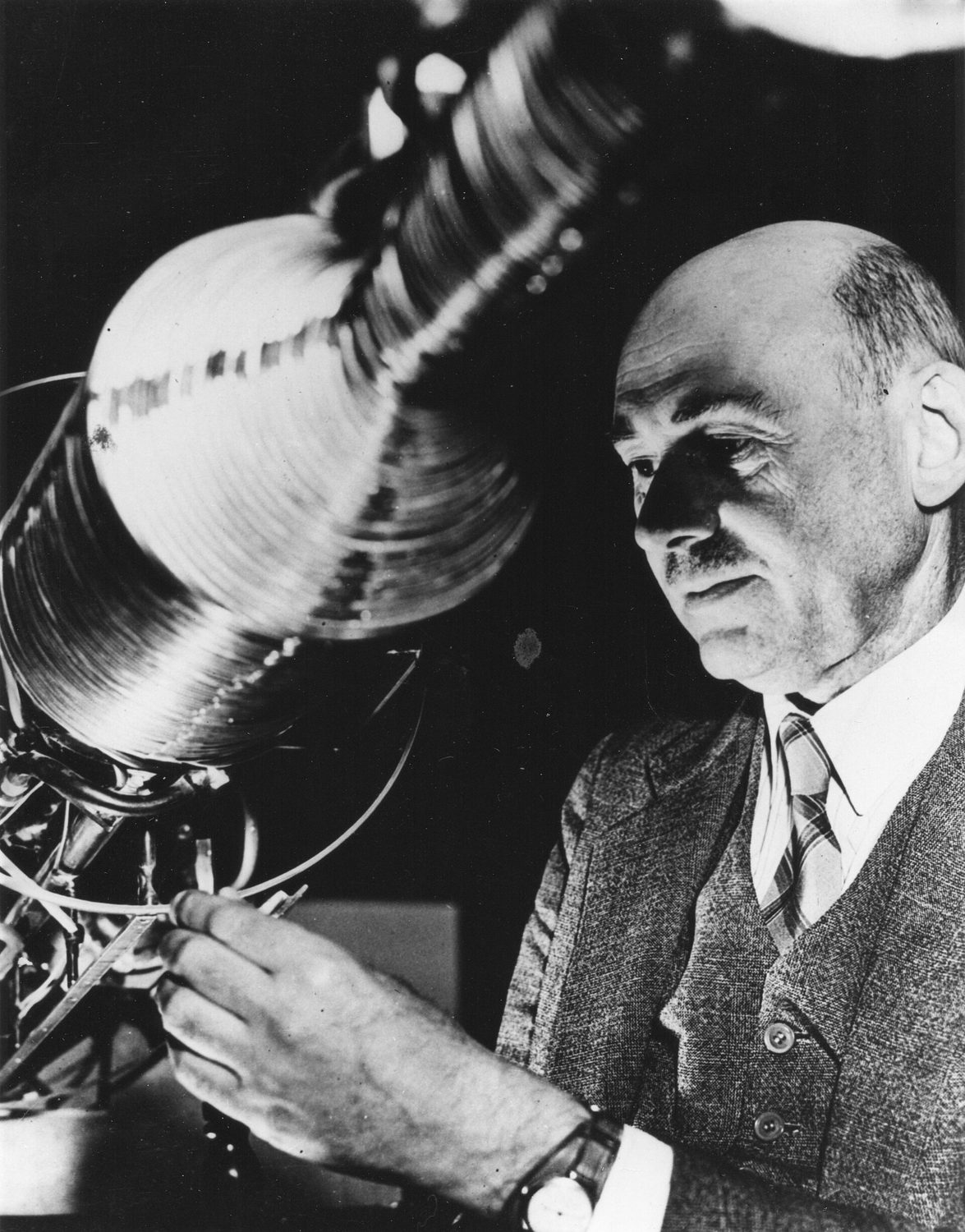
Goddard with an early liquid-fueled rocket. Public domain, via Wikimedia Commons
He died in 1945, before his work bore its fullest fruit. When American engineers examined captured German V-2 rockets after World War II, they found designs eerily similar to Goddard's patents. Wernher von Braun later acknowledged the debt, calling Goddard the father of modern rocketry. NASA's Goddard Space Flight Center carries his name. Every spacecraft that leaves Earth's atmosphere, from satellites to crewed missions, owes something to that brief flight in a cabbage patch.
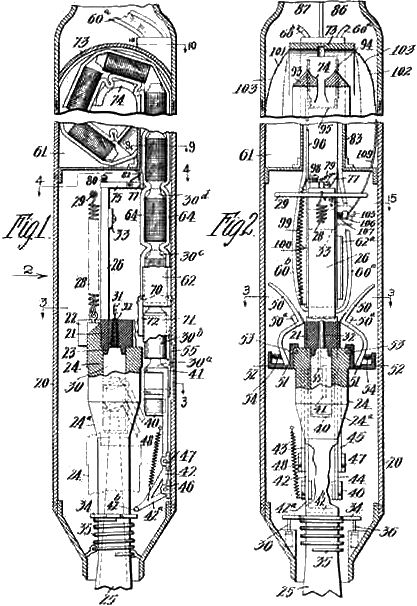
A figure from Goddard's rocket apparatus patent — he filed more than 200, and German v-2 designs later echoed them. Robert H. Goddard, Public domain, via Wikimedia Commons
What Goddard proved was not just that liquid-fueled rockets could fly, but that radical ideas need patient engineering. The dream was interplanetary travel. The first step was 41 feet. That gap between vision and prototype is where most ambitious projects die, killed by impatience or the demand for immediate results. Goddard treated that gap as the work itself. He built, tested, failed, refined, and tried again. Two and a half seconds was long enough to prove the concept. Everything else was iteration.
studio / on-this-day / Mar 16