studio / on-this-day / Mar 15
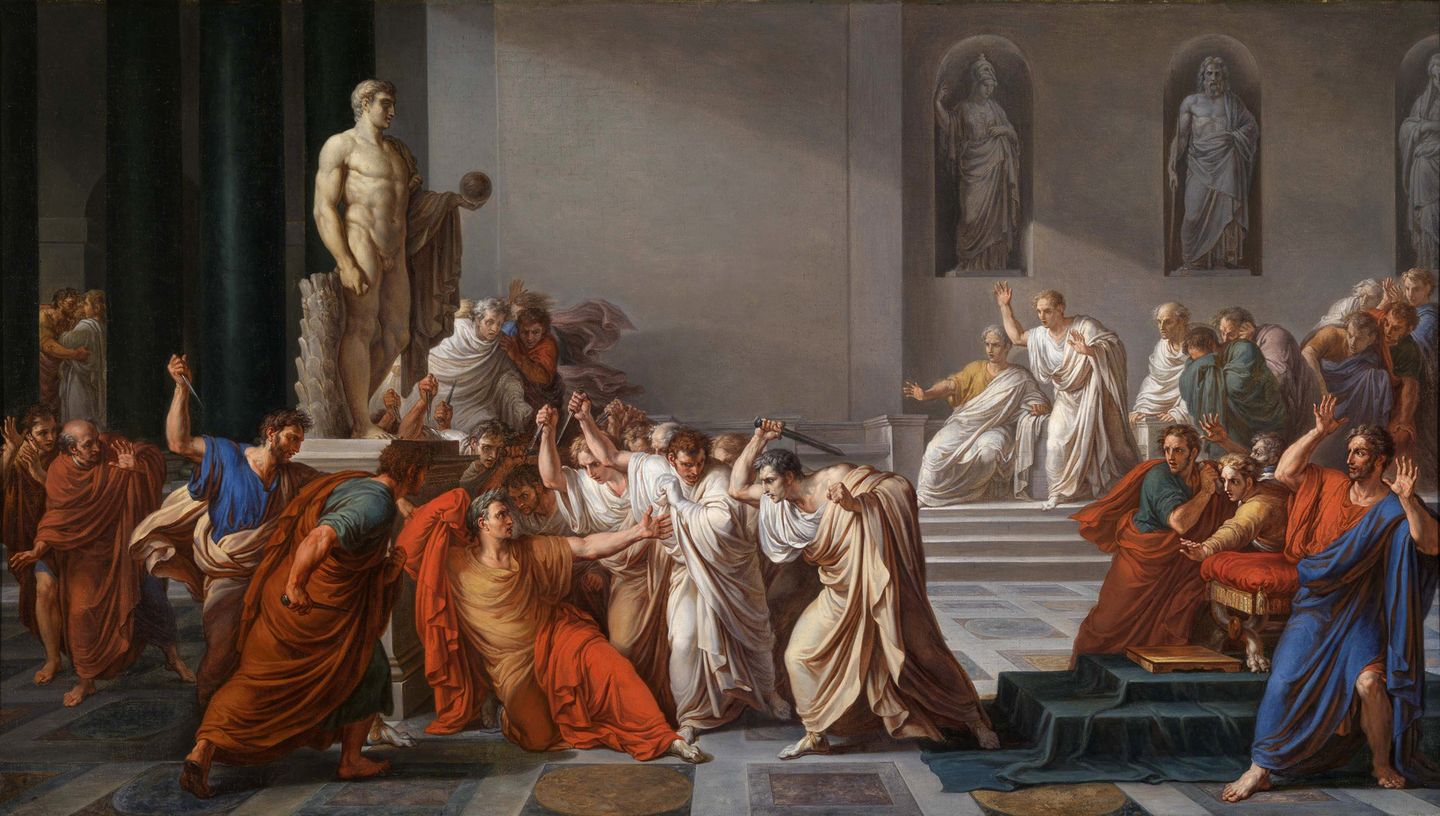
The death of Julius Caesar (la morte di cesare) by vincenzo camuccini, c. 1804-1805. Vincenzo Camuccini, Public domain, via Wikimedia Commons
The Fatal Vulnerability
On this day in 44 BC — Julius Caesar was killed on the Senate floor, a reminder that even the most powerful system has a fatal weak point.
3 min read
Julius Caesar was stabbed to death on March 15, 44 BC, in the Theatre of Pompey in Rome. The conspirators numbered over 60, though history remembers the core group: Brutus, Cassius, Casca, and others who believed they were saving the Republic from tyranny. They surrounded him during a Senate meeting and attacked with daggers. Caesar received 23 wounds. He died at the base of a statue of Pompey, his former rival. The assassination was meticulously planned. The aftermath was chaos.
Caesar had accumulated power systematically. He was a brilliant military commander who conquered Gaul, invaded Britain, and crossed the Rubicon with his army, triggering civil war. He defeated his rivals, became dictator, and began reshaping Roman government. He granted citizenship to provinces, reformed the calendar, redistributed land, and centralized authority. His enemies in the Senate saw him dismantling the Republic's checks and balances. They were not wrong. Caesar was building something new, something closer to monarchy. The Senate was becoming ceremonial.
The conspirators justified the assassination as defense of Republican virtue. They saw themselves as patriots acting to preserve liberty. But they had no plan for what came next. They expected the populace to celebrate Caesar's death and restore the old order. Instead, Rome erupted. Mark Antony seized control of Caesar's papers and treasury. He turned public opinion against the assassins with a funeral oration so effective it has been studied for 2,000 years. The conspirators fled. Rome descended into another round of civil war.
The assassination was a design failure. The conspirators optimized for the removal of one person but did not account for the system that person had built. Caesar's reforms had created dependencies. His supporters had vested interests. His popularity with soldiers and the lower classes was genuine. Killing Caesar did not restore the Republic. It accelerated its collapse. Within 13 years, his adopted heir Octavian would become Augustus, the first Roman Emperor. The Republic was finished.
Shakespeare wrote the definitive version of the story in 1599. His Julius Caesar is less about Caesar than about Brutus, the man who kills his friend for abstract ideals and discovers too late that ideals are poor substitutes for strategy. Brutus is a tragic figure because he is sincere. He genuinely believes he is acting for the greater good. He is also naïve. He assumes that removing a corrupt leader will automatically restore a pure system, as if power is a bug in the code rather than a feature of human organization.

Marble bust of Julius Caesar, Roman dictator and military commander. Ángel M. Felicísimo from Mérida, España, Public domain, via Wikimedia Commons
The phrase "Ides of March" entered the language as shorthand for impending doom. In the Roman calendar, the Ides was simply the 15th day of March, May, July, and October, and the 13th of other months. It had no inherent significance. But Shakespeare gave Caesar a soothsayer who warns him to "beware the Ides of March." Caesar ignores the warning. The line works because it captures a universal pattern: the powerful are often blind to their vulnerabilities until it is too late. Security is not about eliminating threats. It is about recognizing that threats are always present and adapting accordingly.
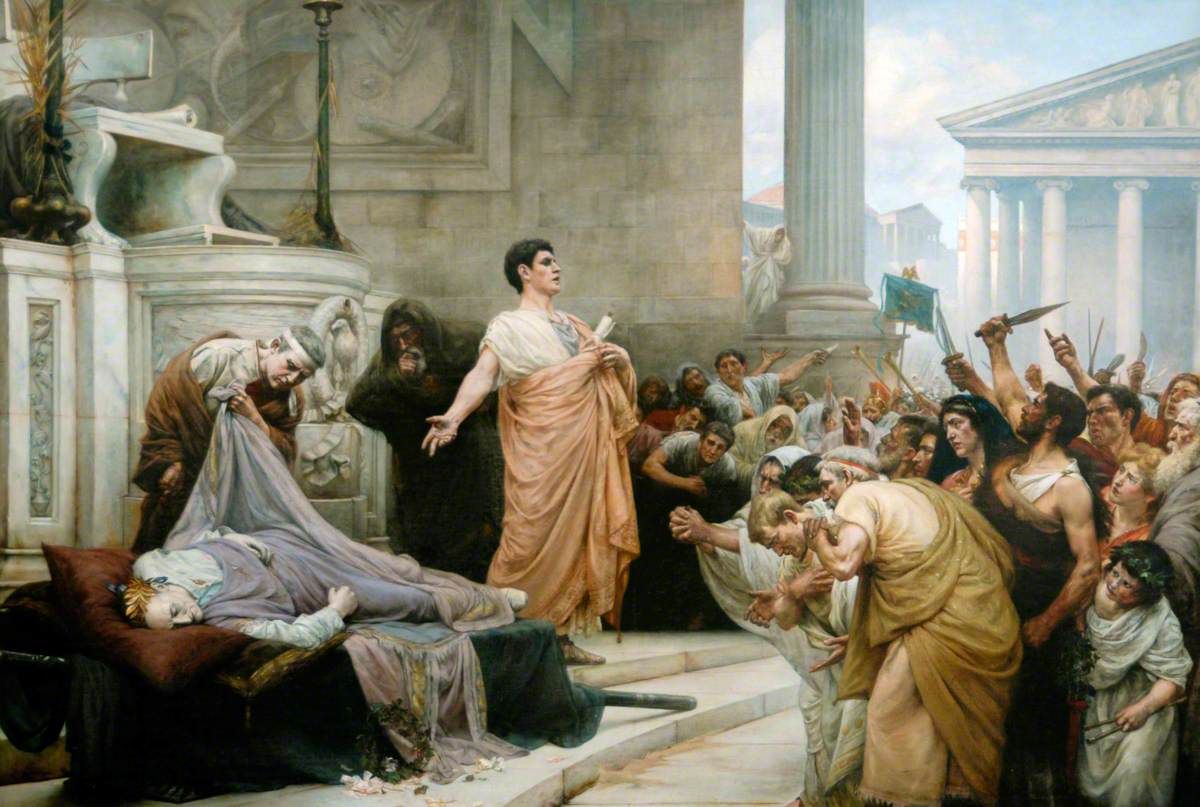
Mark Antony's oration at Caesar's funeral by george Edward Robertson — the speech that turned Rome against the conspirators. George Edward Robertson b. 1864, Public domain, via Wikimedia Commons
Caesar's assassination is a case study in unintended consequences. The conspirators removed a leader they saw as dangerous. They created a power vacuum that produced something worse: prolonged civil war followed by the permanent end of Republican government. Augustus was smarter than Caesar. He kept the forms of the Republic while hollowing out its substance. He called himself "first citizen" rather than dictator. He let the Senate exist but ensured it had no real power. He built an empire that would last 500 years, precisely because he learned from Caesar's mistake. Do not appear to overthrow the old system. Just make it irrelevant.
What the Ides of March teaches is that systems are resilient not because they are strong but because they adapt. Caesar tried to rebuild Rome by force. The conspirators tried to preserve Rome by violence. Both failed because they treated power as a static problem with a permanent solution. Augustus succeeded because he understood that power is dynamic. You do not seize it once. You maintain it continuously, adjusting to new threats, co-opting rivals, and ensuring that the cost of opposition always exceeds the cost of compliance. The lesson is not that assassination is ineffective. It is that killing the person at the center of a system rarely destroys the system itself. It just clears space for the next iteration.
studio / on-this-day / Mar 15