studio / on-this-day / Feb 21
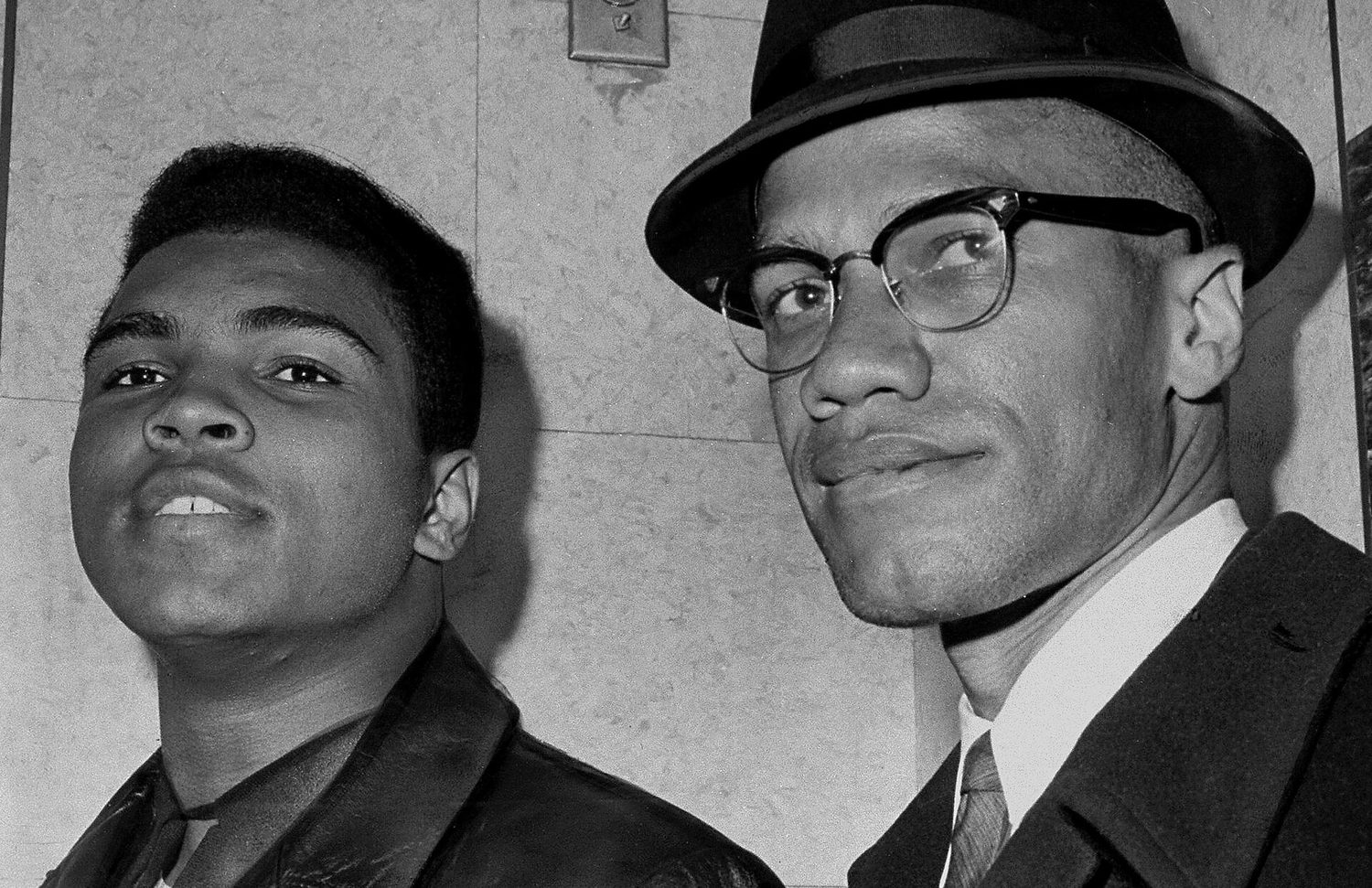
Malcolm X, photographed in 1964. Public domain, via Wikimedia Commons
Radical Redesign
On this day in 1965 — Malcolm X was assassinated, a voice that had insisted on justice strictly on its own uncompromising terms.
3 min read
On February 21, 1965, Malcolm X walked onto a stage at the Audubon Ballroom in Manhattan to deliver a speech. He was 39 years old. A disturbance broke out in the audience. As security moved toward it, three men rushed the stage with guns. Malcolm X was shot 21 times. He was pronounced dead at a nearby hospital. The assassination ended the life of one of the most radical and controversial voices in the American civil rights movement, a man who refused to accept the structures he was given and insisted on redesigning them from first principles.
Malcolm Little was born in Omaha, Nebraska, in 1925. His father was a Baptist minister and organizer for Marcus Garvey's Universal Negro Improvement Association. His mother was a homemaker. The family moved to Michigan, where Malcolm's father was killed in what was ruled a streetcar accident but widely suspected to be murder by white supremacists. His mother suffered a mental breakdown and was institutionalized. Malcolm and his siblings were separated and placed in foster care.
Malcolm was a good student, but when a teacher told him that his dream of becoming a lawyer was unrealistic for a Black person, he lost interest in formal education. He drifted, eventually ending up in Boston and then New York, where he became involved in crime. In 1946, at the age of 20, he was sentenced to ten years in prison for burglary. It was in prison that he encountered the Nation of Islam, a Black nationalist and religious movement that taught that white people were devils and that Black people needed to separate and build their own nation.
Malcolm converted, replaced his surname with an X to symbolize the African name stolen from his ancestors, and educated himself. He read voraciously: philosophy, history, linguistics, religion. When he was released in 1952, he became a minister for the Nation of Islam and quickly rose to prominence. He was charismatic, articulate, and uncompromising. He rejected integration as a goal, arguing that Black people should not seek acceptance from a racist system but instead build their own institutions and economic structures. He rejected nonviolence, arguing that self-defense was a human right.
Malcolm's rhetoric was polarizing. To many white Americans, he was a dangerous extremist. To many Black Americans, he articulated frustrations that the mainstream civil rights movement did not fully address. While Martin Luther King Jr. spoke of dreams and peaceful resistance, Malcolm spoke of power, autonomy, and the right to fight back. He was not interested in appealing to the conscience of white America. He was interested in dismantling the systems that oppressed Black people and replacing them with something new.
In 1964, Malcolm broke with the Nation of Islam. He had grown disillusioned with the organization's leadership and its narrow theology. He traveled to Mecca, where he performed the Hajj, the Islamic pilgrimage. The experience changed him. He saw Muslims of all races worshiping together and began to reconsider his views on race. He returned to the United States with a more inclusive vision, one that did not reject alliances with people of other races but still insisted on Black self-determination.
He founded the Organization of Afro-American Unity, modeled after the Organization of African Unity, to promote human rights for Black people globally. He began speaking more explicitly about economic systems, colonialism, and internationalism. He was evolving, refining his ideas, moving toward a more sophisticated analysis of power and oppression. He was also receiving death threats. The Nation of Islam saw him as a traitor. The FBI had him under surveillance. He told friends he did not expect to live long.

The Audubon Ballroom in Washington Heights, Manhattan, where Malcolm x was shot on February 21, 1965; part of the building now houses a memorial and educational center dedicated to him. Beyond My Ken, CC BY-SA 4.0, via Wikimedia Commons
The assassination in 1965 cut short that evolution. Three members of the Nation of Islam were convicted of the murder, though questions about the full circumstances have persisted for decades. What remains is the body of work Malcolm left behind: speeches, interviews, and an autobiography that has influenced generations of activists, artists, and thinkers.
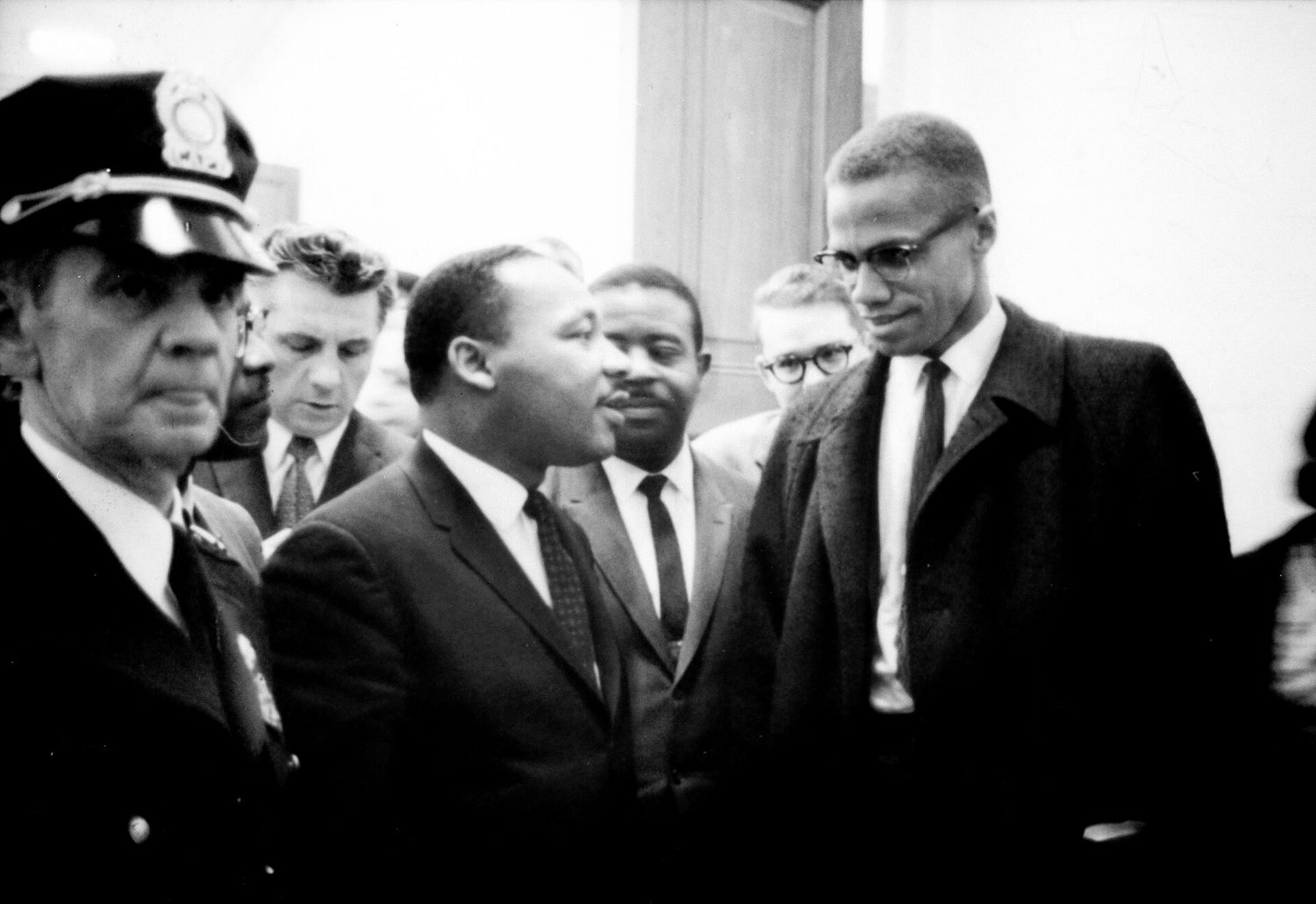
Malcolm X at a press conference. Public domain, via Wikimedia Commons
Malcolm X was a systems thinker. He looked at racism not as a collection of individual prejudices but as an architecture, a set of interconnected institutions designed to produce specific outcomes. He argued that you cannot fix such a system by asking nicely. You have to redesign it. His approach was radical in the literal sense: he went to the root. He questioned the premises, rejected the constraints, and proposed alternatives that many considered impossible or dangerous. He did not live to see those alternatives fully realized, but he made it impossible to ignore the need for them.
studio / on-this-day / Feb 21