studio / on-this-day / Feb 12
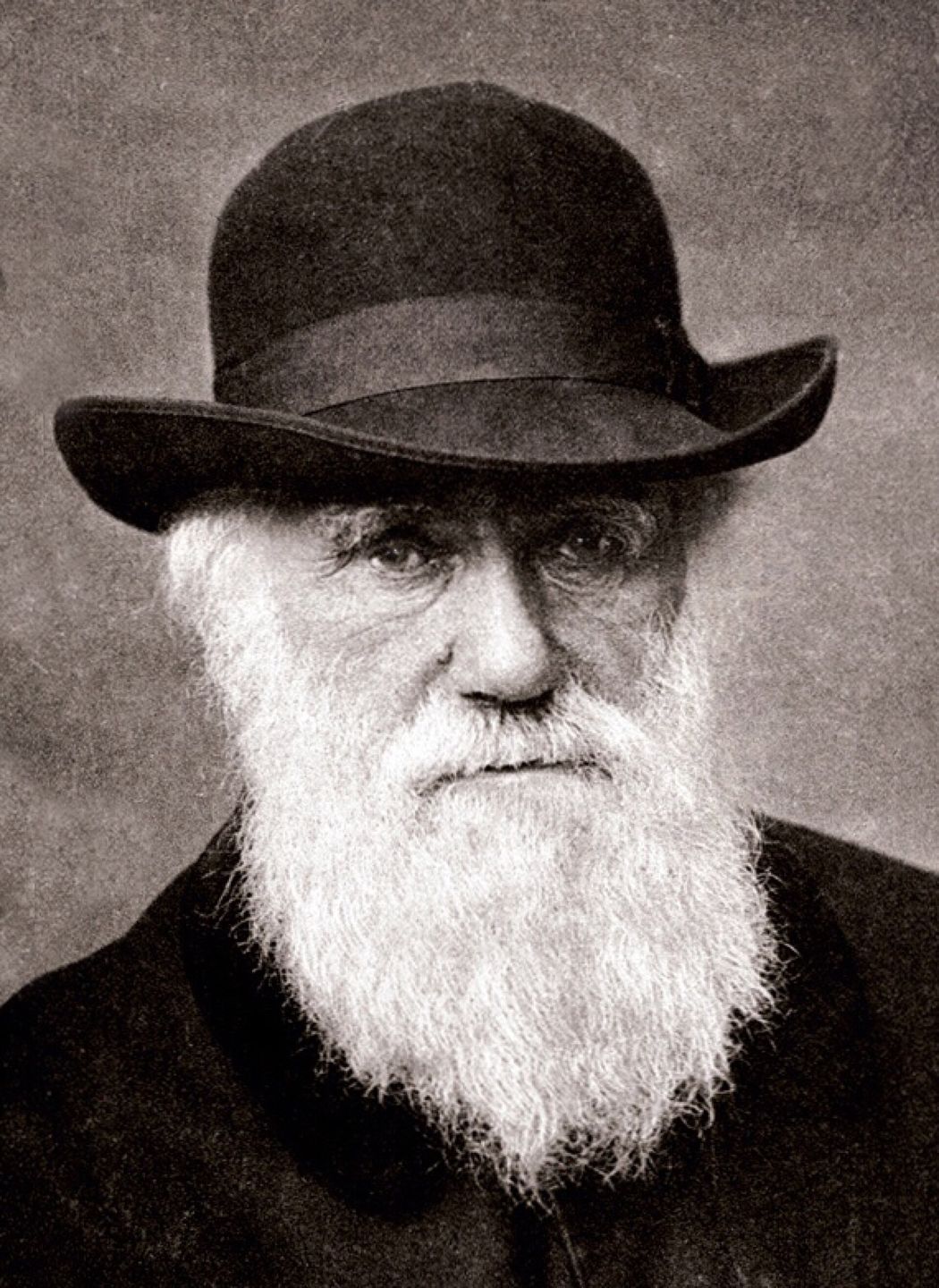
Charles Darwin photographed in 1880, near the end of his life. His theory of natural selection, first published in 1859, became the foundational framework of modern biology. Elliott & Fry, Public domain, via Wikimedia Commons
The Patient Observer
On this day in 1809 — Charles Darwin was born, and would spend decades patiently assembling the evidence for one very dangerous idea.
3 min read
Charles Robert Darwin was born on February 12, 1809, in Shrewsbury, England. His father was a physician, his grandfather Erasmus Darwin was a prominent natural philosopher, and his mother, who died when Charles was eight, was the daughter of pottery magnate Josiah Wedgwood. Darwin was sent to medical school in Edinburgh and hated it. He switched to theology at Cambridge, intending to become a country parson. Instead, he became a naturalist.
In 1831, at age 22, Darwin was invited to join HMS Beagle as an unpaid gentleman companion to Captain Robert FitzRoy. The ship was commissioned for a five-year survey voyage around South America. Darwin brought his microscopes, collecting jars, and notebooks. He observed, collected, and cataloged everything: fossils, plants, birds, insects, geology. On the Galápagos Islands, he noticed that finches on different islands had different beak shapes, adapted to the available food sources. The observation seemed minor at the time. It wasn't.
Darwin returned to England in 1836 with crates of specimens and years of detailed notes. He spent the next two decades analyzing the data, corresponding with experts, conducting experiments, and writing. By 1838, he had formulated the theory of natural selection: species change over time through the differential survival of individuals with traits better suited to their environment. He didn't publish it. The implications were too controversial. Evolution contradicted the Biblical account of creation. Darwin knew it would provoke outrage.
In 1858, Alfred Russel Wallace sent Darwin a manuscript outlining the same theory. Darwin was devastated. Twenty years of work, and someone else had independently arrived at the same conclusion. Friends arranged a joint presentation to the Linnean Society. The following year, Darwin rushed to finish On the Origin of Species. The first edition of 1,250 copies sold out on the first day. The backlash was immediate and fierce. Darwin was vilified in newspapers, mocked in cartoons, and condemned from pulpits. He rarely responded. He let the evidence speak.
What made Darwin's theory revolutionary was not that species changed. Others had proposed that. What Darwin provided was a mechanism: natural selection, a process that required no divine intervention, no guiding intelligence, just variation, heredity, and differential survival. Traits that helped an organism survive and reproduce became more common. Traits that didn't, disappeared. Over millions of years, this simple process could produce the stunning diversity of life on Earth.
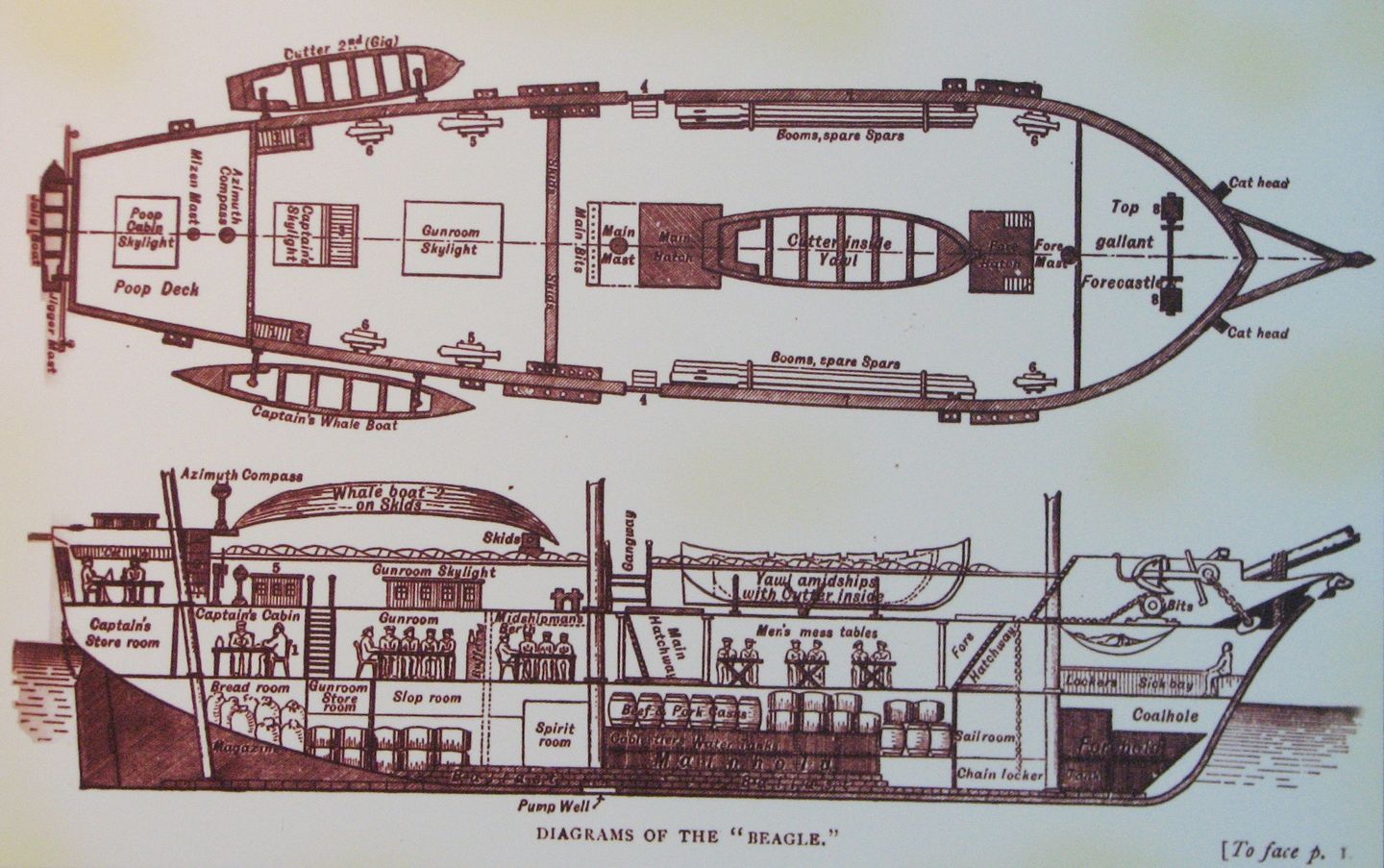
Deck plan and section diagrams of HMS Beagle, the survey ship that carried Darwin around the world from 1831 to 1836, during which he made the observations that led to his theory of natural selection. HTO, Public domain, via Wikimedia Commons
Darwin spent the rest of his life refining the theory, writing books on everything from orchids to earthworms, demonstrating how evolution explained patterns in nature that had previously seemed inexplicable. He published The Descent of Man in 1871, explicitly arguing that humans evolved from earlier species. The idea that humans were not separate from nature, not specially created, but part of the same biological processes as every other organism, was unacceptable to many. It still is.
Darwin died in 1882 and was buried in Westminster Abbey, near Isaac Newton. The theory he hesitated to publish for two decades is now the foundational framework of biology. Every discovery in genetics, paleontology, and molecular biology since has confirmed and extended his insights. DNA sequencing has revealed the exact genetic relationships between species. Fossils have filled in gaps in the evolutionary record. Evolution is not a hypothesis. It is the organizing principle that makes sense of life.
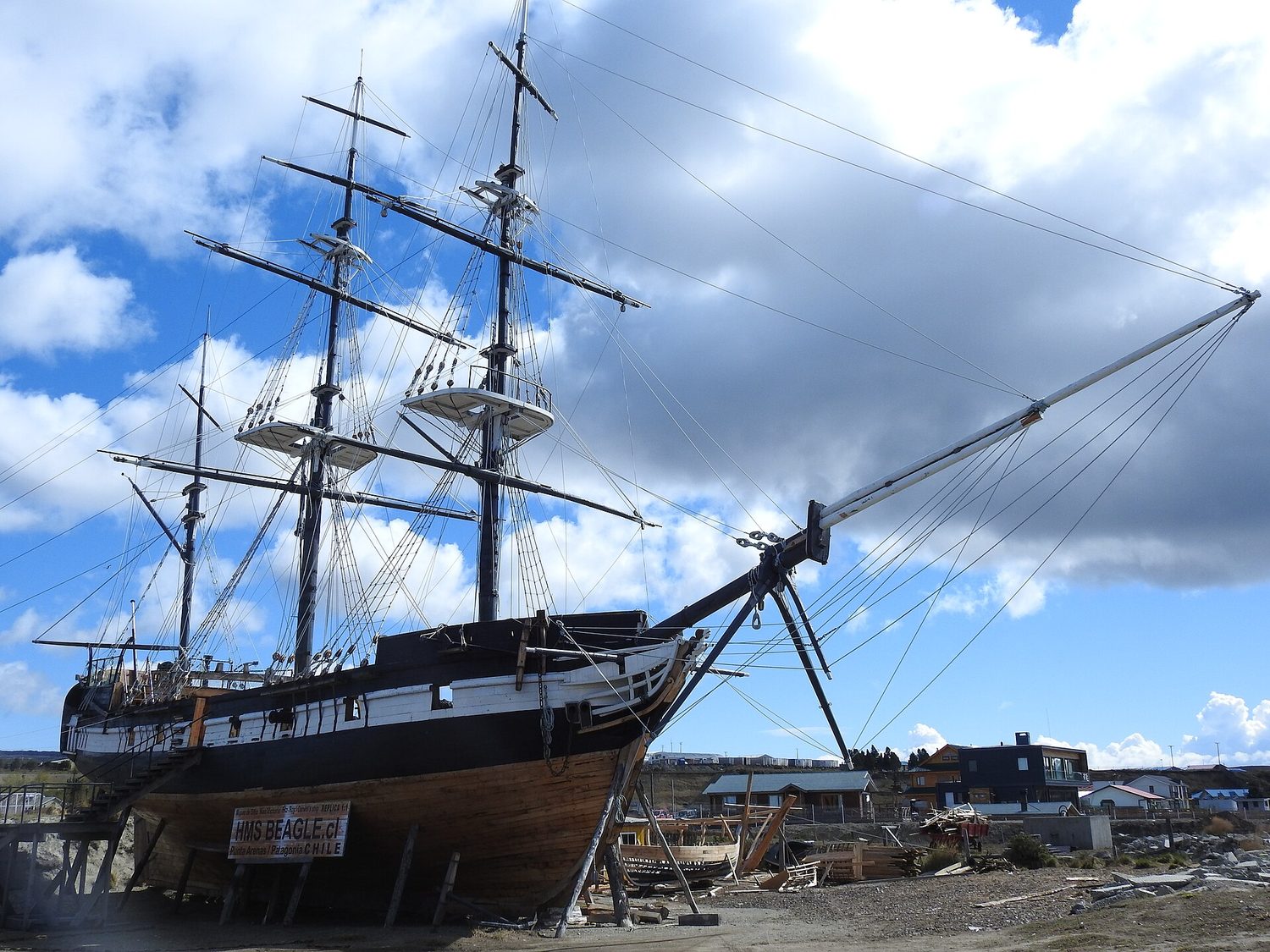
HMS Beagle, the ship that carried Darwin around the world. Bombalot, CC BY-SA 4.0, via Wikimedia Commons
What Darwin demonstrated was the power of patient observation and rigorous documentation. He didn't perform dramatic experiments. He watched, recorded, and connected patterns over timescales longer than a human lifetime. He treated nature as a system with rules that could be discovered through careful study. That approach, the idea that complex phenomena can be understood through evidence and logic rather than revelation and authority, is the foundation of science. And it began with finches on an island and a man willing to look closely enough to see what everyone else had missed.
studio / on-this-day / Feb 12