studio / on-this-day / Feb 10
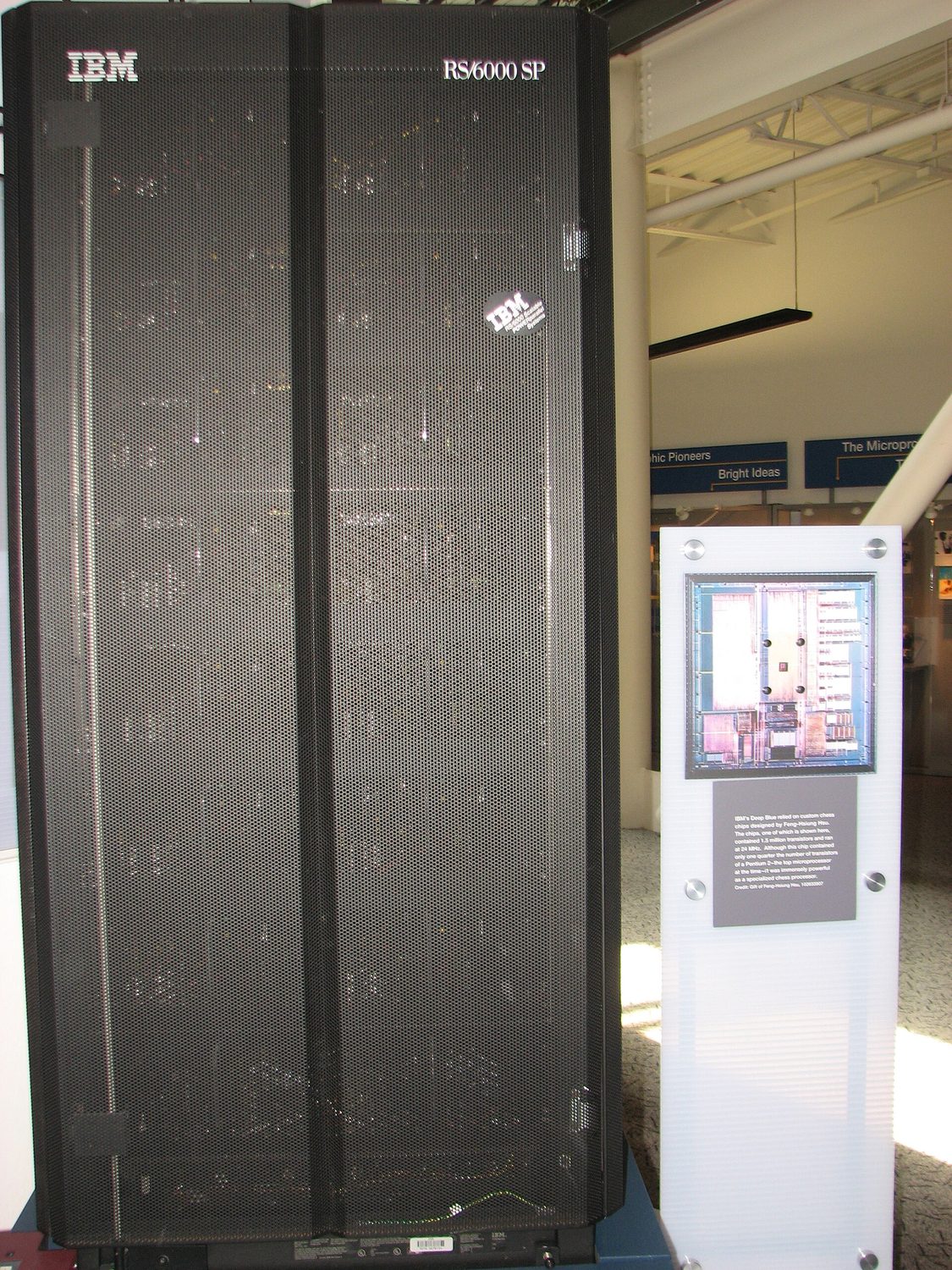
IBM's Deep Blue, the chess computer that beat world champion Garry Kasparov in 1997. Erik Pitti from San Diego, CA, USA, CC BY 2.0, via Wikimedia Commons
When the Machine Won
On this day in 1996 — IBM's Deep Blue took a single game from Garry Kasparov, the first time a computer beat a reigning world chess champion.
3 min read
Garry Kasparov had been the world chess champion since 1985. He was widely considered the best player in history, a master of intuition, pattern recognition, and psychological warfare. Chess computers had been improving for decades, but no machine had ever beaten a reigning world champion in a regulation game. Then, on February 10, 1996, in Philadelphia, Deep Blue made a move Kasparov didn't expect. The machine won. The match continued, and Kasparov ultimately won the six-game series 4 to 2, but the barrier had been crossed. A computer had defeated the best human at a game humans invented to demonstrate intelligence.
Deep Blue was not software running on a standard computer. It was custom hardware designed specifically to evaluate chess positions. The system used 256 specialized processors working in parallel, capable of analyzing 200 million positions per second. It didn't think the way humans think. It didn't have intuition or experience. It had brute force search guided by evaluation functions written by chess grandmasters and computer scientists.
Kasparov came back the next year for a rematch, this time with a rebuilt Deep Blue that was twice as fast. The 1997 match took place in New York, broadcast live, watched by millions. Deep Blue won the series 3.5 to 2.5. Kasparov accused IBM of cheating, claiming that certain moves seemed too creative for a machine and must have involved human intervention. IBM denied it. The company retired Deep Blue immediately after the match, refusing a rematch. The system was dismantled. The victory stood.
What made Deep Blue significant was not that it could search faster than a human. Speed alone doesn't create insight. What mattered was the combination of raw computational power with domain-specific knowledge. The evaluation functions that determined which positions were strong were written by experts. The opening book and endgame tables were curated by grandmasters. The machine didn't invent chess strategy. It executed it faster and more thoroughly than any human could.
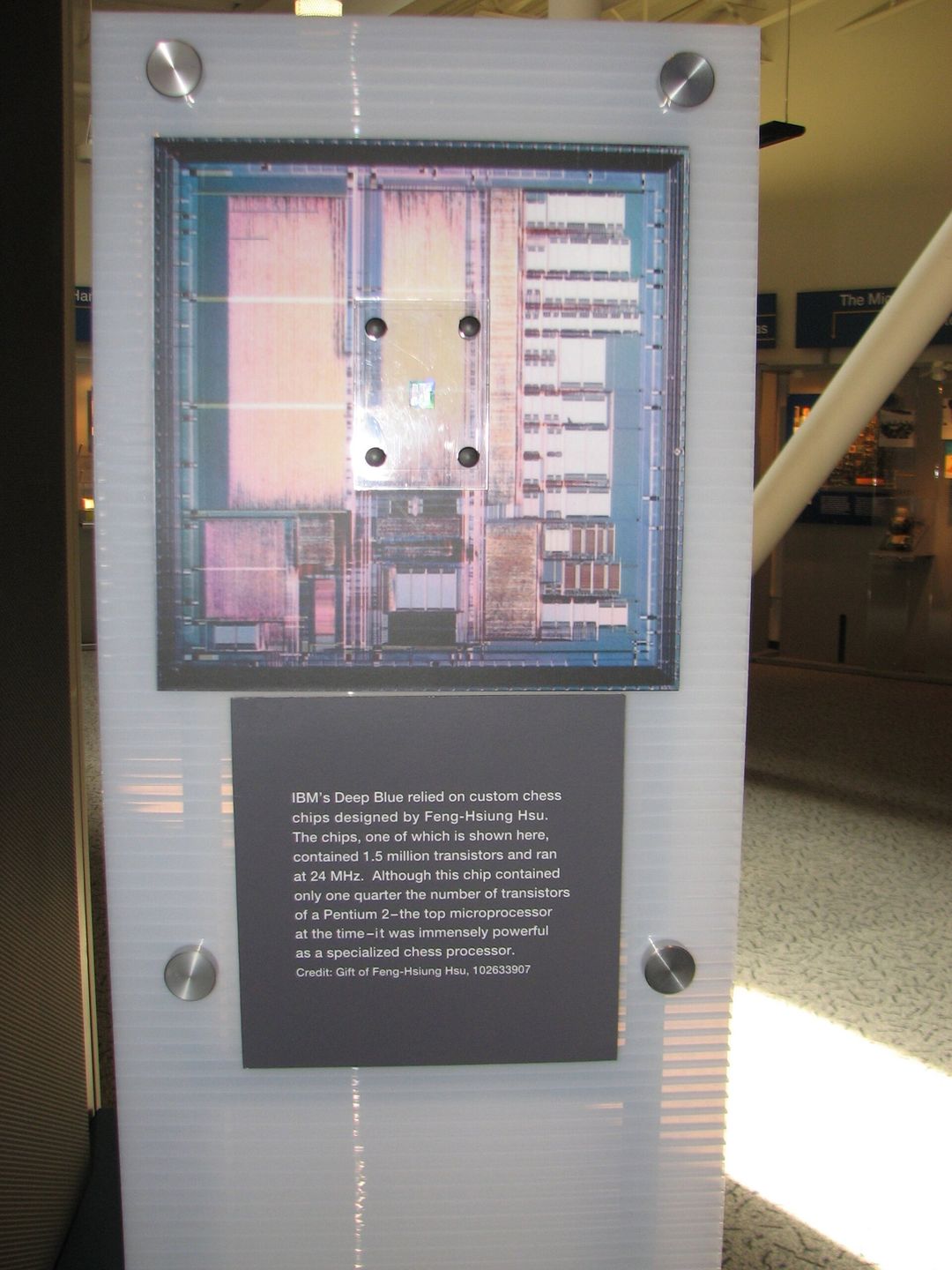
One of Deep Blue's custom chess chips, the specialized silicon behind its 256-processor parallel search of 200 million positions per second. Erik Pitti from San Diego, CA, USA, CC BY 2.0, via Wikimedia Commons
The match changed how people thought about machine intelligence. Before Deep Blue, the assumption was that computers could do repetitive tasks and calculations, but not creative, strategic thinking. Chess was supposed to require something uniquely human. After 1997, that assumption collapsed. If a machine could beat the world champion at chess, what other tasks supposedly requiring human judgment could be automated?
Chess engines have improved exponentially since 1997. Modern programs running on a smartphone can defeat the best human players effortlessly. Grandmasters use engines to prepare, to analyze, and to check their own thinking. The top engines today use neural networks trained on millions of games, learning patterns through self-play rather than explicit programming. They don't just calculate. They develop a kind of learned intuition, making moves that seem inexplicable until you analyze them deeply.
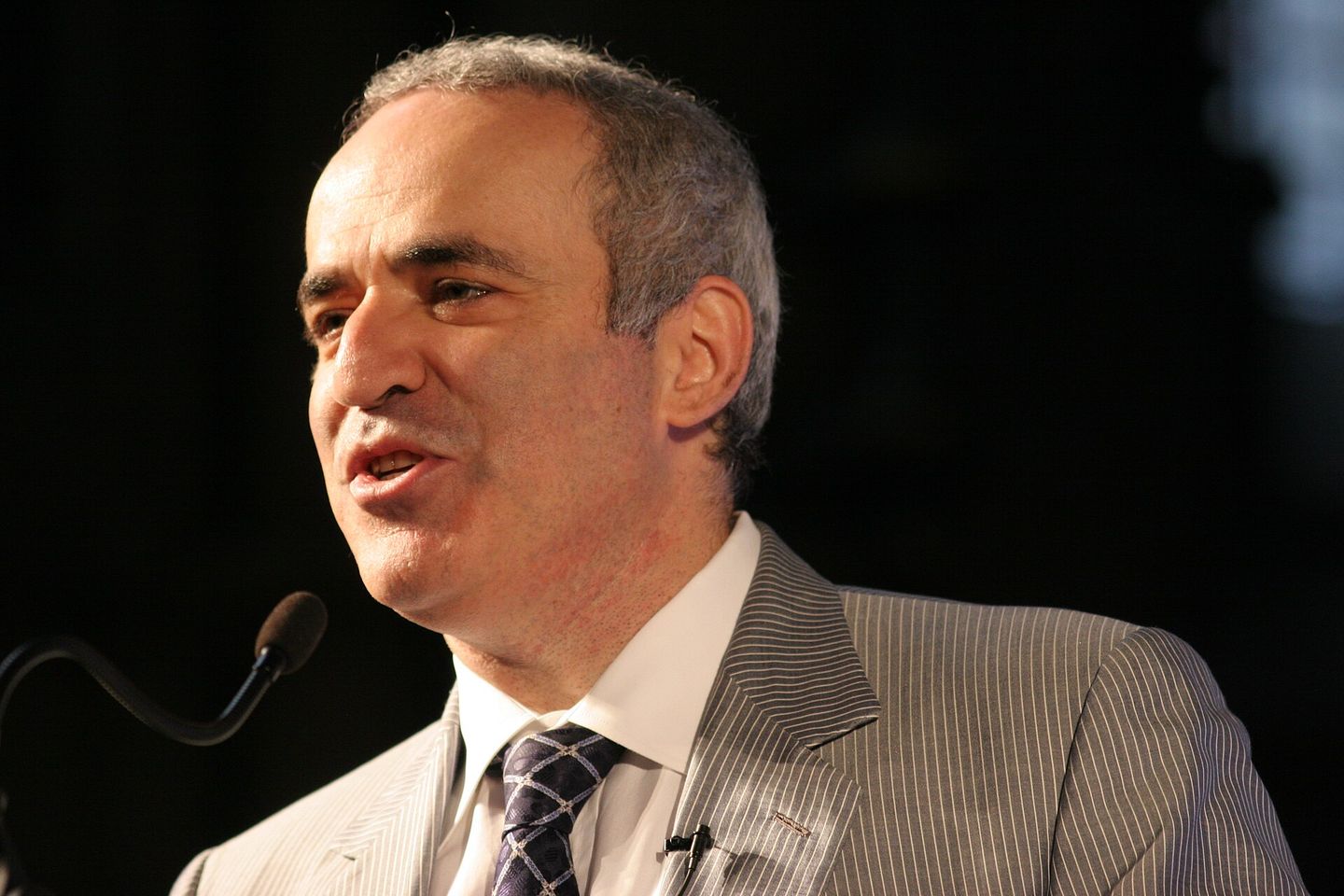
Garry Kasparov, world chess champion from 1985, who faced IBM's Deep Blue in the landmark 1996 and 1997 matches that changed how humanity understood machine intelligence. David.Monniaux, CC BY-SA 3.0, via Wikimedia Commons
Kasparov later became an advocate for human-computer collaboration. He argued that the future wasn't humans versus machines, but humans working with machines to achieve results neither could accomplish alone. He coined the term "advanced chess," where players can consult computers during games. The best teams in these competitions are not the strongest computers or the strongest humans, but the combinations that know how to leverage both.
February 10, 1996, was the day the dream of artificial intelligence started to feel real. Not because Deep Blue was sentient or conscious, but because it demonstrated that machines could surpass human performance in domains we once believed required something ineffable. The question stopped being "Can machines think?" and became "What does thinking mean if a machine can do it better?" That shift, from philosophy to engineering, is where the future began.
studio / on-this-day / Feb 10