studio / on-this-day / Dec 8
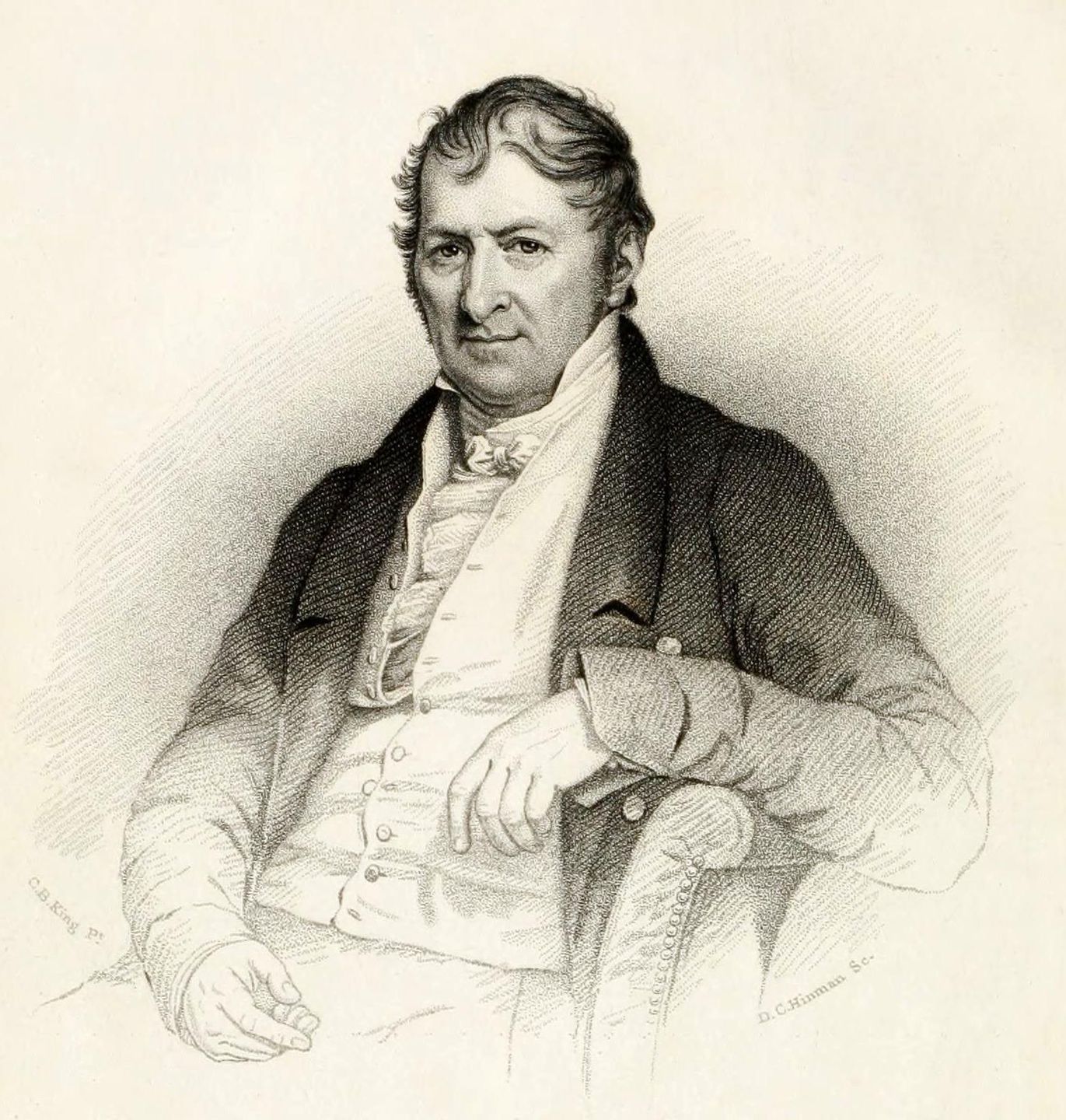
Eli Whitney, portrait by samuel f.b. morse. C.B. King (original portrait), D.C. Hinman (engraver), Public domain, via Wikimedia Commons
The Machine That Changed Cotton
On this day in 1765 — Eli Whitney was born, whose cotton gin remade American agriculture and, tragically, drove slavery deeper.
3 min read
Eli Whitney was born on December 8, 1765, in Westborough, Massachusetts. He grew up on a farm, tinkering with tools and mechanical devices. He was skilled with his hands and good at solving problems. After graduating from Yale in 1792, he traveled south to Georgia, where he planned to work as a tutor. The job fell through. Instead, Whitney visited a plantation owned by Catherine Greene, widow of Revolutionary War General Nathanael Greene. There, he learned about a problem plaguing Southern agriculture: cotton was profitable, but processing it was unbearably slow.
Short-staple cotton, the variety that grew well in the inland South, had sticky green seeds that clung to the fibers. Removing the seeds by hand was labor-intensive. A single worker could clean about one pound of cotton per day. The economics didn't work. Cotton could be grown cheaply, but processing it created a bottleneck. Long-staple cotton, which grew along the coast, had seeds that separated easily, but it required specific climate conditions and was limited in where it could be cultivated. The South needed a machine that could clean short-staple cotton at scale.
Whitney built one. In 1793, he designed the cotton gin, a simple device with a rotating drum fitted with wire hooks. The hooks pulled cotton fibers through a mesh screen, separating them from the seeds, which were too large to pass through. A second drum with brushes swept the clean cotton away from the hooks. The machine could process 50 pounds of cotton per day, a fiftyfold improvement over hand labor. It was elegant, effective, and devastatingly consequential.
The cotton gin made short-staple cotton profitable across the entire South. Within a decade, cotton production exploded. In 1790, the U.S. produced about 1.5 million pounds of cotton. By 1810, it was 93 million pounds. By 1860, it was over 2 billion pounds. The South became the world's leading cotton supplier, fueling textile mills in Britain and the northern United States. Cotton was called "King Cotton" because it dominated the Southern economy and, by extension, much of global trade.
But the cotton gin didn't reduce the need for enslaved labor. It increased it. Before the gin, slavery in the South was declining. Tobacco had exhausted soils, and other crops weren't profitable enough to justify large-scale enslavement. The cotton gin changed that calculus. Plantations expanded. More land was cleared. More enslaved people were needed to plant, tend, and harvest cotton. The gin automated one step in the process, but it made the entire system more valuable, which meant more people were enslaved to support it. Between 1790 and 1860, the enslaved population in the U.S. grew from 700,000 to nearly 4 million, driven largely by cotton.
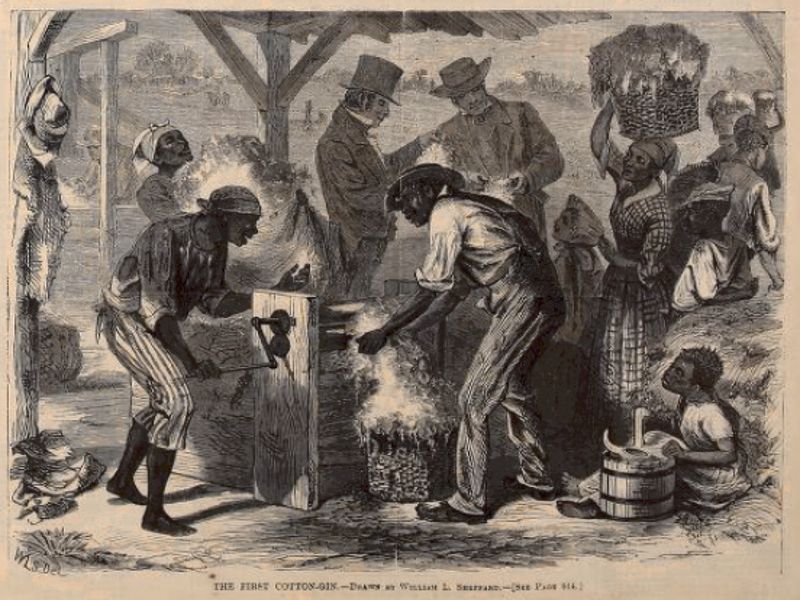
Cotton gin, harper's weekly, 1869. William L. Sheppard, Public domain, via Wikimedia Commons
Whitney patented the cotton gin in 1794, but he struggled to profit from it. The design was simple enough that others copied it. Patent enforcement in the South was weak, and planters built their own gins or bought bootleg versions. Whitney spent years in legal battles trying to protect his patent. He made little money from the invention. Ironically, the machine that reshaped the American economy brought its inventor financial hardship. Whitney eventually shifted focus, moving to manufacturing and pioneering the use of interchangeable parts in firearms production, a concept that influenced modern mass production.
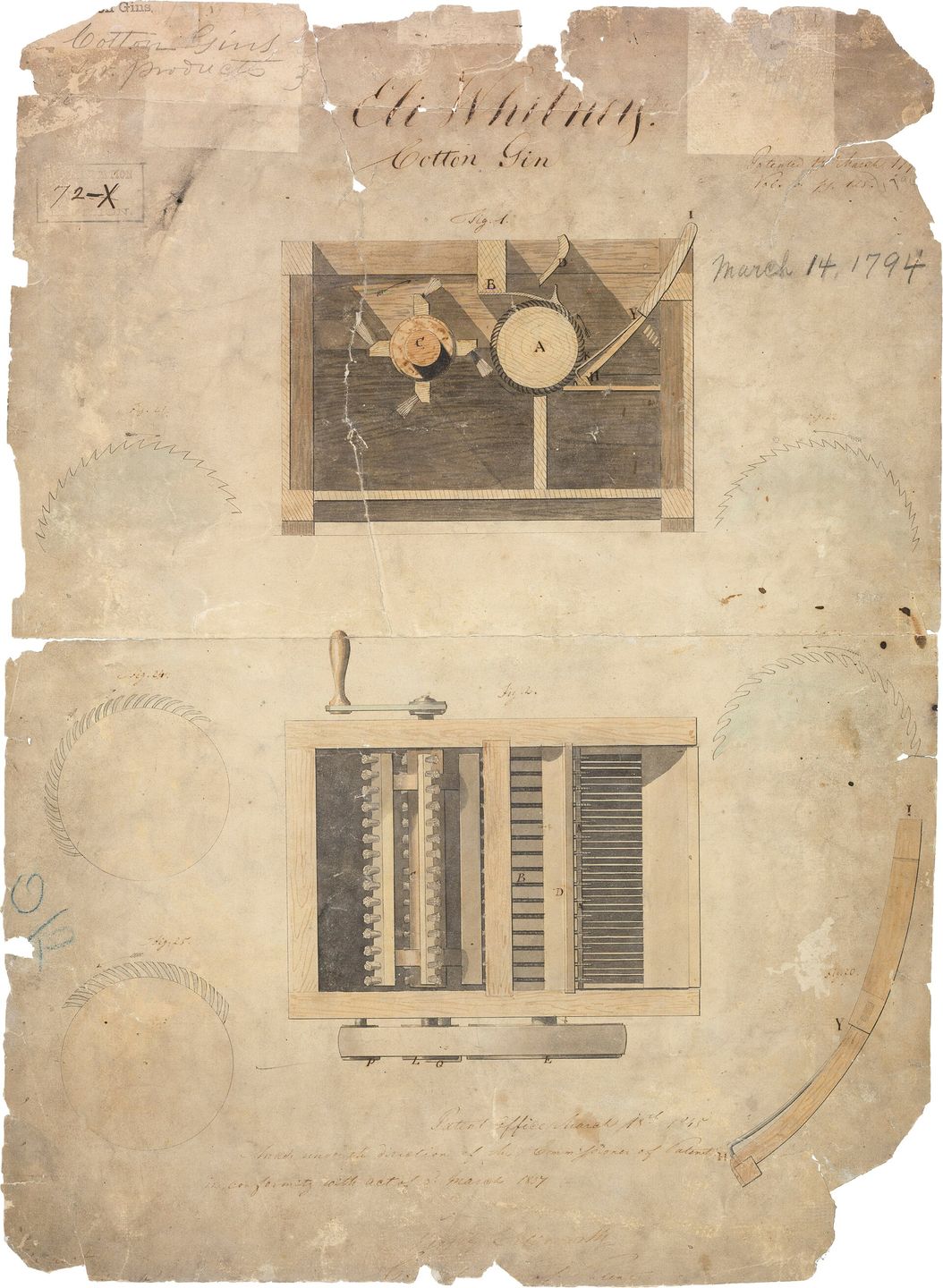
Whitney's original 1794 Cotton gin patent, signed by thomas jefferson. Eli Whitney, Public domain, via Wikimedia Commons
The cotton gin's legacy is inseparable from slavery. The machine didn't cause the institution, but it revitalized it. Slavery might have withered in the early 19th century without a crop profitable enough to sustain it. Cotton gave slavery new economic justification, entrenching it so deeply that it took a civil war to end. The wealth generated by cotton built Southern cities, financed infrastructure, and shaped American politics. But that wealth was built on forced labor, violence, and the systematic denial of human dignity.
Technology is never neutral. The cotton gin was a tool. It processed fibers efficiently. But the system it supported was a moral catastrophe. Whitney's invention is a reminder that innovation doesn't inherently improve the world. It amplifies existing structures. If those structures are unjust, innovation can make the injustice worse. The cotton gin optimized a process. But the process it optimized was slavery. And optimization, in that context, meant suffering at scale.
studio / on-this-day / Dec 8