studio / on-this-day / Dec 6
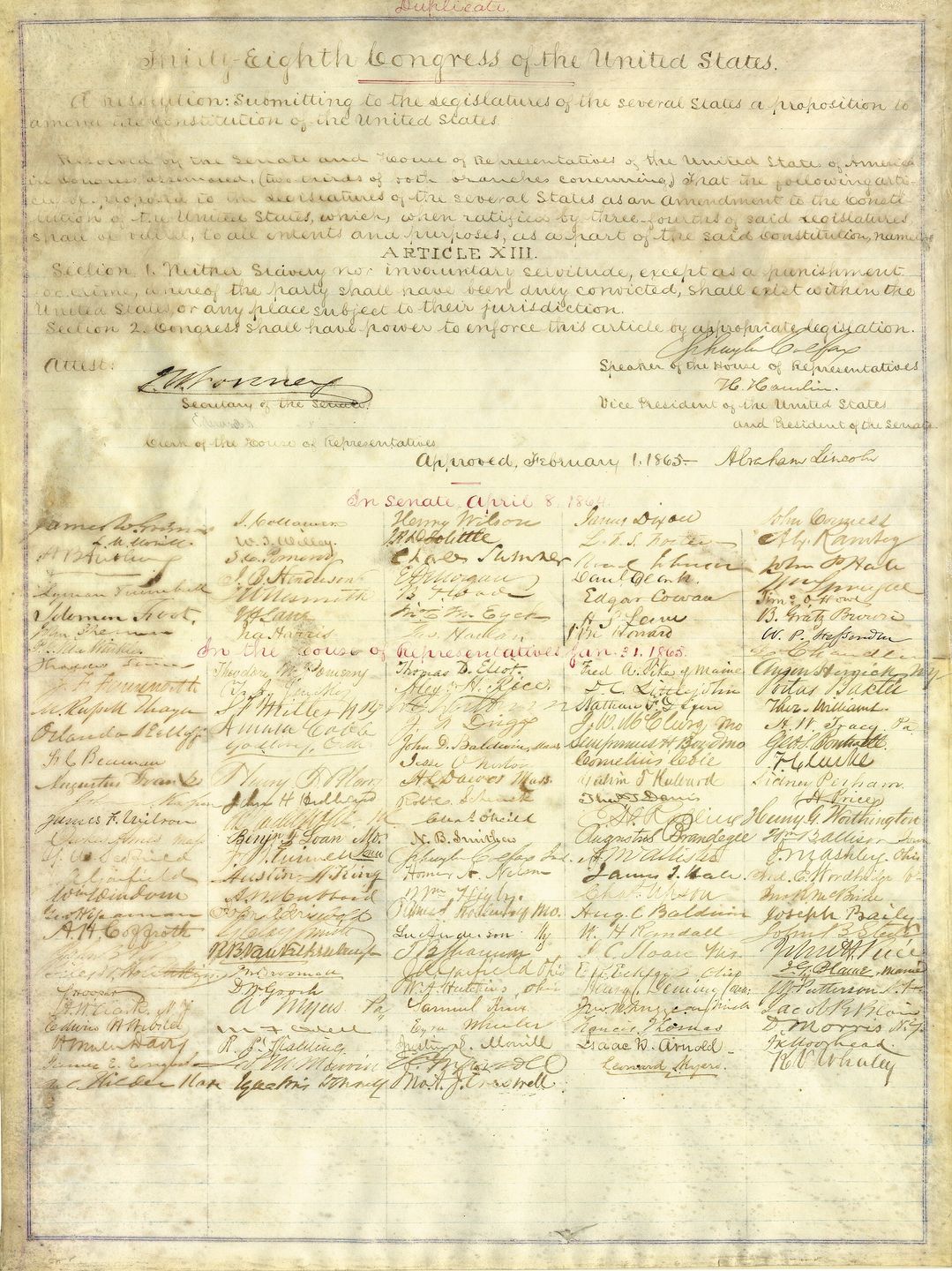
A signed copy of the Thirteenth Amendment, which abolished slavery in the United States. Public domain, via Wikimedia Commons
The Sentence That Ended Slavery
On this day in 1865 — the Thirteenth Amendment was ratified, and with one sentence written into the Constitution, slavery in the United States was abolished.
4 min read
On December 6, 1865, the state of Georgia voted to ratify the Thirteenth Amendment to the United States Constitution, becoming the twenty-seventh state to do so and carrying it past the three-quarters threshold needed to become law. With that vote, one sentence took effect: neither slavery nor involuntary servitude, except as punishment for a crime, would exist within the United States. Slavery, in a nation built substantially upon it, was abolished.
It is worth pausing on the economy of the thing. The institution had shaped two and a half centuries of American life, its laws, its wealth, its geography, its politics. Ending it in the founding document took a single declarative sentence and one subordinate clause. The brevity is not a flaw; it is the point. The most fundamental rules are usually the shortest, because they are meant to be unambiguous and permanent.
The sentence did not write itself, and it did not pass easily. It came only after a war that killed hundreds of thousands, and after decades of argument, organizing, and resistance led by the people with the most at stake, the enslaved and formerly enslaved, and abolitionists Black and white who had insisted for generations that the country's stated ideals and its actual laws could not both stand. The amendment was the legal capstone on a struggle that long preceded it.
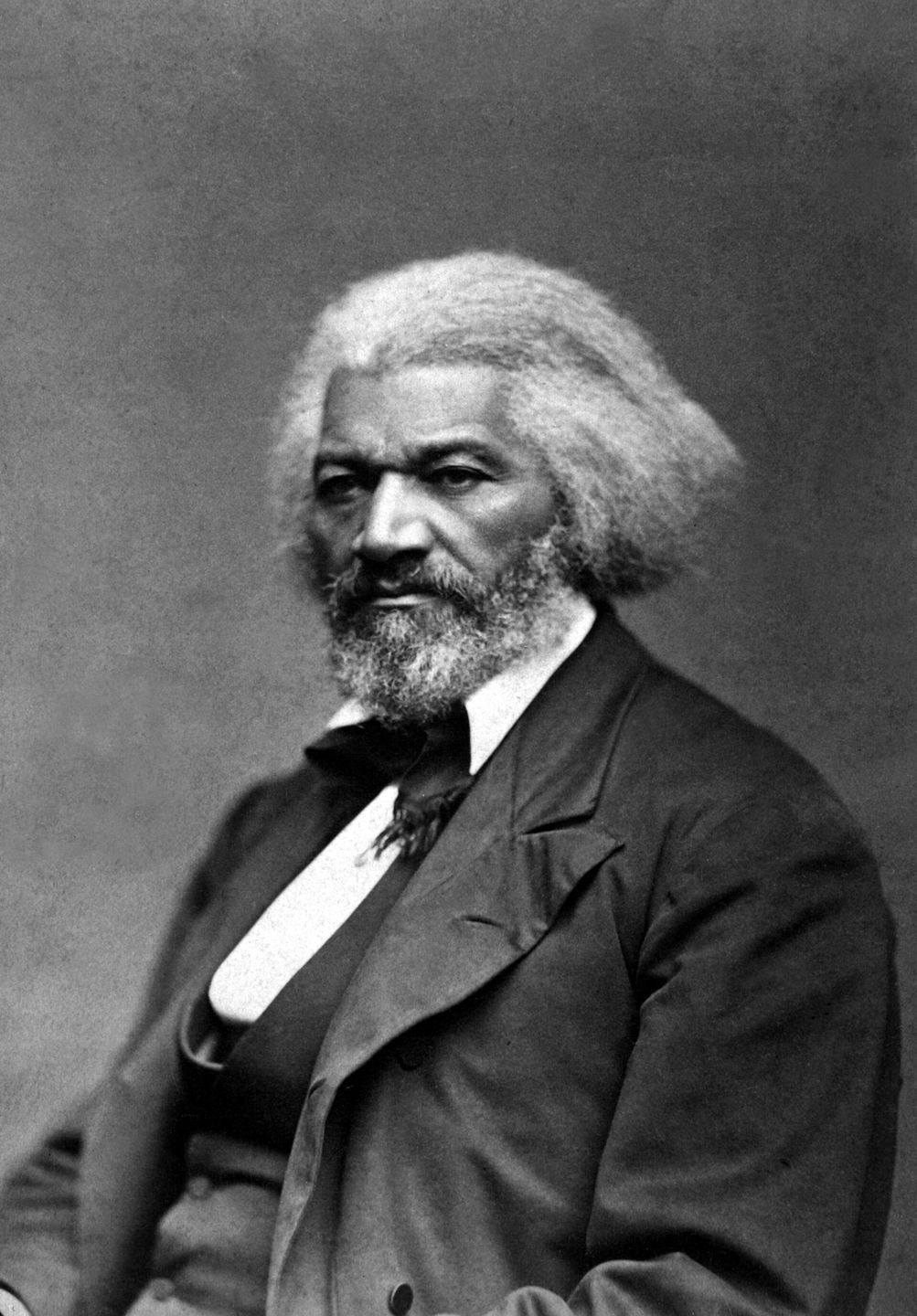
Frederick Douglass, the formerly enslaved abolitionist who argued for decades that the Constitution had to end slavery. Public domain, via Wikimedia Commons
It also carried, from the first draft, a fault line that still matters: the exception clause, punishment for a crime. That qualifier, added deliberately, left a door open. In the years after ratification it would be used to force convict labor onto newly freed people through discriminatory arrests, and its consequences are argued about to this day. Even the cleanest-looking rule can contain, in a few words, a loophole that reshapes everything downstream.
Ratification was not the end of the work; it was the start of a harder phase. A line in the Constitution changed the law instantly and the country slowly. Legal freedom did not by itself deliver land, safety, the vote, or equality, and the century that followed, of Reconstruction, backlash, and segregation, was the long, contested project of trying to make the sentence mean what it said. The document changed in a day. The reality did not.
That gap, between a rule adopted and a rule realized, is one of the most important things to understand about any system. Writing the correct sentence is necessary and nowhere near sufficient. It sets the standard against which everything after can be measured and demanded, but it does not enforce itself. People do, or fail to, over years.
Still, the sentence mattered enormously. For four million people it marked the legal end of being owned, and it wrote into the country's highest law a principle that could then be pointed to, insisted upon, and built on. On December 6, 1865, the United States declared, at last, that no person could own another. Making it true would take far longer. Writing it down was where that work could finally stand.
studio / on-this-day / Dec 6