studio / on-this-day / Dec 5
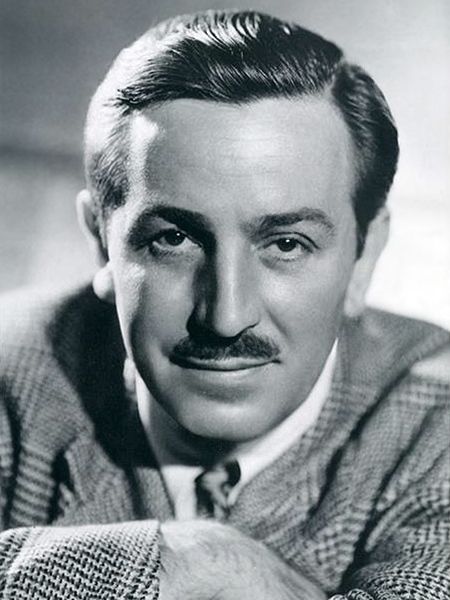
Walt Disney, 1946. Boy Scouts of America, Public domain, via Wikimedia Commons
The Empire Built From Cells
On this day in 1901 — Walt Disney was born, and would build a mouse, a castle, and an empire out of hand-painted cels.
3 min read
Walter Elias Disney was born on December 5, 1901, in Chicago, the fourth son of Elias and Flora Disney. His childhood was unstable. The family moved repeatedly: from Chicago to a farm in Missouri, then to Kansas City, then back to Chicago. His father was stern, often harsh. Walt found refuge in drawing. He sketched horses, neighbors, anything he could see. At 16, he lied about his age to drive an ambulance for the Red Cross in France during World War I. He never saw combat. He spent the war doodling cartoons on the side of his ambulance.
After the war, Disney returned to Kansas City and found work as a commercial illustrator. He became fascinated by animation, a new medium where drawings could move. Early animation was crude: characters jerked across the screen, movements were stiff, and stories were thin. Disney saw potential. In 1923, he moved to Hollywood with $40 in his pocket and a half-finished animated reel. He and his brother Roy founded Disney Brothers Studio, later renamed Walt Disney Productions. Their first success was a character called Oswald the Lucky Rabbit. Then Disney lost the rights to Oswald in a contract dispute. He needed a new character, one he owned completely.
In 1928, Disney created Mickey Mouse. The character debuted in Steamboat Willie, the first cartoon with synchronized sound. Audiences had never seen anything like it. Mickey whistled, talked, and moved in time with music. The synchronization was precise. Every footstep, every gesture matched the audio. It was a technical achievement, but it was also storytelling. Mickey had personality. He was mischievous, optimistic, and expressive. The mouse became a global icon, but Disney didn't stop there. He pushed animation further.
In 1937, Disney released Snow White and the Seven Dwarfs, the first full-length animated feature film. Hollywood insiders called it "Disney's Folly." They believed audiences wouldn't sit through 80 minutes of cartoons. Disney bet everything on it. He mortgaged his house, maxed out credit, and developed new animation techniques. The multiplane camera created depth by shooting through layers of cel animation at different distances, giving scenes a three-dimensional quality. The result was stunning. Snow White was both a technical and commercial triumph, earning $8 million during the Great Depression. It proved animation could be art.
Disney followed Snow White with Pinocchio, Fantasia, Dumbo, and Bambi. Each film advanced the medium. Fantasia synchronized animation to classical music and experimented with abstract imagery. Bambi rendered naturalistic movement and realistic fire effects. Disney wasn't just making cartoons. He was building a design language for emotional storytelling through animation. His studio became a laboratory where artists studied motion, anatomy, and physics to make drawings feel alive.

Adventureland at Disneyland, Anaheim, California. B64 at English Wikipedia, CC BY-SA 3.0, via Wikimedia Commons
After World War II, Disney expanded beyond film. In 1955, he opened Disneyland in Anaheim, California. It wasn't a traditional amusement park. It was a designed environment, a physical space organized around narrative. Each "land" had a theme. Main Street USA evoked small-town America. Tomorrowland imagined the future. Frontierland recreated the Old West. Disney called it a "three-dimensional film." Every detail, from architecture to landscaping to the uniforms cast members wore, was engineered to maintain immersion. Disneyland was experience design at scale, a precursor to modern themed entertainment and user experience design.
Disney died in 1966, but the company he built kept growing. Walt Disney World opened in Florida in 1971. The corporation acquired Pixar, Marvel, and Lucasfilm. Disney+ became one of the largest streaming platforms. The company's market value exceeds $150 billion. But the foundation of Disney's empire remains animation: hand-drawn cells, each one a static image, sequenced together to create the illusion of life. Twenty-four frames per second. Thousands of drawings for a single scene. Labor-intensive, painstaking, analog.
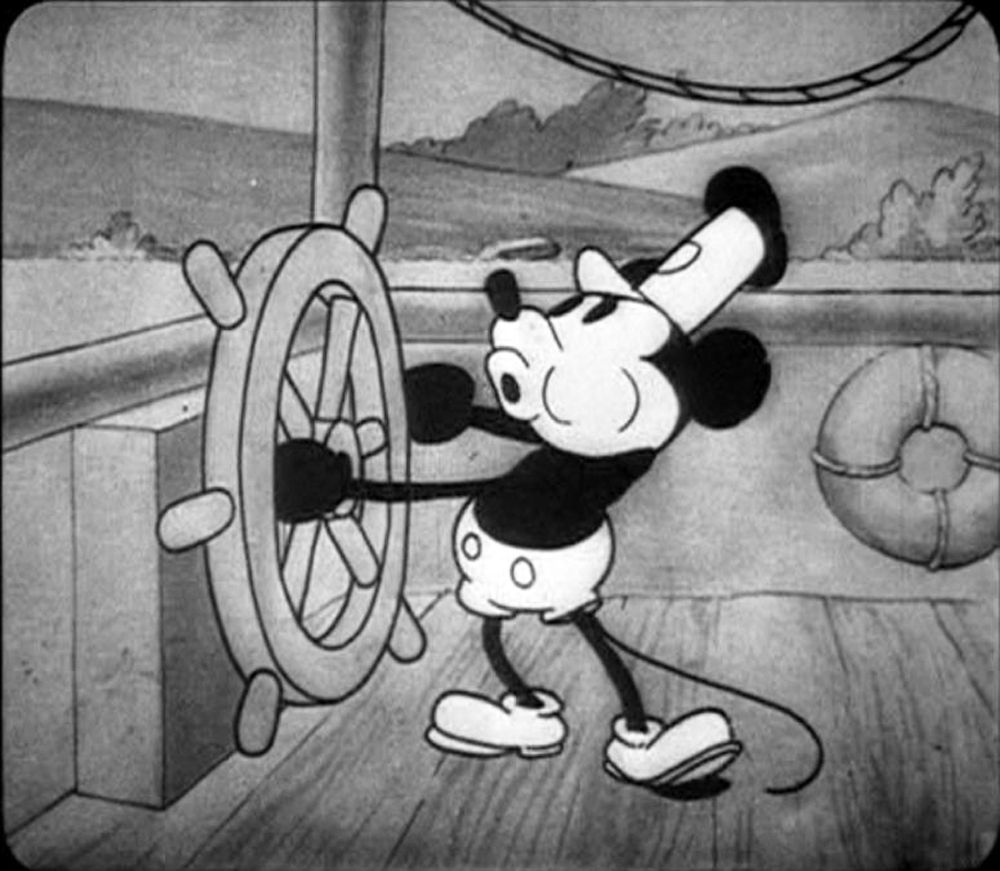
Mickey Mouse in Steamboat Willie, 1928, the first cartoon with synchronized sound. Walt Disney / Ub Iwerks, Public domain, via Wikimedia Commons
What Disney understood was that storytelling could be systematized. Animation required discipline, precision, and process. Characters needed model sheets to ensure consistency across artists. Scenes required storyboards to plan sequences before animators drew them. Audio had to sync frame-by-frame with visuals. Disney turned creativity into a production pipeline. He industrialized imagination, taking something handmade and scaling it without losing quality. The mouse, the castle, the theme parks, the media empire: all of it started with a man who believed drawings could tell stories better than anything else. And he was right.
studio / on-this-day / Dec 5