studio / on-this-day / Dec 3
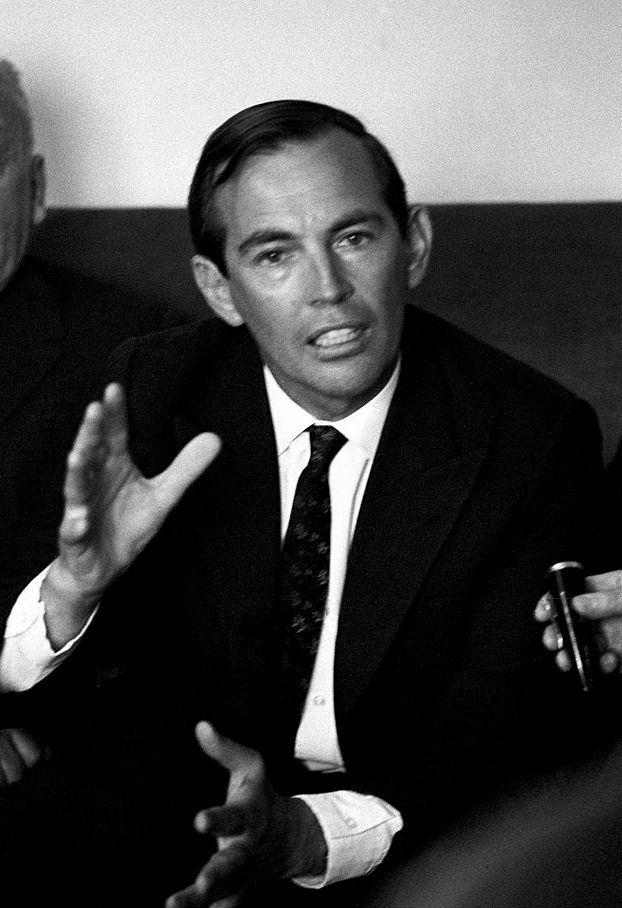
Dr. christiaan Barnard, 1969. Mario De Biasi (Mondadori Publishers), Public domain, via Wikimedia Commons
The Transplanted Heart
On this day in 1967 — Christiaan Barnard performed the first human heart transplant, and the body itself became something you could redesign.
3 min read
At 6 a.m. on December 3, 1967, in Groote Schuur Hospital in Cape Town, South Africa, a team led by Dr. Christiaan Barnard removed the heart from 25-year-old Denise Darvall, who had been declared brain dead following a car accident the day before, and transplanted it into the chest of 54-year-old Louis Washkansky, a man whose own heart was failing from chronic disease. The operation took nine hours. When Barnard cross-clamped the aorta and stopped Washkansky's diseased heart, the patient was technically dead. When Darvall's heart restarted in Washkansky's chest four minutes later, Barnard had achieved what many thought impossible: he had replaced a human heart with another and kept the patient alive.
The transplant was not just surgery. It was systems engineering applied to the human body. Barnard had to solve problems of tissue compatibility, organ preservation, surgical technique, and post-operative immunosuppression. Hearts deteriorate rapidly once removed from a donor. Darvall's heart was cooled and perfused with oxygenated blood during transport to preserve viability. Barnard's team worked in parallel, preparing Washkansky while another surgical team harvested the donor heart. The coordination was precise. Every minute mattered.
Washkansky's new heart beat on its own. He regained consciousness. He spoke with his wife. The world's media descended on Cape Town. For 18 days, Washkansky's progress was front-page news around the globe. He was the first human to live with another person's heart. Then, weakened by immunosuppressive drugs meant to prevent his body from rejecting the foreign organ, Washkansky contracted pneumonia. He died on December 21. The heart itself never failed. It was the system around it, the delicate balance between rejection and infection, that collapsed.
Barnard's achievement redefined the boundaries of medicine. Before December 3, 1967, the heart was untouchable, metaphysically and medically. It was the seat of life, the organ that, once it stopped, meant death. Transplanting it required accepting a radical idea: that the heart is a pump. A machine. And machines can be replaced. Barnard, trained as a cardiac surgeon but influenced by his experience with experimental surgery on dogs, approached the heart as a mechanical component in a biological system. If a pump fails, you swap it out.
The ethics were murky. Denise Darvall's father consented to donate his daughter's heart, but the concept of brain death was still controversial. Some critics argued that Darvall was killed to save Washkansky. Barnard maintained that she was already gone, that brain death is death, and that harvesting her organs honored her life rather than ending it. The transplant forced medicine and law to define when life ends. South Africa, still under apartheid, did not allow Darvall, who was white, to donate organs to a non-white recipient. The racism embedded in the healthcare system limited who could be saved and by whom.
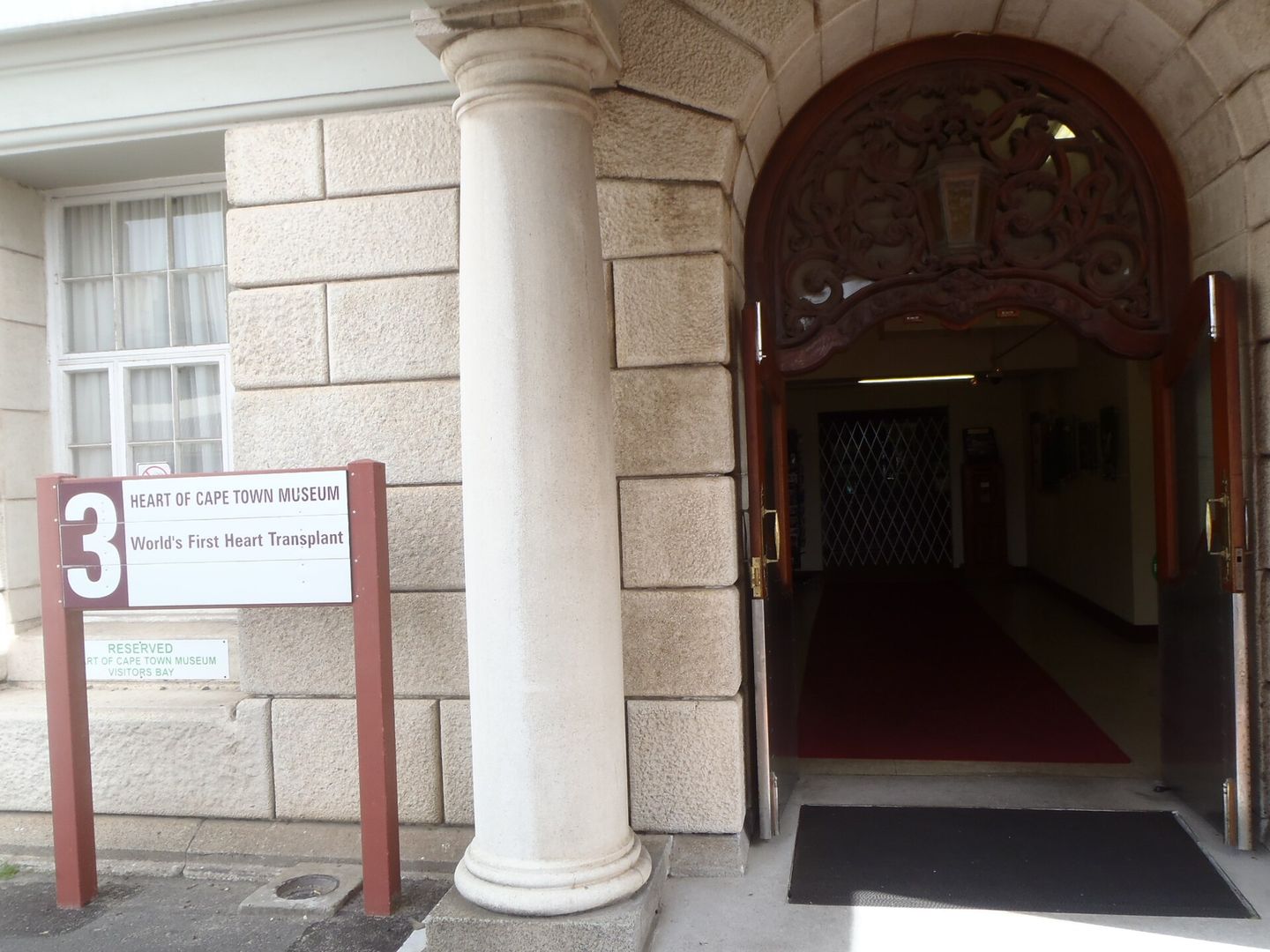
Groote Schuur Hospital, Cape Town, South Africa. Tiiu Sild, Public domain, via Wikimedia Commons
Barnard performed a second transplant in January 1968. The patient, Philip Blaiberg, lived for 19 months. Four of Barnard's first ten heart transplant patients survived over a year, with two living for 13 and 23 years. The technique improved. Anti-rejection drugs advanced. Just as the first kidney transplant in 1954 had proven organ transplantation was viable, Barnard's work proved the heart could be transplanted. Today, over 5,000 heart transplants are performed annually worldwide. Patients routinely live decades with transplanted hearts. The procedure Barnard pioneered is now standard.
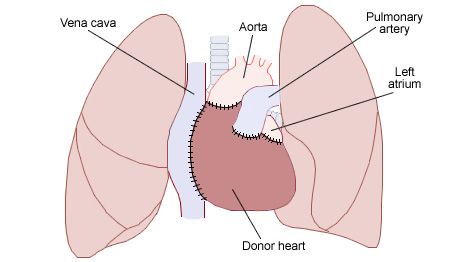
How a heart transplant connects the donor organ to the recipient's vessels. CC BY-SA 3.0, via Wikimedia Commons
What makes the first heart transplant historically significant is not just the surgical skill but the conceptual leap. Barnard demonstrated that human biology is modular. Organs can be removed, replaced, and integrated into a living system if you understand the underlying architecture. The heart is not mystical. It's functional. And function can be restored by design. The transplant was a form of repair at the most fundamental level. Washkansky lived only 18 days, but his survival proved the concept. The heart that beat in his chest was not his, yet it was his. The boundaries of self, of identity, of what it means to be alive, all shifted. The body became something that could be redesigned, one component at a time.
studio / on-this-day / Dec 3