studio / on-this-day / Dec 16
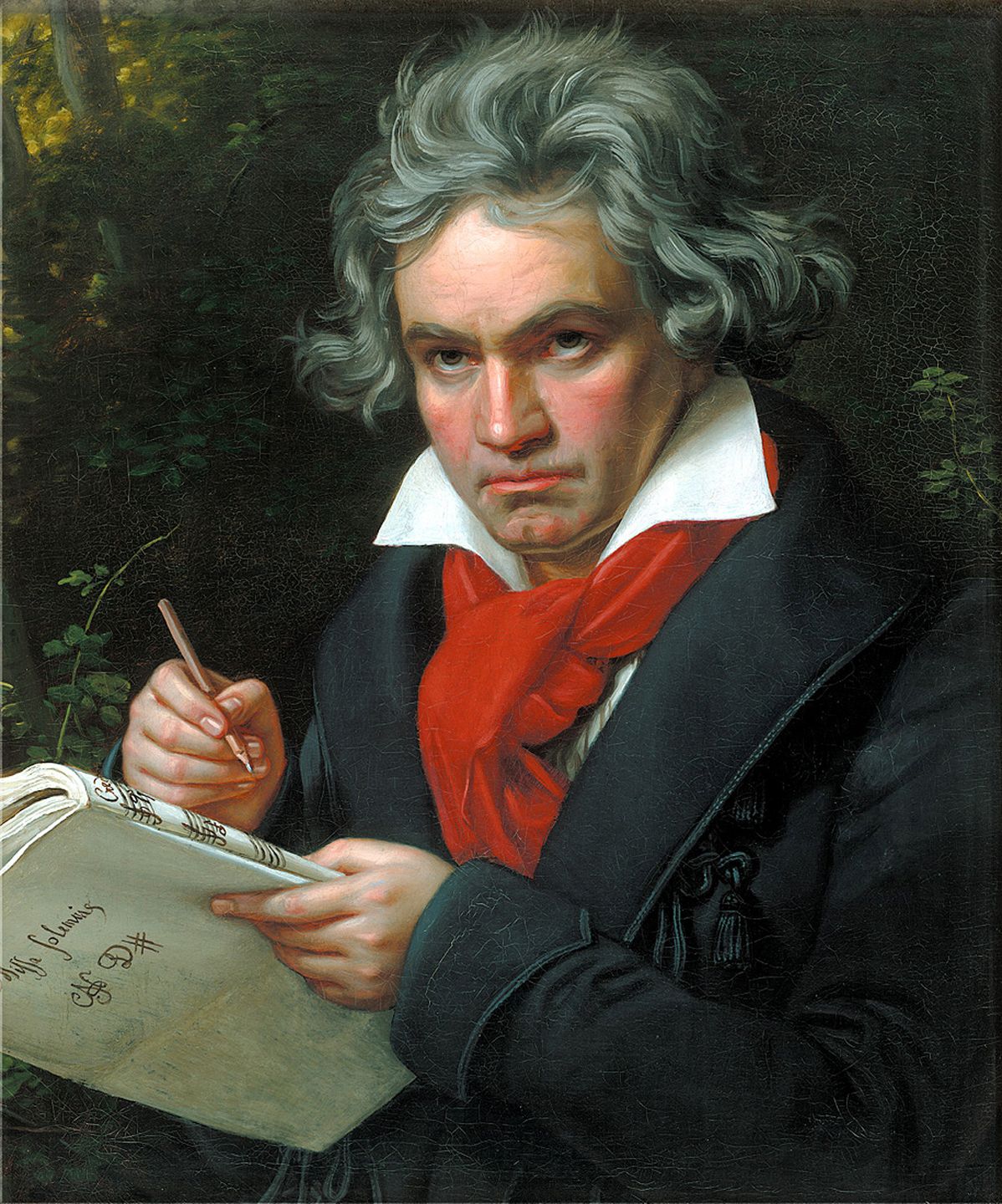
Ludwig van Beethoven, joseph karl stieler, 1820. Joseph Karl Stieler, Public domain, via Wikimedia Commons
Composing in Silence
On this day in 1770 — Ludwig van Beethoven was born, and would write his greatest music after losing the ability to hear it.
3 min read
Ludwig van Beethoven was born in Bonn on December 16, 1770, into a family where music was work, not art. His father, a court musician and alcoholic, recognized talent early and pushed it hard. Young Ludwig performed publicly at seven. By eleven he was composing. By seventeen he was playing for Mozart, who said the boy would give the world something to talk about.
Beethoven arrived in Vienna in 1792, the city where he would spend the rest of his life. He came as a pianist first, a composer second. His improvisations were famous. He could take any theme, no matter how simple, and build entire worlds from it in real time. People spoke of his playing the way they spoke of thunderstorms, something powerful and dangerous and impossible to look away from.
Then, in his late twenties, he began losing his hearing. The exact cause remains unknown. Some scholars point to lead poisoning, others to an autoimmune disorder. What matters is that Beethoven, whose entire life was organized around sound, was becoming deaf. He wrote to his brothers in 1802, a letter known as the Heiligenstadt Testament, describing his despair. He had contemplated suicide. Only his art held him back.
What followed was not surrender but reinvention. Beethoven stopped performing in public. He withdrew from the social world. And he composed. By 1814 he was almost entirely deaf. By 1818 he could not hear at all. Yet between 1803 and his death in 1827, he wrote symphonies three through nine, the late piano sonatas, the Missa Solemnis, and the late string quartets. These works are not just his greatest. They are among the greatest works in Western music.

The house in Bonn where Beethoven was born in 1770. Asif Masimov, CC BY-SA 3.0, via Wikimedia Commons
The Ninth Symphony, completed in 1824 when he was completely deaf, includes the Ode to Joy. At its premiere, Beethoven stood on stage, keeping tempo for an orchestra he could not hear. When it ended, the audience erupted. He did not know. A singer had to turn him around so he could see the applause. The work redefined what a symphony could be, adding voices to instruments, making the human voice part of the architecture.
Beethoven's deafness forced him to compose entirely in his mind. He could not test harmonies on a piano. He had to imagine every note, every instrument, every interaction. This was composition as pure thought, music designed in silence. In a strange way, losing his hearing gave him freedom. He was no longer bound by what sounded good in a room. He could write music that existed only in the abstract until someone else played it.
Constraint has always been a design tool. Limitations force invention. Twitter's 140 characters made people write differently. Leonardo da Vinci's notebooks, written in mirror script, created a private language. Beethoven's deafness pushed him beyond the conventions of his time. The late quartets are so strange, so exploratory, that many of his contemporaries did not know what to make of them. It took decades for audiences to catch up.
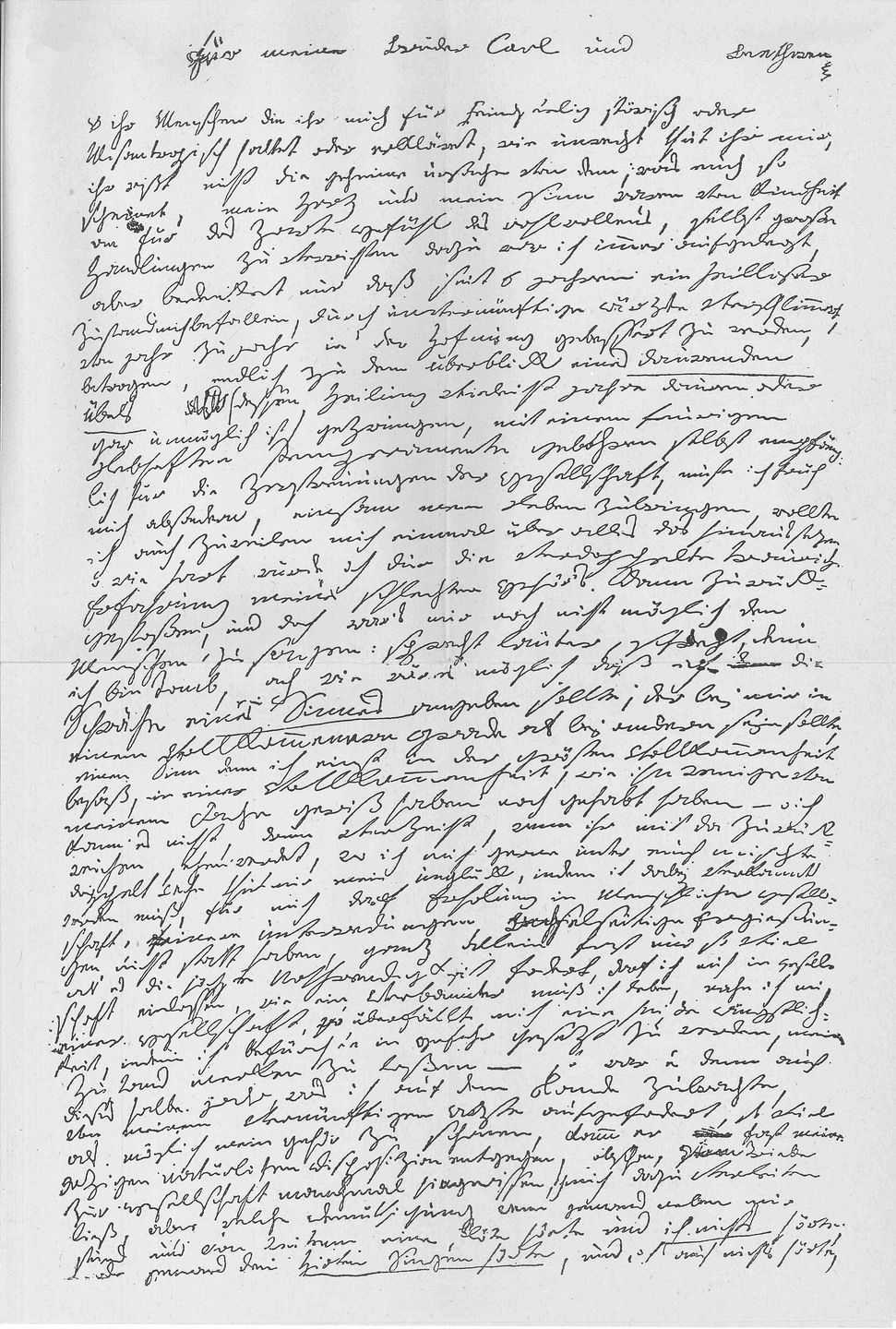
First page of the Heiligenstadt Testament, the 1802 letter where Beethoven confronted his deafness. Ludwig van Beethoven, Public domain, via Wikimedia Commons
Beethoven died on March 26, 1827, during a thunderstorm. According to one witness, he raised a fist toward the sky as lightning flashed. It is probably apocryphal, but it fits. He spent his life fighting against limitation and turning obstacles into fuel. Deafness should have ended his career. Instead, it freed him to become something more than a performer. He became an architect of sound, designing structures that still stand two centuries later, built entirely in the silence of his mind.
studio / on-this-day / Dec 16