studio / on-this-day / Nov 8
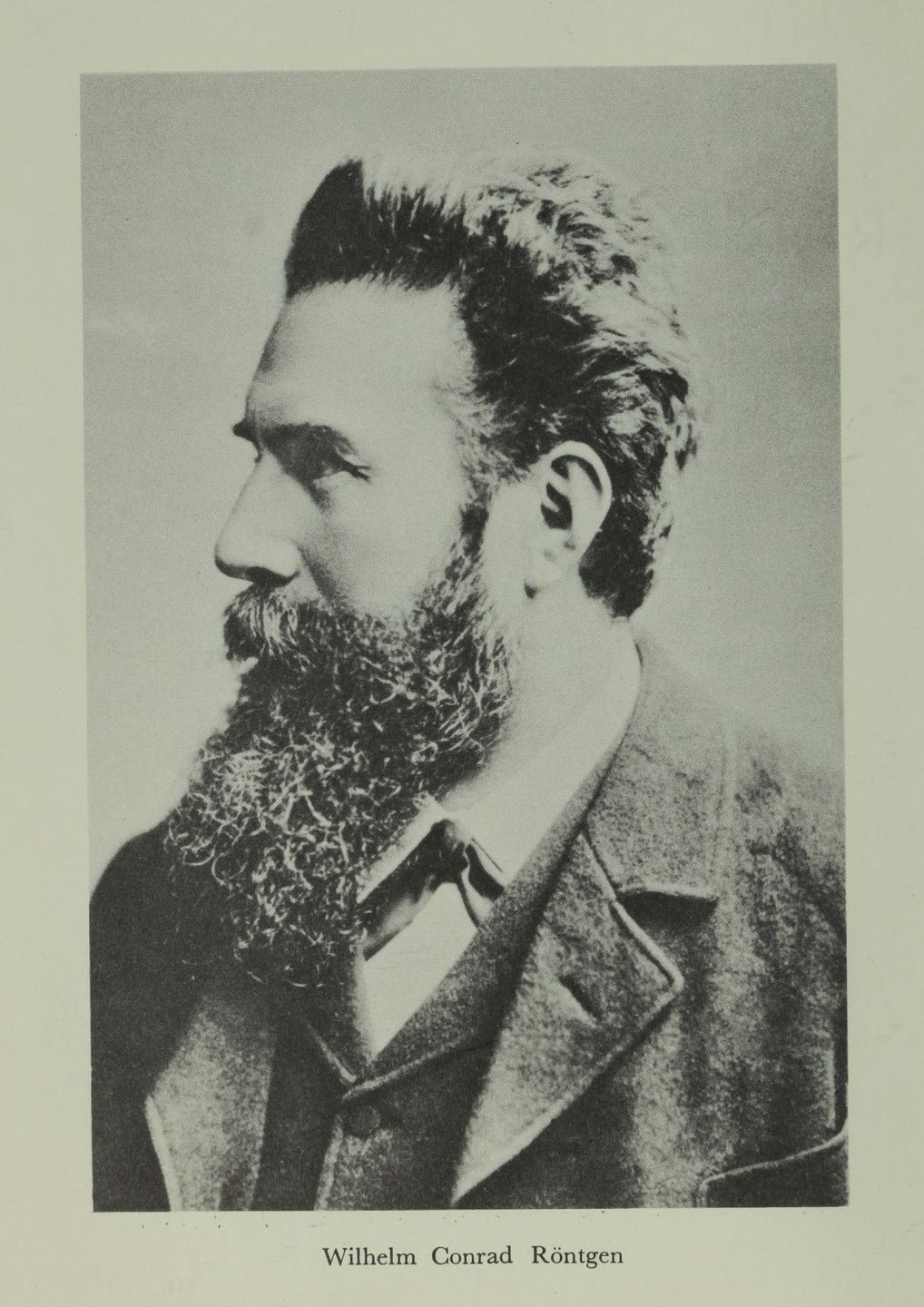
Wilhelm röntgen. Public domain, via Wikimedia Commons
Seeing Through Everything
On this day in 1895 — Wilhelm Röntgen stumbled onto X-rays and saw straight through solid matter for the first time.
3 min read
On the evening of November 8, 1895, Wilhelm Röntgen was working alone in his laboratory at the University of Würzburg. He was experimenting with cathode rays, beams of electrons generated inside a glass tube when high voltage was applied. The tube was wrapped in black cardboard to block all visible light. He turned off the lights, powered on the tube, and noticed something strange: a screen coated with barium platinocyanide across the room was glowing faintly. The screen was nine feet away, too far for cathode rays to travel. Something else was coming out of the tube.
Röntgen spent the next seven weeks investigating. He found that the mysterious rays passed through wood, paper, and human flesh, but were blocked by metal and bone. He placed his wife's hand between the tube and a photographic plate. When he developed the plate, it showed the bones of her fingers and her wedding ring suspended in ghostly shadow. She reportedly looked at the image and said, "I have seen my death." It was the first X-ray photograph, a glimpse inside the body without cutting it open.
Röntgen called them "X-rays" because their nature was unknown. He published his findings on December 28, 1895, in a paper titled "On a New Kind of Rays." He sent copies to physicists across Europe, along with sample photographs. The response was immediate and global. Within weeks, newspapers were running stories about the rays that could see through walls. Within months, doctors were using X-rays to locate bullets and broken bones. Within a year, X-ray machines were being sold commercially. It was the fastest adoption of a scientific discovery in history.
The medical applications were obvious. Surgeons could see inside patients without surgery. Broken bones could be diagnosed accurately. Foreign objects could be located and removed. But the technology also created new risks that weren't understood for decades. Early X-ray operators suffered burns, hair loss, and cancer. Many died from prolonged exposure. Röntgen himself refused to patent the technology, believing it should be freely available for the benefit of humanity. Others were not so careful, and the lack of regulation led to reckless experimentation.
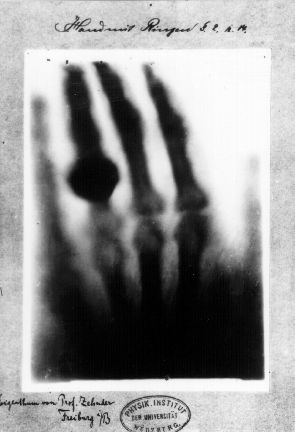
The first medical x-ray, röntgen's wife's hand, December 22, 1895. Wilhelm Röntgen., Public domain, via Wikimedia Commons
X-rays also revealed something fundamental about the nature of light. They were electromagnetic radiation, like visible light, but with much shorter wavelengths. This discovery helped establish that light exists on a continuous spectrum, from radio waves to gamma rays, each with different properties and uses. The X-ray was the first technology to manipulate the invisible parts of that spectrum for practical purposes, opening the door to radar, radio, and eventually wireless communication.
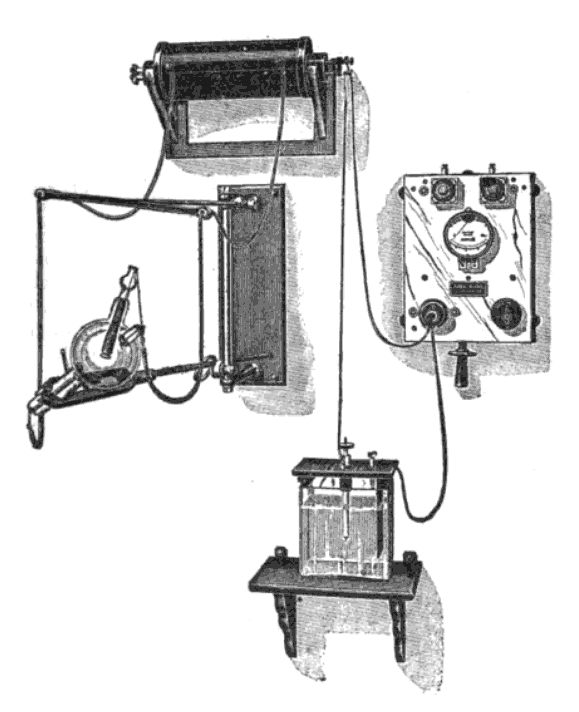
Diagram of a Crookes-tube x-ray apparatus, the Kind of vacuum tube röntgen used to generate the Rays. Sinclair Tousey, Public domain, via Wikimedia Commons
Röntgen won the first Nobel Prize in Physics in 1901. He donated the prize money to his university. He refused to commercialize his discovery, believing that scientific knowledge should belong to everyone. He was a meticulous experimentalist who avoided speculation and public attention. When asked what he thought when he first saw the glow on that November night, he said only that he didn't think, he investigated. X-rays became ubiquitous in medicine, security, and scientific research. They remain one of the most useful tools ever discovered, a way to see what should be invisible, to make the interior exterior, and to diagnose without destruction. It all started with a glow in a dark room and a scientist who noticed.
studio / on-this-day / Nov 8