studio / on-this-day / Nov 7
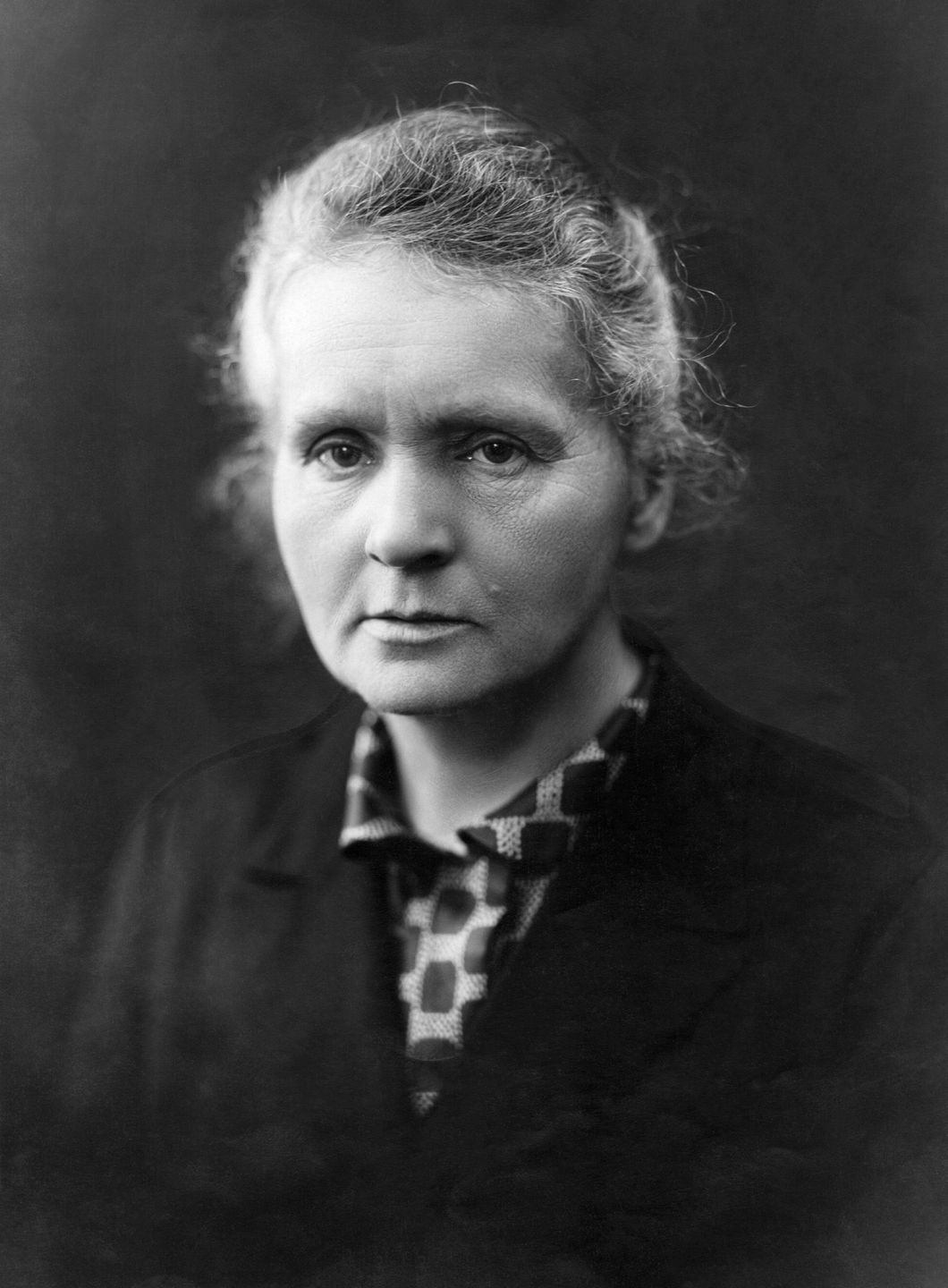
Marie Curie in her laboratory, circa 1920s. Henri Manuel, Public domain, via Wikimedia Commons
The Woman Who Glowed
On this day in 1867 — Marie Curie was born, and would win two Nobel Prizes and pull two new glowing elements out of tons of ore.
3 min read
Maria Sklodowska was born in Warsaw on November 7, 1867, in a Poland that didn't exist on any map. The country had been partitioned among Russia, Prussia, and Austria. She grew up under Russian occupation, in a household where education was treated as resistance. Her father taught mathematics and physics. Her mother ran a boarding school. Both died before Maria turned 15. She taught herself to survive and kept learning.
At 24, she moved to Paris to study physics at the Sorbonne. Women couldn't attend university in Russian-controlled Poland. In France, they could, barely. She lived in a sixth-floor garret, so cold in winter that water froze in the basin. She survived on bread, chocolate, and tea, fainting occasionally from malnutrition. She graduated first in her class in physics, second in mathematics. She met Pierre Curie, a physicist with his own laboratory. They married in 1895. She kept her own name and added his. Marie Curie was a constructed identity, built for a career that wasn't supposed to exist.
In 1896, Henri Becquerel discovered that uranium emitted mysterious rays. Marie chose this phenomenon as the subject of her doctoral research. She and Pierre set up a makeshift laboratory in an abandoned shed with a leaky roof and no ventilation. Using an electrometer Pierre had invented, she measured the radiation from uranium compounds. She discovered that the intensity of radiation depended only on the amount of uranium present, not on its chemical form. This meant radiation was an atomic property, not a molecular one. She had found something fundamental.
She tested every element she could find. Two uranium ores, pitchblende and chalcolite, were more radioactive than pure uranium, which meant they contained unknown elements. She and Pierre spent four years processing tons of pitchblende, boiling it down, isolating fractions, measuring radiation. In 1898, they announced two new elements: polonium, named for her homeland, and radium, which glowed faintly blue in the dark. Radium was a million times more radioactive than uranium. It took four more years to isolate a single gram of radium chloride from eight tons of ore.
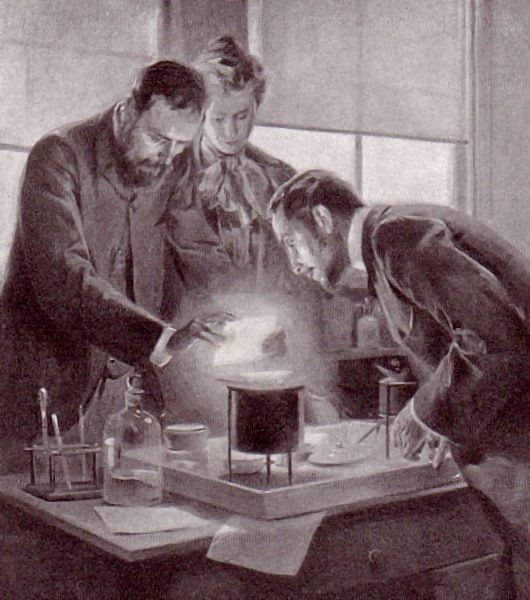
An illustration of Marie Curie at work with radium, by andré Castaigne. André Castaigne, Public domain, via Wikimedia Commons
In 1903, Marie, Pierre, and Becquerel shared the Nobel Prize in Physics for their work on radioactivity. Marie was the first woman to win a Nobel Prize. In 1906, Pierre was killed by a horse-drawn cart on a rainy Paris street. Marie took over his teaching position at the Sorbonne, becoming the first woman to teach there. She kept working. In 1911, she won a second Nobel Prize, this time in Chemistry, for isolating pure radium. She remains the only person to win Nobel Prizes in two different sciences.
The work killed her slowly. She carried test tubes of radium in her pockets. She kept samples in her desk drawer because she liked the glow. She had no idea that radiation was destroying her bone marrow. Her notebooks are still radioactive and stored in lead-lined boxes. She developed cataracts and chronic anemia. She died of aplastic anemia in 1934, her body saturated with radiation from decades of handling radioactive materials without protection.
Marie Curie proved that science is a process, not a credential. She had no laboratory, no funding, and no institutional support at the start. She built everything herself: the methods, the equipment, the career. She discovered two elements and founded the science of radioactivity. She did it in a shed, with borrowed equipment, while raising two daughters and fighting the French Academy of Sciences, which refused to admit women until 1979. The periodic table remembers her twice: curium, element 96, named in honor of Marie and Pierre together. She didn't need permission. She just needed a question and the persistence to answer it.
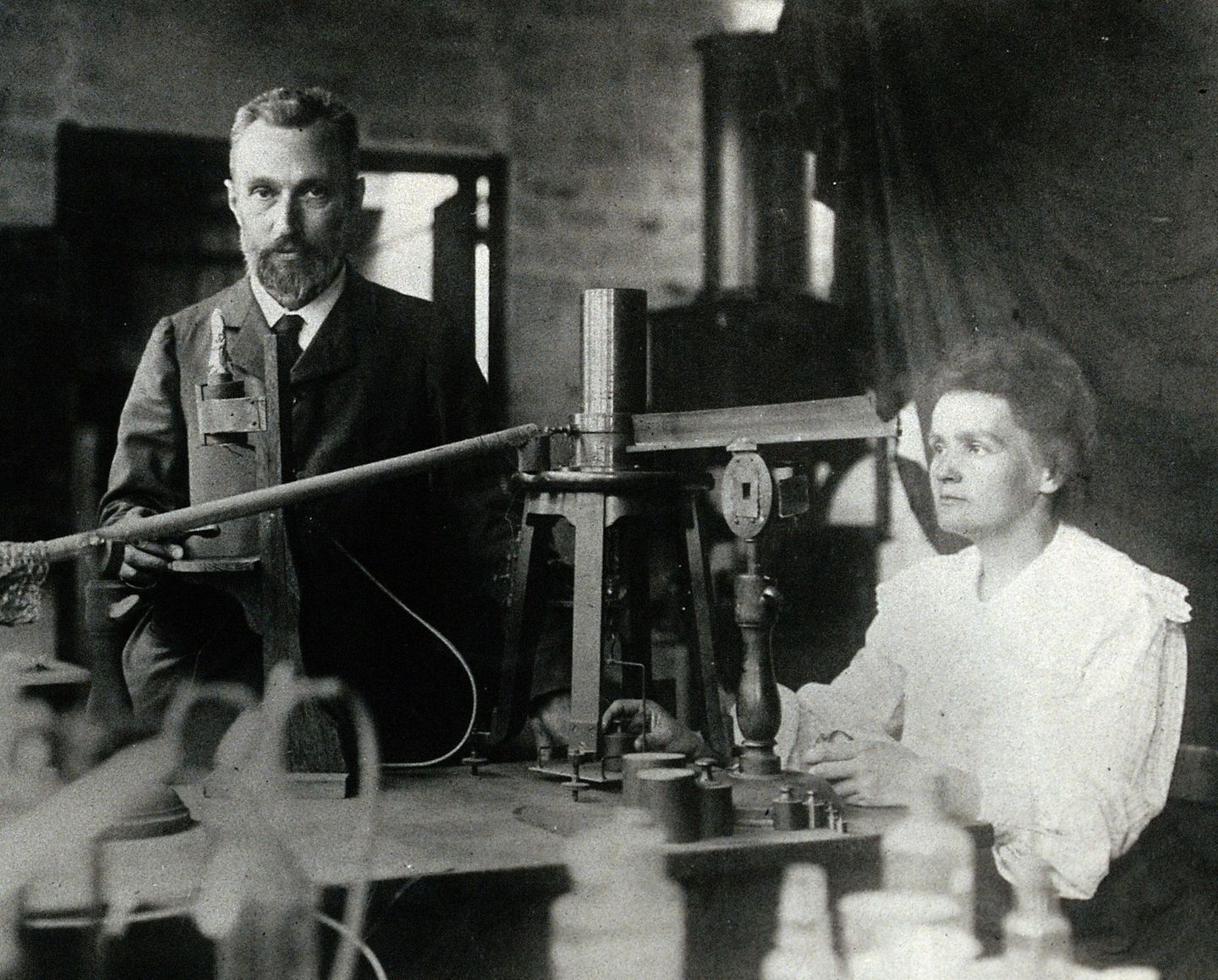
Pierre and Marie Curie in their laboratory, Paris. Public domain, via Wikimedia Commons
studio / on-this-day / Nov 7