studio / on-this-day / Nov 5
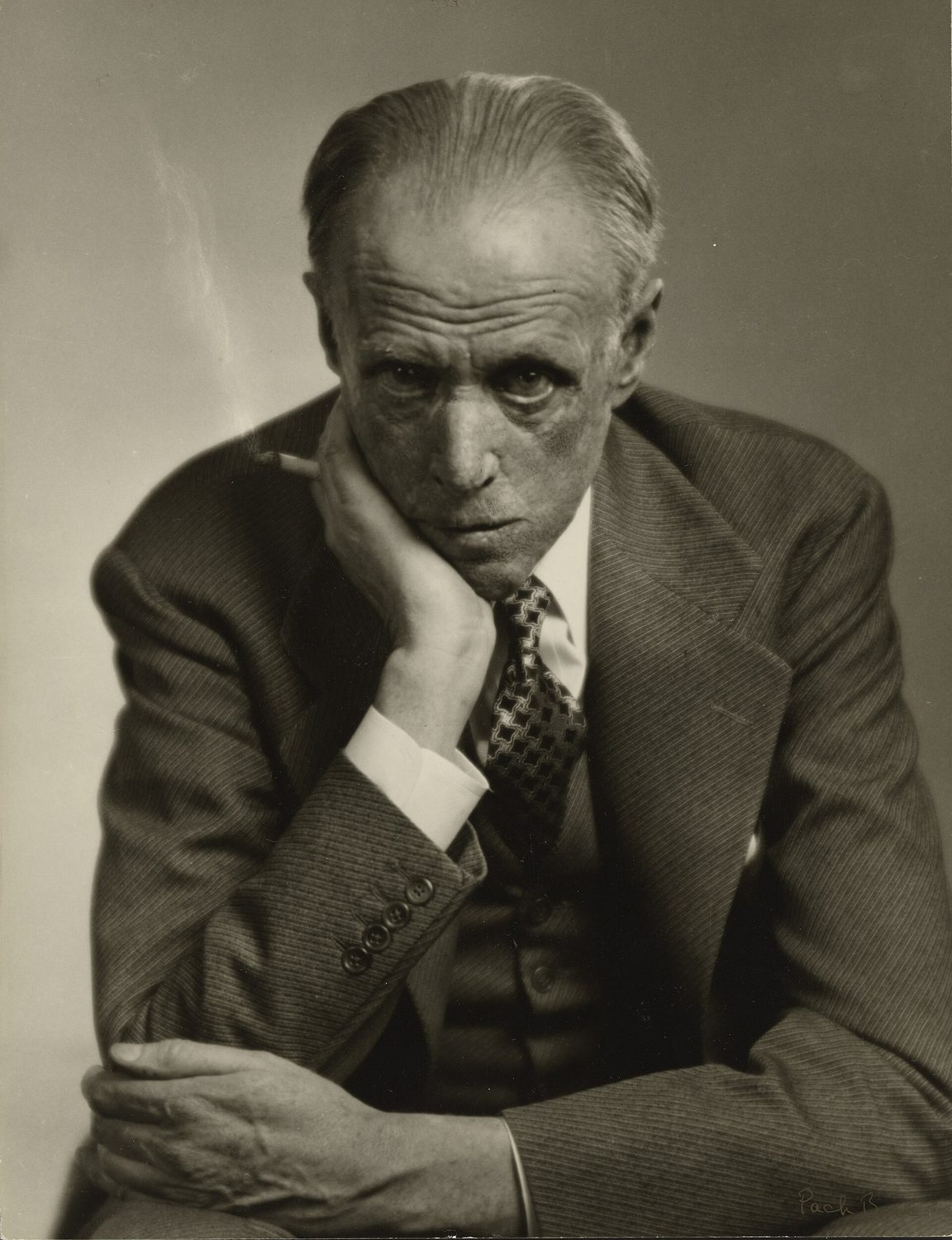
Sinclair Lewis, the first American to win the Nobel Prize in Literature, around 1945. Public domain, via Wikimedia Commons
The First American Voice
On this day in 1930 — Sinclair Lewis became the first American awarded the Nobel Prize in Literature.
3 min read
On November 5, 1930, the Swedish Academy announced that Sinclair Lewis had won the Nobel Prize in Literature. He was the first American writer to receive the honor, and the choice was controversial. European critics had long dismissed American literature as provincial and derivative. The Academy's citation praised Lewis "for his vigorous and graphic art of description and his ability to create, with wit and humor, new types of characters." It was a polite way of saying he had shown that American life could be worthy of serious literary attention.
Lewis built his reputation by dissecting middle-class American culture with surgical precision. His novel "Main Street" (1920) depicted the suffocating conformity of small-town life. "Babbitt" (1922) satirized the empty materialism of the business class. "Arrowsmith" (1925) examined the compromises of scientific integrity. "Elmer Gantry" (1927) exposed religious hypocrisy. These weren't pastoral celebrations of American virtue. They were autopsies of American delusion, written in a style that was direct, vernacular, and merciless.
What made Lewis's work distinctive was his ear for how people actually spoke. His characters talked in the rhythms of real American speech: the glad-handing salesman, the evangelical preacher, the self-satisfied businessman. He transcribed the language of advertising, boosterism, and self-promotion with documentary accuracy. Reading Lewis is like listening to overheard conversations from the 1920s, complete with the period's tics, slang, and ideological blind spots. He turned American dialogue into a design element, using it to reveal character and culture simultaneously.
Lewis almost didn't accept the prize. He had declined the Pulitzer Prize for "Arrowsmith" in 1926, arguing that literary awards were used to enforce genteel conformity. But the Nobel was different. It came with international prestige and a substantial cash award. He accepted, and in his Nobel Lecture, he used the platform to challenge the literary establishment. He criticized the dominance of conservative, genteel writers and called for a literature that engaged with the complexities of modern industrial society.
The prize elevated American literature on the world stage. Before Lewis, American writers were seen as talented but minor, lacking the depth and tradition of European literature. After Lewis, the perception shifted. Within the next three decades, Americans would win the Nobel Prize five more times: Eugene O'Neill, Pearl S. Buck, T.S. Eliot (though British by adoption), William Faulkner, and Ernest Hemingway. Lewis opened the door by proving that American subjects, American settings, and American speech could carry the weight of serious literary ambition.
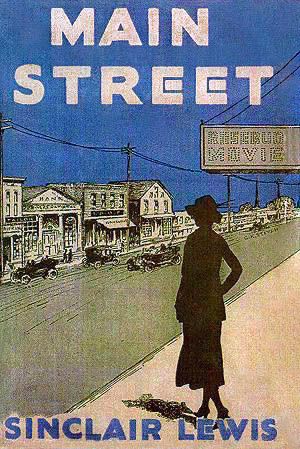
First edition cover of "Main Street" (1920), the novel that made Lewis's name. Public domain, via Wikimedia Commons
Lewis's later career was less distinguished. He continued writing but never matched the cultural impact of his 1920s novels. He struggled with alcoholism and personal instability. By the time he died in 1951, his reputation had dimmed. His satirical targets felt dated, his prose style too tied to a specific moment. But the recognition mattered. It established that American culture, for all its contradictions and vulgarity, was worth serious attention. Literature didn't require aristocratic pedigree or ancient tradition. It just required someone willing to look closely at the world they inhabited and describe it without flinching. Lewis did that, and the Nobel Prize acknowledged it as art.

Sinclair Lewis boyhood home, Sauk Centre, Minnesota, the inspiration for Main Street. AgnosticPreachersKid, CC BY-SA 3.0, via Wikimedia Commons
studio / on-this-day / Nov 5