studio / on-this-day / Nov 1
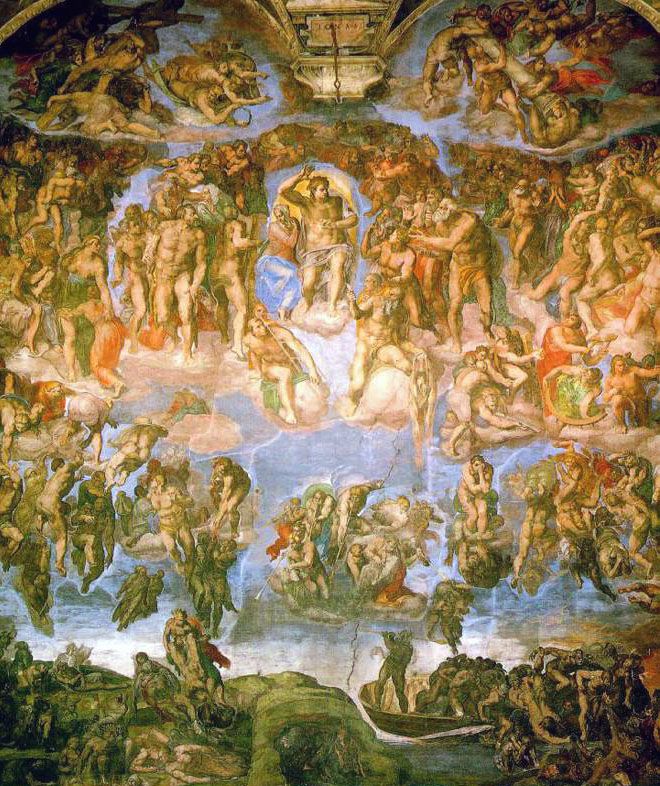
Michelangelo's work in the Sistine Chapel. Michelangelo, Public domain, via Wikimedia Commons
Four Years Above the World
On this day in 1512 — the Sistine Chapel ceiling was unveiled, the result of four years Michelangelo spent bent backward on a scaffold.
3 min read
On November 1, 1512, the scaffolding finally came down. After four years of working on his back, painting upward toward heaven, Michelangelo Buonarroti stepped away from what would become the most famous ceiling in human history. The Sistine Chapel ceiling was revealed to the public for the first time, and the Renaissance reached a new height, literally and figuratively.
Michelangelo didn't want the job. He considered himself a sculptor, not a painter. When Pope Julius II commissioned him in 1508, Michelangelo suspected sabotage by rival artists who wanted to see him fail at an unfamiliar craft. He tried to decline. The Pope insisted. So Michelangelo designed a wooden scaffold that bridged the chapel rather than rising from the floor, allowing Mass to continue below while he worked above. He then spent four years lying on his back, paint dripping into his eyes, creating over 300 figures across 5,000 square feet of curved plaster.
The technical challenge was staggering. Fresco painting requires applying pigment to wet plaster, which means the work must be completed in sections before the plaster dries. There's no room for revision. Every brushstroke is permanent. Michelangelo had to conceive the entire composition as a unified system while executing it in discrete, irreversible chunks. He worked alone most of the time, grinding his own pigments and mixing his colors, climbing up and down the scaffold dozens of times a day.
The ceiling tells the story of Genesis in nine central panels, from the Creation to the Flood. God separates light from darkness. He creates the sun and moon with a single gesture. In the most iconic panel, Adam reaches toward God's outstretched finger, the moment of human creation rendered as a gap of potential energy. Around these central scenes, Michelangelo painted prophets and sibyls, nude figures known as ignudi, and the ancestors of Christ. The composition is an exercise in architectural thinking applied to narrative. Each element supports the others, structurally and thematically.
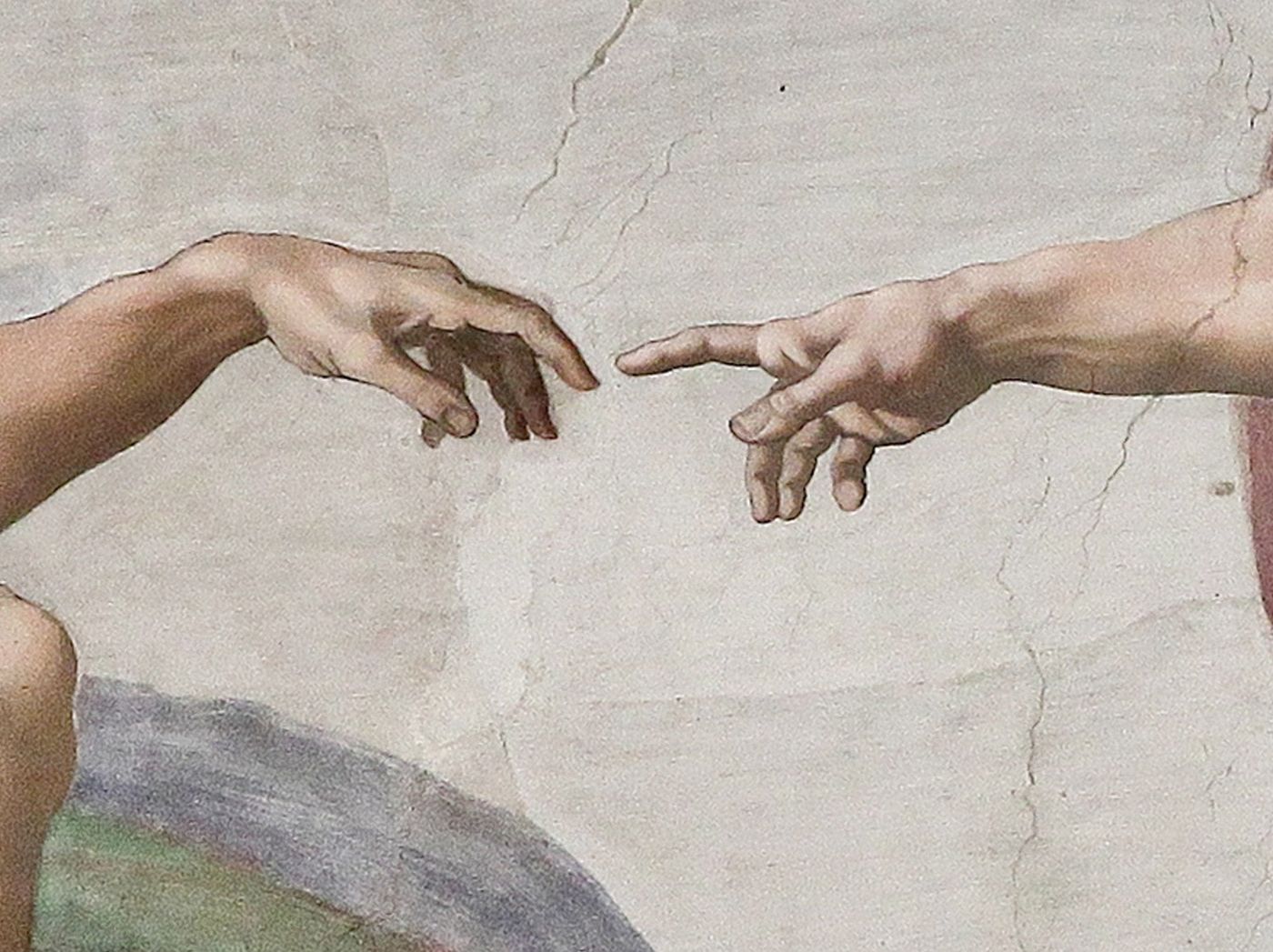
The Creation of Adam, detail. Michelangelo, Public domain, via Wikimedia Commons
What Michelangelo achieved wasn't just artistic brilliance, it was a feat of project management under brutal constraints. He worked 60 feet above the chapel floor in dim light, with limited visibility of the whole composition. He couldn't step back to see what he was creating until entire sections were complete. The physical toll was severe. In a sonnet he wrote during the work, he described his body contorted like a Syrian bow, his beard pointing skyward, paint dripping onto his face. He complained that he was going blind and deaf, that his body was broken. Yet he kept painting.
When the ceiling was finally revealed, the impact was immediate. Artists came from across Europe to study it. The human form had never been rendered with such anatomical precision and emotional range. Michelangelo's figures weren't static; they twisted, reached, and strained with a sense of motion frozen in plaster. His use of color was bold and unexpected. The composition demonstrated that painting could achieve the same sculptural weight and three-dimensional presence as carved marble.
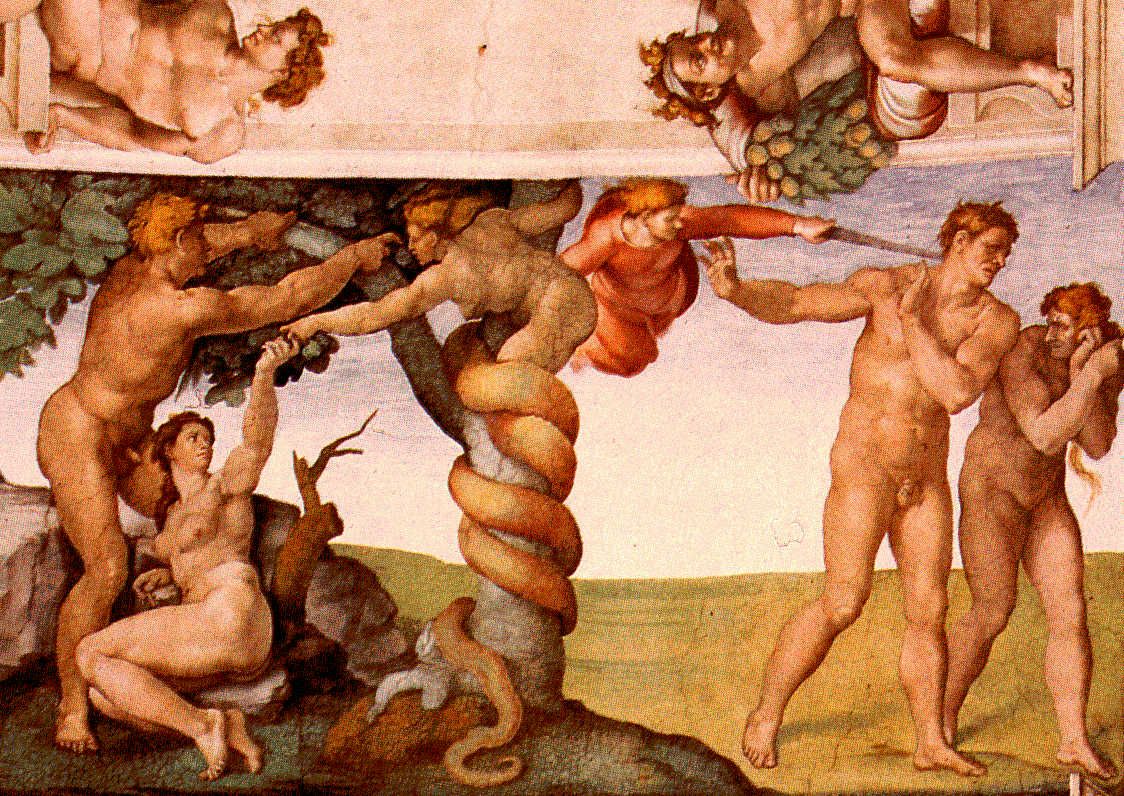
The Temptation and Fall, a panel from the Genesis sequence on the ceiling. Michelangelo, Public domain, via Wikimedia Commons
The Sistine Chapel ceiling became a textbook for generations of artists. It proved that ambition and constraint aren't opposites but collaborators. Michelangelo didn't want the commission, worked in a medium he didn't prefer, and endured four years of physical punishment. What he created wasn't despite those constraints. It was because of them. The ceiling remains a demonstration that the hardest projects, the ones we resist, sometimes become the work that defines us.
studio / on-this-day / Nov 1