studio / on-this-day / Nov 18
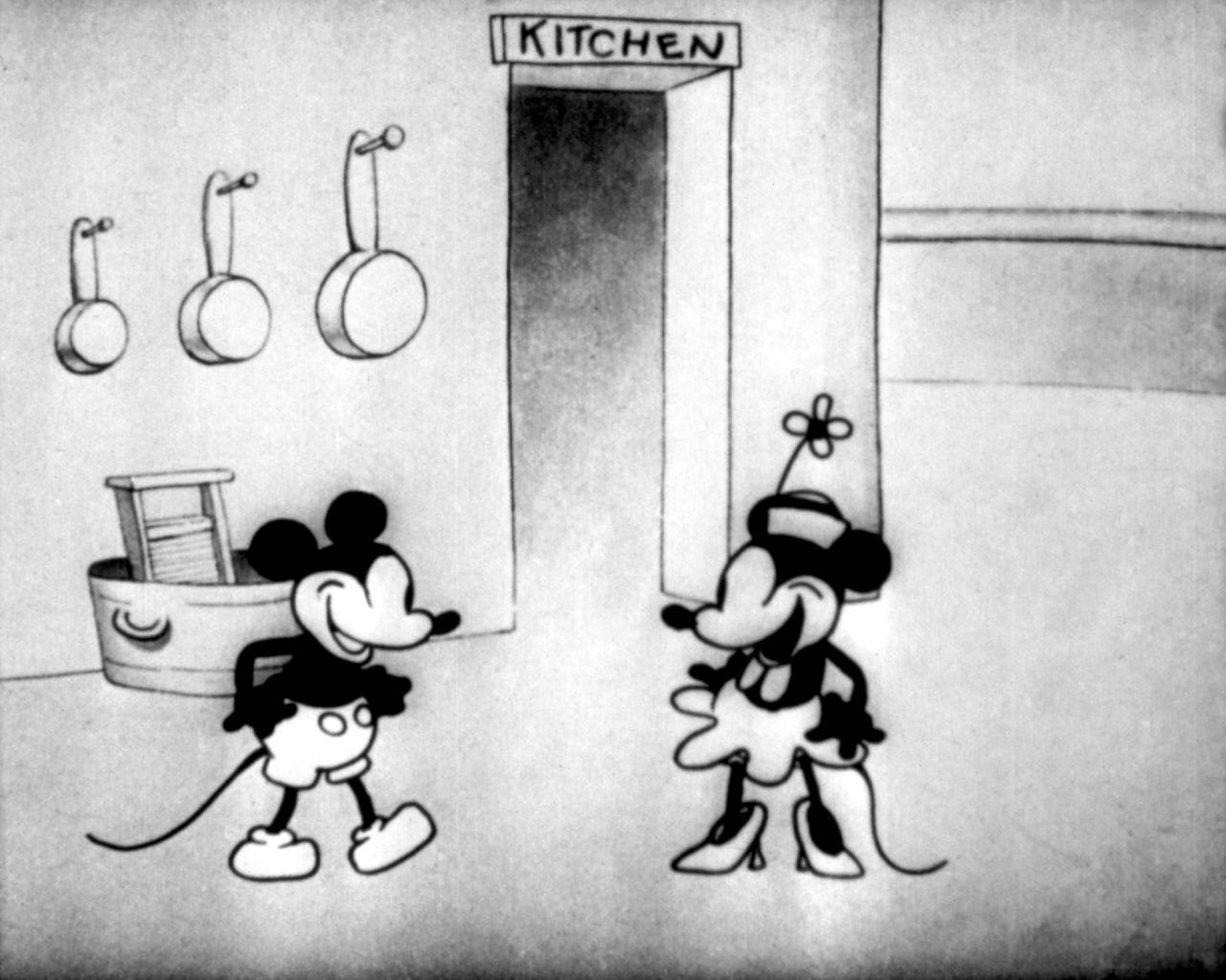
Mickey and Minnie Mouse in Steamboat Willie, 1928, the cartoon that launched an industry. Public domain, via Wikimedia Commons
The Mouse That Built an Empire
On this day in 1928 — Mickey Mouse debuted in Steamboat Willie, and animation turned into an industry.
3 min read
Steamboat Willie premiered at the Colony Theatre in New York on November 18, 1928. It was seven minutes and 42 seconds long, black and white, and utterly unlike anything audiences had seen before. Not because of the animation itself, though Walt Disney and Ub Iwerks had drawn it with remarkable fluidity. The revelation was the sound. Mickey Mouse whistled. He played a washboard. He cranked a goat's tail like a hurdy-gurdy and turned a cow's teeth into a xylophone. The images and the audio were synchronized perfectly, every movement matched to every note, and the effect was transformative. Cartoons stopped being silent experiments and became a medium with its own grammar.
Mickey was not Disney's first character. He had already created Oswald the Lucky Rabbit for Universal, but he lost the rights to his distributor in a contract dispute. Facing financial ruin in 1928, Disney needed a new character he could own outright. Mickey Mouse emerged from that necessity. The design was simple to the point of abstraction: circles for ears, a pear-shaped body, stick legs, gloves to hide the complexity of hands. He was built for efficient reproduction, for animators to draw him hundreds of times per film without variation or error. He was, from the beginning, a design object as much as a personality.
Disney had tried two earlier Mickey shorts, Plane Crazy and The Gallopin' Gaucho, but neither found distribution. Then he saw The Jazz Singer, the first feature film with synchronized dialogue, and understood that sound was the future. He reworked Steamboat Willie to include a full soundtrack, recording the effects and music with a small orchestra in New York while projecting the film on a screen so the conductor could match tempo. The process was primitive and expensive. Disney went into debt to finish it. But when it premiered, the reaction was immediate. Audiences laughed at sounds they had only imagined before. Silence had been the default; synchronization felt like magic.
Mickey became a phenomenon almost overnight. Within a few years, he appeared in films, comic strips, merchandise, toys. Disney built an entire studio infrastructure around him, hiring more animators, refining production techniques, creating new characters to populate Mickey's world. The studio became a machine for generating narrative and design at industrial scale, a factory where personality could be manufactured frame by frame. Mickey was the brand, but the real innovation was the system Disney built to produce him.
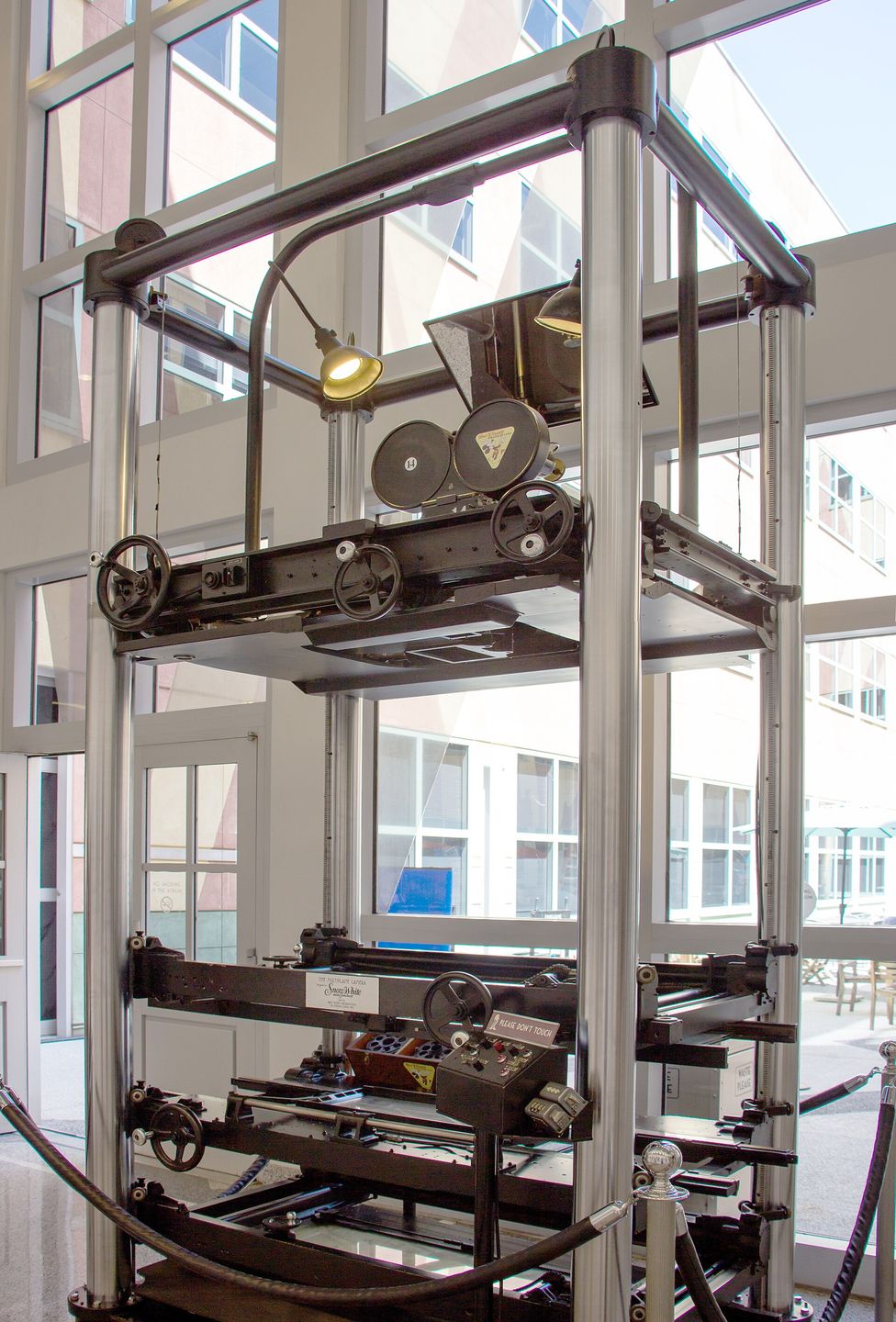
Disney's multiplane camera, 1937, built to shoot layered artwork for depth. HarshLight from San Jose, CA, USA, CC BY 2.0, via Wikimedia Commons
By the 1930s, Disney was using Mickey shorts to test new technologies: Technicolor, multiplane cameras, improved sound recording. The character himself became less anarchic and more polite, evolving from a mischievous trickster into a wholesome corporate symbol. The early Mickey was edgier, more willing to bend rules and cause chaos. Success smoothed his edges. He became safe, marketable, universal. The design outlasted the personality, just as Engelbart's mouse outlasted his vision for augmented intelligence.
Steamboat Willie entered the public domain in 2024, 96 years after its release. The character in that film, the version with the sharp grin and the chaotic energy, is now free to use. But the Mickey Mouse most people recognize, the one with the modernized design and the friendly demeanor, remains trademarked. Disney has spent a century refining the character's appearance, protecting it legally, ensuring that the empire built on seven minutes of synchronized sound endures. The film was the seed. The system was the tree. And the mouse, somehow, is still whistling.

Walt Disney, the man who turned a seven-minute cartoon into an empire. Boy Scouts of America, Public domain, via Wikimedia Commons
studio / on-this-day / Nov 18