studio / on-this-day / Nov 17
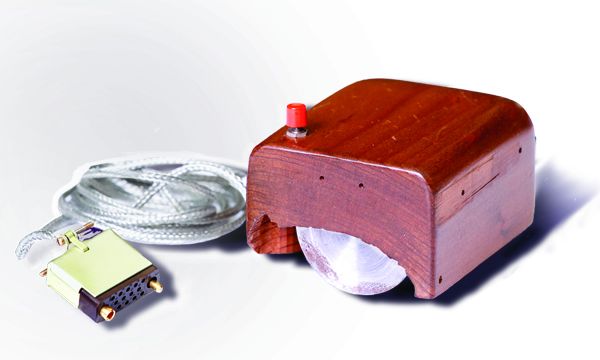
Engelbart's original mouse prototype, with wooden shell and cord. SRI International, CC BY-SA 3.0, via Wikimedia Commons
The Tail That Moved the World
On this day in 1970 — Douglas Engelbart patented the computer mouse, so named, he said, for the cord trailing off it like a tail.
3 min read
The patent was filed on November 17, 1970, for what Douglas Engelbart and his colleague Bill English described as an "X-Y position indicator for a display system." The official language was precise and technical, but the nickname was simpler. They called it a mouse because the cord came out the back like a tail. The name stuck. Forty years later, billions of people would move their hands across desks every day, guiding cursors, clicking icons, dragging windows, all because Engelbart believed the computer should be an extension of human thought, not a barrier to it.
Engelbart built the first prototype sometime before 1965 at the Stanford Research Institute, working with English in what they called the Augmentation Research Center. The goal was ambitious: to augment human intellect using interactive computing. Most computers in the 1960s were programmed with punch cards and printed their results on paper. Engelbart imagined something else entirely. A screen. A cursor. A way to point at things and manipulate them directly. He needed an input device that felt natural, something faster and more intuitive than typing coordinates or using a light pen.
The mouse was carved from wood, about the size of a deck of cards. Inside were two metal wheels positioned at right angles, one tracking horizontal movement, the other vertical. When you moved the mouse, the wheels rolled and sensors converted that motion into electrical signals. The computer translated those signals into cursor position. It was analog motion made digital, continuous gesture turned into discrete coordinates. The design was elegant in its directness: your hand moved, the cursor moved. No abstraction, no learning curve.
Engelbart demonstrated the mouse publicly in 1968 at what later became known as the Mother of All Demos. In 90 minutes, he showed a live audience in San Francisco how his system could edit text, rearrange paragraphs, create hyperlinks, hold video conferences, and navigate documents with a pointing device. The demonstration included the mouse, a keyboard, and a five-key chording device he called a keyset. Most people remember the mouse. The whole presentation was so far ahead of its time that it took the rest of the industry two decades to catch up.
Xerox PARC licensed the mouse technology in the 1970s and refined it for the Alto, their experimental personal computer. Apple adapted it for the Lisa and later the Macintosh, turning the mouse into the defining interface element of consumer computing. Microsoft followed. By the 1990s, the mouse was ubiquitous. It became invisible through familiarity, the way Fleming's vacuum tube had once become invisible inside every radio. You stopped noticing it the moment you started using it.
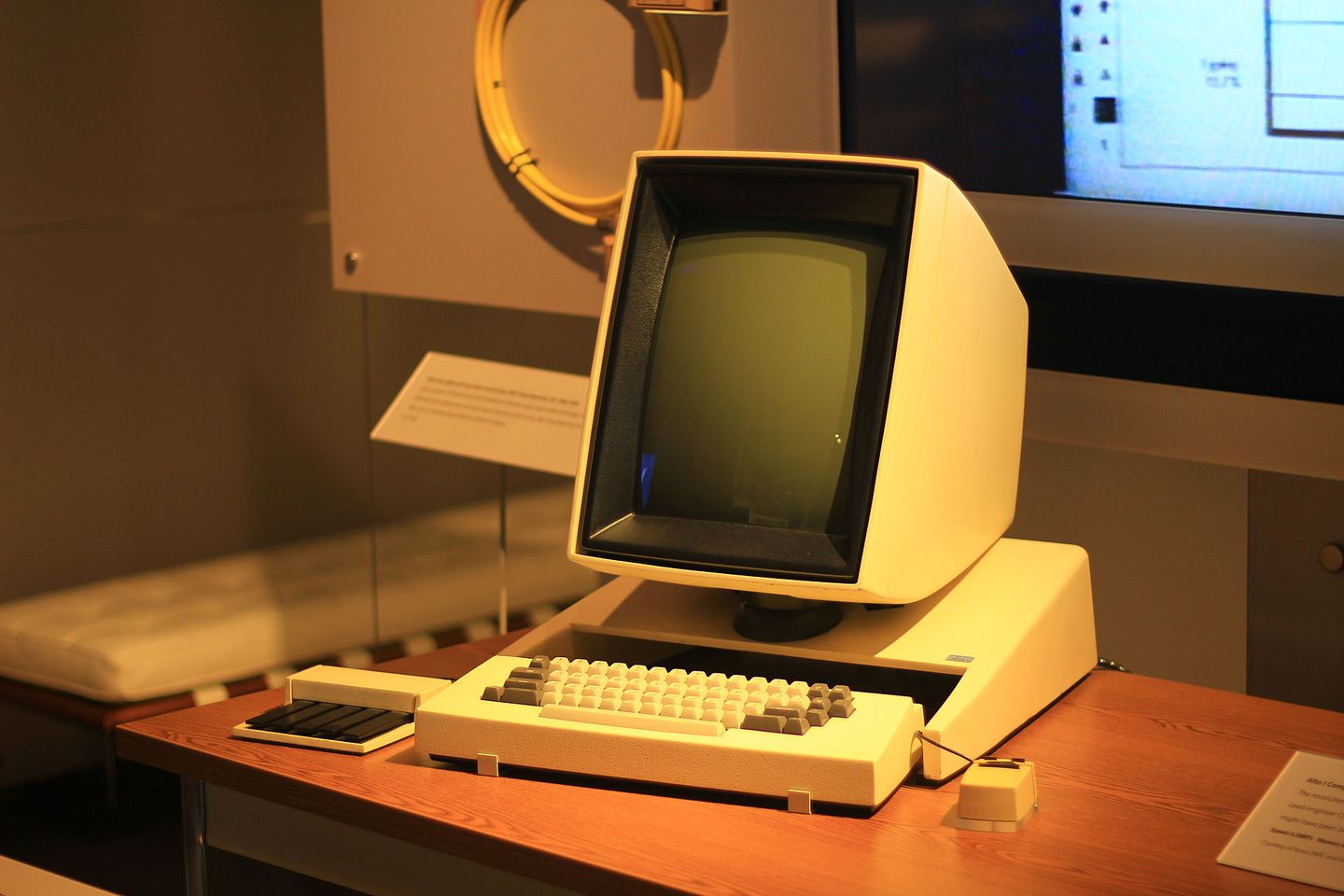
A xerox Alto with mouse and the five-key chorded keyset, descendants of Engelbart's system. Michael Hicks from Saint Paul, MN, USA, CC BY 2.0, via Wikimedia Commons
Engelbart never made much money from the invention. SRI owned the patent, and it expired before the personal computer revolution made the mouse indispensable. He spent the rest of his career working on collaboration tools and interface design, trying to push the augmentation idea further, but he never had another moment quite like 1968. He died in 2013, knowing he had changed the way humans and computers relate to each other but frustrated that the industry had stopped where he had only wanted to begin. The mouse was supposed to be the start of something larger. Instead, it became the thing itself, perfect enough in its simplicity that nothing needed to come after.
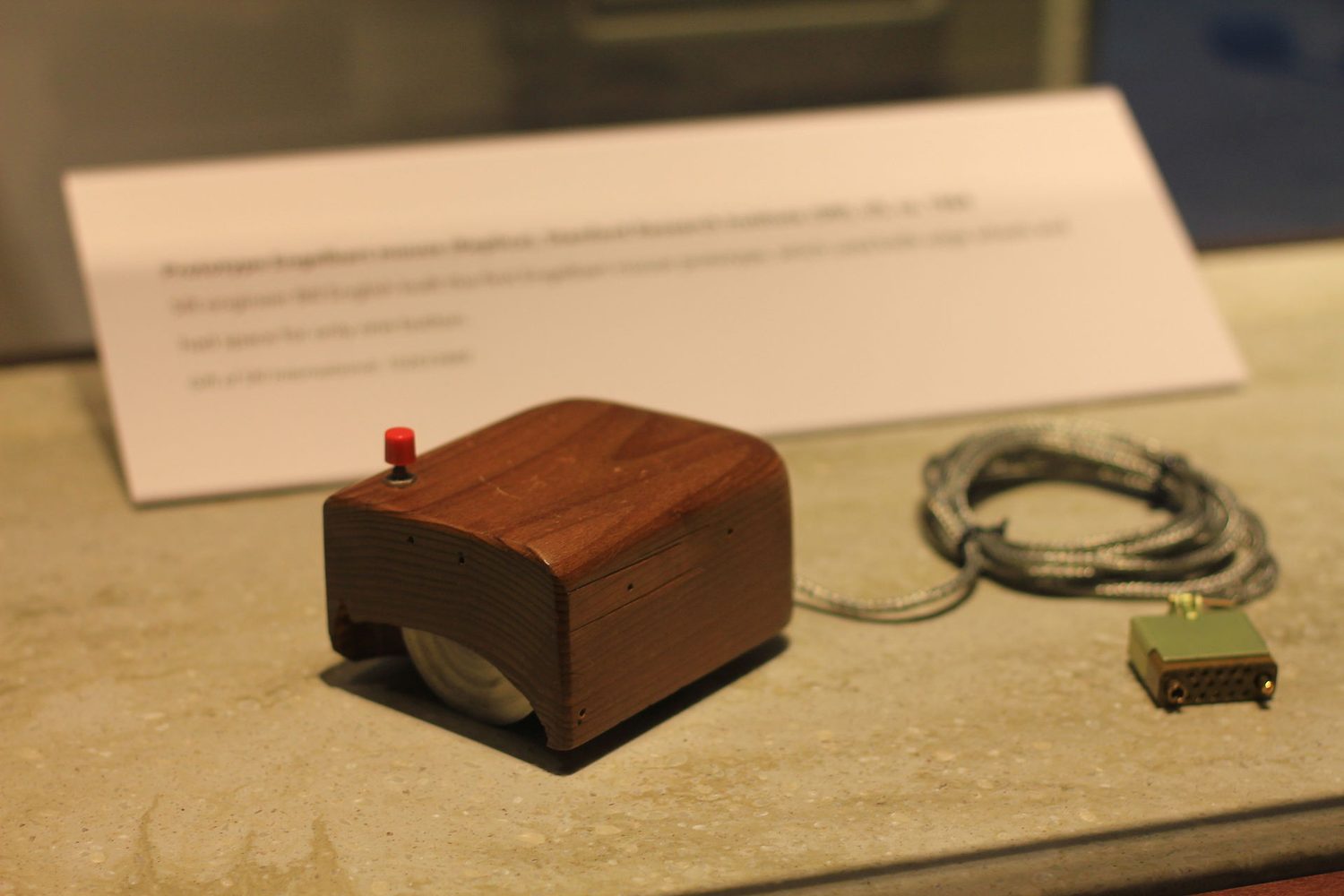
An early computer mouse, the pointing device Engelbart patented. Michael Hicks from Saint Paul, MN, U, CC BY 2.0, via Wikimedia Commons
studio / on-this-day / Nov 17