studio / on-this-day / Nov 19
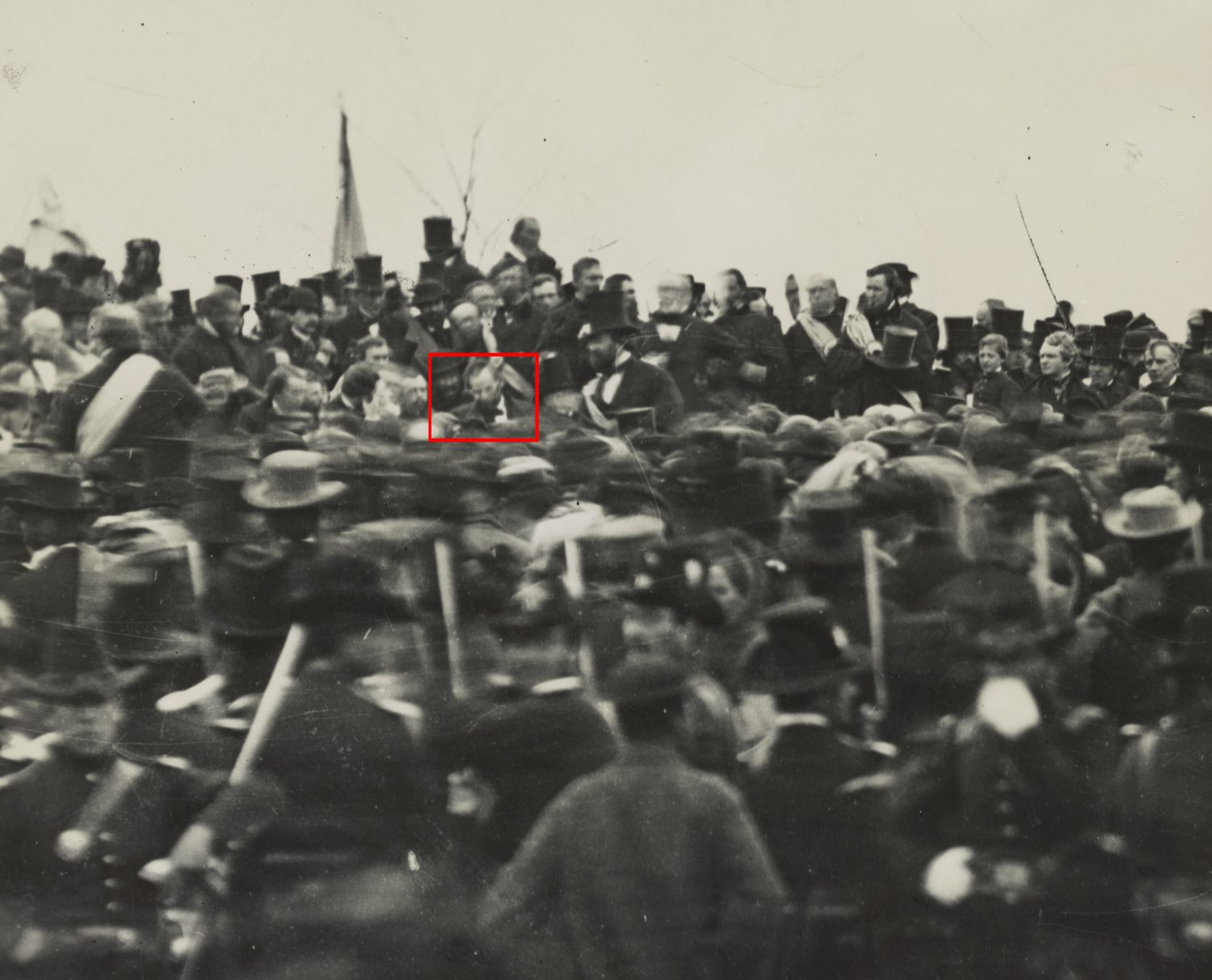
Lincoln (bareheaded, center) in the crowd at Gettysburg, November 1863. Public domain, via Wikimedia Commons
Two Minutes That Rewrote a Nation
On this day in 1863 — Lincoln delivered the Gettysburg Address, redefining the purpose of the nation in two hundred and seventy-two words.
3 min read
Abraham Lincoln spoke for about two minutes on November 19, 1863, at the dedication of the Soldiers' National Cemetery in Gettysburg, Pennsylvania. He was not the main speaker. That honor went to Edward Everett, a former senator and renowned orator who delivered a two-hour address filled with classical references and elaborate rhetoric. Everett's speech was forgotten almost immediately. Lincoln's 272 words became the most quoted piece of American political writing after the Declaration of Independence. It was a masterclass in compression, in saying everything by saying almost nothing.
The battle at Gettysburg had ended four months earlier, leaving more than 50,000 soldiers dead, wounded, or missing. The Union had won, but the cost was staggering. The cemetery was being established to bury the Union dead with dignity, and the dedication ceremony was meant to honor their sacrifice. Lincoln's role was secondary, almost ceremonial. He arrived the day before, stayed at a local home, and reportedly finished writing the address that evening, though some accounts suggest he had drafted most of it in Washington.
The speech began with a timestamp, "Four score and seven years ago," which placed the founding of the nation in 1776 rather than 1789, when the Constitution was ratified. That choice was deliberate. Lincoln was invoking the Declaration of Independence, with its assertion that all men are created equal, rather than the Constitution, which had accommodated slavery. He was reframing the war. It was no longer just about preserving the Union. It was about whether a nation conceived in liberty could endure, whether the proposition that all men are created equal was viable or just rhetoric.
Lincoln's language was spare and rhythmic, built from short sentences and simple words. He used parallelism and repetition the way a coder uses loops, creating structures that reinforced themselves through iteration. "We cannot dedicate, we cannot consecrate, we cannot hallow this ground." The repetition was hypnotic, almost liturgical. He turned the speech into a kind of prayer, a collective recitation of national purpose. And then he pivoted. The work of consecration was not the audience's to perform. The soldiers had already done it by dying there. What remained was for the living to finish the work the dead had begun.
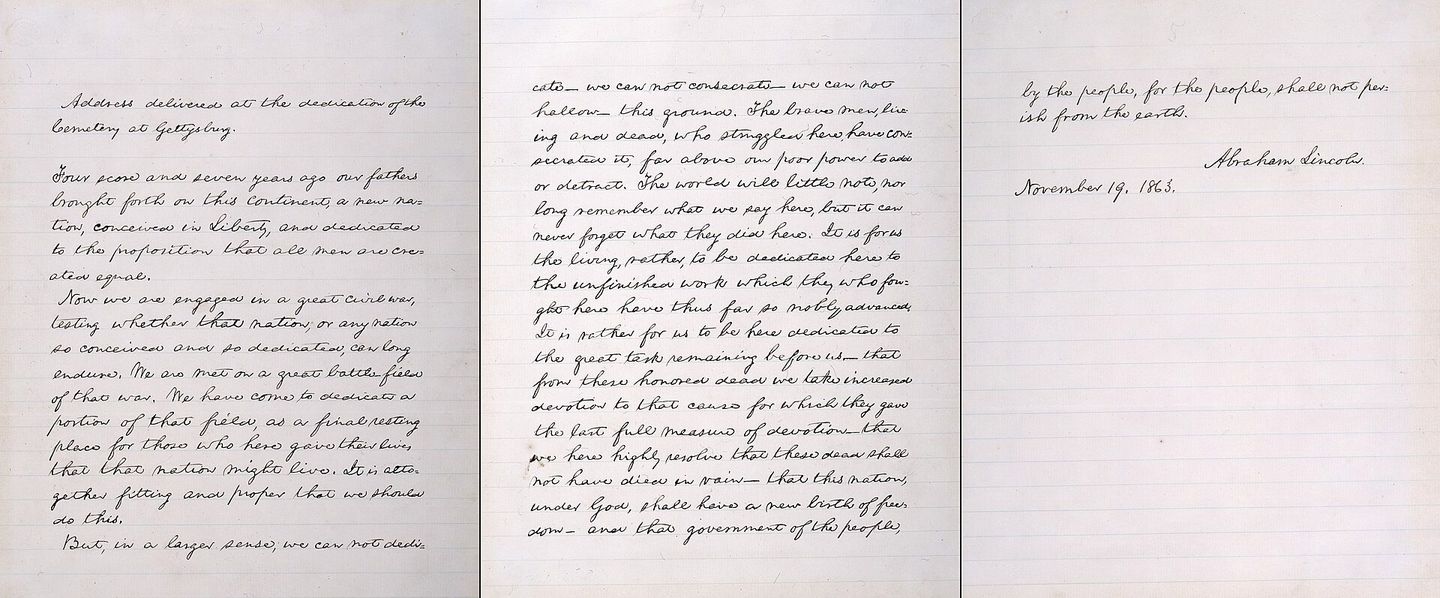
The Bliss copy, the only signed and dated draft in Lincoln's hand and the version etched on the Lincoln memorial. Abraham Lincoln, Public domain, via Wikimedia Commons
The final sentence ran 82 words, a single unbroken arc that swept from the deaths at Gettysburg to a vision of renewed national purpose. "That we here highly resolve that these dead shall not have died in vain, that this nation, under God, shall have a new birth of freedom, and that government of the people, by the people, for the people, shall not perish from the earth." The phrase "government of the people, by the people, for the people" became shorthand for democracy itself, a three-part definition so clean it felt inevitable. It was information architecture applied to political philosophy, a way of organizing ideas so they felt like truth.
Lincoln sat down. The audience applauded politely, but the response was muted. Some newspapers dismissed the speech as disappointingly brief. Others ignored it entirely. It took months, even years, for the address to be recognized as something extraordinary. Everett wrote to Lincoln the next day, saying he wished he had come as close to the central idea of the occasion in two hours as Lincoln had in two minutes. Lincoln replied that he was glad the speech was not a total failure. He undersold it. The Gettysburg Address became the template for how nations talk to themselves in moments of crisis, how they take chaos and loss and restructure them into meaning. It was a systems reboot disguised as a eulogy.
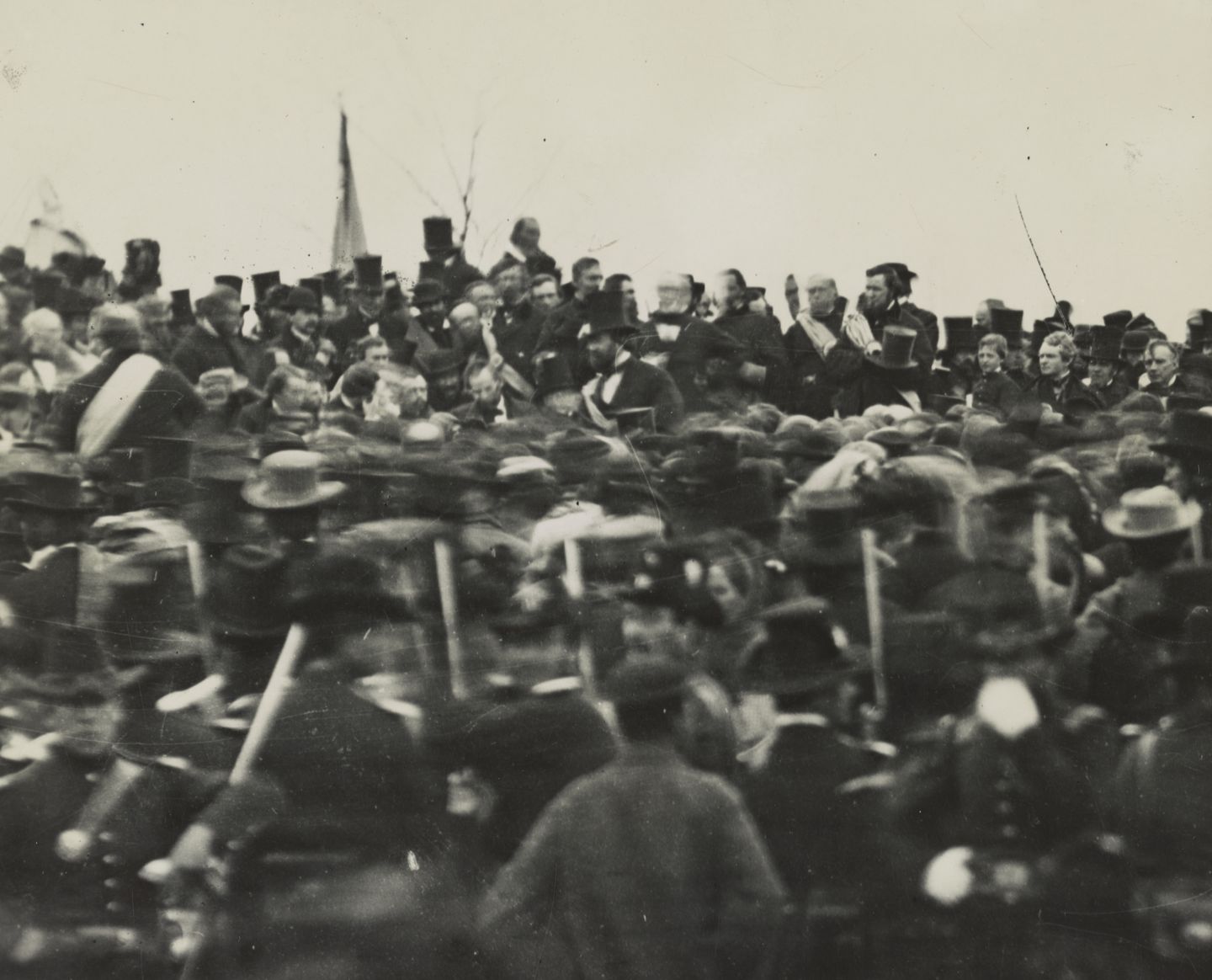
The crowd at Gettysburg, November 19, 1863 — Lincoln is visible near the center, having just delivered his Address. David Bachrach, Public domain, via Wikimedia Commons
studio / on-this-day / Nov 19