studio / on-this-day / Nov 16
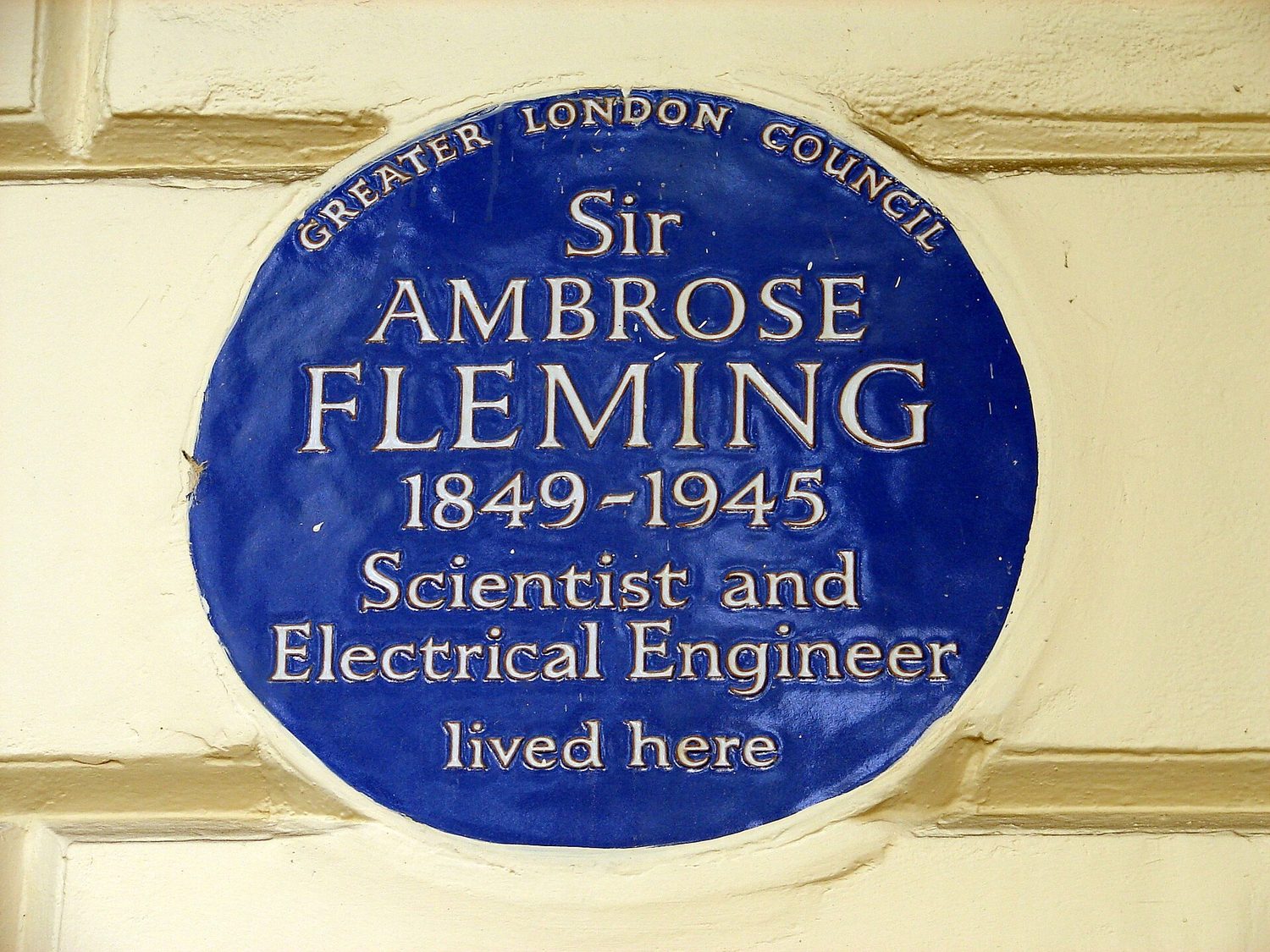
John Ambrose Fleming, who patented the vacuum-tube diode in 1904. Simon Harriyott from Uckfield, England, CC BY 2.0, via Wikimedia Commons
The Valve That Opened the Electronic Age
On this day in 1904 — John Ambrose Fleming patented the vacuum tube, the fragile glass ancestor of every transistor to come.
3 min read
On November 16, 1904, John Ambrose Fleming filed a patent for a device he called the oscillation valve. It was a glass bulb with two electrodes inside, evacuated of air, and it did something no device had done before: it allowed electric current to flow in only one direction. Fleming built it to solve a practical problem for the Marconi Company, converting the alternating radio signals coming from their transatlantic receiver into direct current that could be measured and decoded. He had no idea he was building the foundation of the electronic age.
Fleming was already 55, a professor at University College London and a consultant to Marconi. He had studied under James Clerk Maxwell and worked with Thomas Edison. He understood electromagnetic theory better than almost anyone alive, but the vacuum tube was born from intuition as much as calculation. He remembered something Edison had noticed two decades earlier: a mysterious current that flowed inside an incandescent bulb between the filament and a metal plate. Edison had patented the observation without understanding it, calling it the Edison Effect. Fleming understood it. When the filament heated, it released electrons that could be captured by a positively charged plate. One-way flow. A valve for electricity.
The Fleming valve was simple. Heat a cathode, place an anode nearby, remove the air. Electrons boil off the cathode and fly toward the anode if the voltage is right. Reverse the voltage and nothing happens. Current flows or it doesn't. Binary. The valve could detect radio signals, switch circuits, rectify alternating current. It was the first true electronic component, a device that controlled the flow of electrons through a vacuum rather than through wires or mechanical contacts.
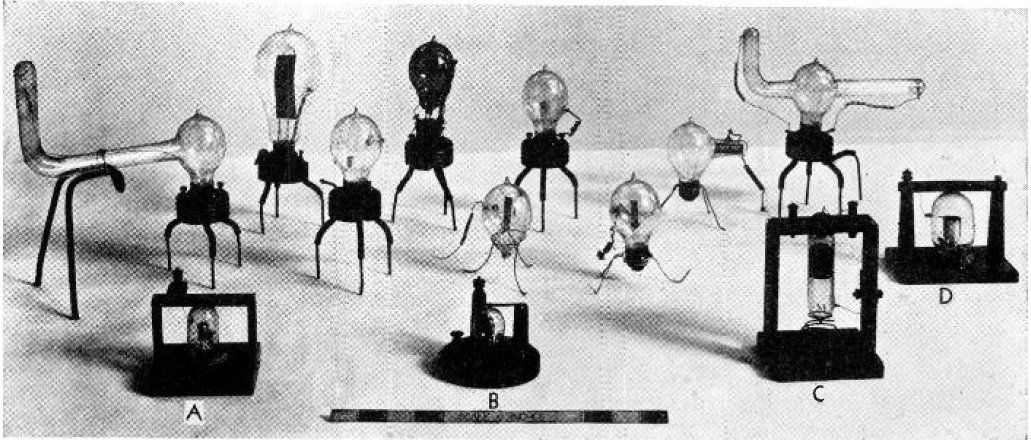
A group of Fleming's oscillation valves from 1904 — the first true electronic components. Gerald F. J. Tyne, Public domain, via Wikimedia Commons
Within a few years, Lee de Forest added a third electrode, the grid, creating the triode and turning the valve into an amplifier. Suddenly weak signals could be boosted. Radio transmitters could reach across continents. Telephone lines could stretch across oceans. The vacuum tube became the building block of everything: radios, televisions, radar systems, early computers. The ENIAC, built in 1945, used 17,468 vacuum tubes and weighed 30 tons. Every digital calculation humanity made until the late 1950s passed through glass bulbs filled with nothing.
Fleming's valve was eventually replaced by the transistor, which does the same job with solid-state materials instead of hot cathodes and vacuums. But the conceptual architecture remains identical. Control the flow of electrons. Open the gate or close it. On or off. The transistor inherited the vacuum tube's logic, just as Douglas Engelbart's mouse would later inherit the logic of analog pointing devices. Every chip in every device you touch contains billions of transistors, each one a descendant of Fleming's glass bulb.
Fleming lived to see the vacuum tube transform the world, but he never quite accepted some of the implications. He was a devout Christian who wrote treatises arguing that science and faith were compatible, that the material world pointed to divine order. He saw his valve as an instrument of discovery, not disruption. He believed in design as revelation. The valve revealed that emptiness could be useful, that nothing, when carefully controlled, could carry everything. That idea still hums inside every machine we build.
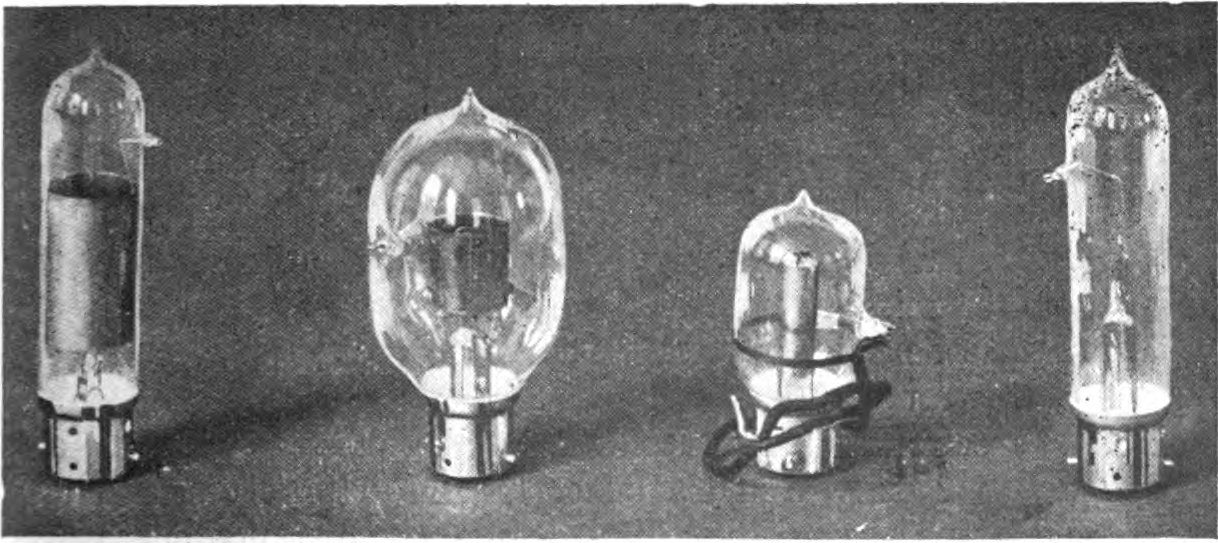
Commercial Fleming valves, the thermionic diode that Fleming patented in 1904. Public domain, via Wikimedia Commons
studio / on-this-day / Nov 16