studio / on-this-day / Nov 14
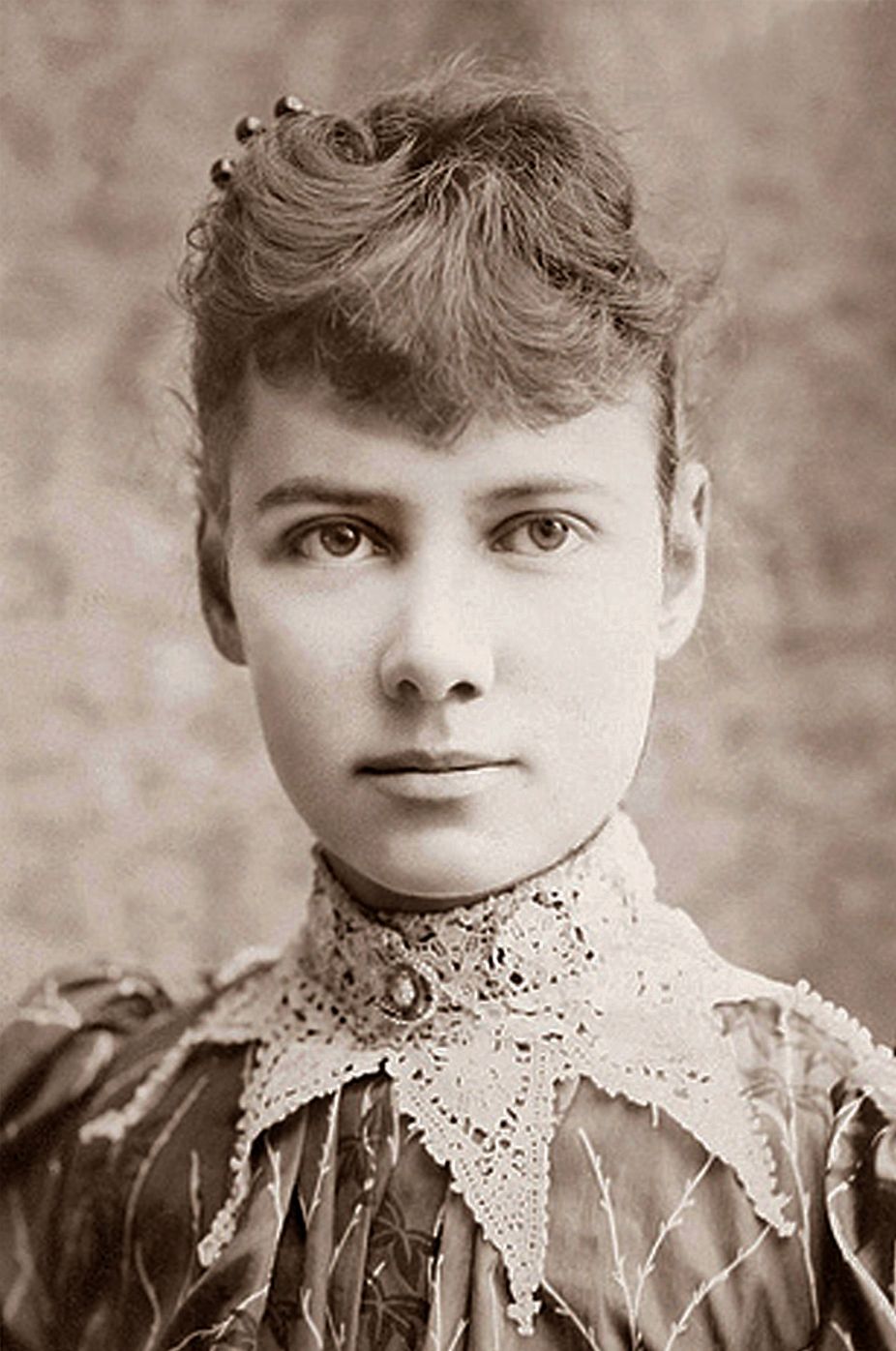
Nellie Bly. H. J. Myers, photographer, Public domain, via Wikimedia Commons
Seventy-Two Days Around the World
On this day in 1889 — Nellie Bly set off to circle the globe, and did it in seventy-two days, beating even the fictional record.
3 min read
On November 14, 1889, Nellie Bly walked onto a steamship in Hoboken, New Jersey, carrying a single travel bag. She was 25 years old and worked as a reporter for the New York World. Her assignment: travel around the world faster than Phileas Fogg, the fictional character in Jules Verne's novel "Around the World in Eighty Days." The journey would take her through England, France, Italy, Egypt, Ceylon, Singapore, Hong Kong, and Japan before returning to the United States. She had no advance planning, no confirmed reservations, and no companions. She had a goal and a watch.
Nellie Bly was born Elizabeth Cochran in Pennsylvania in 1864. She became a journalist after writing a furious rebuttal to a newspaper column that claimed women belonged in the home. The editor was impressed and hired her. She chose the pen name Nellie Bly and started writing investigative pieces. In 1887, she went undercover in a New York asylum for the mentally ill and exposed horrific conditions. Her reporting led to reforms and established her reputation as a journalist willing to do what others wouldn't. The world trip was her next stunt, a piece of self-promotion that doubled as a demonstration of what was possible in an age of steamships, trains, and telegraphs.
She traveled alone, which was unusual for a woman in 1889. She moved fast, rarely staying in one place more than a day. She sent dispatches back to the World, which published updates on her progress. Readers followed along, betting on whether she would make it. The newspaper turned her journey into a spectator event, printing a board game based on her route and offering prizes to readers who guessed her exact return time. She became a celebrity before she even returned.
Bly's route was designed for speed, not sightseeing. She took a steamship across the Atlantic, a train across France, another ship through the Suez Canal to Sri Lanka and Singapore, then on to Hong Kong and Japan. From Yokohama, she sailed to San Francisco, then took a train across the United States back to New York. She dealt with delays, missed connections, and rough seas. In Hong Kong, she met Jules Verne, who had doubted a woman could complete the trip in under 80 days. She proved him wrong.
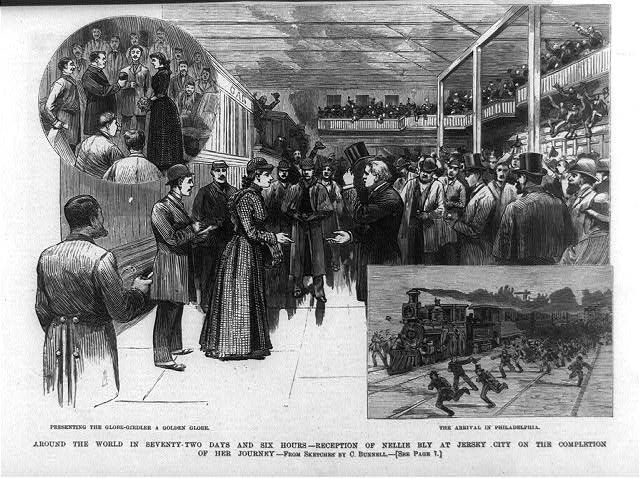
The reception for Nellie Bly at Jersey City as she completed her trip Around the World. Miscellaneous Items in High Demand, PPOC, Library of Congress, Public domain, via Wikimedia Commons
She arrived back in New York on January 25, 1890, having traveled 24,899 miles in 72 days, 6 hours, and 11 minutes. She had beaten the fictional record by over a week. Crowds greeted her at every stop on the final leg of the journey. The World ran a front-page story declaring her the fastest person to circumnavigate the globe. Her trip demonstrated that the world had shrunk, that infrastructure now connected continents in ways that had been unimaginable a generation earlier. What had once required years could now be done in weeks.
Bly's achievement was part journalism, part performance art, and part proof of concept. She showed that speed was possible, that women could travel independently, and that a newspaper could turn a stunt into a circulation-boosting phenomenon. After the trip, she continued reporting, covering strikes, poverty, and corruption. She later became a businesswoman, running a steel manufacturing company. She died in 1922, largely forgotten by a public that had moved on to newer spectacles.
What Nellie Bly left behind wasn't just a record. It was the idea that constraints are negotiable. Eighty days felt impossible until someone did it in 72. Travel felt dangerous for women until a woman did it alone and made it look easy. Media could create events, not just report them. Infrastructure was changing the world, collapsing distance and time, and Bly turned that collapse into a story. She didn't invent global travel. She made it visible, urgent, and competitive. The world was smaller than anyone thought. All it took was someone willing to prove it with a bag, a ticket, and a deadline.
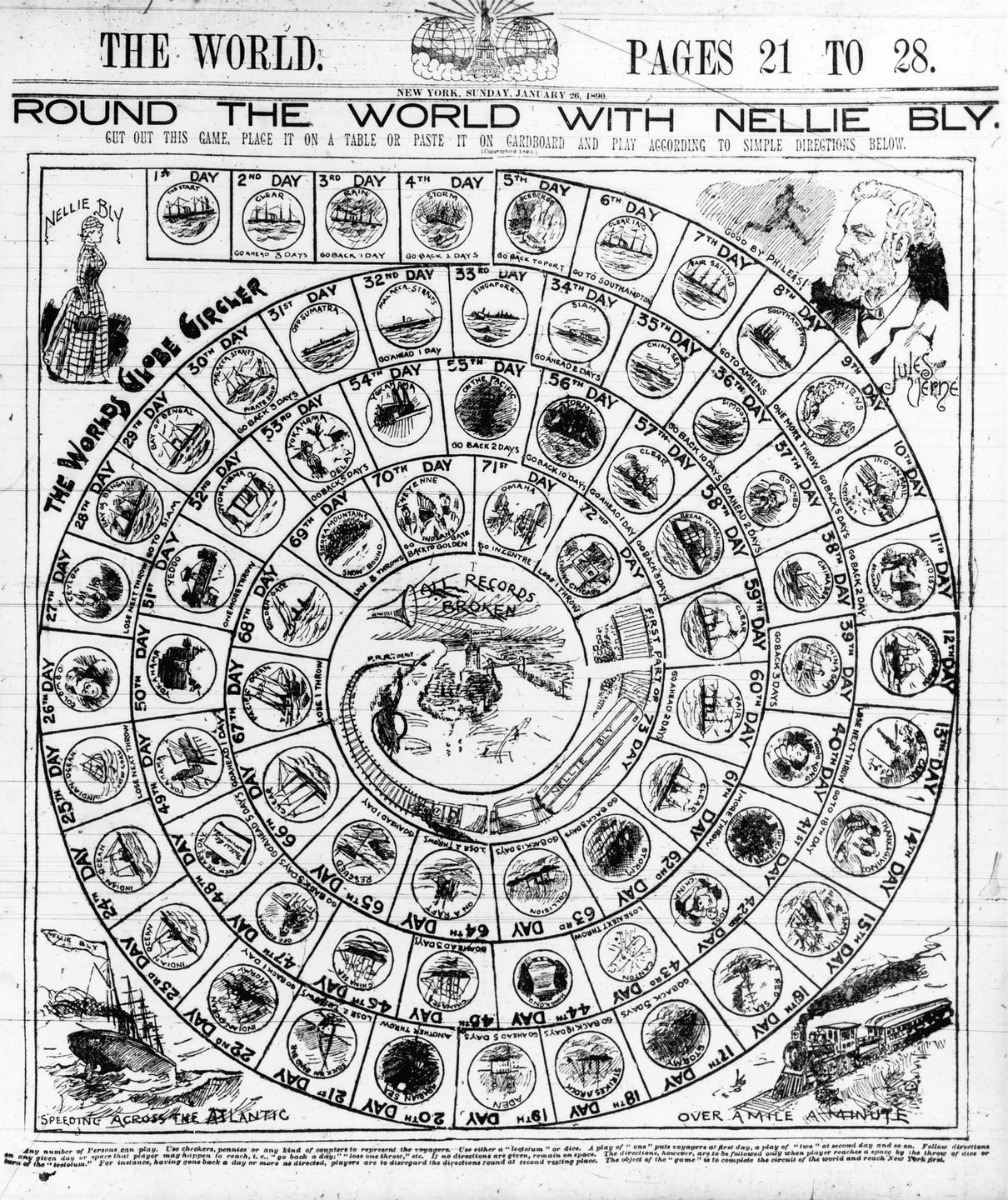
Round the World with Nellie Bly — the 1890 board game published by the New York World to follow her journey. Unattributed, Public domain, via Wikimedia Commons
studio / on-this-day / Nov 14