studio / on-this-day / Feb 8
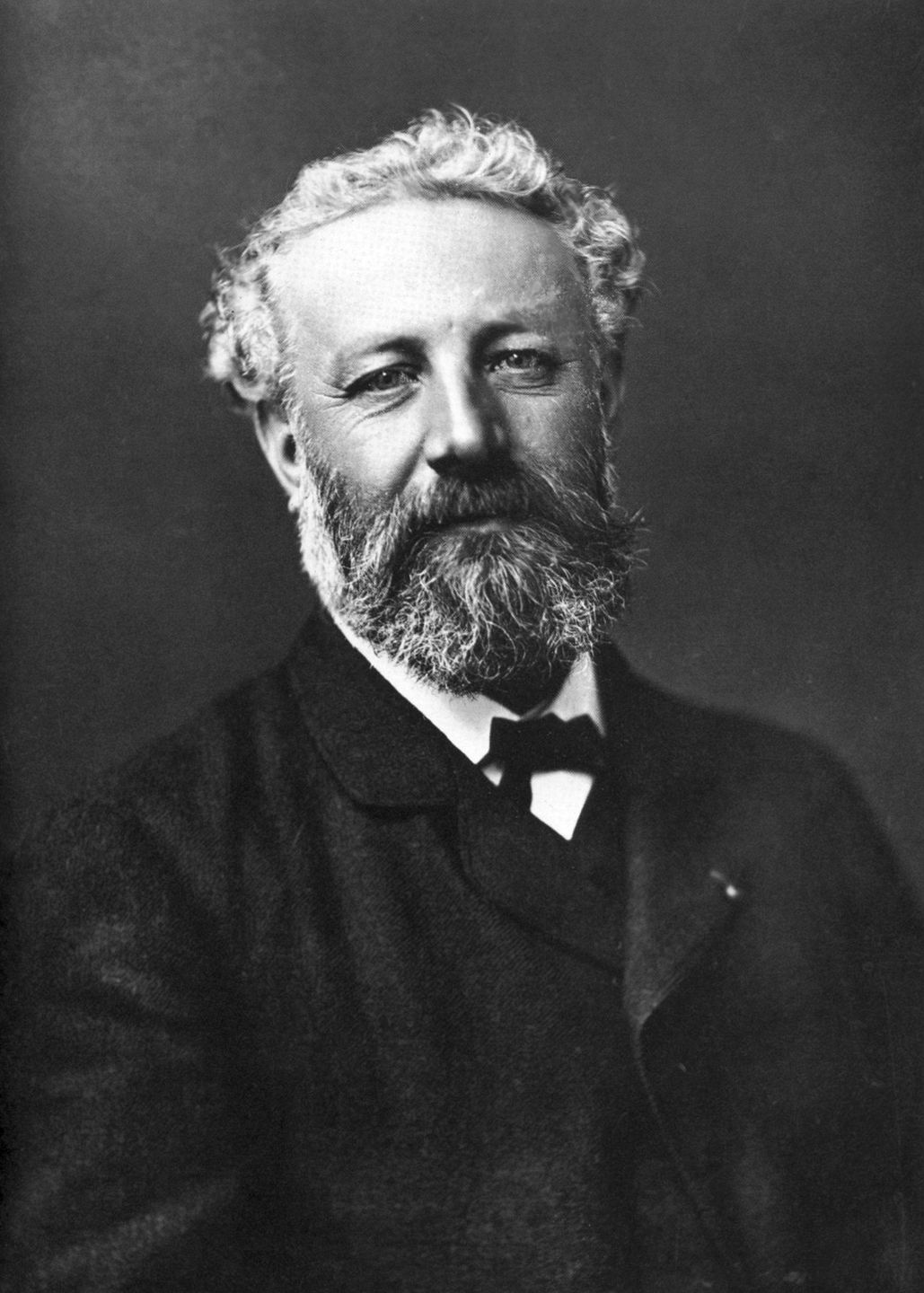
Portrait of Jules Verne, the French author who imagined submarines, space travel, and the internet a Century before they existed, photographed by félix Nadar. Nadar, Public domain, via Wikimedia Commons
The Man Who Designed the Future
On this day in 1828 — Jules Verne was born, and would sketch submarines and spaceflight in fiction decades before engineers built the real things.
3 min read
Jules Gabriel Verne was born in Nantes, France, on February 8, 1828, in a port city where ships came and went carrying cargo, stories, and maps of distant places. His father was a lawyer who expected Jules to follow the same profession. Verne studied law in Paris, passed the bar, and then quietly abandoned it to write plays, libretti, and eventually the novels that would make him one of the most translated authors in history.
What made Verne unusual was not that he wrote adventure stories. Adventure fiction was popular in the 19th century. What made him different was that he treated technology as character. In Twenty Thousand Leagues Under the Sea, the Nautilus submarine isn't just a plot device. Verne describes its propulsion system, its electrical generation, its air recycling. He specifies dimensions, materials, and operational constraints. The submarine feels engineered, because Verne researched how such a machine might actually work.
His novels extrapolated from existing science. Electric submarines were theoretical in the 1860s, but electric motors existed. Batteries existed. The principles were known. Verne consulted engineers, read scientific journals, and visited factories. When he sent characters to the Moon in From the Earth to the Moon, he calculated the velocity needed to escape Earth's gravity and chose a giant cannon as the propulsion method because rockets in 1865 were still fireworks. The cannon was impractical, but the physics was sound.
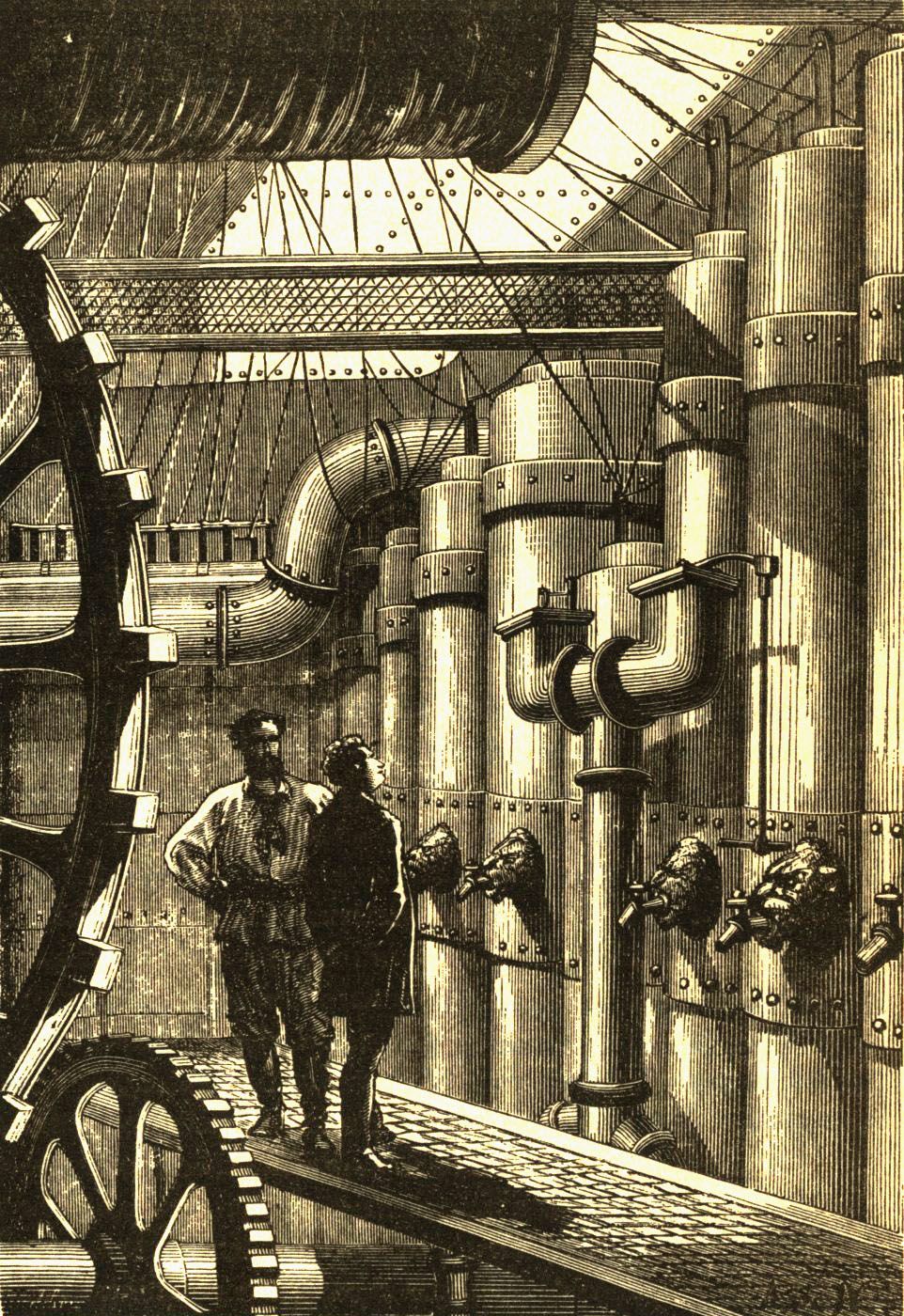
An original 1870 illustration of the Nautilus engine room from Twenty Thousand Leagues under the Sea, the kind of detailed machinery Verne researched and described down to its propulsion and electrical systems. Alphonse de Neuville / Henri Théophile Hildibrand, Public domain, via Wikimedia Commons
Many of his predictions were uncannily accurate. He described helicopter-like aircraft decades before they flew. He imagined videoconferencing and something resembling the internet in Paris in the Twentieth Century, a novel so bleak his publisher refused to print it during his lifetime. He envisioned electric lights, skyscrapers, and suburbs connected by high-speed trains. He saw the future not through mysticism, but through engineering trends and material constraints.
Verne was not always right. His space travelers experienced no weightlessness, because he didn't account for freefall. His submarines never needed to surface for air, which ignored the limits of 19th-century battery technology. His characters traveled vast distances with implausible speed. But the errors were errors of optimism, not ignorance. He understood the principles and bet on progress solving the problems.
The influence of his work on actual inventors is well documented. Simon Lake, who pioneered the modern submarine, credited Verne with inspiring his career. Konstantin Tsiolkovsky, the father of Soviet rocketry, said From the Earth to the Moon sparked his interest in space. Admiral Richard Byrd took a copy of Verne's books on his Antarctic expedition. The line between science fiction and engineering proposal was often thinner than people assumed.
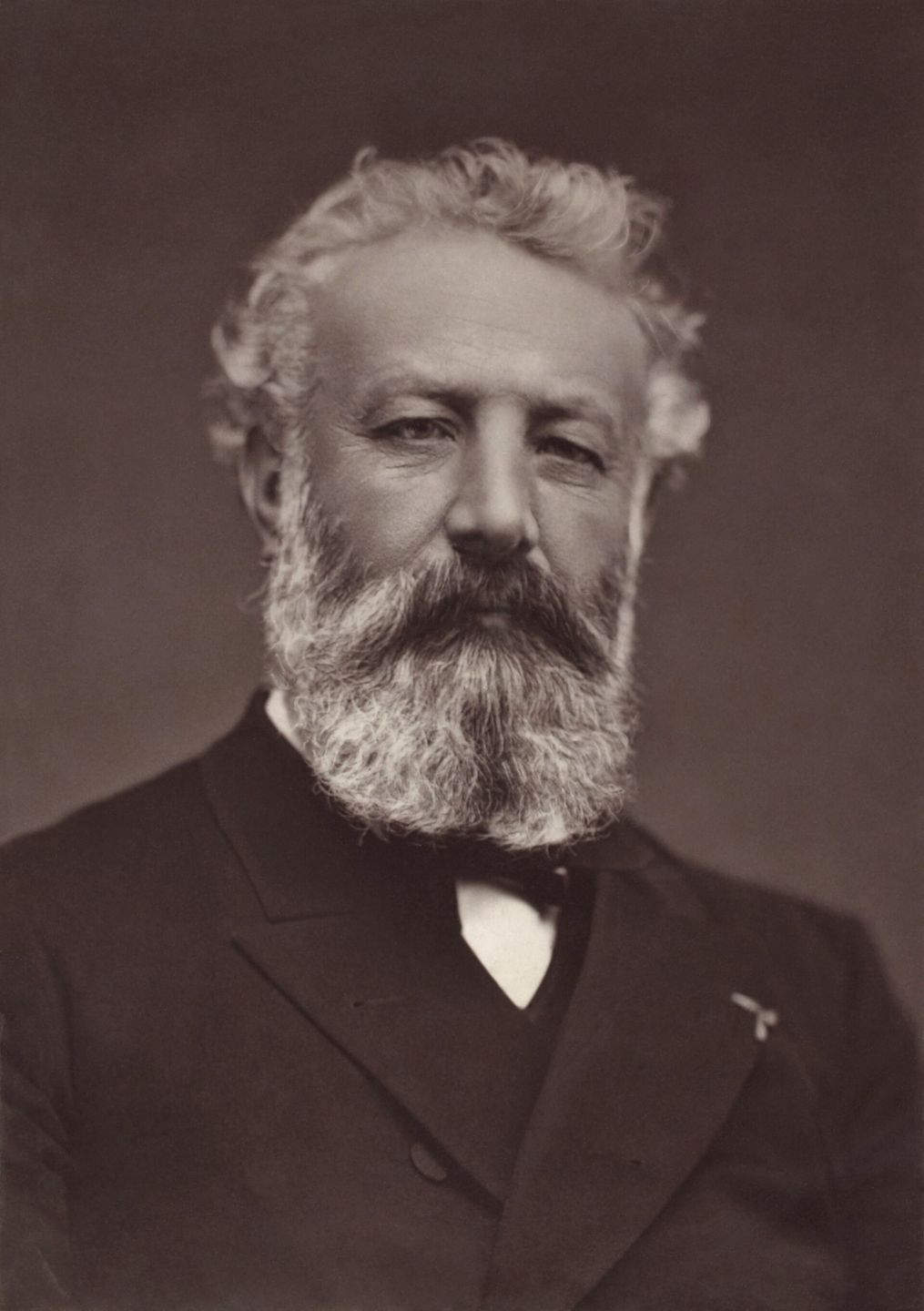
A second portrait of Jules Verne, photographed by étienne Carjat, showing the author who would go on to write 54 novels in his "Voyages Extraordinaires" series. Étienne Carjat / Adam Cuerden, Public domain, via Wikimedia Commons
Verne wrote 54 novels in his "Voyages Extraordinaires" series, most of them bestsellers. He became wealthy, bought a yacht, and traveled Europe, North Africa, and North America. He was elected to the town council of Amiens. He was shot in the leg by a nephew suffering from paranoia and walked with a limp for the rest of his life. He died in 1905, a year before the first powered flight and 64 years before humans actually walked on the Moon.
What Verne understood, perhaps better than anyone writing in his era, was that technology changes what stories are possible. If you can imagine a machine that works within physical law, someone will eventually build a version of it. The Nautilus preceded functional submarines by decades, but it described the concept clearly enough that readers could picture it. That act of picturing, of making the speculative feel tangible, is design work. Verne wasn't an engineer, but he designed artifacts in prose that engineers later built in metal.
studio / on-this-day / Feb 8