studio / on-this-day / Nov 13
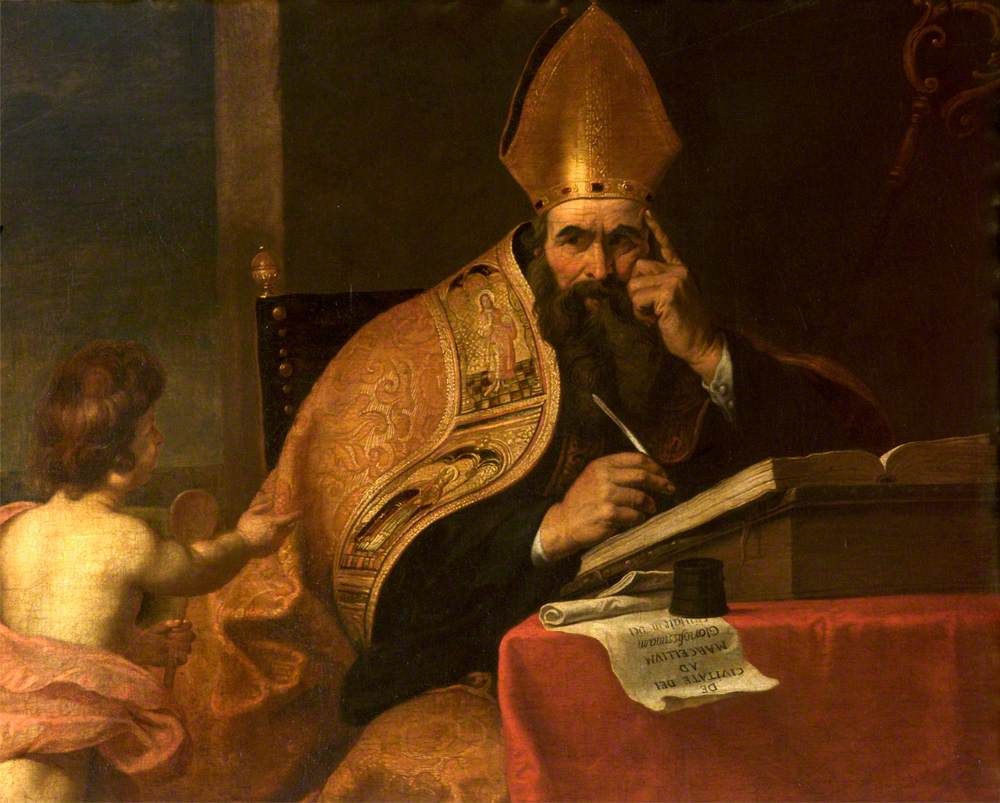
Saint Augustine, by sandro Botticelli. Attributed to Gerard Seghers, Public domain, via Wikimedia Commons
The Interior Architect
On this day in 354 — Augustine of Hippo was born, and would map, in his Confessions, the inner architecture of guilt and grace.
3 min read
Augustine of Hippo was born on November 13, 354, in Thagaste, a small town in Roman North Africa. His mother, Monica, was a devout Christian. His father, Patricius, was a pagan who converted on his deathbed. Augustine inherited both traditions and spent his life reconciling them. He became a rhetorician, a teacher of persuasion, someone trained to argue any position convincingly. He lived with a concubine for 15 years and fathered a son. He joined a religious sect called the Manicheans, which taught that the world was a battleground between good and evil, light and darkness. He left them dissatisfied. He moved to Rome, then Milan. And then, in a garden in 386, he heard a child's voice singing "take up and read." He opened the Bible at random, read a passage from Paul, and converted to Christianity.
In 397, Augustine began writing "Confessions," a book addressed to God but meant for everyone. It was autobiography as theology, a dissection of his own life in search of universal truths. He wrote about stealing pears as a boy, not because he was hungry but because the act of theft itself was thrilling. He wrote about lust, ambition, and the desire for fame. He wrote about his mistress, whom he loved but abandoned to make a socially advantageous marriage that never happened. He wrote about his son, Adeodatus, who died at 17. He wrote about time, memory, and language. He asked questions like "What is time?" and concluded that the past exists only as memory, the future only as expectation, and the present is a knife edge between them, infinitely thin and infinitely sharp.
"Confessions" was the first autobiography in Western literature. Earlier writers had recorded their deeds. Augustine recorded his thoughts. He made the inner life a subject worth documenting. He showed that the structure of consciousness, the way we experience guilt, desire, and transformation, was as worthy of attention as external events. He invented introspection as a literary form, and every memoir since owes him a debt.
Augustine's theology shaped Western Christianity for over a thousand years. He developed the doctrine of original sin, the idea that humanity is born flawed because of Adam's disobedience. He argued that free will exists but is constrained, that humans can choose to do good but are inclined toward evil without grace. He believed that salvation comes through faith, not works, a concept that would resurface in the Protestant Reformation 1,100 years later. He wrote about predestination, the idea that God has already chosen who will be saved, which created centuries of debate about whether human actions matter if the outcome is predetermined.
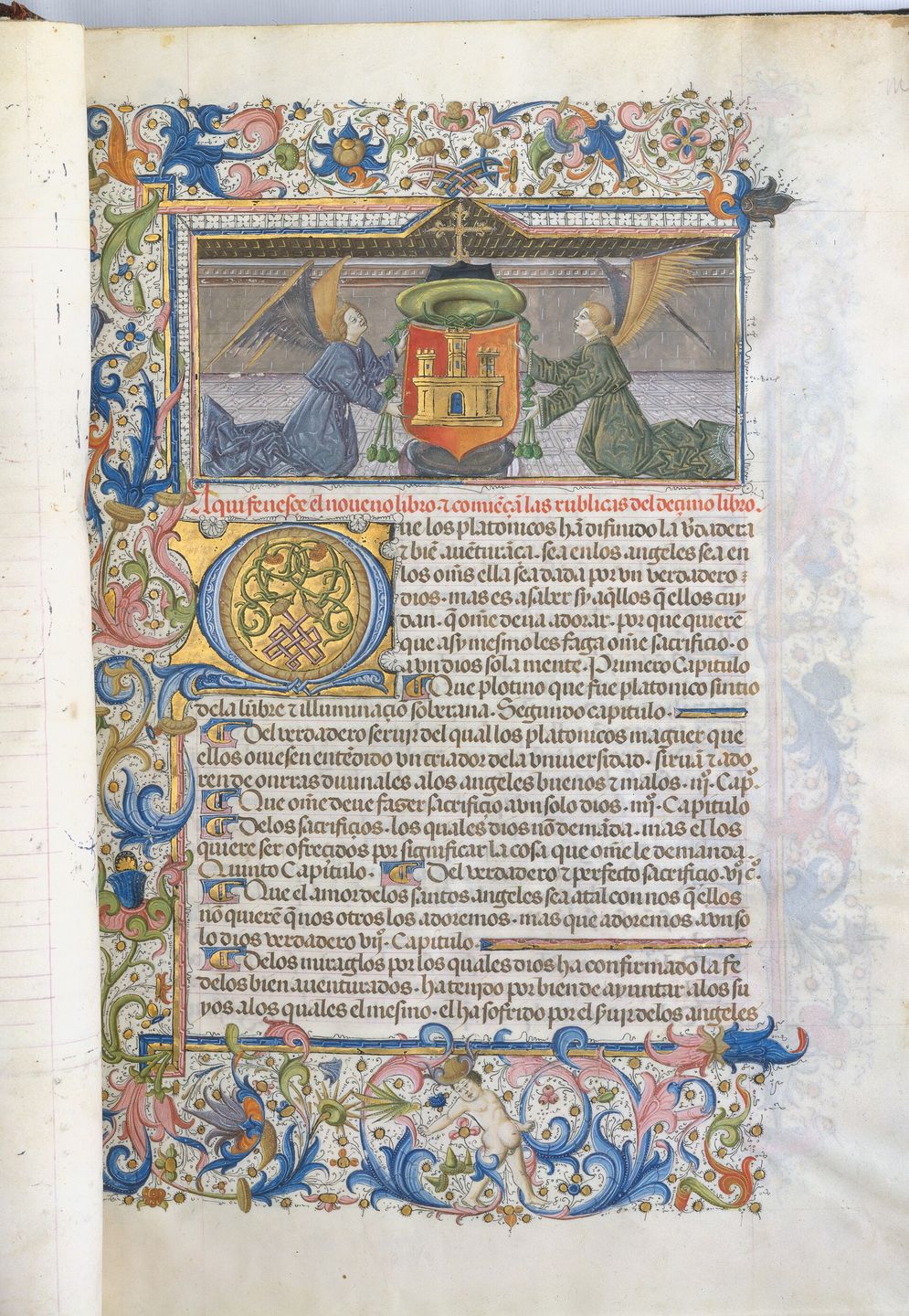
A page from a Spanish translation of Augustine's "the City of God," written after the sack of Rome in 410. Cano de Aranda, CC0, via Wikimedia Commons
He was also a pragmatist. When barbarians sacked Rome in 410, pagans blamed Christianity for weakening the empire. Augustine responded with "The City of God," a 22-book defense arguing that earthly cities rise and fall, but the City of God is eternal. He separated the sacred from the secular, arguing that the church's mission wasn't to preserve Rome but to save souls. This allowed Christianity to survive the collapse of the empire and become the organizing structure of medieval Europe.
Augustine died in 430 during a siege of Hippo by the Vandals. The Roman Empire in the West had 46 years left. But Augustine's ideas outlasted empires. His "Confessions" became a template for self-examination. His theology influenced Aquinas, Luther, and Calvin. His separation of church and state became foundational to Western political thought. He proved that ideas about the interior life, memory, time, and the self could be as enduring as architecture. The soul had structure, and Augustine was the first to map it. What he built wasn't made of stone. It was made of sentences, arguments, and self-awareness. And it still stands.
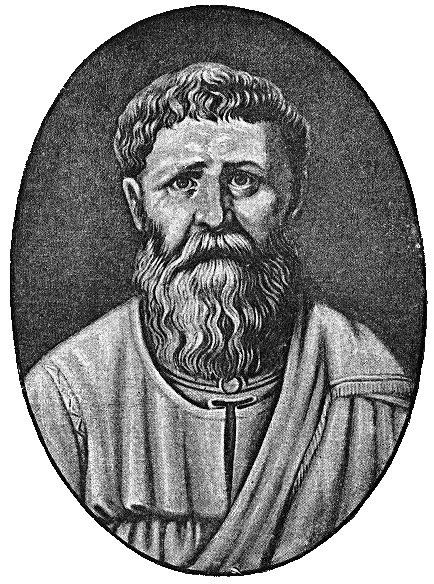
Augustine of Hippo, bishop of Hippo regius and author of Confessions and the City of God. Public domain, via Wikimedia Commons
studio / on-this-day / Nov 13