studio / on-this-day / Nov 11
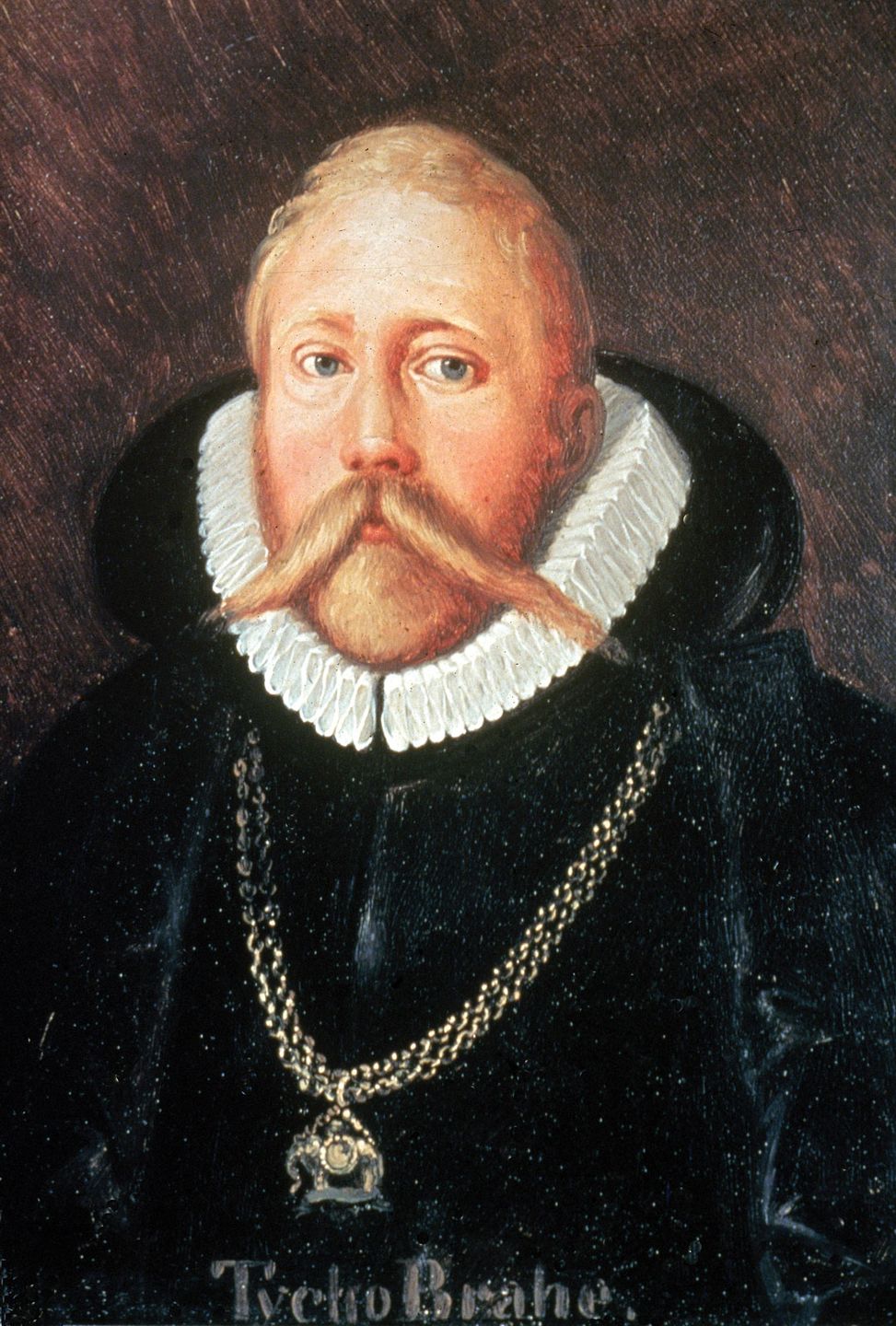
Tycho Brahe, astronomer. Eduard Ender (1822-1883), Public domain, via Wikimedia Commons
The Star That Shouldn't Have Existed
On this day in 1572 — Tycho Brahe watched a new star flare into being, and the ancient belief in an unchanging heaven quietly died.
3 min read
On the evening of November 11, 1572, Tycho Brahe walked outside and noticed a star in the constellation Cassiopeia that hadn't been there before. It was brighter than Venus, visible even in daylight. According to Aristotelian cosmology, which had dominated European thought for nearly 2,000 years, this was impossible. The heavens were perfect and unchanging. Stars were fixed in crystalline spheres. New stars didn't appear. Yet there it was, glowing impossibly bright, refusing to obey the rules.
Tycho spent months observing the new star, measuring its position with instruments he had designed himself. He found no parallax, the apparent shift in position that occurs when observing nearby objects from different angles. This meant the star was beyond the Moon, in the celestial realm that Aristotle claimed was eternal and immutable. Tycho published his findings in 1573 in a book titled "De nova stella," Latin for "concerning the new star." The term stuck. We still call exploding stars novae and supernovae, even though they aren't new at all. They're dying.
The supernova challenged the entire structure of medieval cosmology. If the heavens could change, then they weren't made of different substance than Earth. If stars could appear and disappear, then the universe wasn't a fixed hierarchy with Earth at the center and God's perfect realm above. Tycho's observation didn't immediately overturn the old model, but it cracked the foundation. Astronomers had to choose between the data and the doctrine. Some chose doctrine. Tycho chose data.
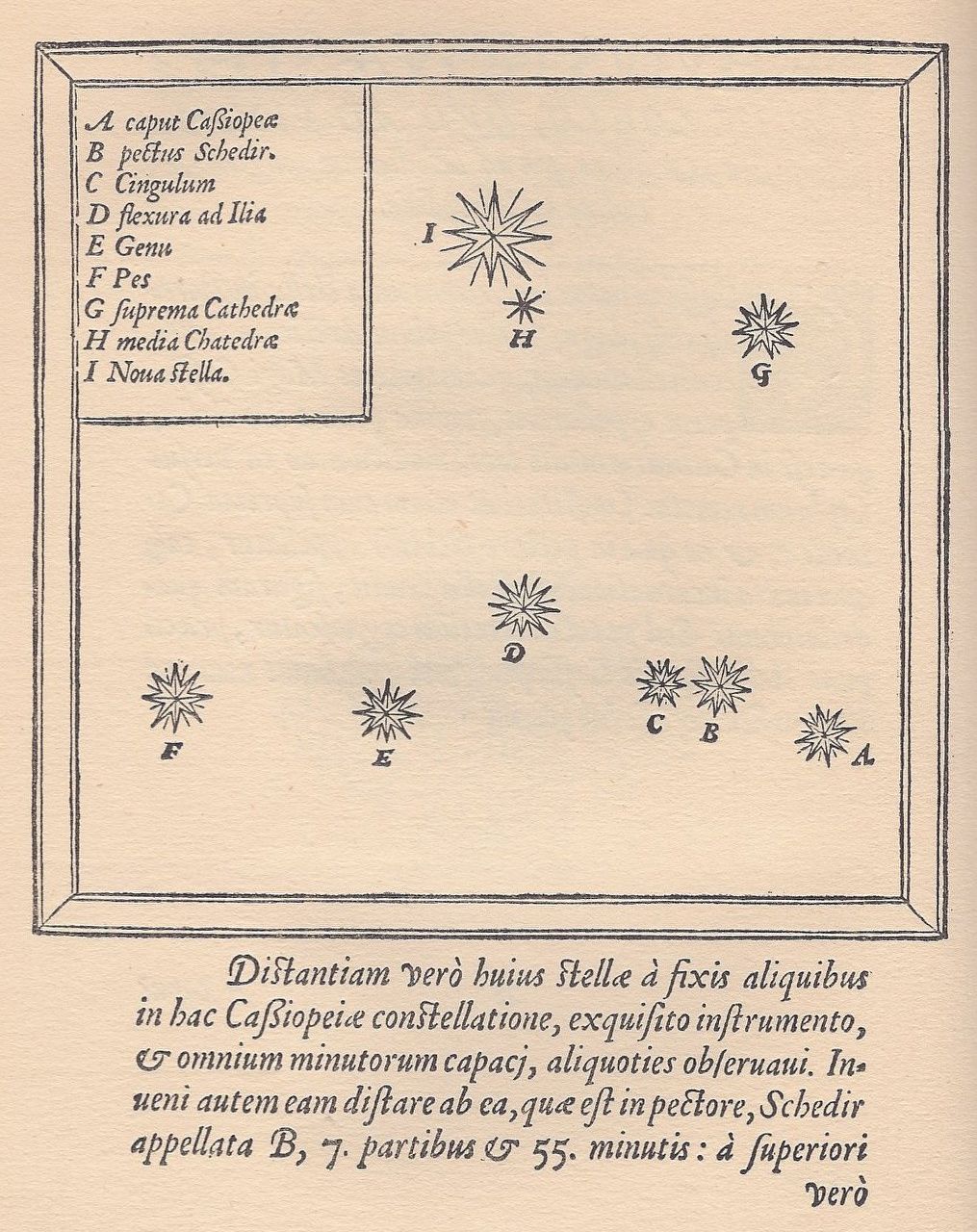
Tycho's own star map of Cassiopeia from De nova stella (1573), with the new star marked. Tycho Brahe, Public domain, via Wikimedia Commons
Tycho became the most precise observational astronomer before the telescope. He built an observatory on the island of Hven, equipped it with massive brass instruments, and spent 20 years cataloging the positions of over 1,000 stars with unprecedented accuracy. He couldn't explain what he saw. He knew the Earth-centered Ptolemaic model was wrong, but he couldn't accept the Sun-centered Copernican model either. So he proposed a hybrid: the Sun and Moon orbit Earth, but the other planets orbit the Sun. It was mathematically awkward but observationally defensible.
After Tycho died in 1601, his assistant Johannes Kepler inherited his data. Kepler used Tycho's measurements to discover that planets move in ellipses, not circles, and that their speed varies as they orbit. This was only possible because Tycho's observations were accurate enough to reveal the discrepancies. Tycho provided the raw material. Kepler built the theory. Together, they dismantled the old cosmos and prepared the ground for Newton's mechanics and Einstein's relativity.
The supernova of 1572 is still visible today, not as a star but as a expanding shell of gas and dust called a supernova remnant. It's about 13 light-years across, still growing, still glowing faintly in X-rays. Tycho saw it for 18 months before it faded from view. In that time, it rewrote the rules of the universe. The heavens weren't perfect. Change was everywhere, even in the stars. Observation mattered more than authority. The cosmos was stranger and more dynamic than anyone had imagined, and the only way to understand it was to measure, record, and question. Tycho's star didn't just appear in the sky. It appeared in the history of science as the moment when seeing became more important than believing.
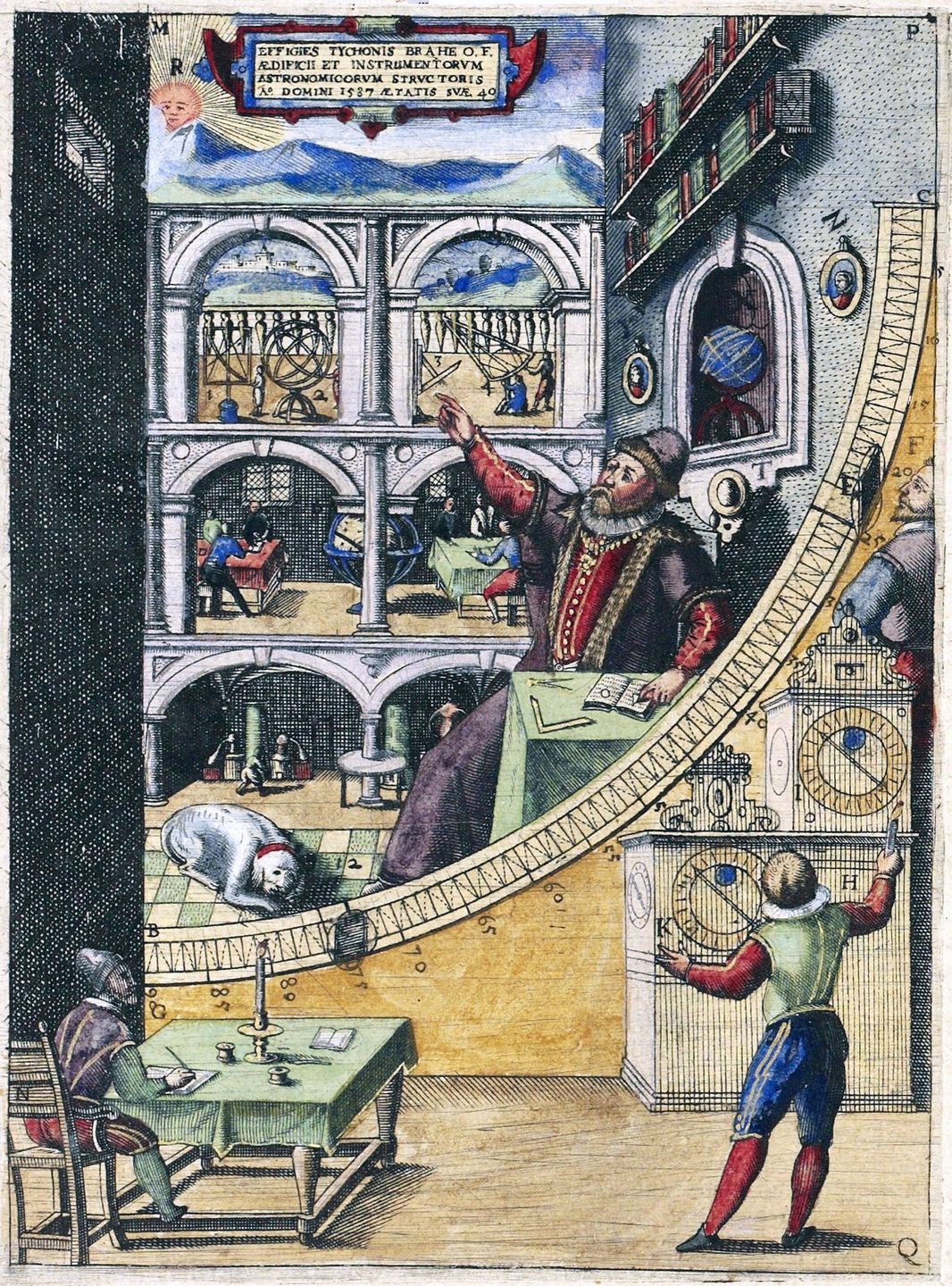
Tycho Brahe's mural quadrant at Uraniborg — the instrument he used to measure the positions of stars with unprecedented accuracy. Public domain, via Wikimedia Commons
studio / on-this-day / Nov 11