studio / on-this-day / Oct 5
President Harry s. Truman. Paigemallo, CC0, via Wikimedia Commons
The Living Room Presidency
On this day in 1947 — a president addressed the nation on television for the first time, and politics began moving into the living room.
3 min read
On October 5, 1947, President Harry S. Truman sat before a television camera in the White House and addressed the nation about food conservation in the wake of World War II. The speech lasted about 20 minutes. It was broadcast to an estimated 10 million viewers, though only a small fraction owned television sets. Most watched in bars, store windows, or neighbors' living rooms. Television was still a novelty. The presidency was about to become a performance medium.
The address was not the first time a president had appeared on television. Franklin D. Roosevelt had been televised at the 1939 World's Fair. But Truman's speech was the first official presidential address broadcast from the White House itself, the first time the office used the medium deliberately as a tool of communication. It marked the beginning of a transformation in how political power is presented and perceived.
Radio had already changed the presidency. FDR's fireside chats brought the president's voice into American homes, making him feel accessible, almost intimate. But television added a visual dimension that radio could not provide. Presence, posture, facial expressions, all became part of the message. A president could no longer rely solely on words. How you looked delivering them mattered just as much.
Truman was not a natural performer. He was blunt, plain-spoken, and often stiff on camera. But that bluntness worked in his favor. Television made artifice visible. The medium rewarded sincerity, or at least the appearance of it. Truman's lack of polish came across as honesty. Viewers could see him, not just hear him. The White House became a stage, and the president became a character in a national narrative that played out nightly in millions of homes.
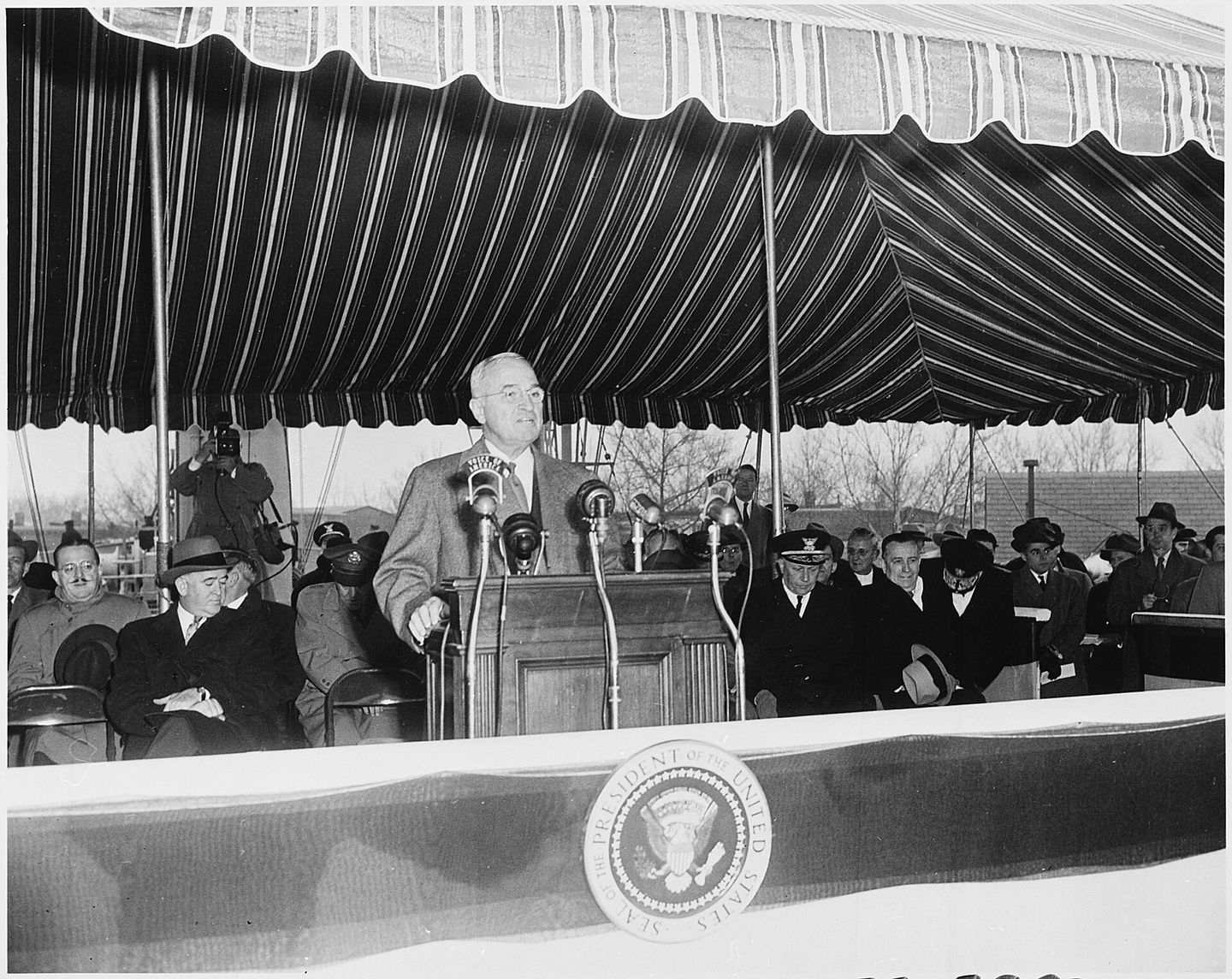
President Truman at the first televised White House address, October 5, 1947. Abbie Rowe, Public domain, via Wikimedia Commons
The implications were not immediately obvious. In 1947, fewer than 1% of American households owned a television. By 1960, that number had risen to 90%. The medium went from curiosity to cultural infrastructure in a single generation. Political campaigns adjusted accordingly. Appearance, charisma, and screen presence became as important as policy positions. The 1960 presidential debate between Kennedy and Nixon is the most famous example. Those who listened on radio thought Nixon won. Those who watched on television favored Kennedy. The medium was not neutral. It had preferences.
Television collapsed the distance between leaders and citizens, but it also created new forms of distance. The president became simultaneously more accessible and more curated. Every appearance was an opportunity for messaging, every gesture analyzed, every speech crafted for maximum visual impact. Authenticity became a performance, and performance became a requirement for power.
Truman's 1947 address was about food conservation, urging Americans to reduce consumption to help feed war-torn Europe. The content was practical, the tone earnest. But the medium was the message. Television made politics personal in a way that newspapers and radio could not. It brought leaders into living rooms, made them part of the household, turned governance into something you watched the way you watched a play or a sporting event.
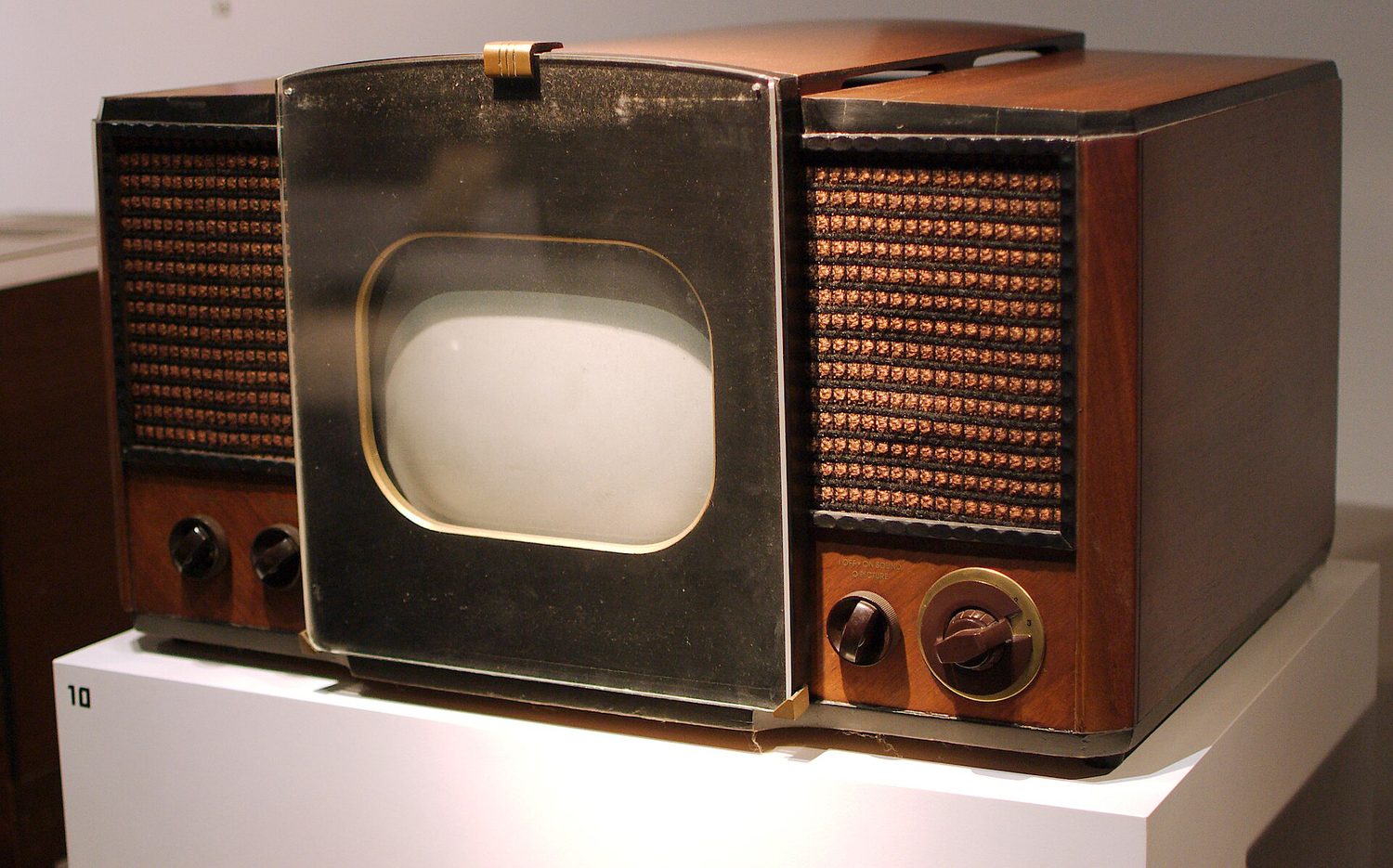
An RCA 630-TS, the first mass-market television set, the kind of receiver Americans watched Truman's 1947 address on. Fletcher6, CC BY-SA 3.0, via Wikimedia Commons
What began on October 5, 1947, has only intensified. Presidential communication is now designed for television first, with everything else secondary. Press conferences are staged. State of the Union addresses are theater. Every public appearance is an exercise in image management. The camera has become as important as the podium, and the living room has become the primary venue for political engagement.
Truman could not have predicted where this would lead. He was simply using a new tool to reach the public. But tools shape the messages they carry, and television reshaped the presidency into something fundamentally different from what it had been. October 5, 1947, is the day we started watching our leaders instead of just listening to them. The consequences are still unfolding.
studio / on-this-day / Oct 5