studio / on-this-day / Oct 21
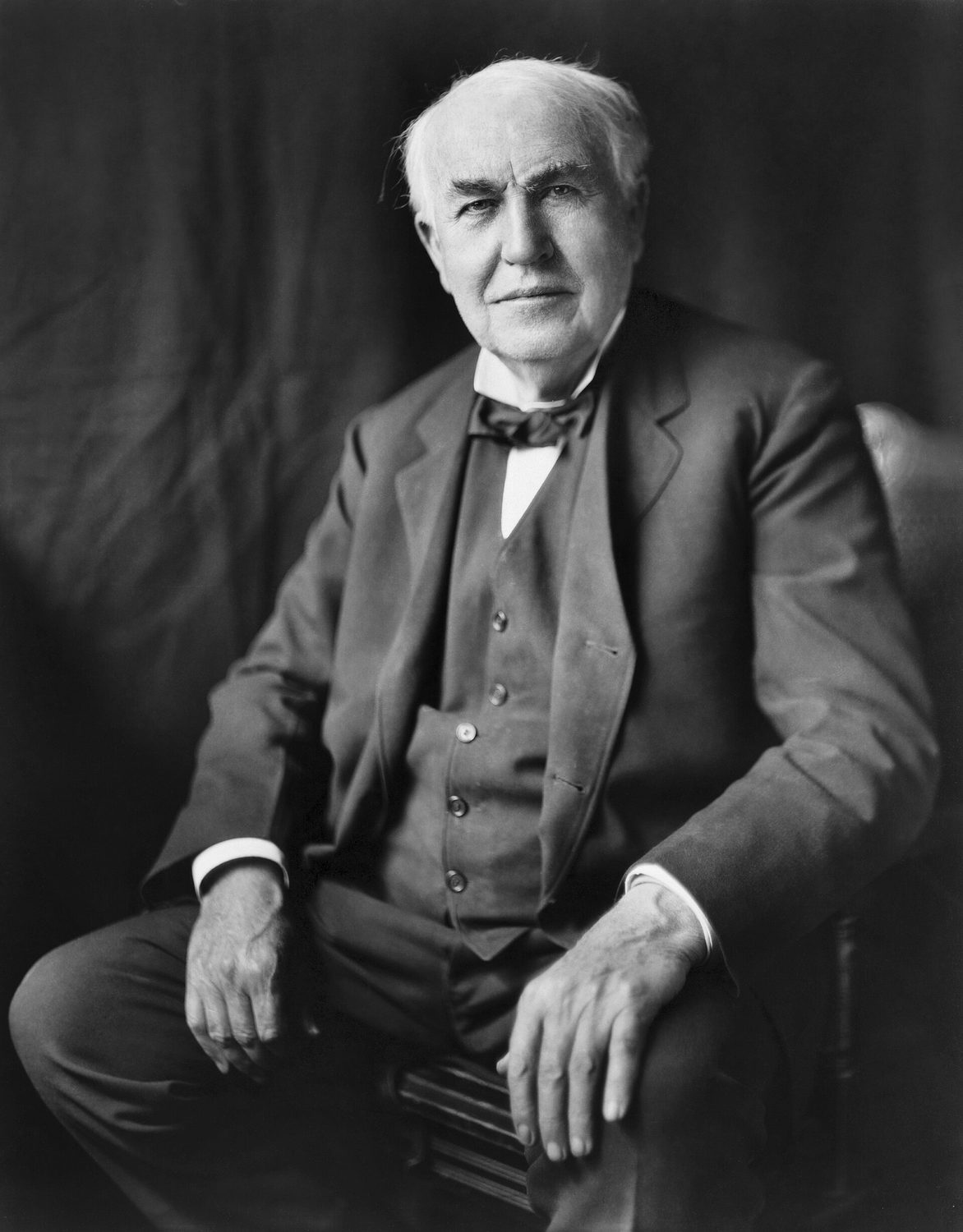
Thomas Edison, whose carbon-filament lamp burned for over thirteen hours in the famous 1879 test. Public domain, via Wikimedia Commons
Thirteen Hours of Light
On this day in 1879 — Edison's carbon-filament bulb burned for thirteen and a half hours, long enough to prove electric light could be practical.
3 min read
On October 21, 1879, Thomas Edison turned on a light bulb at his Menlo Park laboratory and watched it glow for thirteen and a half hours before it finally burned out. It was not the first electric light. Dozens of inventors had created working prototypes. But it was the first that seemed practical enough to replace gas lamps and candles in homes and businesses. The problem had never been making light from electricity. The problem was making it last.
Electric arc lamps already existed and were used for street lighting, but they were too bright, too hot, and required constant maintenance. Incandescent bulbs, which produced light by heating a filament until it glowed, were more promising but faced a fundamental materials problem. Most filaments burned out in minutes. Platinum lasted longer but was prohibitively expensive. Carbon filaments worked but broke easily. Edison needed something that could burn for hours, ideally hundreds of hours, and cost little enough to manufacture at scale.
He approached the problem with exhaustive testing. His team tried thousands of materials: bamboo, cedar, flax, hickory, even human hair. They carbonized the materials, turned them into thin filaments, and sealed them in glass bulbs with the air pumped out to prevent oxidation. Most failed immediately. Some lasted a few minutes. A few made it to an hour. Edison kept records of every attempt, analyzing what worked and why.
The breakthrough came with carbonized cotton thread. It was cheap, available, and could be processed into a stable filament. On that October night, the bulb stayed lit long enough to prove the concept. Edison later improved the design using carbonized bamboo, which could last over a thousand hours. But the cotton thread bulb was the first time the system worked well enough to demonstrate commercial viability.
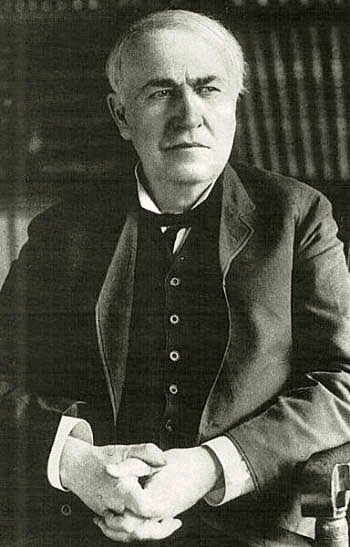
Thomas Alva Edison, whose persistence through thousands of experiments led to the practical incandescent light bulb. CC BY-SA 3.0, via Wikimedia Commons
Edison understood that the bulb alone was not enough. He needed to build an entire electrical distribution system: generators to produce power, wiring to deliver it, switches to control it, and sockets to connect the bulbs. He designed the infrastructure in parallel with the product. By 1882, he had built the first commercial power station on Pearl Street in Manhattan, supplying electricity to 59 customers. The system was designed to be simple, safe, and scalable.
The light bulb changed how people lived. Before electric lighting, daily routines were constrained by daylight. Work stopped at dusk unless you could afford expensive oil lamps or gas lighting, both of which were dim, dangerous, and required constant attention. Electric light was instant, bright, and safe. It extended the productive day by hours. Factories could run multiple shifts. People could read, work, and socialize after dark without difficulty.
But the deeper impact was infrastructural. The electric grid that powered the light bulbs became the foundation for every electrical device that followed. Motors, appliances, communication systems, and eventually computers all relied on the same distribution network Edison designed to deliver power to light bulbs. The grid became invisible infrastructure, so fundamental that it is only noticed when it fails.
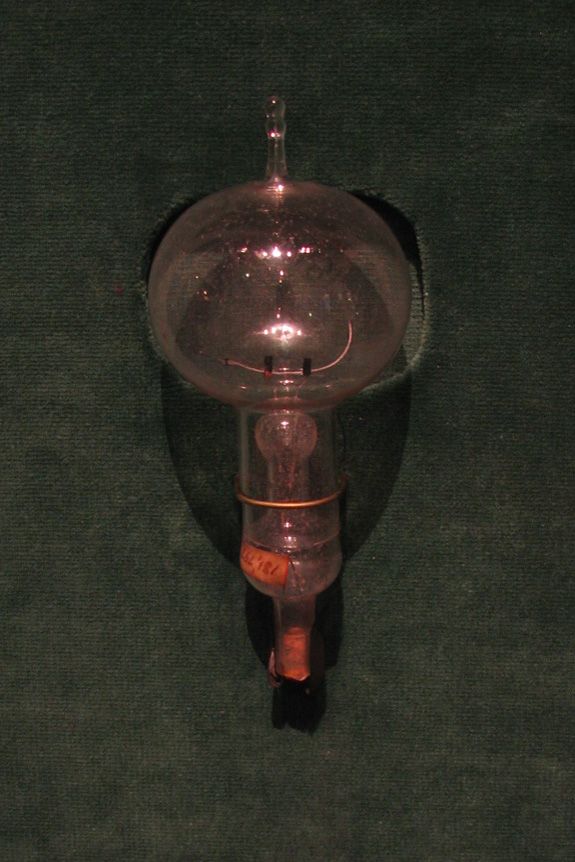
An early Edison carbon-filament bulb, the kind of design that first burned long enough to be practical. Terren, CC BY 2.0, via Wikimedia Commons
Today, incandescent bulbs are being phased out in favor of LEDs, which are vastly more efficient. But the design pattern Edison established remains: a small, replaceable component connected to a large, centralized power system. The light bulb was never just about light. It was about creating a platform, a system that could be extended and built upon. That is what made it transformative. Thirteen hours of continuous light proved that the system worked. Everything else followed from there.
studio / on-this-day / Oct 21