studio / on-this-day / Oct 22
Chester Carlson, inventor of xerography. Marcin Wichary from San Francisco, U.S.A., CC BY 2.0, via Wikimedia Commons
Printing Without Ink
On this day in 1938 — Chester Carlson made the first xerographic copy, printing without ink and inventing the photocopier.
3 min read
On October 22, 1938, Chester Carlson stood in a rented room above a bar in Astoria, Queens, and made the first xerographic copy. He had coated a zinc plate with sulfur, charged it with static electricity using a silk handkerchief, and placed a glass slide with the text "10-22-38 Astoria" on top. After exposing it to light, he dusted the plate with lycopodium powder and pressed it onto wax paper. The powder stuck to the charged areas, transferring the image. The copy was crude, barely legible. But it worked. Carlson had invented dry printing.
The achievement came after years of frustration. Carlson worked as a patent attorney and spent his days handling technical documents that needed to be copied. The only options were carbon paper, which required retyping, or photostatic machines, which were expensive, messy, and required wet chemicals. Carlson had arthritis, which made writing painful, and he was convinced there had to be a better way to duplicate documents. He started experimenting in his kitchen, then moved to the rented room when his wife objected to the smell of sulfur.
Xerography, from the Greek words for "dry" and "writing," relied on a simple principle: oppositely charged particles attract. Carlson used light to create a pattern of electrical charges on a surface. Where light hit, the charge dissipated. Where it did not, the charge remained. Powder dusted onto the surface stuck only to the charged areas, creating an image that could be transferred to paper. No ink, no chemicals, no mess. Just static electricity and powder.
The idea was elegant, but no one wanted it. Carlson spent years trying to sell the technology. He approached more than 20 companies, including IBM, General Electric, and Kodak. All of them turned him down. They did not see a market for office copying machines. Carbon paper worked fine. Photostats were available if you needed them. Why invest in a new, unproven system?

A photocopier, the commercial product that descended from Chester Carlson's 1938 xerography invention. Blayten, CC0, via Wikimedia Commons
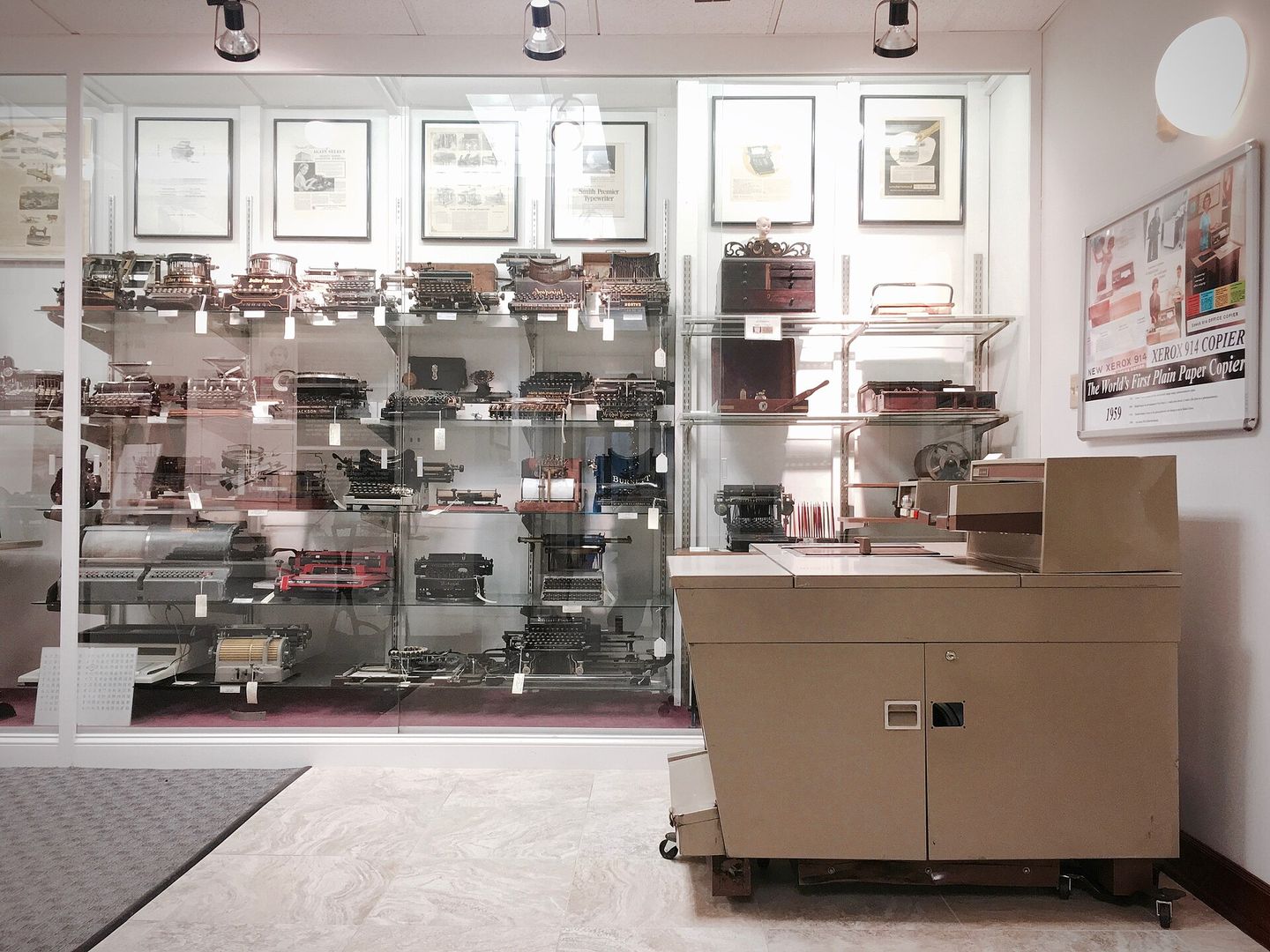
In 1944, a nonprofit research institute called Battelle Memorial Institute agreed to refine the technology. Three years later, a small photo-paper company called Haloid saw potential and licensed the patents. Haloid renamed itself Xerox and spent a decade improving Carlson's prototype. The breakthrough came in 1959 with the Xerox 914, the first fully automated plain-paper photocopier. It was a commercial success beyond anything Carlson had imagined.
The photocopier changed office work in ways that were not immediately obvious. Before Xerox, making copies was slow, expensive, and deliberate. You only copied what you absolutely needed. After Xerox, copying was fast, cheap, and trivial. Information became more fluid. Documents could be distributed widely with minimal effort. This had unintended consequences. Offices were suddenly flooded with paper. Entire bureaucracies emerged to manage the copies of copies of copies that accumulated in filing cabinets.
But the deeper shift was cultural. Xerography democratized information distribution. Before, controlling the original document meant controlling access. After, anyone with access to a photocopier could reproduce and distribute information at will. This had political implications. Activists used photocopiers to spread pamphlets. Dissidents copied banned texts. The Xerox machine became a tool for circumventing centralized control of information, much like the internet would decades later.
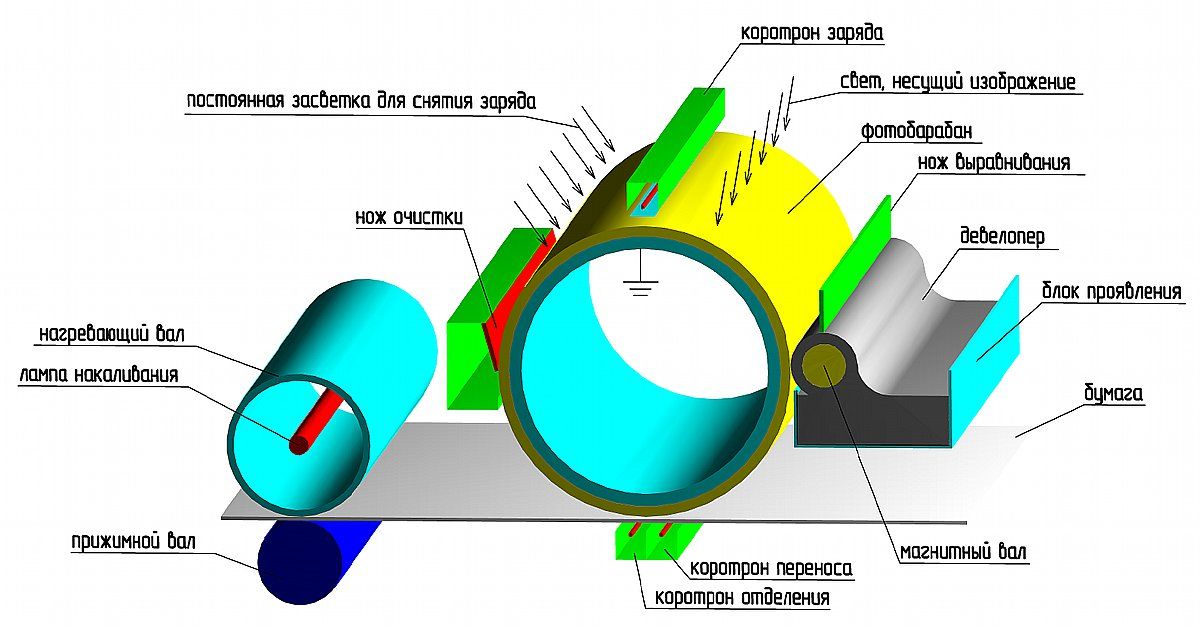
A schematic of the electrophotographic process: a charged surface, light, and powder that sticks only where the charge remains. Чернышев Денис, CC0, via Wikimedia Commons
Chester Carlson made a fortune from his invention, but he gave most of it away, donating millions to charities and educational institutions. He died in 1968, a decade after the Xerox 914 launched. The technology he invented in a rented room above a bar became so ubiquitous that "xerox" became a verb. Dry printing replaced wet. Static electricity replaced ink. And the ability to copy anything, instantly, became a fact of modern life.
studio / on-this-day / Oct 22