studio / on-this-day / Oct 18
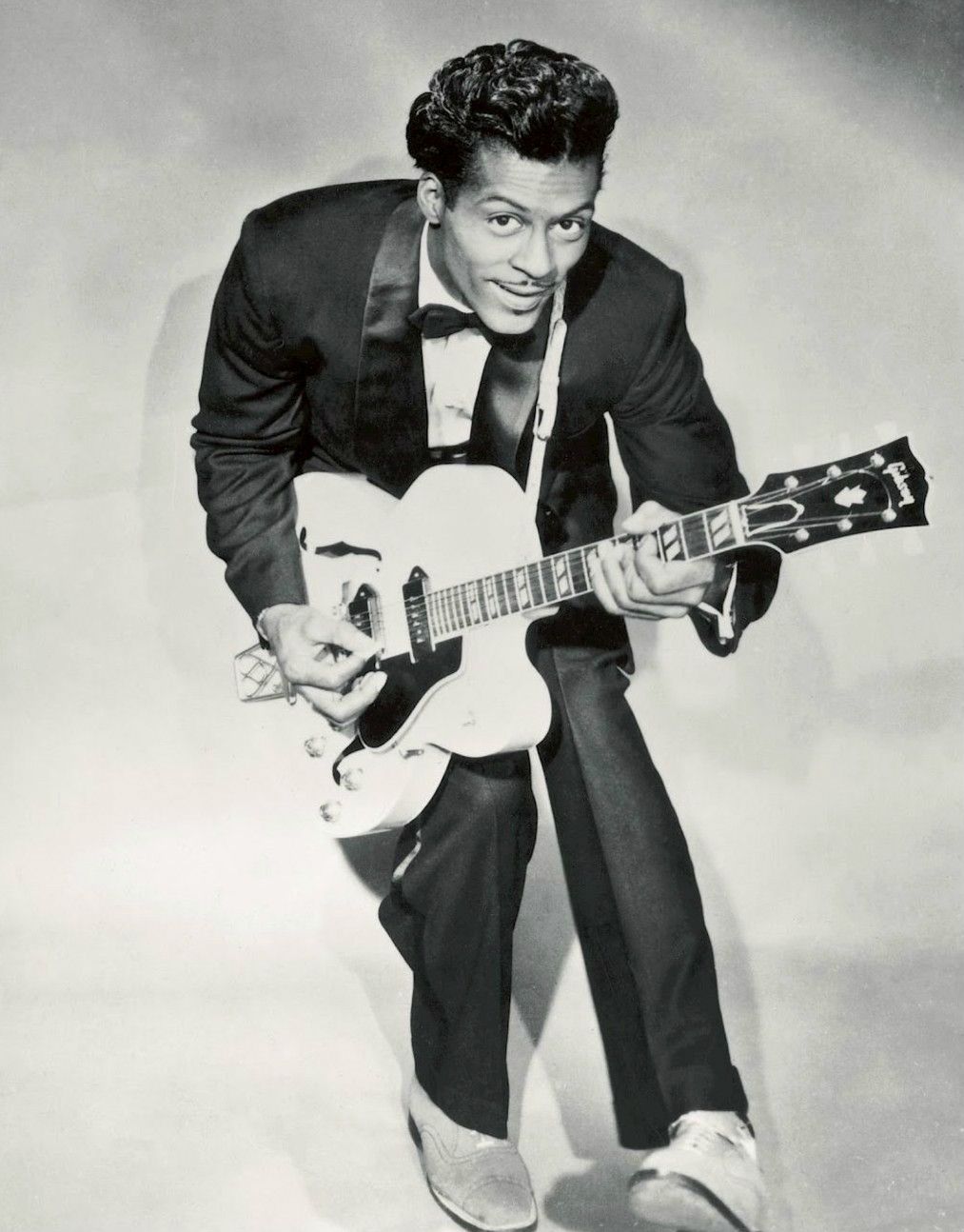
Chuck Berry in a promotional photograph, around 1958. public domain, via Wikimedia Commons
The Man Who Wrote the Blueprint
On this day in 1926 — Chuck Berry was born. He fused rhythm and blues, country, and a poet's eye for teenage life into the basic template that nearly all of rock and roll has followed since.
4 min read
Chuck Berry was born on October 18, 1926, in St. Louis, Missouri. He worked as a hairdresser and played guitar on the side, and he did not have his first hit until he was nearly thirty, which in pop-music terms is practically middle-aged. When it came, though, it did not just add to the music of the moment. It quietly wrote the rulebook that the next seventy years would follow.
What Berry did was a kind of synthesis. He took the rhythm and blues he had grown up with and fused it with the phrasing and storytelling of country music, a genre coded at the time as white, and welded the two into something new. On top of that hybrid he laid a guitar style, those bright, double-string riffs and the driving intro to a song like "Johnny B. Goode," that became the default vocabulary of the instrument in rock. Pick up an electric guitar today and you are, whether you know it or not, quoting him.
He was also a writer, and this part gets underrated. Berry aimed his lyrics with precision at the emerging world of the American teenager, cars, school, records, romance, the specific texture of a new kind of adolescence, and rendered it in sharp, witty, novelistic detail. He was not just making a sound; he was defining a subject, telling a generation that its ordinary life was worth singing about.
Sound, guitar language, and subject matter: on all three, the thing we call rock and roll largely runs on templates Berry set. The Beatles and the Rolling Stones openly built on him and covered him; a huge share of what followed is, structurally, variations on his design. He was less a star within a genre than the author of the genre's basic grammar.
He did this as a Black man in a segregated industry that was, at the very moment his music crossed over, busy handing versions of that same music to white performers who could be sold more easily to a mass audience. Berry reached enormous fame and was also, repeatedly, cheated, policed, and constrained in ways his white imitators were not. The blueprint was his; the rewards were handed out by a system not built to reward him fully.
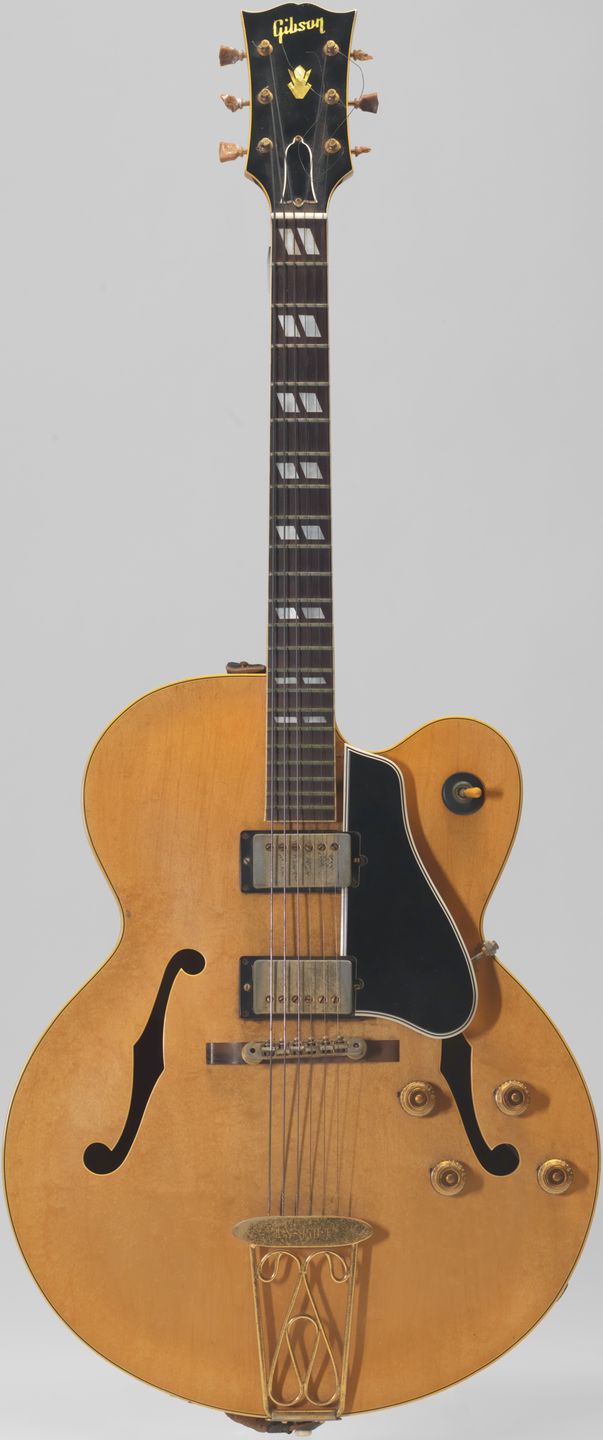
Chuck Berry's Gibson ES-350t guitar, nicknamed maybellene. CC0, via Wikimedia Commons
That gap, between who designs the thing and who is allowed to profit from it, is one of the recurring stories of American culture, and Berry's career is one of its sharpest examples. He built the machine that others drove to greater riches, and he knew it, and he was pointed about saying so.
He kept performing almost to the end of his long life, playing the songs everyone had spent decades copying. On October 18, 1926, a man was born who would not merely play rock and roll but effectively specify it, the sound, the words, the moves, and then watch the form he authored become the soundtrack of a century that did not always pay him back for it.
studio / on-this-day / Oct 18