studio / on-this-day / Oct 19
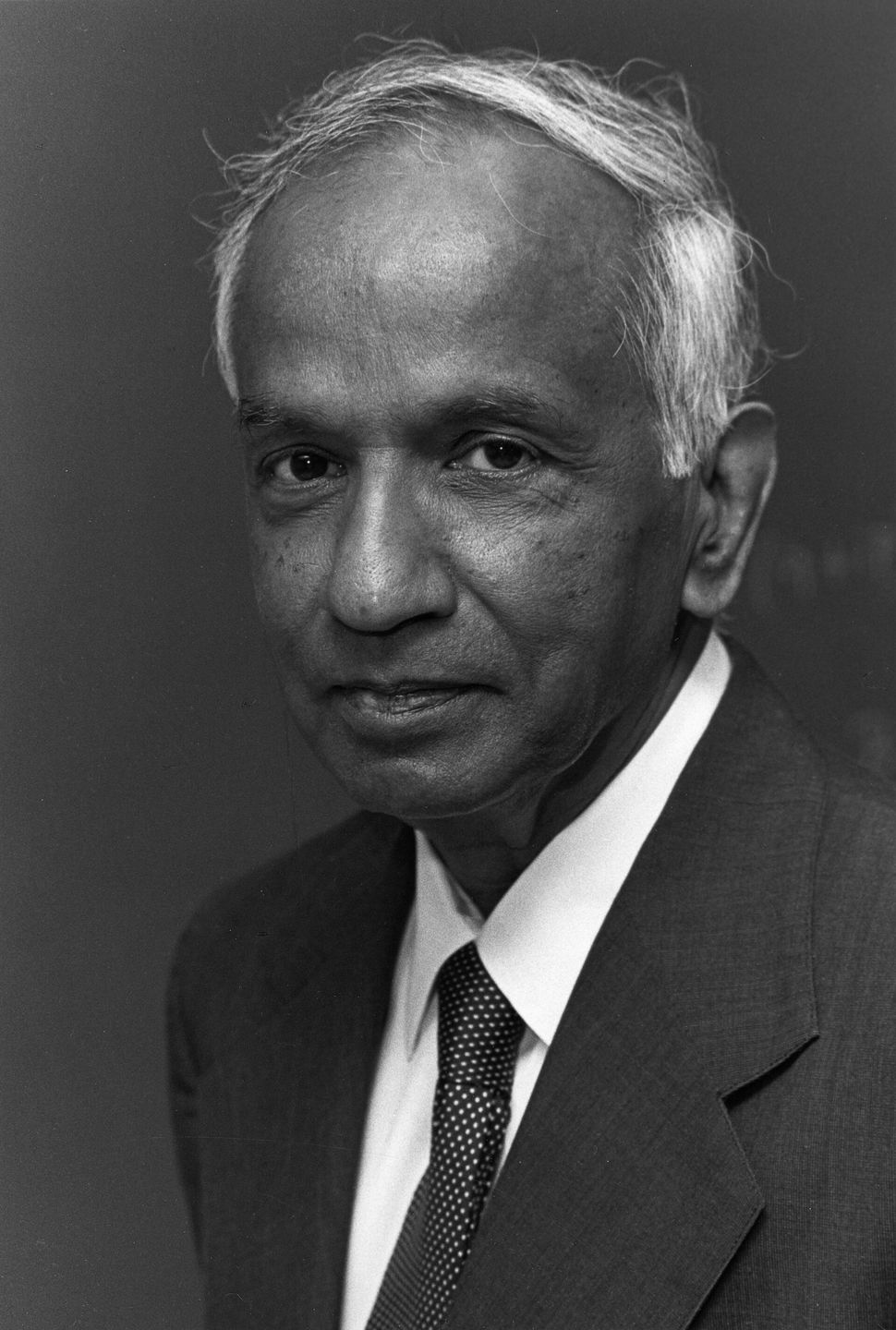
Subrahmanyan Chandrasekhar, who calculated the mass limit of white-dwarf stars at nineteen. AIP Emilio Segrè Visual Archives, via Wikimedia Commons
The Limit He Was Ridiculed For
On this day in 1910 — Subrahmanyan Chandrasekhar was born. At nineteen he calculated the mass beyond which a dying star cannot hold itself up, then spent decades being told, by his own hero, that he was wrong.
4 min read
Subrahmanyan Chandrasekhar was born on October 19, 1910, in Lahore, in what was then British India. He was a prodigy, and in 1930, at the age of nineteen, he boarded a ship from India to England to study at Cambridge. To fill the long weeks at sea he worked on a problem about the fate of dying stars, and by the time the ship docked he had, in effect, found something the most eminent astronomers of the age were not ready to accept.
The result is now called the Chandrasekhar limit. A star spends its life balancing two forces: gravity pulling it inward, and the pressure of its own hot matter pushing out. When the fuel runs out, gravity wins unless something holds the line. Chandrasekhar showed, by combining Einstein's relativity with the new quantum mechanics, that there is a ceiling, roughly 1.4 times the mass of our Sun, above which nothing can stop the collapse. Below it, a star settles into a dense ember called a white dwarf. Above it, the star must keep falling, into what we now call a neutron star or a black hole.
This was a genuinely new idea: that mass alone decides a star's ending, and that the universe contains objects gravity can crush without limit. It was also elegant, a clean number falling out of first principles, exactly the sort of result that ought to have made a young man's name at once.
Instead he was humiliated. At a 1935 meeting of the Royal Astronomical Society, Sir Arthur Eddington, the most famous astrophysicist alive and a man Chandrasekhar admired, rose after his talk and ridiculed the whole idea, calling it very nearly absurd and declaring there ought to be a law of nature to stop stars from behaving so. The room, deferring to Eddington's stature, largely sided with him. Chandrasekhar was in his twenties, a foreigner in England, and had just watched a giant of the field dismiss his correct work in public.
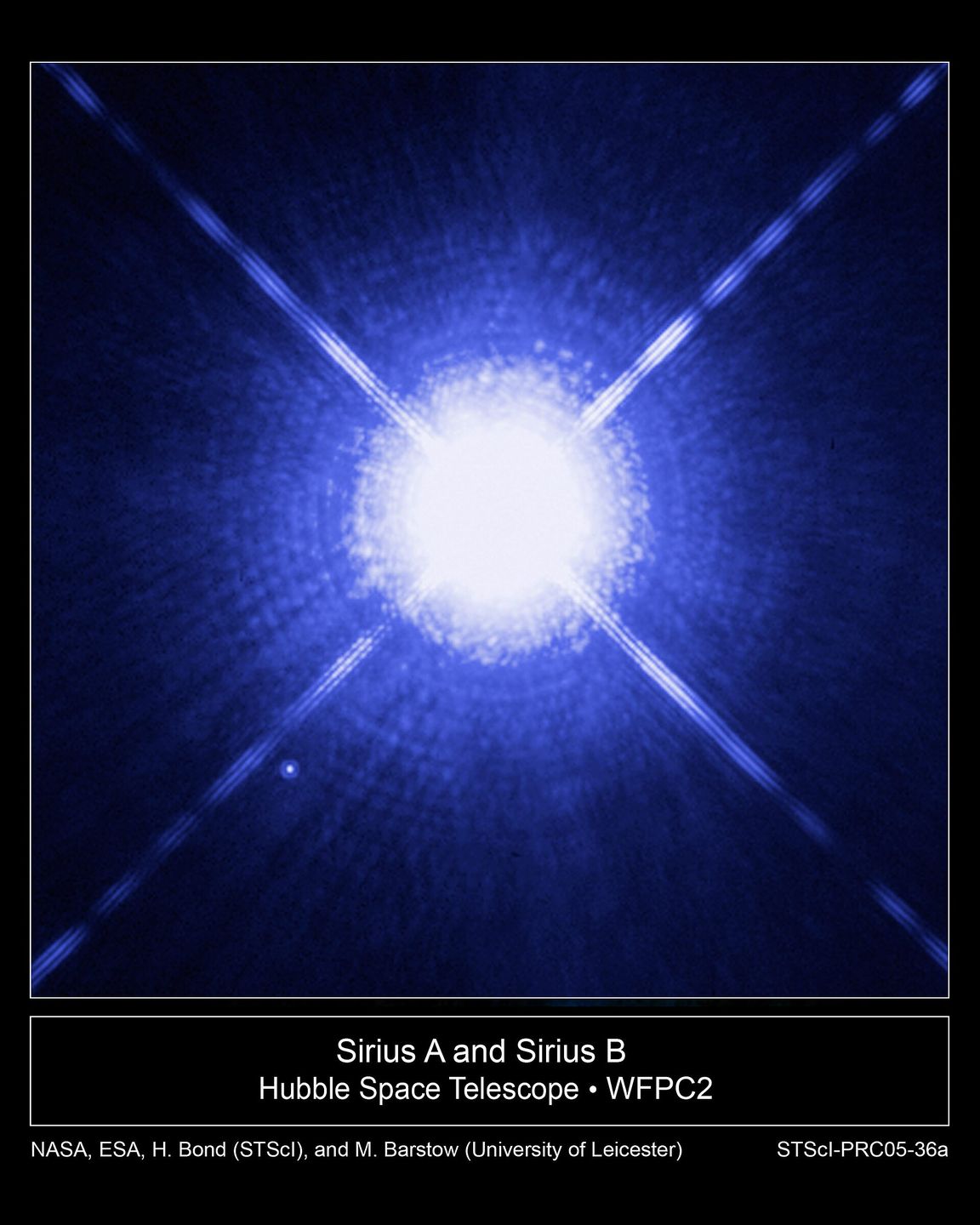
The bright star Sirius with its faint white-dwarf companion, Sirius b (lower left); the Chandrasekhar limit governs the fate of such stars. Public domain, via Wikimedia Commons
He did not win the argument by shouting. He wrote the calculation up carefully, put it in a book, and turned to other fields, transforming each one he touched across a long career at the University of Chicago. He let the work stand and let time do the arguing. Slowly, as neutron stars and then black holes were actually found, it became clear that the young man had been right and the great Eddington wrong.
In 1983, nearly half a century after that meeting, Chandrasekhar received the Nobel Prize in Physics for the work he had done on the boat and been mocked for as a young man. The limit carries his name, and the space telescope that studies black holes and exploding stars, NASA's Chandra observatory, is named for him as well.
There are two lessons braided together here. One is that authority and correctness are different things, and that a confident senior voice can be flatly wrong while a young outsider is right. The other is quieter and harder: when you have done the work carefully and you know it holds, you do not always have to win the room. Sometimes you write it down clearly, let it stand, and trust that reality will take your side in the end. It took decades. He was right the whole time.
studio / on-this-day / Oct 19