studio / on-this-day / Oct 10

Panama Canal Gatun Locks under construction, 1913. Isthmian Historical Society, Public domain, via Wikimedia Commons
Cutting Through
On this day in 1913 — a remote-triggered blast joined the two oceans through the Panama Canal, dynamite finishing what design had begun.
3 min read
On October 10, 1913, President Woodrow Wilson pressed a button in Washington, D.C., triggering an explosion 2,000 miles away. The blast destroyed the Gamboa Dike, allowing water from the Atlantic to flow into the Panama Canal for the first time. The Atlantic and Pacific Oceans were now connected through 51 miles of engineered waterway. Ships could cross between hemispheres without sailing around the tip of South America. The journey that once took months now took hours.
The Panama Canal is one of the largest and most ambitious infrastructure projects ever undertaken. Construction began in 1904, after a failed French attempt in the 1880s that killed over 20,000 workers from disease and accidents. The United States succeeded where France failed by solving two problems: controlling tropical disease and redesigning the canal itself.
The French had tried to build a sea-level canal, like the Suez Canal. But Panama's terrain was mountainous, its rivers unpredictable, and its rainy season catastrophic. A sea-level canal would have required excavating far more earth than was practical. The American approach was different. Instead of cutting through the mountains, they would lift ships over them using a system of locks.
The locks are the genius of the Panama Canal. Ships enter a lock chamber, gates close behind them, and water fills the chamber, raising the ship to the next level. Three sets of locks lift ships 85 feet above sea level to cross Gatun Lake, a massive artificial reservoir created by damming the Chagres River. On the Pacific side, another set of locks lowers ships back to sea level. The entire passage takes 8 to 10 hours.
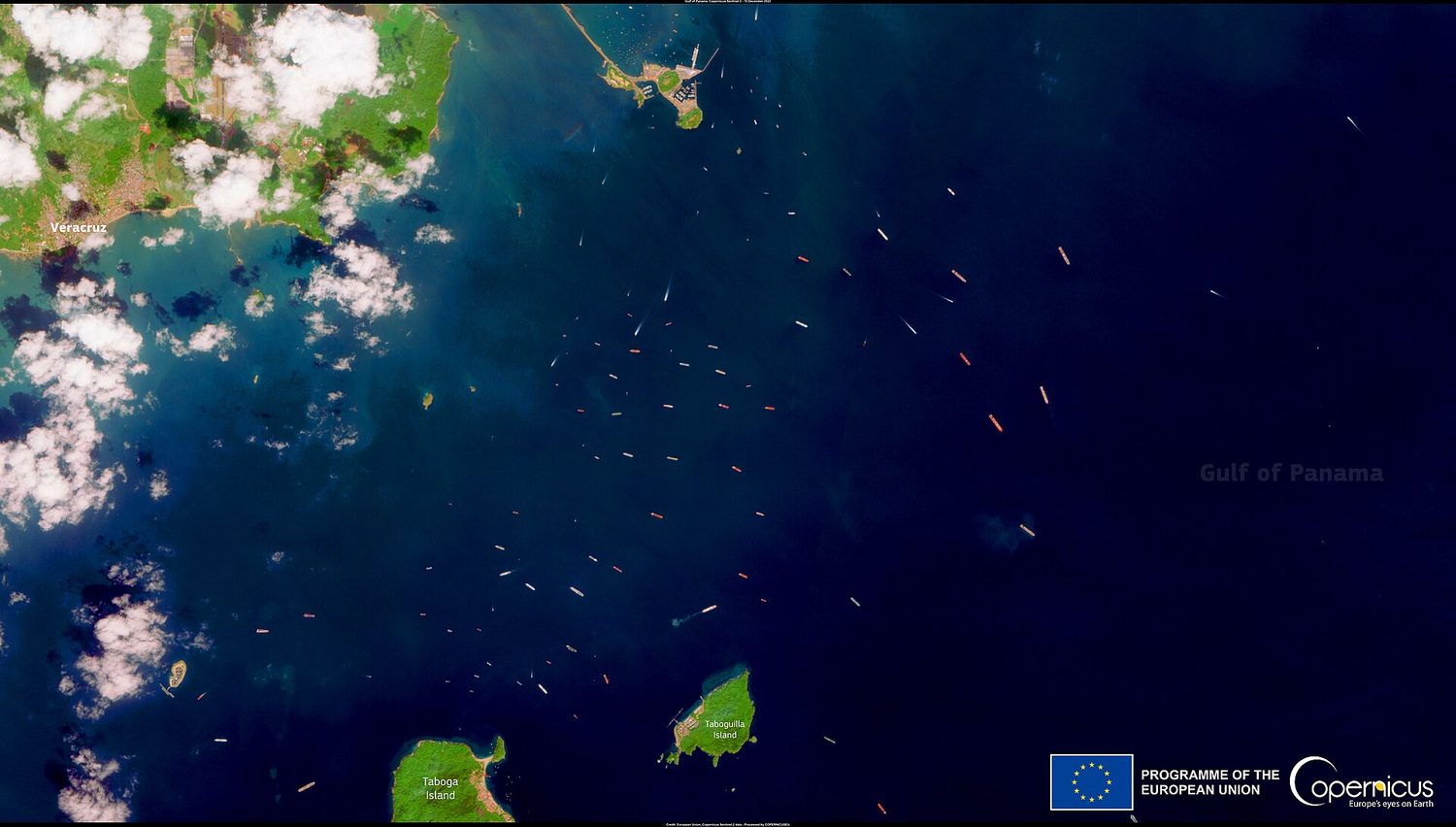
A vessel transiting the completed Panama Canal. European Union, Copernicus Sentinel-, Attribution, via Wikimedia Commons
Building the canal required moving over 200 million cubic yards of earth, more than any construction project before it. Workers used dynamite, steam shovels, and railroads to carve through mountains and jungles. They built dams, spillways, and power plants. They created a lake by flooding an entire valley. The scale was unprecedented. So was the human cost. Another 5,600 workers died during American construction, mostly from disease and industrial accidents.
The canal also required solving the problem of tropical disease. Yellow fever and malaria had decimated the French workforce. American Chief Sanitary Officer William Gorgas implemented aggressive mosquito control measures, draining swamps, screening buildings, and fumigating living quarters. The effort worked. Disease rates plummeted, and the canal could be completed. Public health infrastructure was as critical to the project's success as the engineering itself.
The canal officially opened to traffic on August 15, 1914, just as World War I began in Europe. The geopolitical significance was immediate. The United States controlled a critical chokepoint for global shipping. The canal shortened trade routes, reduced costs, and projected American power into both oceans. It also displaced thousands of people, reshaped Panama's economy and politics, and became a flashpoint for anti-imperialist movements.
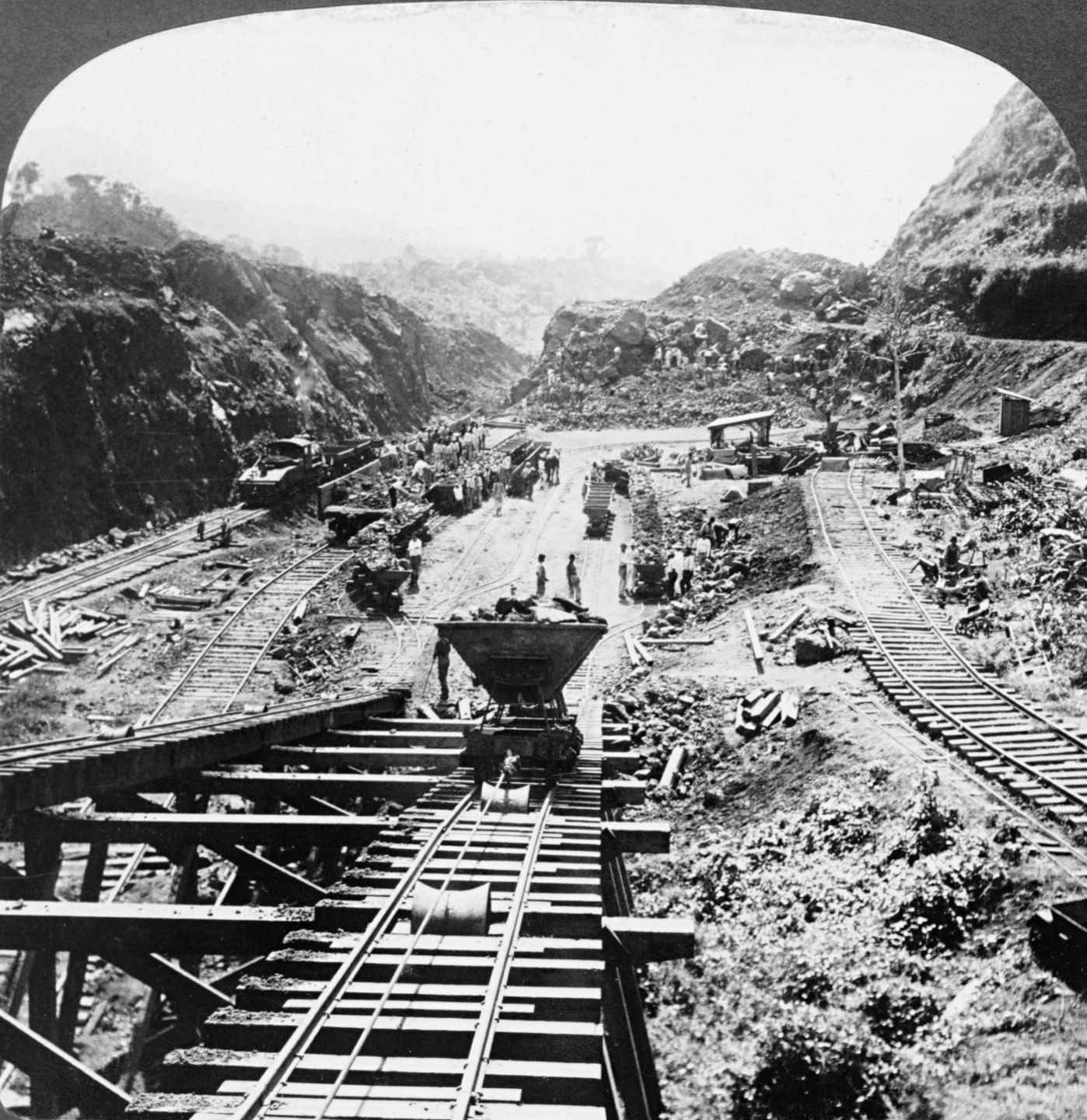
The Panama Canal under construction in 1907, cutting through the isthmus. H.C. White Co., Public domain, via Wikimedia Commons
Panama regained full control of the canal in 1999, as stipulated by treaties signed in 1977. Today, the canal handles about 6% of global maritime trade, with over 14,000 transits per year. It has been expanded to accommodate larger ships, including a new set of locks completed in 2016. The canal remains one of the most important pieces of infrastructure in the world.
October 10, 1913, is the day two oceans became one waterway. The Panama Canal proved that geography is not destiny, that mountains and jungles can be redesigned, and that human ambition, given enough time, resources, and lives, can reshape the planet. The cost was enormous. The achievement was undeniable. The canal stands as both a monument to engineering and a reminder that the most powerful systems are often built on the sacrifices of those who never benefit from them.
studio / on-this-day / Oct 10