studio / on-this-day / Oct 9
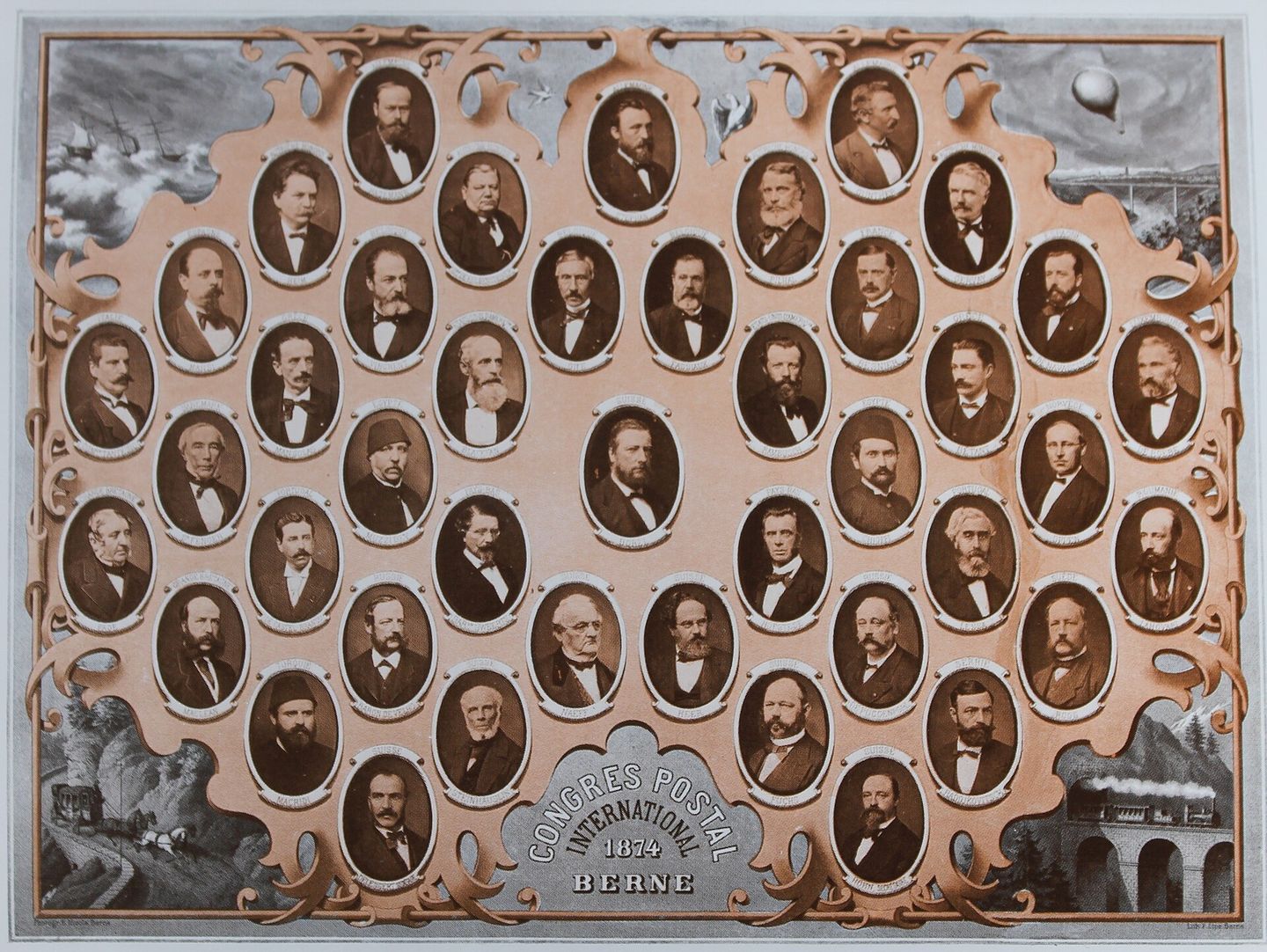
Delegates at the International Postal Congress, Bern, 1874. Photographed and cropped by Play It Again, SPAM, Public domain, via Wikimedia Commons
The World's First Network
On this day in 1874 — the Universal Postal Union was formed, quietly wiring the whole planet together into one working mail system.
3 min read
On October 9, 1874, representatives from 22 countries met in Bern, Switzerland, and signed the Treaty of Bern, establishing the General Postal Union, later renamed the Universal Postal Union. The agreement created a single postal territory spanning multiple nations, with standardized rates, routes, and procedures. For the first time in history, a letter could travel from any country to any other country through a unified system. Global communication had been designed.
Before 1874, international mail was chaos. Each country negotiated bilateral agreements with its neighbors, creating a patchwork of incompatible systems. Sending a letter across multiple borders required separate postage for each country it passed through. Rates varied wildly. Delivery was unreliable. The system worked locally but failed globally. The Universal Postal Union solved this by treating all member countries as a single postal network.
The key innovation was standardization. Member countries agreed to handle foreign mail at the same rate as domestic mail. Transit countries would forward mail without charging additional fees. Postage would be prepaid in the sender's country, eliminating the need for recipients to pay on delivery. The system was elegant, efficient, and radically egalitarian. A letter from a small village in Portugal would be treated the same as one from Paris.
The Universal Postal Union was one of the first intergovernmental organizations, predating the League of Nations by 45 years and the United Nations by 71 years. It demonstrated that nations could cooperate to build infrastructure that served everyone. The postal network became a model for other international systems, from telecommunications to air travel. Standardization was not just practical. It was political.
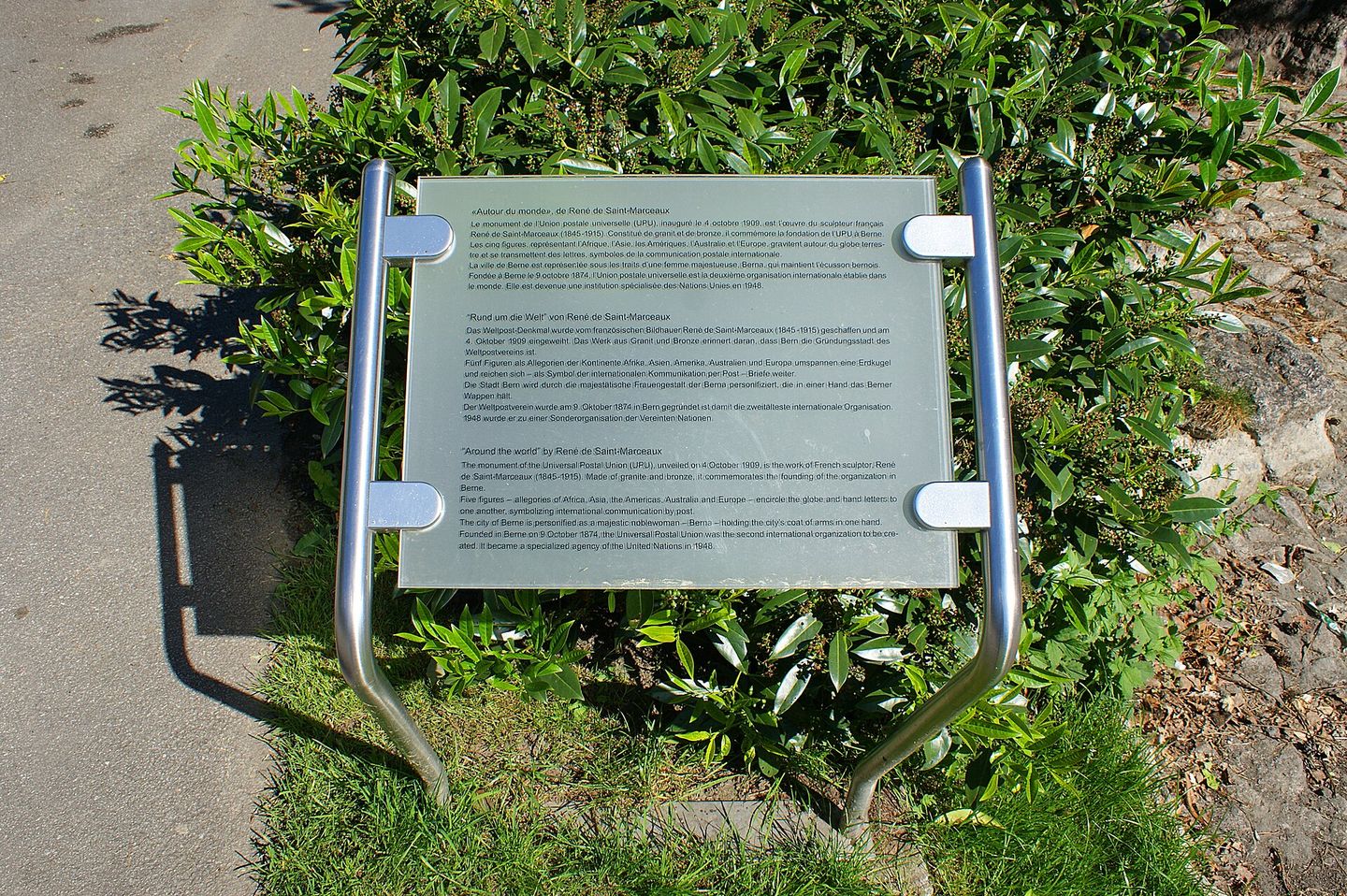
The weltpostdenkmal (world Postal Union monument) in Bern, Switzerland, unveiled in 1909. AnBuKu, Public domain, via Wikimedia Commons
The UPU also revealed the power of protocols. A protocol is a set of agreed-upon rules that allows independent systems to communicate. The postal system works because every country follows the same basic procedures for sorting, routing, and delivering mail. You do not need to understand the internal workings of another country's postal service. You just need to know that it will honor the same protocols you do.
This idea, simple as it sounds, is fundamental to all networked systems. The internet works because computers follow standardized protocols like TCP/IP. Airlines can book passengers across multiple carriers because they share reservation systems. Global finance depends on standardized transaction protocols. The Universal Postal Union pioneered this approach in 1874, proving that interoperability could be designed into systems from the start.
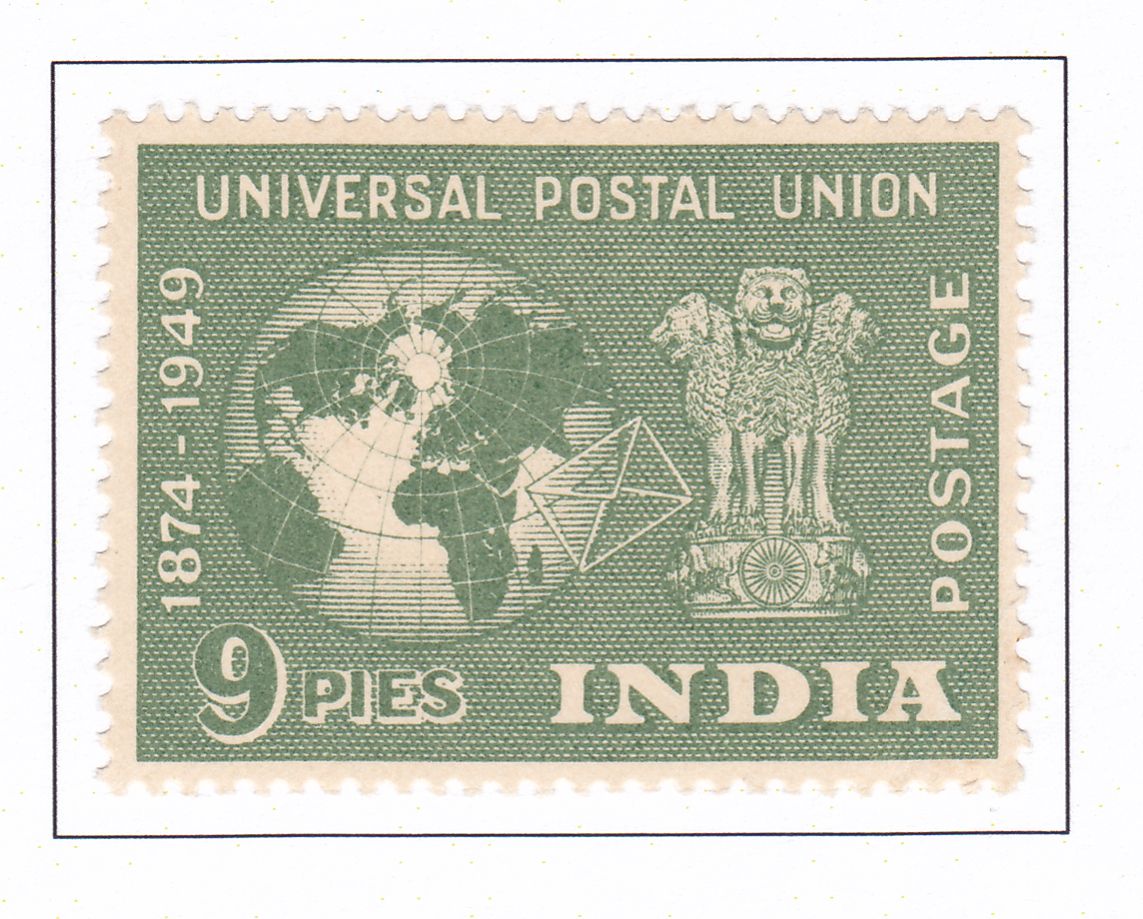
A 1949 stamp marking the UPU's 75th anniversary — one of countless issues worldwide honoring the shared Postal network. India Post, Government of India, Public domain, via Wikimedia Commons
The UPU is still operational today, now with 192 member countries. It coordinates international mail, sets technical standards, and resolves disputes between postal services. In an age of email and instant messaging, physical mail might seem obsolete. But the postal system remains one of the most reliable global networks ever built, precisely because it was designed to be universal, standardized, and cooperative.
October 9, 1874, is the day the world agreed that communication should not be limited by borders. The Universal Postal Union showed that complex systems could be coordinated across nations through shared standards and mutual trust. It was an early experiment in globalization, one that succeeded because it solved a real problem with a simple, scalable solution. Every package delivered, every letter sent across borders, is a reminder that we built this network together, and it still works.
studio / on-this-day / Oct 9