studio / on-this-day / Oct 11
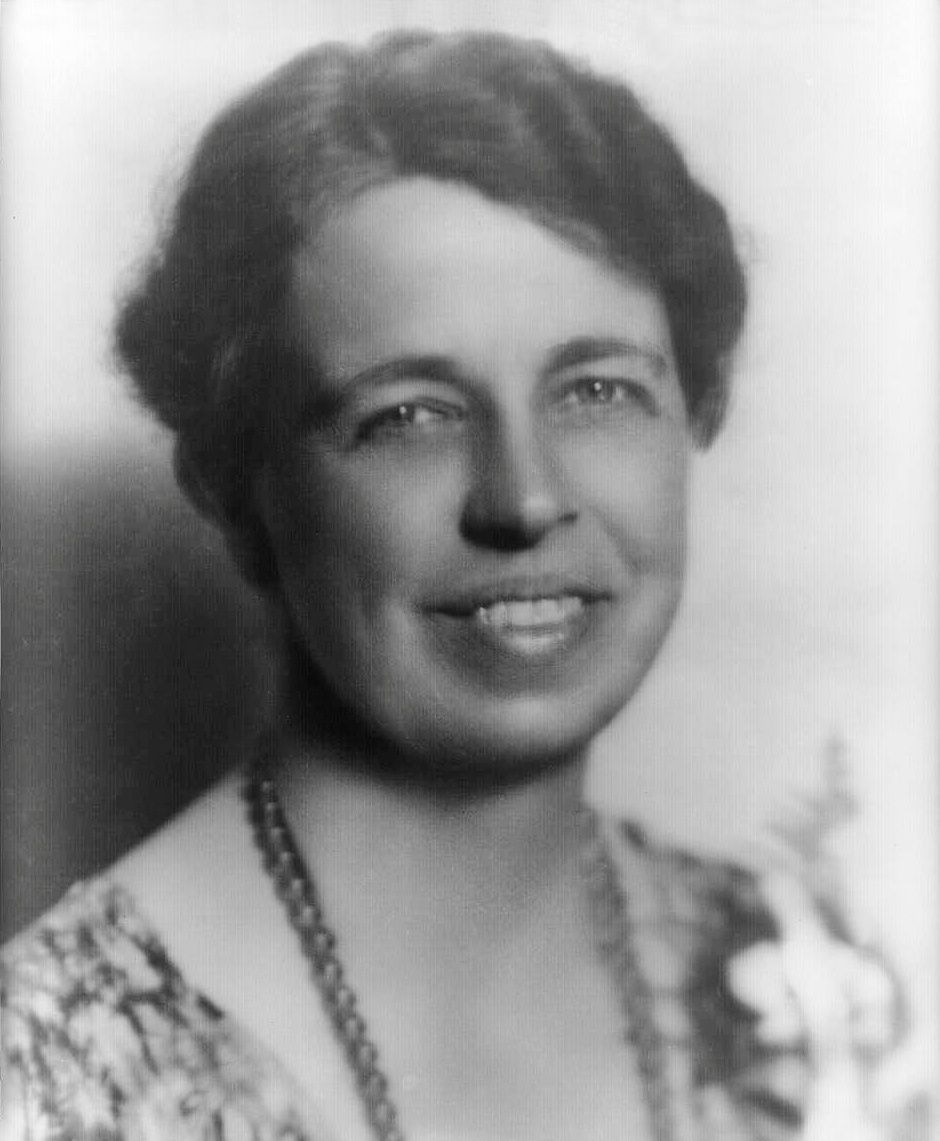
Eleanor Roosevelt, 1933. Public domain, via Wikimedia Commons
Redefining the Role
On this day in 1884 — Eleanor Roosevelt was born, and would remake the role of first lady into a platform for human rights.
3 min read
Anna Eleanor Roosevelt was born on October 11, 1884, into one of New York's most prominent families. She was shy, awkward, and, by her own account, desperately insecure. Her mother called her "Granny" because she was so serious. Both parents died before she turned 10. She was raised by her grandmother in an environment that valued propriety over curiosity. Nothing in her early life suggested she would become one of the most influential women of the 20th century.
Eleanor married her distant cousin Franklin Delano Roosevelt in 1905. For years, she lived the expected life of a political wife: managing households, raising children, attending social functions. But when Franklin contracted polio in 1921, Eleanor's role began to shift. She became his eyes, ears, and legs, traveling to places he could not go, meeting people he could not meet, and reporting back on conditions he could not see firsthand. She was his proxy, but she was also developing her own voice.
When Franklin became president in 1933, Eleanor redefined what it meant to be First Lady. She held press conferences, wrote a daily newspaper column, and gave radio broadcasts. She traveled extensively, visiting coal mines, factories, and impoverished communities. She advocated for civil rights, labor rights, and women's rights, often taking positions more progressive than her husband's. She was not a ceremonial figure. She was a political force.
Eleanor's most significant work came after Franklin's death in 1945. President Truman appointed her as a delegate to the newly formed United Nations. There, she chaired the committee that drafted the Universal Declaration of Human Rights, adopted by the UN General Assembly in 1948. The document established a common standard for human dignity, articulating rights that applied to all people, everywhere, regardless of nationality, race, or creed. It was aspirational, not enforceable, but it set a framework that shaped international law for decades.
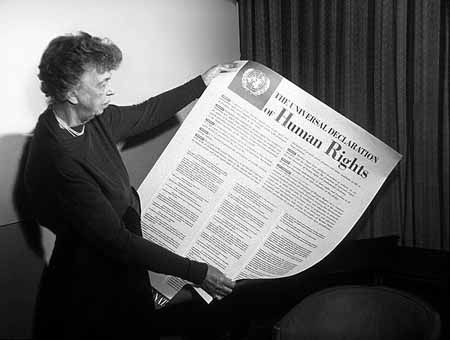
Eleanor Roosevelt holding the Universal Declaration of Human Rights, 1949. Public domain, via Wikimedia Commons
The Universal Declaration was a design document as much as a political one. It defined what human rights are, categorized them into civil, political, economic, social, and cultural rights, and presented them as universal and inalienable. Eleanor shepherded the document through two years of debate, negotiation, and revision, navigating ideological conflicts between Western democracies, Soviet-bloc countries, and newly independent nations. The result was imperfect but groundbreaking.
Eleanor understood that rights without implementation are aspirations. She spent the rest of her life advocating for policies that would make the declaration real: desegregation, fair labor standards, women's suffrage, and refugee protection. She believed that rights were not gifts from governments but inherent to being human. Her role was to ensure that governments acknowledged and protected them.
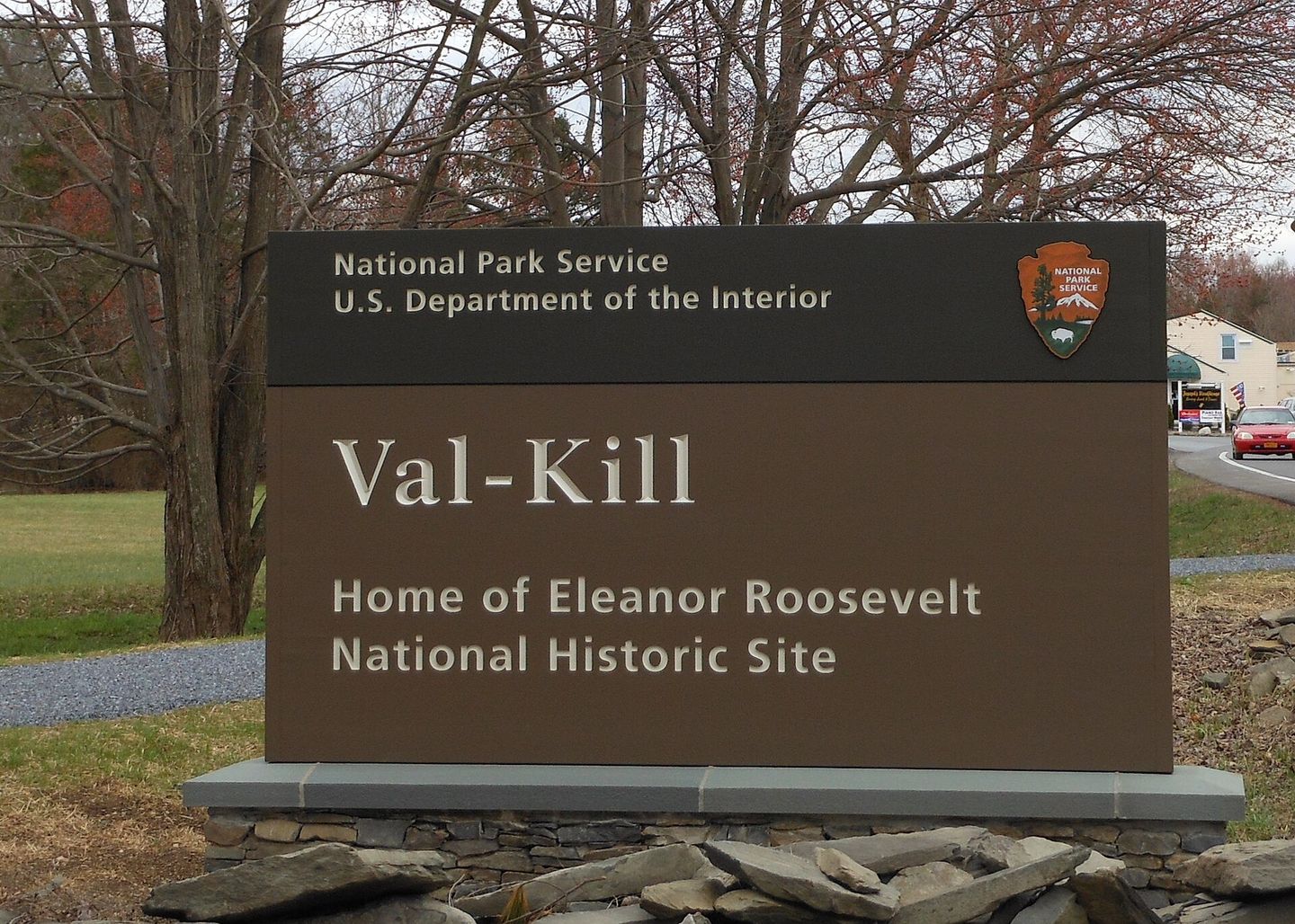
Val-Kill, Eleanor Roosevelt's private cottage at Hyde Park, New York, where she lived and worked. Alexisrael, CC BY-SA 3.0, via Wikimedia Commons
She was also a prolific writer, publishing thousands of articles, essays, and columns over her lifetime. Her daily column, "My Day," ran for 27 years and reached millions of readers. She used it to discuss politics, social issues, and everyday life, making complex ideas accessible and personal. She wrote the way she spoke: clearly, directly, and without pretension. Her words carried authority because they came from someone who had seen poverty, inequality, and injustice up close.
Eleanor Roosevelt died in 1962 at the age of 78. She had transformed the role of First Lady from ceremonial to substantive, proving that the position could be a platform for advocacy rather than just decoration. She showed that influence does not require formal power, that moral authority can be as effective as political office, and that persistence in the face of resistance can change systems.
October 11, 1884, marks the birth of someone who refused to accept the roles assigned to her. Eleanor Roosevelt redesigned the First Lady position, reshaped international human rights law, and demonstrated that leadership is not about title but about action. She left behind a framework for thinking about human dignity that still guides activism, policy, and law. The declaration she helped create remains imperfect, often ignored, frequently violated. But it endures, a testament to the idea that some principles are worth articulating even when the world is not ready to honor them.
studio / on-this-day / Oct 11