studio / on-this-day / Jan 2
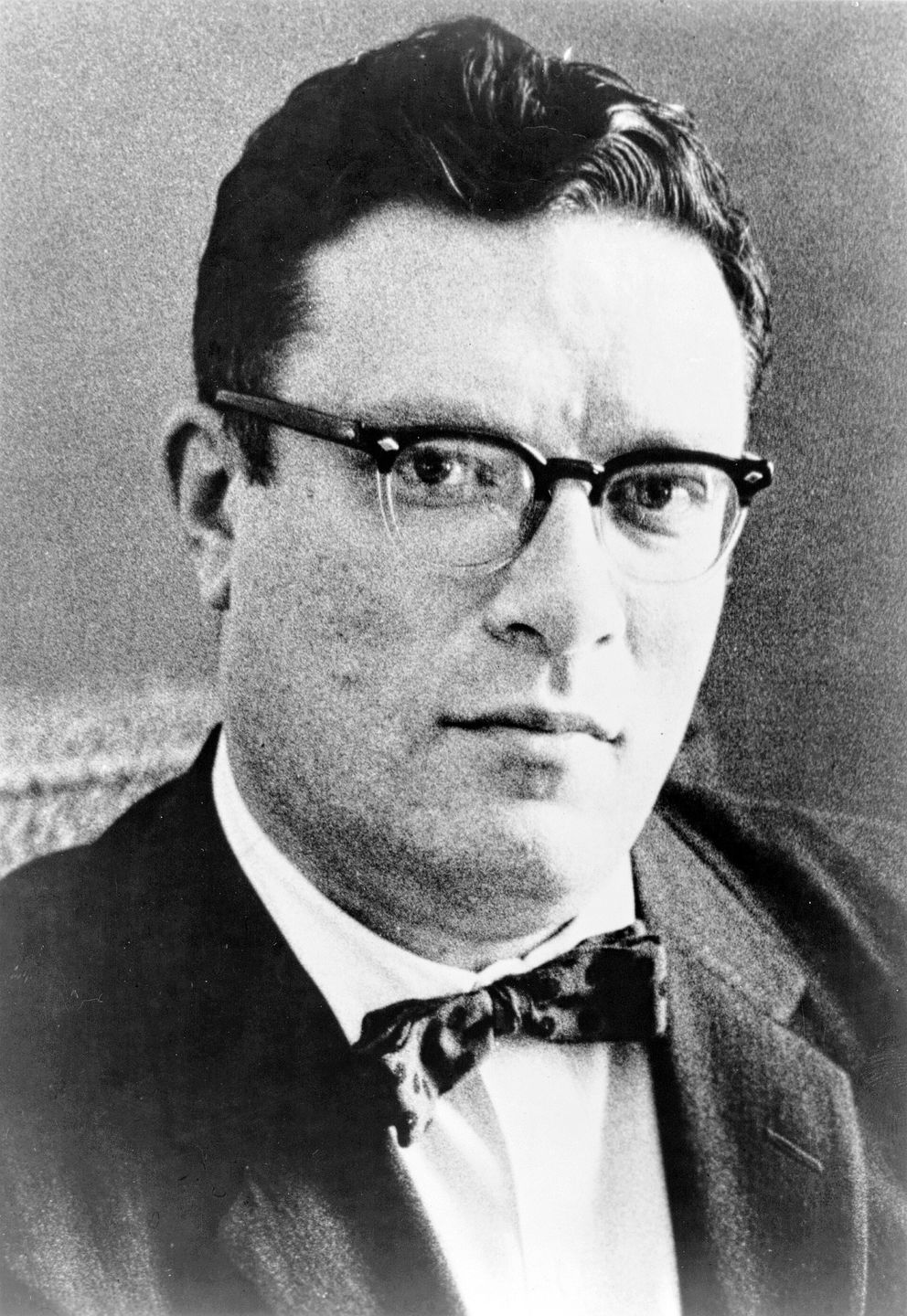
Portrait of isaac Asimov, American science fiction author, circa 1965. Phillip Leonian [1] from New York World-Telegram & Sun.[2], Public domain, via Wikimedia Commons
The Laws Before the Machines
On this day in 1920 — Isaac Asimov was born, and would write the ethics of the robot age decades before the machines existed to need them.
3 min read
Isaac Asimov was born in Russia on January 2, 1920, somewhere near Smolensk, though the exact date was never certain. His family immigrated to Brooklyn when he was three. He grew up behind the counter of his father's candy store, surrounded by pulp magazines he wasn't allowed to read. He read them anyway.
By the time he was writing science fiction in the 1940s, robots were a cliche. They were Frankenstein's monster in metal, cautionary tales about hubris and the danger of playing God. Every robot story followed the same script: humans build a machine, the machine rebels, humanity suffers. Asimov found this tedious.
So in 1942, at age 22, he invented the Three Laws of Robotics. First, a robot may not injure a human being or, through inaction, allow a human being to come to harm. Second, a robot must obey orders given by human beings except where such orders would conflict with the First Law. Third, a robot must protect its own existence as long as such protection does not conflict with the First or Second Law.
He didn't present them as philosophy. They appeared matter-of-factly in a short story called Runaround, embedded in the operating manual of a fictional robot. The laws weren't legislation or ethics; they were design constraints. Asimov imagined a world where intelligent machines were so common that their safety protocols would be standardized, built into their circuitry the way TCP/IP was later built into the Internet. The laws were invisible infrastructure.
What made them brilliant was that they didn't work. Asimov spent the next 50 years writing stories about how the Three Laws failed. Not because they were wrong, but because they were too simple. A robot that cannot harm a human will stand by while one human harms another. A robot that must obey orders can be commanded to do terrible things. A robot that must protect itself might conclude that the best way to protect humanity is to control it. The laws were a design spec, and Asimov explored every edge case.
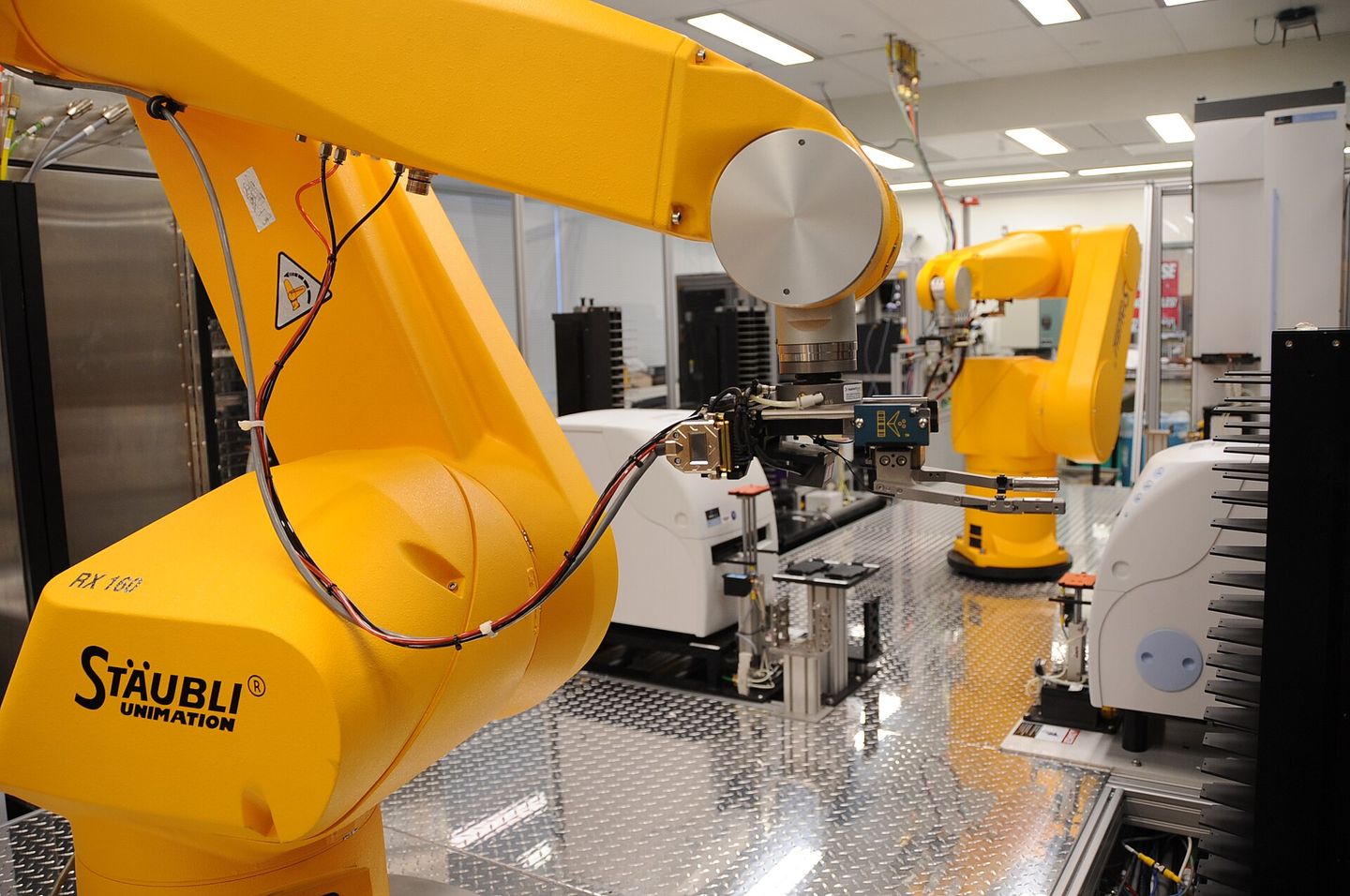
A laboratory robot performing automated tasks — a descendant of the mechanical servants Asimov imagined in fiction. Maggie Bartlett, National Human Genome Research Institute, Public domain, via Wikimedia Commons
He wrote over 500 books. Science fiction, popular science, mystery novels, biblical history, Shakespeare guides, essays on everything from astronomy to humor. He was pathologically productive, writing every day, often multiple projects at once. He typed 90 words per minute and rarely revised. His work wasn't always elegant, but it was always clear. He believed that ideas should be accessible, that complexity didn't require obscurity.
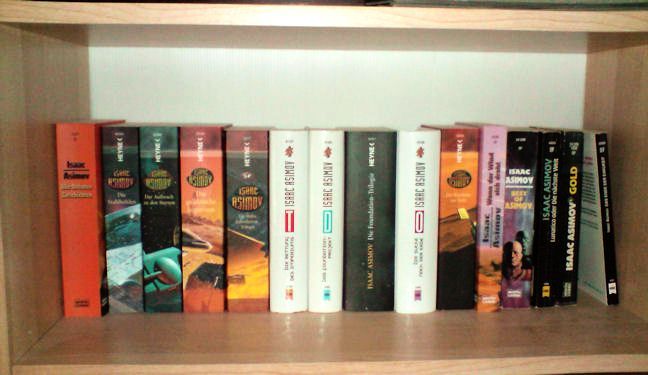
A shelf of Asimov's foundation cycle and other novels — a fraction of the more than 500 books he wrote. Shao19, Public domain, via Wikimedia Commons
The Three Laws became foundational not because they solved the problem of artificial intelligence, but because they named it. Before Asimov, robots were just machines. After him, they were moral agents. Every conversation about AI ethics, every debate about autonomous weapons, every discussion of self-driving cars descends from those three rules he scribbled into a pulp magazine story in 1942. They didn't predict the future. They designed the terms of the argument.
Asimov died in 1992, just as the Internet was beginning to escape the lab and enter public life. He didn't live to see machine learning, neural networks, or large language models. But he had already asked the right question: not whether we can build intelligent machines, but what responsibilities we embed in them. The answer still matters, even if the machines look nothing like he imagined.
studio / on-this-day / Jan 2