studio / on-this-day / Jan 26
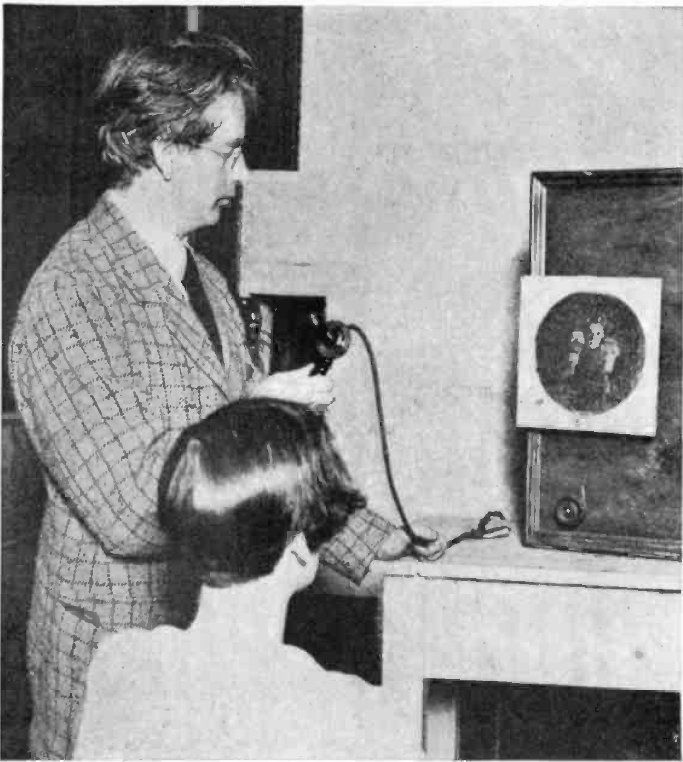
John Logie Baird with his early Television receiver, the mechanical scanning apparatus he used for the first public demonstration of Television. Orrin Dunlap, Jr., Public domain, via Wikimedia Commons
Moving Pictures Through Air
On this day in 1926 — John Logie Baird pulled a moving image out of thin air for a room of skeptics, and television stopped being a rumor.
3 min read
On January 26, 1926, John Logie Baird stood in front of 50 members of the Royal Institution in London and transmitted live moving images across a room using nothing but electromagnetic waves. The resolution was 30 vertical lines. The image flickered and blurred. But a human face appeared on a screen several feet away from the camera with no physical connection between them. Television had arrived, crude and barely functional, but unmistakably real.
Baird had been working on the problem for years in a cramped laboratory above a flower shop in Hastings, using scavenged materials: biscuit tins, bicycle lamps, cardboard, string, sealing wax. He was chronically ill, perpetually broke, and convinced that transmitting images through the air was possible using the same principles as radio. Radio sent sound. Television would send light. The technical challenge was converting a two-dimensional image into a one-dimensional electrical signal, transmitting it, then reconstructing it at the other end fast enough that the human eye perceived continuous motion.
His solution was mechanical, not electronic. A spinning disc with spiral holes scanned an image line by line, converting light into electrical pulses. A photoelectric cell measured the brightness. The signal traveled to a receiver with a synchronized spinning disc that recreated the image. It was ingenious, clunky, and ultimately obsolete. Electronic television, developed by Philo Farnsworth and Vladimir Zworykin, would replace Baird's mechanical system within a decade. But Baird got there first, and his public demonstration proved the concept worked.
The implications weren't immediately obvious. In 1926, radio was still new. Most people had never seen a motion picture. The idea of live images transmitted into your home seemed like science fiction. But Baird understood what he'd built: a medium that combined the immediacy of radio with the visual richness of film. You could watch events as they happened, from anywhere. Distance and time collapsed into a glowing rectangle in your living room.
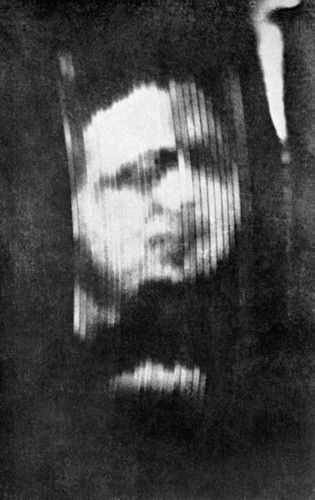
The first photograph taken of a Television image — the ventriloquist's dummy "stooky bill" used by Baird during early tests, c. 1926. Public domain, via Wikimedia Commons
Television scaled slowly. The technology was expensive, broadcasts were rare, and the images were poor quality. But by the 1950s, television had become the dominant mass medium in the developed world. It shaped politics, culture, commerce. Presidential debates, moon landings, breaking news, all experienced simultaneously by millions of people watching the same broadcast. Television created shared visual experiences at a scale previously impossible.
The format constraints shaped content in predictable ways. Everything had to fit into a broadcast schedule. Shows needed defined start and end times. Commercial breaks required natural pauses in the narrative. Studios optimized for live performance under bright lights. The medium imposed a grammar: cuts, dissolves, close-ups, establishing shots. Filmmakers adapted cinematic language for smaller screens and shorter attention spans. Television became its own aesthetic category, distinct from both film and theater.
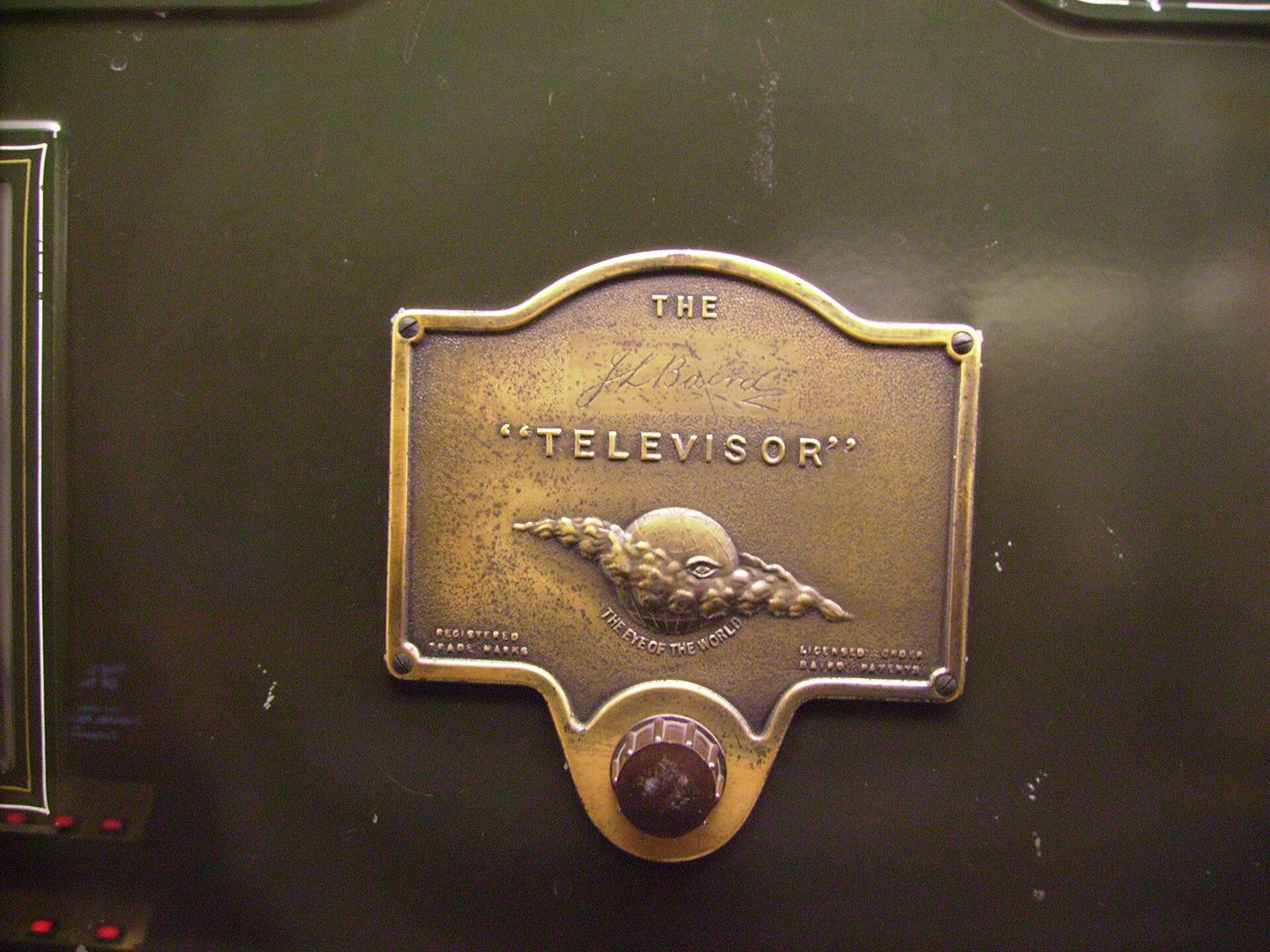
A Baird televisor, the mechanical-disc Television receiver Baird's company sold to the first home viewers. Ged Carroll from Hong Kong mostly, HKSAR, CC BY 2.0, via Wikimedia Commons
Baird died in 1946, just as television was beginning its global expansion. He never saw color broadcasts, satellite transmission, high-definition screens, or streaming video. But the core principle he demonstrated, converting images into signals and back into images, remains unchanged. Every video call, every livestream, every screen showing moving pictures is a descendant of that flickering 30-line transmission in 1926. The resolution improved. The format evolved. The fundamental architecture stayed the same.
studio / on-this-day / Jan 26