studio / on-this-day / Jan 16
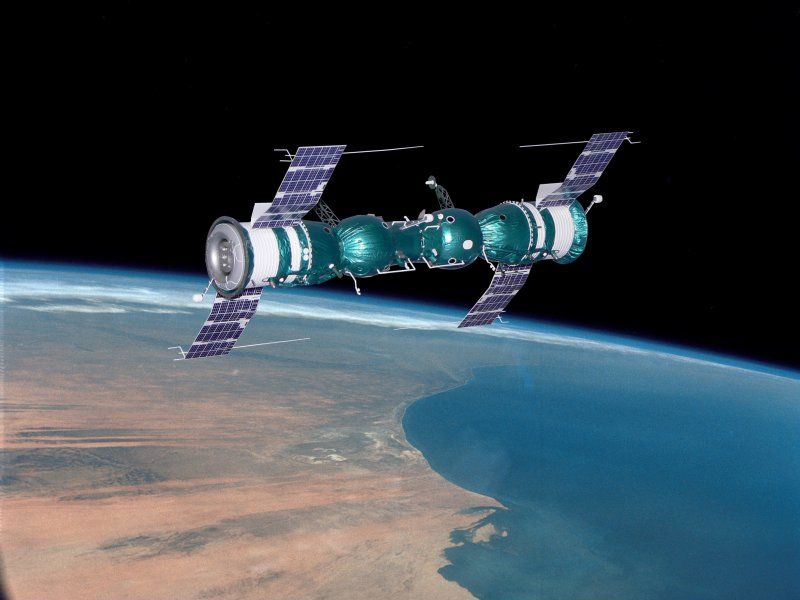
Model of Soyuz 4 and Soyuz 5 after performing the first docking of two crewed spacecraft on 16 January 1969. Lunokhod 2, CC BY-SA 3.0, via Wikimedia Commons
Connection in the Void
On this day in 1969 — two Soviet spacecraft found each other and joined in orbit, the first time crewed vehicles ever docked in the void.
3 min read
On January 16, 1969, two small metal capsules met in the vacuum 150 miles above Earth. Soyuz 4, carrying cosmonaut Vladimir Shatalov, aligned with Soyuz 5, piloted by Boris Volynov with crewmates Aleksei Yeliseyev and Yevgeny Khrunov. At 11:20 Moscow time, the docking latches engaged. For the first time in history, two crewed spacecraft had connected in orbit.
The technical achievement was remarkable, but the real challenge came next. Soviet engineers had not yet developed an internal transfer tunnel between docked vehicles. To move from one spacecraft to another, cosmonauts Yeliseyev and Khrunov would have to suit up, depressurize the entire Soyuz 5 cabin, crawl outside, and spacewalk the short distance to Soyuz 4's hatch. Connection in space required disconnection from everything that kept them alive.
The spacewalk lasted one hour. Khrunov's tether tangled. He accidentally closed his suit ventilator. Every movement was deliberate, mechanical, rehearsed. The void doesn't allow for improvisation. Both men made it to Soyuz 4, the hatch sealed behind them, and they returned to Earth with Shatalov the next day. Volynov came home alone in Soyuz 5, surviving a harrowing reentry when his service module failed to separate properly. His capsule spun wildly, pulling eight times the force of gravity on his body before the heat of reentry burned through the connecting struts.
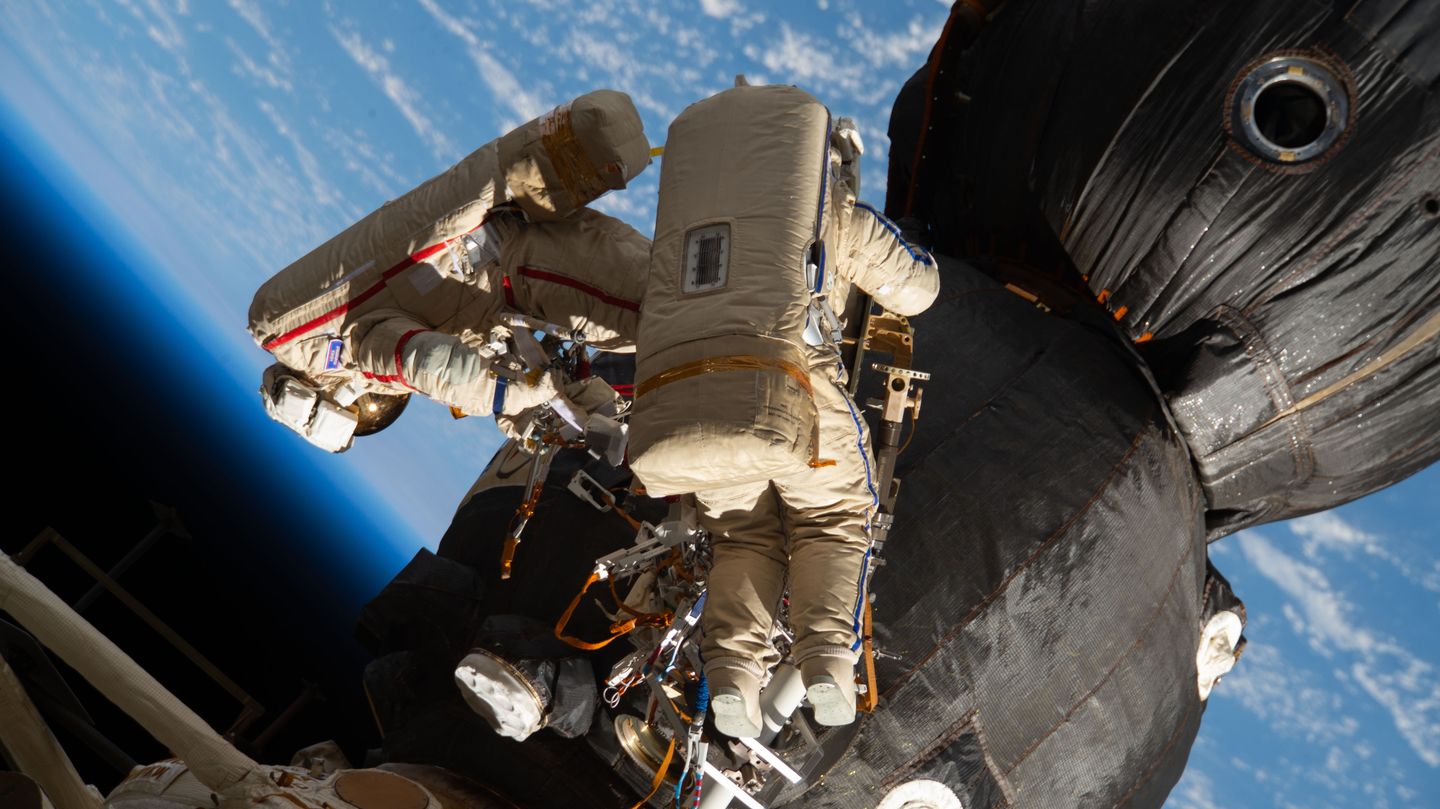
Cosmonaut oleg kononenko on extravehicular activity outside the iss, continuing the tradition of spacewalking that began with Soyuz 4/5. NASA, Public domain, via Wikimedia Commons
The Soyuz 4/5 mission proved something fundamental about spaceflight that designers are still working with today: building systems that can find each other, align, and connect autonomously in three dimensions while moving at 17,000 miles per hour. It's a problem of spatial choreography, timing, and fault tolerance. Miss the alignment window by a few degrees or a few seconds and you drift past your target, fuel spent, mission over.
Docking is now routine. The International Space Station has hosted more than 250 successful dockings since its first modules connected in 1998. Modern spacecraft use automated systems that would seem impossibly precise to the engineers who worked on Soyuz. But the core problem remains unchanged: two independent machines, traveling through a vacuum, must become one machine without destroying each other in the process.
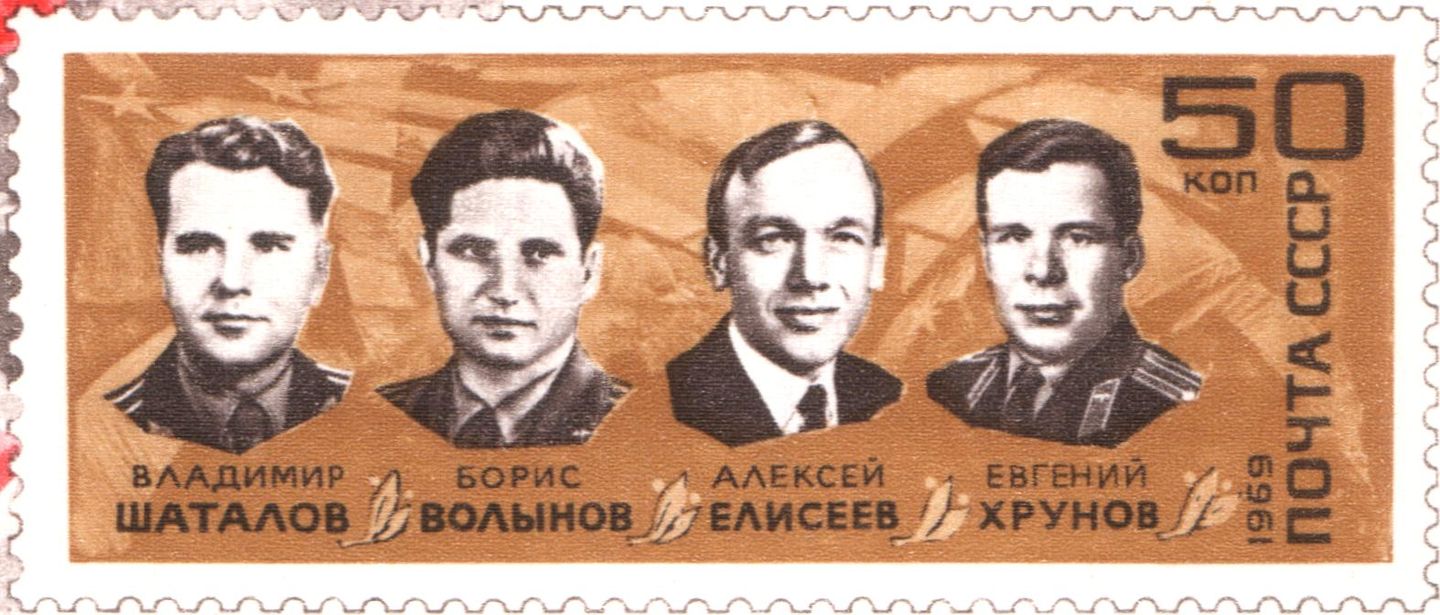
1969 Soviet stamp honoring the Soyuz 4/5 cosmonauts Vladimir Shatalov, Boris Volynov, Aleksei Yeliseyev and Yevgeny Khrunov. USSR Post, Public domain, via Wikimedia Commons
What Shatalov and Volynov demonstrated was that space architecture isn't just about launching things into orbit. It's about creating structures that can reconfigure themselves, nodes that can join and separate, systems that can adapt their geometry on demand. Every modular building, every plug-and-play interface, every distributed network owes something to this conceptual breakthrough. Connection requires a shared language of alignment.
The first orbital docking lasted four hours and 35 minutes. Then the spacecraft separated, their trajectories diverging as planned. Two objects that had briefly been one became two again, each carrying humans back to different landing sites on the same planet. In the void, connection is temporary. But the fact that it's possible at all is what makes everything else in orbit work.
studio / on-this-day / Jan 16