studio / on-this-day / Sep 4
The Google logo. Google Inc, Public domain, via Wikimedia Commons
The Search Bar That Ate the World
On this day in 1998 — two Stanford students incorporated Google, having decided to organize the whole of human knowledge behind one text box.
3 min read
On September 4, 1998, Larry Page and Sergey Brin filed incorporation papers for Google Inc. in a garage in Menlo Park, California. They were 25 and 24 years old. Their company had no revenue model, no office, and no clear plan for how a better search engine would make money. What they did have was an algorithm called PageRank that treated the web as a citation network, ranking pages not by keyword density but by how many other pages linked to them. It was an academic insight applied to a practical problem, and it worked better than anything else available.
The web in 1998 was a chaotic, rapidly expanding space. Yahoo organized sites into directories, like a phonebook. AltaVista indexed pages by keywords, which made it easy to game the system by stuffing invisible text into a webpage. Lycos, Excite, Ask Jeeves,they all had different approaches, and none of them worked particularly well. Finding what you actually wanted required patience, multiple searches, and luck. Page and Brin believed the structure of the web itself contained the answer. Links were endorsements. A page linked to by many authoritative pages was probably more valuable than one linked to by none. It was a surprisingly simple idea, and it scaled.
PageRank was not the only reason Google won. The interface mattered. Most search engines in 1998 were cluttered with ads, news headlines, stock tickers, and weather widgets. Google was a white page with a search box and two buttons. That simplicity was a statement: the search was the product, not a gateway to other content. The design communicated confidence. We do one thing, and we do it well. It was minimalism as competitive advantage.
The name itself was a misspelling. Page and Brin wanted to call it "Googol," a mathematical term for the number 1 followed by 100 zeros, symbolizing the vast amount of information they intended to organize. When they went to register the domain, someone typed it wrong. They kept it. The error became the brand, and within a few years, "google" became a verb. To google something was to search for it online, regardless of which search engine you actually used. The company had become synonymous with the action it enabled.
Google's business model took time to figure out. For the first two years, the company burned through venture capital without a clear revenue stream. The breakthrough came in 2000 with AdWords, a system that let advertisers bid on keywords and display text ads next to search results. The ads were clearly labeled, unobtrusive, and relevant to what users were searching for. More importantly, advertisers only paid when someone clicked, aligning Google's incentives with delivering useful results. It was elegant, scalable, and wildly profitable. By 2004, when Google went public, it was generating over $3 billion in revenue annually.
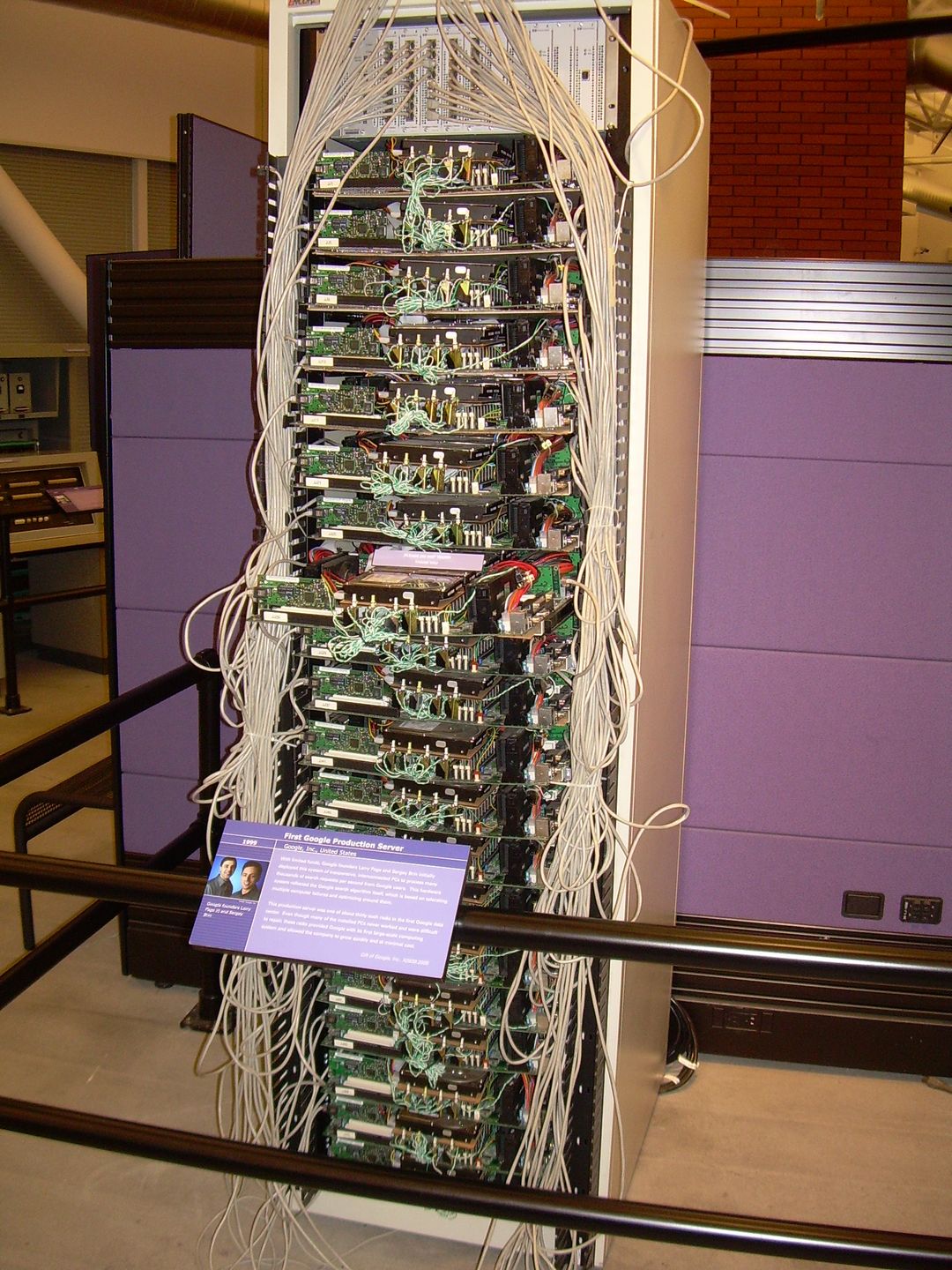
Google's first production server, circa 1999, now in the computer history museum. Carlo Nardone from Roma, Italy, CC BY-SA 2.0, via Wikimedia Commons
The company's growth from that point was relentless. Gmail in 2004 offered a gigabyte of free storage when competitors offered megabytes. Google Maps in 2005 made navigation feel like a designed experience. YouTube, acquired in 2006, became the default platform for online video. Android, released in 2008, turned Google's services into an operating system. Chrome, launched the same year, became the world's most popular browser. Each product reinforced the others, creating an ecosystem where leaving Google meant leaving a set of interconnected tools that had become daily utilities.
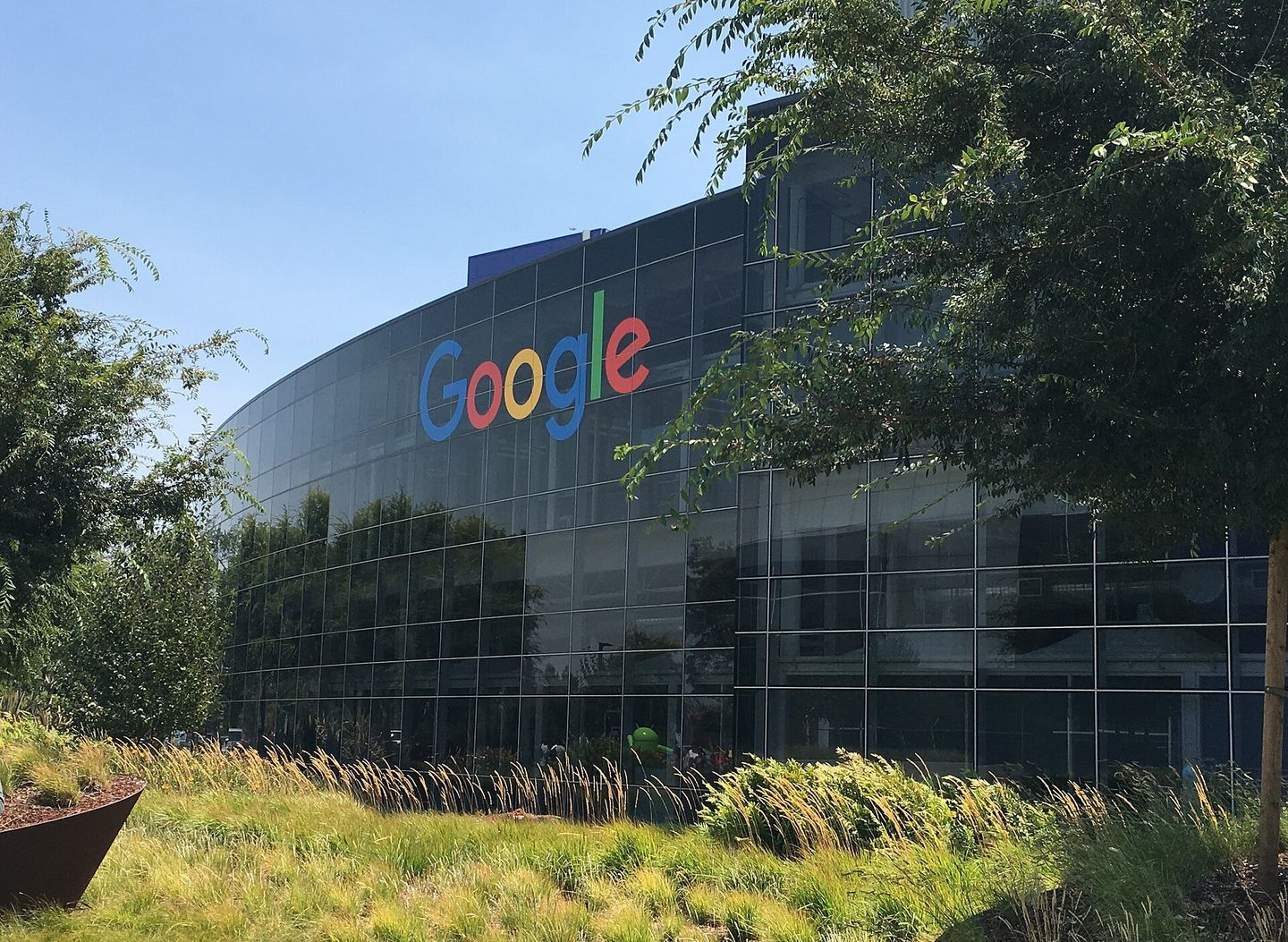
The Googleplex, Google's headquarters in Mountain View, California. Asoundd, CC BY-SA 4.0, via Wikimedia Commons
What started as a better way to search the web became an infrastructure layer for the internet itself. Google indexes the web, hosts much of its video content, provides the maps for most of its location services, runs the most widely used mobile operating system, and serves the ads that fund much of its free content. The white search box is still there, cleaner than ever, but behind it is a system of data collection, algorithmic curation, and targeted advertising that touches nearly every corner of digital life.
The garage in Menlo Park is long gone. Google now occupies sprawling campuses in Mountain View, employs over 150,000 people, and is worth more than a trillion dollars. The company that began as a graduate school project has become one of the most powerful corporations in history. And it all started with a search bar, a misspelled name, and the belief that the best way to organize information was to let the information organize itself.
studio / on-this-day / Sep 4