studio / on-this-day / Aug 10
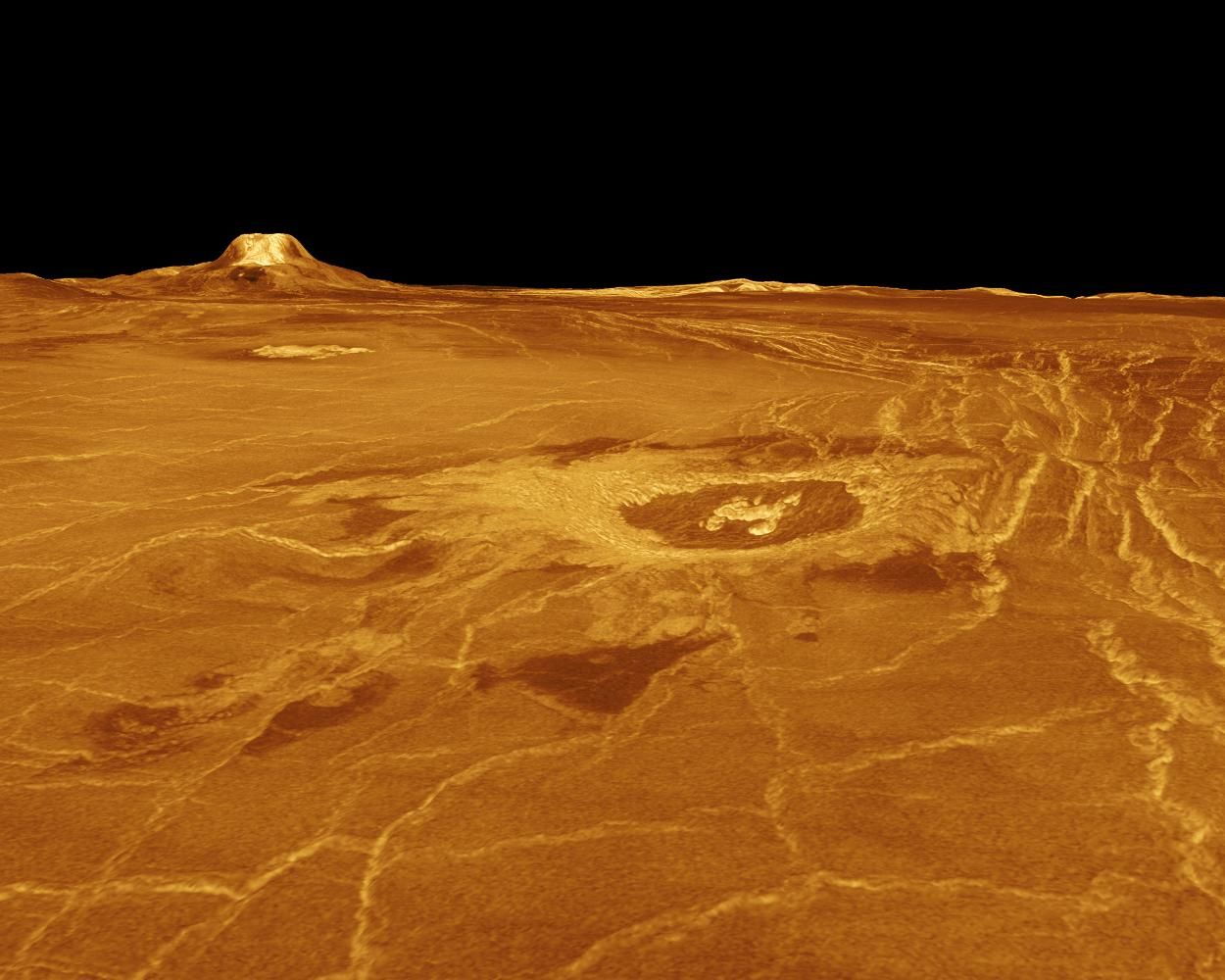
3d perspective view of Venus from Magellan radar data. Magellan Team (NASA - Jet Propulsion Laboratory), Public domain, via Wikimedia Commons
Seeing Through the Clouds
On this day in 1990 — the Magellan probe reached Venus and began peeling back its clouds with radar to map the hidden surface.
2 min read
On August 10, 1990, after a 15-month journey through space, the Magellan spacecraft fired its thrusters and entered orbit around Venus. The planet was invisible beneath a thick blanket of sulfuric acid clouds. Surface temperatures reached 900 degrees Fahrenheit, hot enough to melt lead. Atmospheric pressure was 90 times that of Earth. No optical camera could see through the clouds, and no lander could survive more than a few hours on the surface. But Magellan didn't need to see in visible light. It carried synthetic aperture radar, a system that could map the surface in exquisite detail using radio waves that passed straight through the atmosphere.
Over the next four years, Magellan mapped 98% of Venus's surface, revealing a world of volcanoes, impact craters, and vast plains of solidified lava. The radar images showed geological features as small as 100 meters across. For the first time, scientists could study the topography of another planet with the same precision they used to map Earth. The data revealed that Venus was geologically active, with evidence of recent volcanism and tectonic processes unlike anything on Earth. It was a dead world, but not a static one. The surface had been reshaped by forces still at work.
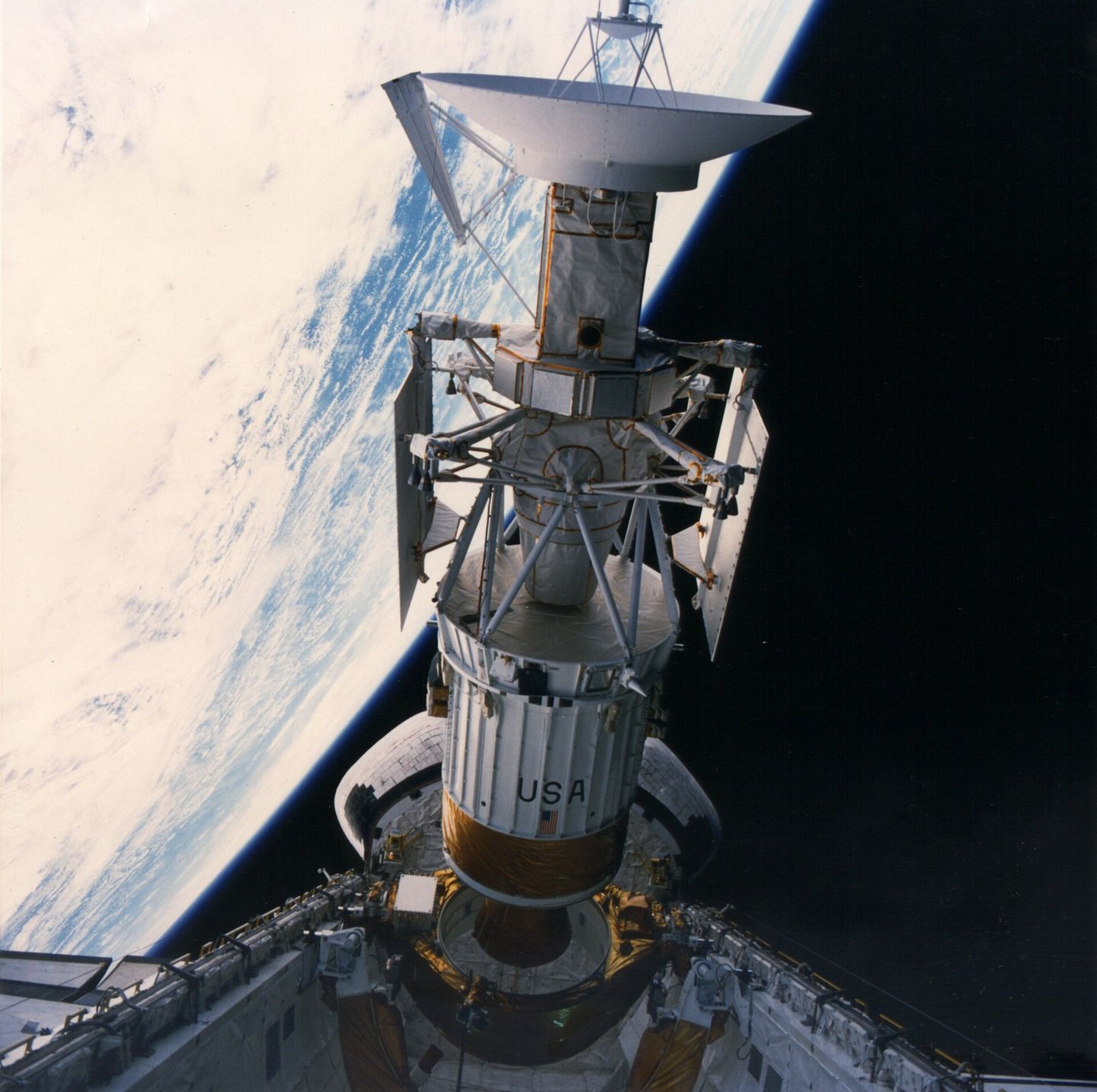
The Magellan spacecraft, attached to its booster, deployed from the cargo bay of Space Shuttle Atlantis in 1989 to begin its journey to Venus. NASA, Public domain, via Wikimedia Commons
Magellan was built from spare parts. Budget constraints forced NASA to use leftover components from previous missions. The spacecraft's main antenna was a backup from the Voyager program. The attitude control system came from the Galileo Jupiter probe. The radar was adapted from a military reconnaissance satellite. It was a spacecraft assembled from the scrap pile, designed to do groundbreaking science on a shoestring budget. And it worked. Magellan's success demonstrated that innovation doesn't always require new technology. Sometimes it just requires using what you have in a new way.
The mission ended in 1994 when Magellan was deliberately sent into Venus's atmosphere to collect atmospheric data before burning up. The spacecraft that revealed a hidden world became part of that world, vaporized in the same heat it had spent years studying from above. But the maps remain. They are still the most detailed images we have of Venus's surface, used by researchers to understand planetary geology, volcanism, and the evolutionary paths planets can take. Venus is Earth's twin in size, but its history diverged long ago. Magellan's maps are a record of what happens when a planet's climate spirals into runaway greenhouse conditions.
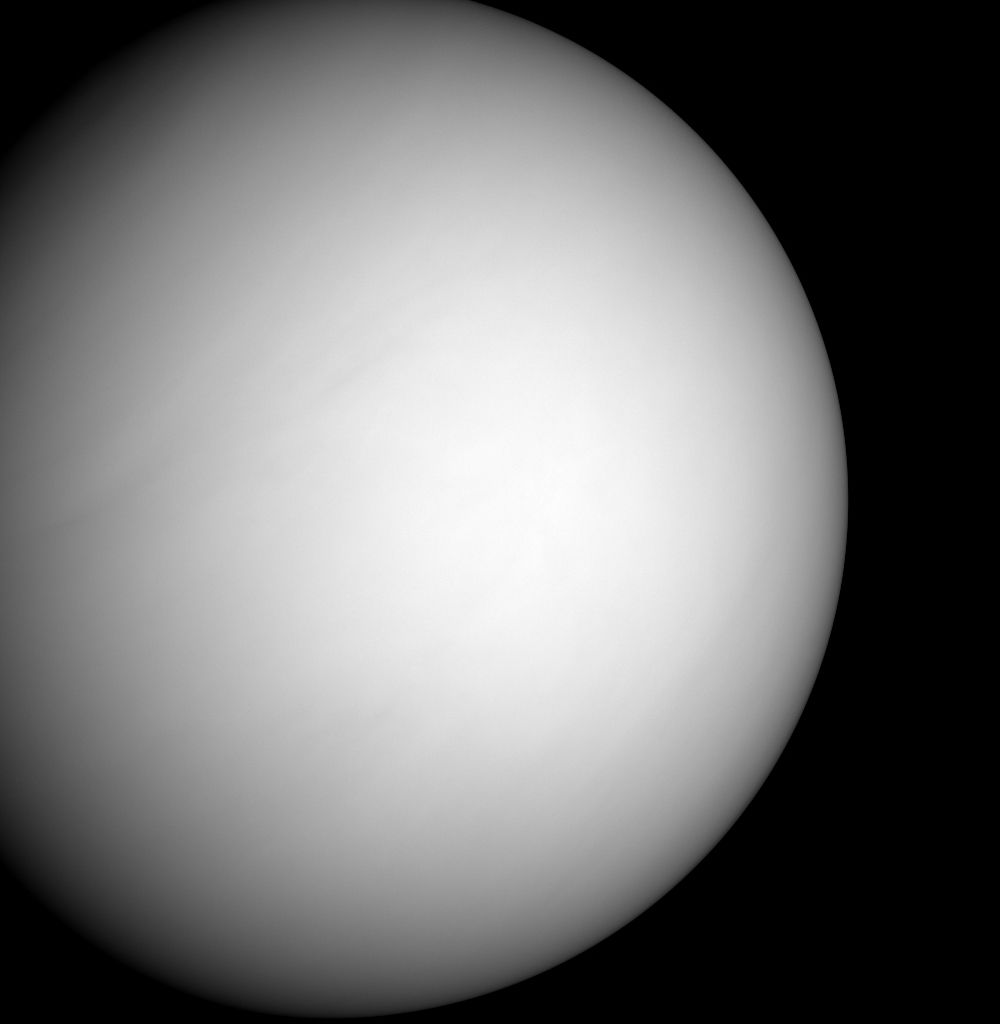
Venus photographed during approach — the thick cloud cover that hides the planet's surface, penetrated only by Magellan's radar. Public domain, via Wikimedia Commons
Venus reminds us that design is about seeing what is hidden. The clouds never parted. The surface never became visible to the naked eye. But with the right tools, radar instead of light, radio waves instead of photons, the invisible becomes legible. Magellan looked at a planet shrouded in acid and saw mountains, valleys, and a landscape shaped by fire. That is what good design does. It makes the unseen, seen. It turns data into understanding. And sometimes, it does it with spare parts and stubbornness, which is the best kind of engineering there is.
studio / on-this-day / Aug 10