studio / on-this-day / Aug 27
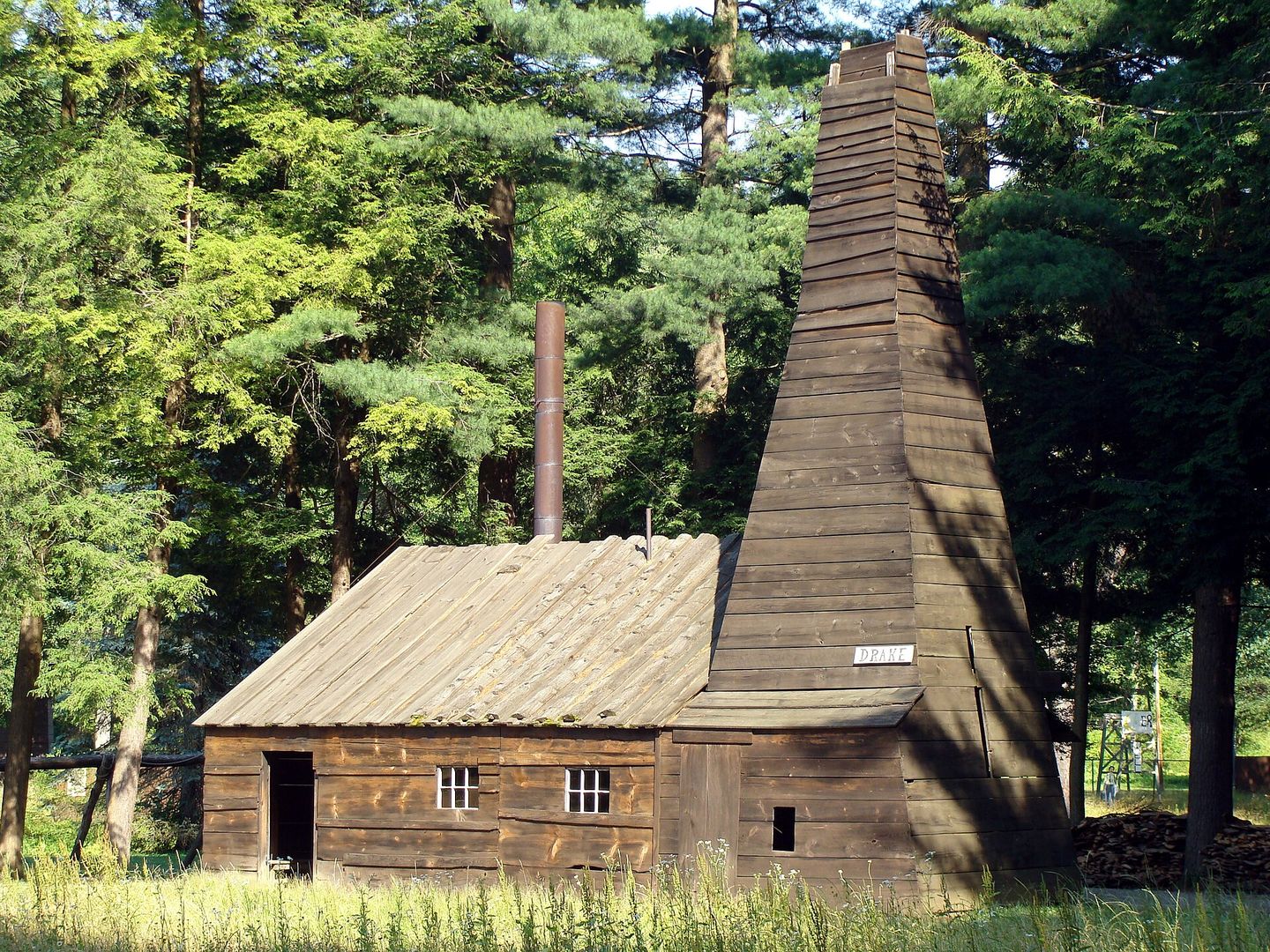
The Drake Well and engine house, Titusville, Pennsylvania, circa 1859. Niagara, CC BY-SA 3.0, via Wikimedia Commons
Sixty-Nine Feet Down
On this day in 1859 — the first oil well was drilled at Titusville, and pulling energy out of the ground became an engineering problem.
3 min read
On August 27, 1859, a retired railroad conductor named Edwin Drake struck oil at a depth of 69.5 feet along Oil Creek in Titusville, Pennsylvania. The well produced perhaps 25 barrels a day. Within a decade, Pennsylvania would be producing millions. Within a century, the infrastructure Drake's modest hole set in motion would have reshaped the geopolitics of the entire planet. Most transformative inventions look, at first, like small problems neatly solved.
Drake had not come to Pennsylvania as a visionary. He was an agent for the Seneca Oil Company, hired partly because his railroad pass made travel cheap, and tasked with finding a way to extract the oily seeps that locals had been skimming off the surface of streams for years. Petroleum wasn't unknown, it was used medicinally and as lamp fuel, but no one had found a reliable way to get it in quantity. The engineering challenge was, at its core, a problem of access: how do you reach something that exists in pockets underground without drilling through shifting, water-saturated soil that collapses before you get there?
Drake's solution, which he never patented, was called the drive pipe. He drove an iron pipe down through the unstable upper layers to bedrock, then sent his drill through the pipe to reach the oil-bearing rock below. It was adapted from salt-well drilling technology, a direct transfer of technique from one extraction industry to another. The idea was so straightforward that it seems obvious in retrospect, as most good engineering solutions do. But it hadn't occurred to anyone working on the problem before, and it worked the first time they used it at scale.
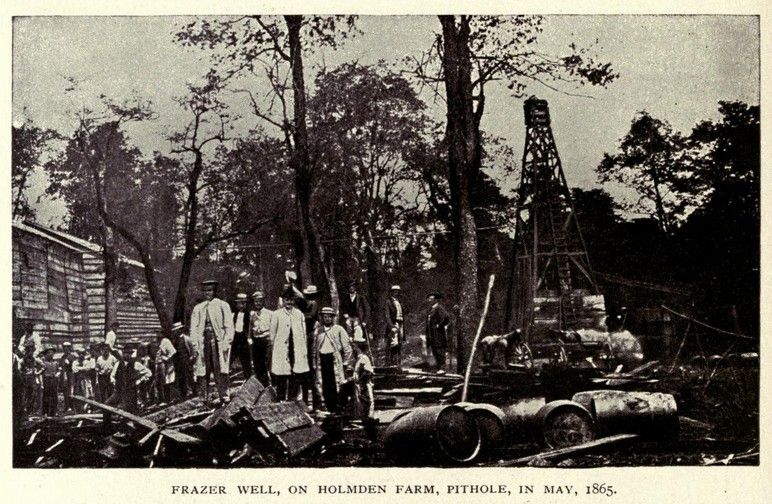
The Frazer Well near Pithole, Pennsylvania, in 1865 — within a few years of Drake's strike, the Oil Regions filled with crowded wooden derricks like these. McLaurin, John J. (John James), b. 1841, Public domain, via Wikimedia Commons
What followed was rapid and chaotic. Titusville's population exploded from a few hundred to tens of thousands within years. The surrounding region, known as the Oil Regions, filled with derricks, refineries, and barrel-rolling operations. John D. Rockefeller, then in his early twenties in Cleveland, watched the boom and noticed that the real money was not in finding oil but in refining and transporting it. The infrastructure layer, the pipelines, the railroads, the storage tanks, was where durable value accumulated. Standard Oil was his answer to that observation, and it became one of the most powerful companies in history.
The design legacy of Drake's well runs in two directions simultaneously. On one hand, it produced a framework for large-scale resource extraction that engineers have refined ever since: better drill bits, offshore platforms, horizontal drilling, hydraulic fracturing. The technical vocabulary of petroleum engineering, with its casings and packers and mud weights, all descends from that first iron pipe driven into Pennsylvania soil. On the other hand, the global energy system that grew from that hole is now the central design problem of the twenty-first century. The carbon embedded in fossil fuels, released at industrial scale since 1859, is the challenge that Earth Day activists confronted a century later and that engineers and policymakers continue to grapple with today.
Drake died in 1880 in poverty, having never profited meaningfully from what he started. The Seneca Oil Company had dismissed him after his contract ended, and his later speculations failed. Pennsylvania eventually awarded him a small pension. His contribution was recognized mostly after the fact, as contributions to infrastructure often are. The person who figures out how to get the resource to the surface is rarely the person who builds the system that decides where it goes.
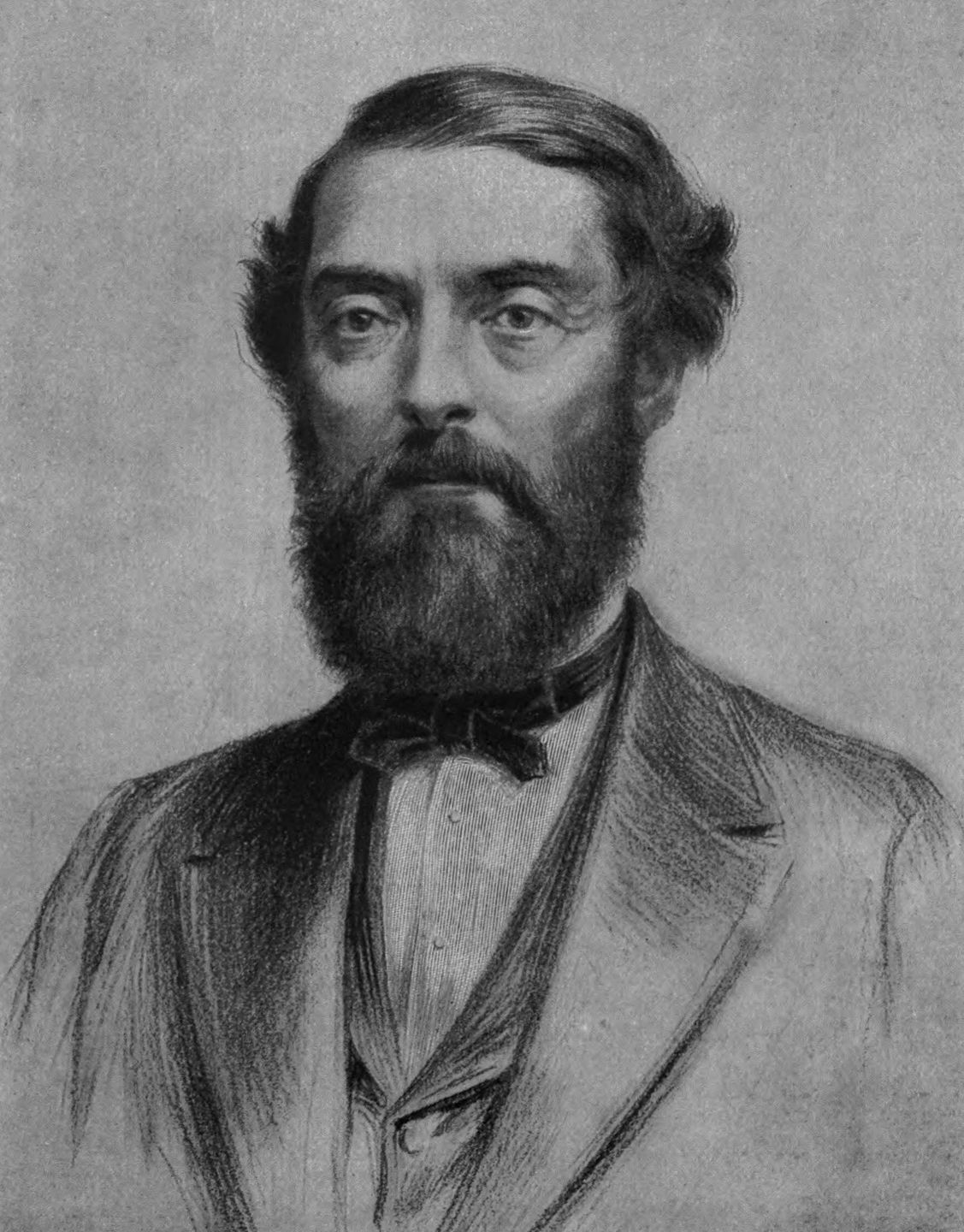
Edwin Drake, the retired railroad conductor who drilled the first commercial Oil Well on August 27, 1859, in Titusville, Pennsylvania — and died in poverty despite starting an industry that would reshape the world. Public domain, via Wikimedia Commons
The well itself is gone, replaced by a museum and a replica derrick at the exact spot on Oil Creek. It is a quiet place. The original hole was 69.5 feet deep, narrower than a dinner plate, and it changed the world more thoroughly than almost any human act in recorded history. Sometimes the thing that matters most is not the scale of the action but the scale of what the action unlocks.
studio / on-this-day / Aug 27