studio / on-this-day / Aug 25
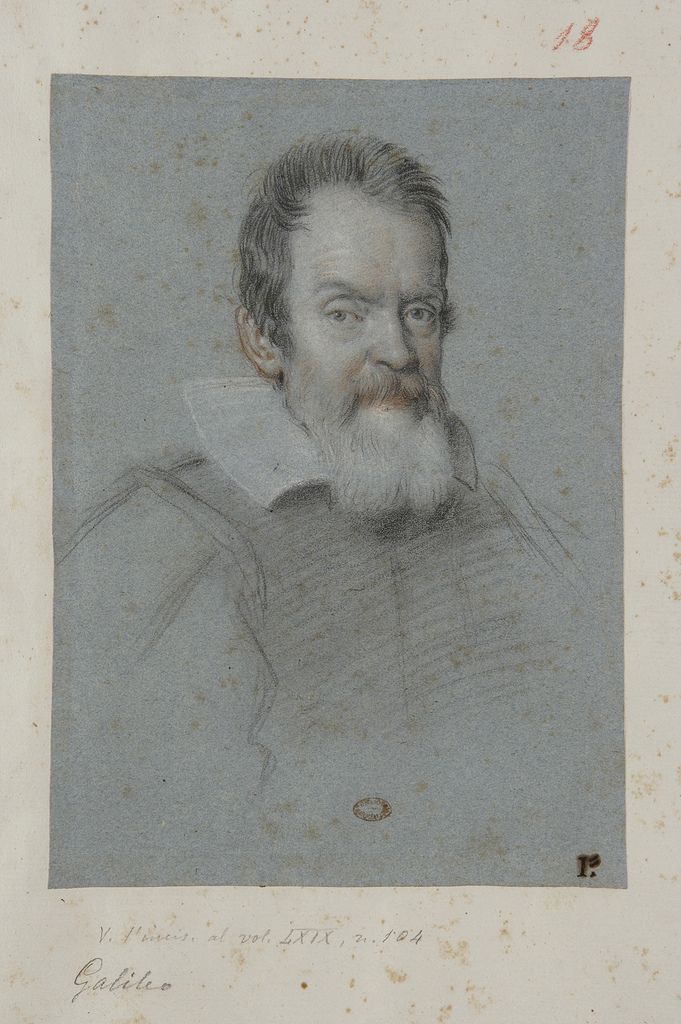
Galileo Galilei, portrait by Ottavio Leoni, c. 1624 — the astronomer who demonstrated a refined telescope to the Venetian Senate on August 25, 1609, then turned it toward the sky. Ottavio Leoni, Public domain, via Wikimedia Commons
The Tool That Magnified Power
On this day in 1609 — Galileo showed his telescope to the Venetian Senate, and the power to see farther quietly became political power.
2 min read
On August 25, 1609, Galileo Galilei climbed the Campanile di San Marco, the bell tower in Venice's main square, and demonstrated a device he called a spyglass to the Venetian Senate. The telescope could magnify distant objects by a factor of eight or nine, allowing senators to see ships approaching the harbor long before they were visible to the naked eye. For a maritime power like Venice, this was a military and commercial advantage. Galileo was rewarded with tenure at the University of Padua and a significant salary increase.
Galileo didn't invent the telescope. Dutch lens makers had built similar devices a year earlier. But Galileo improved the design, increasing its magnification and refining the optics. More importantly, he understood what the tool could do beyond navigation. Within months, he turned his telescope toward the sky and began making observations that would challenge the entire cosmological order.
He saw mountains on the Moon, proving it wasn't a perfect sphere as Aristotelian philosophy claimed. He discovered four moons orbiting Jupiter, demonstrating that not everything in the heavens revolved around Earth. He observed the phases of Venus, which supported the heliocentric model proposed by Copernicus. The telescope didn't just magnify objects. It magnified questions about humanity's place in the universe.
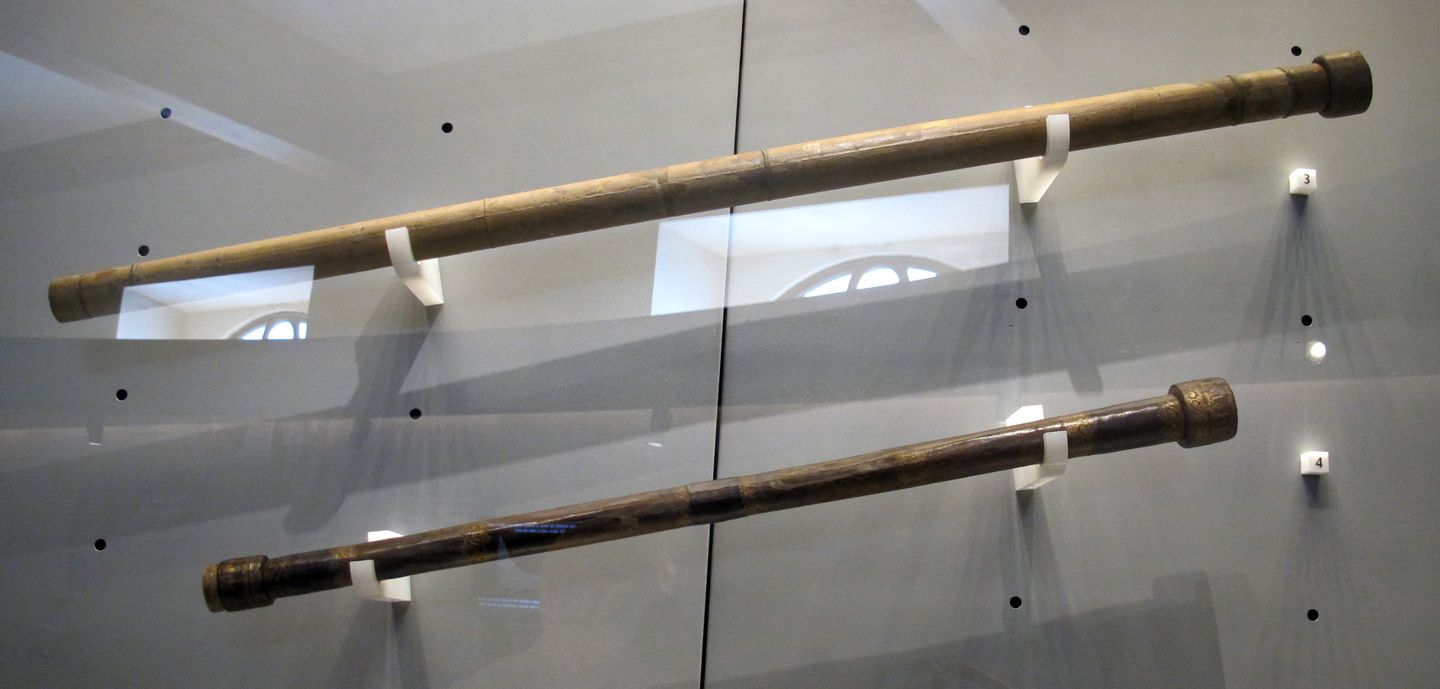
Two of Galileo's surviving telescopes, c. 1609-10, held at the Museo Galileo in Florence — the kind of refined instrument he carried up the Campanile to show the Venetian Senate. Sailko, CC BY-SA 3.0, via Wikimedia Commons
The Venetian demonstration was strategic. Galileo framed the telescope as a tool for power and commerce, which it was. But his real interest was in using it for discovery. The device became a method for challenging authority, not through argument but through observation. You couldn't argue with what you could see through the lens. The telescope turned cosmology into an empirical science.
The demonstration also showed how technology shifts value. Before the telescope, naval intelligence relied on scouts and lookouts. Whoever could see farthest controlled the information. Galileo's telescope collapsed that advantage into a handheld device. Venice recognized its value immediately, but they couldn't monopolize it. Within a few years, telescopes were being built across Europe, and the strategic advantage faded.
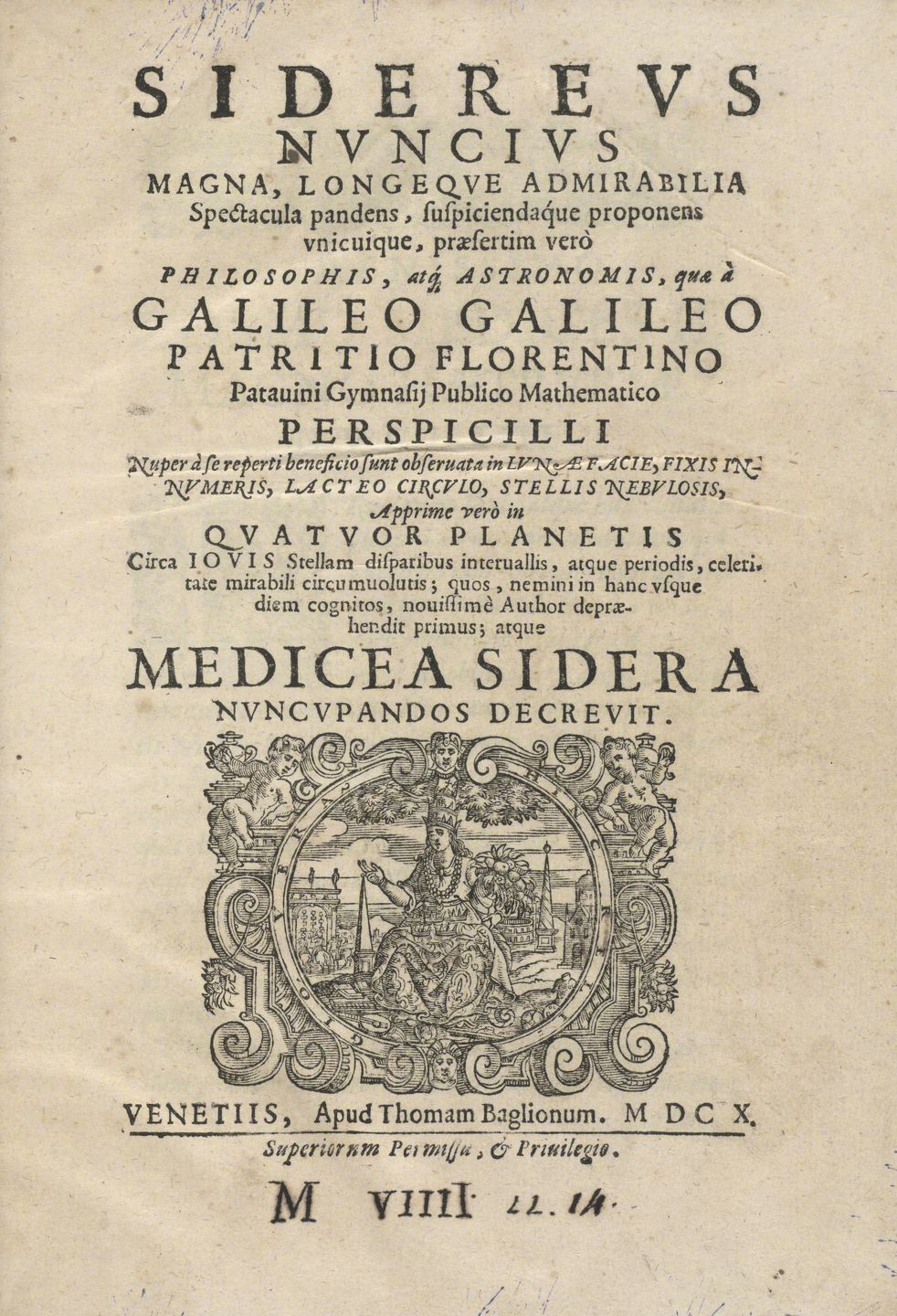
Galileo's drawings of the Moon's surface from Sidereus Nuncius (1610), showing the mountains and craters he discovered by turning his telescope toward the sky — evidence that the Moon was not a perfect sphere as aristotle had claimed. Galileo Galilei, Public domain, via Wikimedia Commons
What remained was the idea that instruments could extend human perception. If you could build a tool to see farther, you could build tools to see smaller, to measure more precisely, to detect what was previously invisible. The telescope established a principle: observation is limited only by the quality of your instruments. Improve the tools, and you improve what you can know. That principle drove the scientific revolution and continues to drive technological development today.
studio / on-this-day / Aug 25