studio / on-this-day / Aug 17
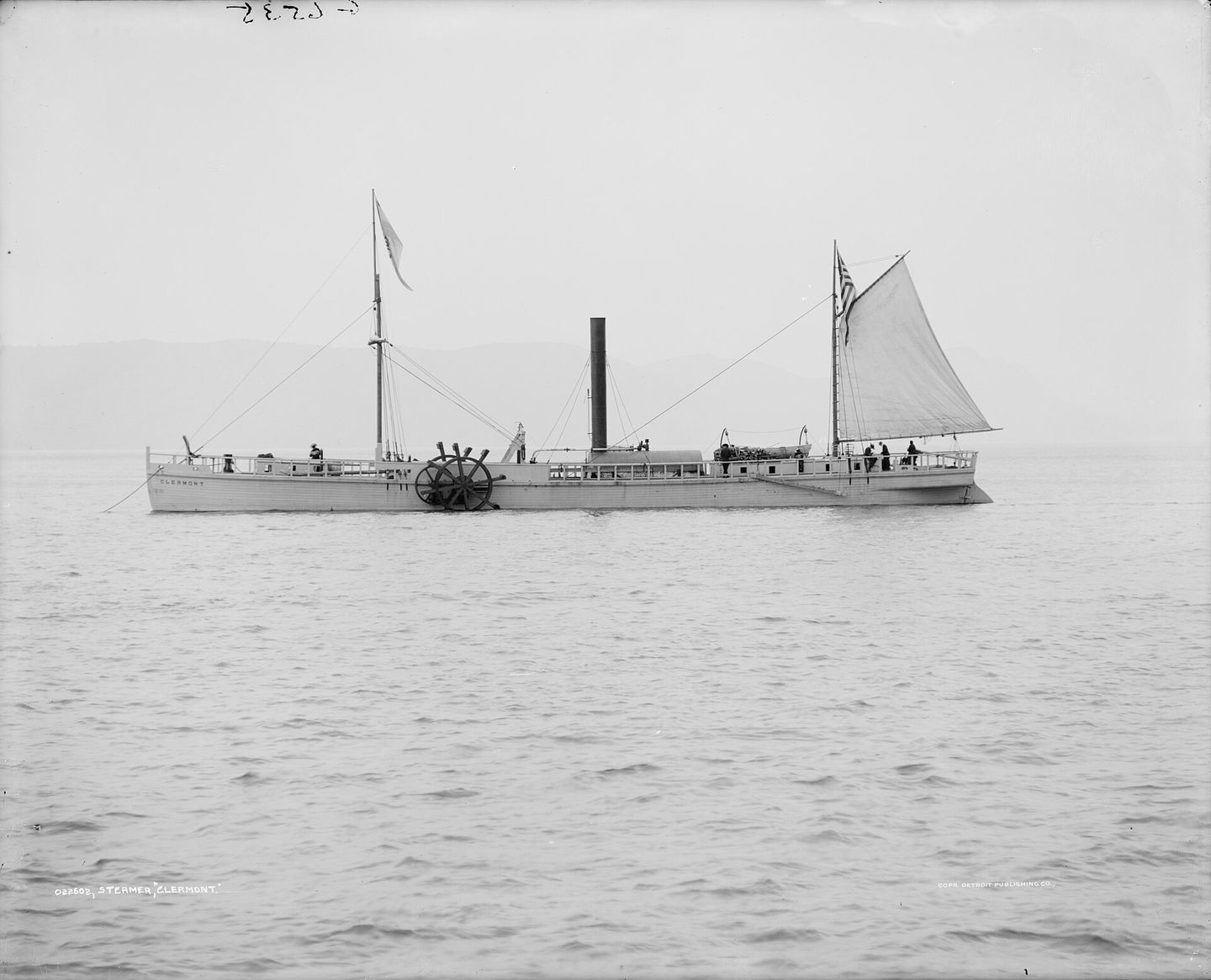
A replica of the Clermont, Robert Fulton's Steamboat that made its first voyage up the Hudson River on August 17, 1807. Detroit Publishing Co., Public domain, via Wikimedia Commons
The Boat That Turned Rivers Into Roads
On this day in 1807 — Robert Fulton's steamboat made its first real voyage, and rivers stopped being obstacles and became highways.
3 min read
On August 17, 1807, Robert Fulton's steamboat, the North River Steamboat, later called the Clermont, left a New York City dock and headed up the Hudson River toward Albany. Crowds gathered on the shore to watch the strange vessel with its tall smokestack belching black clouds and paddle wheels churning the water. Some called it Fulton's Folly. Others thought it looked like the devil's workshop. By the time it returned two days later, having completed the 300-mile round trip in 62 hours, it had proven that steam power could make water travel predictable, scheduled, and profitable.
Rivers had always been highways, but they were unreliable ones. You could float downstream easily enough, but going back up meant rowing, poling, or waiting for the right wind. Cargo moved slowly. Passengers planned trips around current and weather. Fulton's steamboat changed the equation. It didn't need wind. It didn't need oars. It just needed fuel, water, and a boiler that could turn heat into mechanical motion.
Fulton didn't invent the steam engine. James Watt had refined that decades earlier. Fulton didn't even invent the steamboat. Others had built experimental versions before him. What Fulton did was make it work at commercial scale. He designed a vessel that was stable, efficient, and powerful enough to carry passengers and freight reliably. The Clermont was 150 feet long with a 13-foot beam, powered by a Watt steam engine driving two paddle wheels mounted on the sides. It looked ungainly, but it moved.
The first voyage was not smooth. The engine broke down several times. Fulton had to stop and make repairs. Spectators on the shore watched with a mix of amusement and horror as the boat coughed smoke and sparks into the night. But it kept going. It averaged five miles per hour, which doesn't sound fast until you consider that the alternative was a sailboat that might take a week to make the same trip, assuming the wind cooperated.
Within a year, the Clermont was running regular passenger service between New York and Albany. Tickets sold out. Fulton and his business partner, Robert Livingston, had a monopoly on steamboat traffic in New York waters, and they capitalized on it. The steamboat became a fixture of American rivers, transforming commerce and migration. Cities that sat on navigable waterways suddenly became accessible year-round. The Mississippi, the Ohio, the Hudson, all became corridors of mechanical transport.
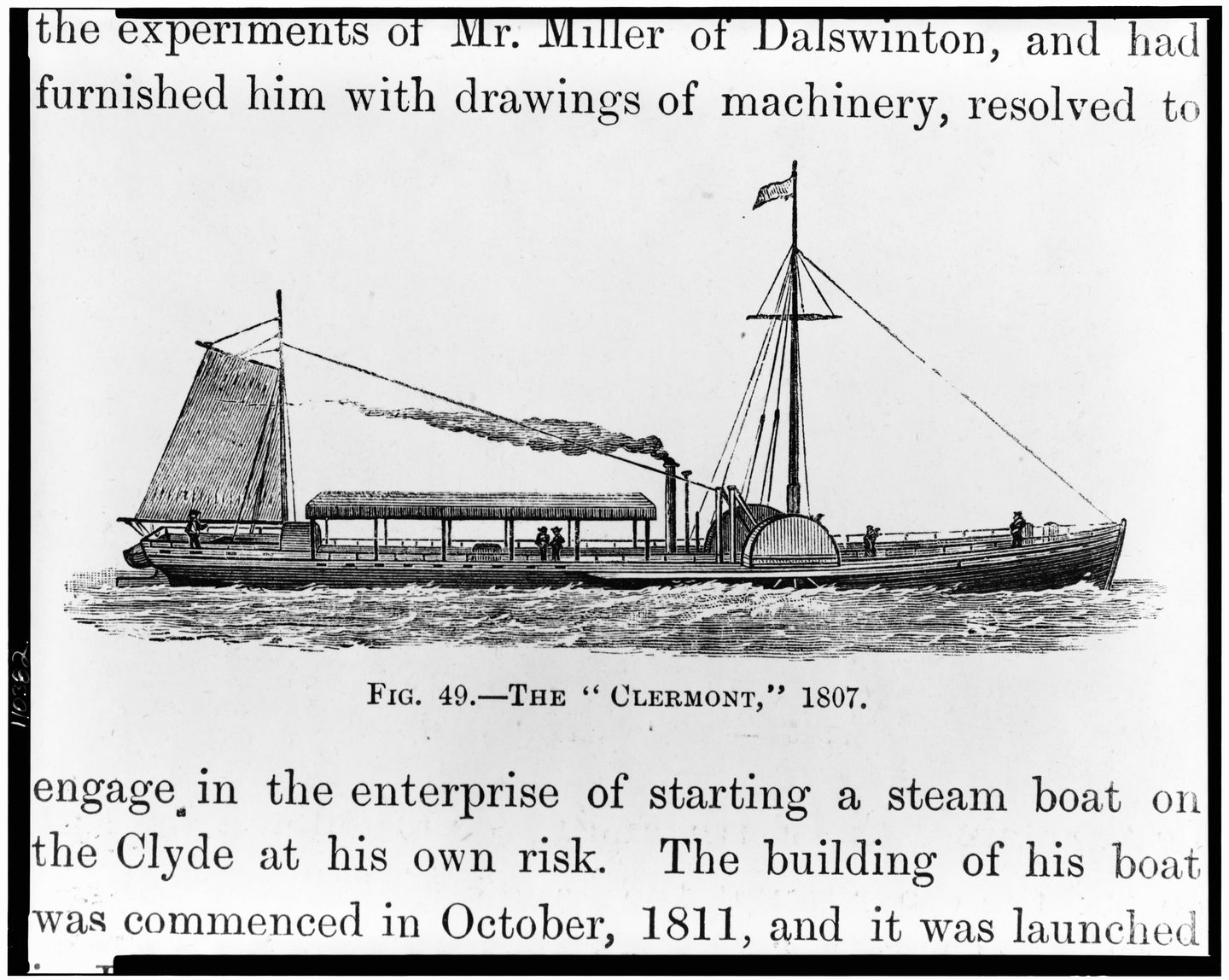
An engraving of the Clermont, 1807, showing the side-mounted paddle wheels and tall smokestack that crowds gathered to watch on the Hudson. Galloway, Robert Lindsay, 1842-1908., Public domain, via Wikimedia Commons
Steamboats also became beautiful in their own industrial way. Later designs featured ornate cabins, grand salons, and towering smokestacks. They were floating hotels, floating casinos, floating stages for everything from commerce to culture. Mark Twain would later romanticize them, but in 1807 they were just machines doing a job that had never been possible before: moving upstream against the current without human or animal muscle.
Fulton's steamboat proved something essential about infrastructure design. If you can make a system reliable, you can build an economy around it. Factories appeared near riverbanks because they could now ship goods predictably. Towns sprang up at steamboat stops. The entire geography of settlement shifted because Fulton figured out how to put a steam engine on a hull and make it work trip after trip.
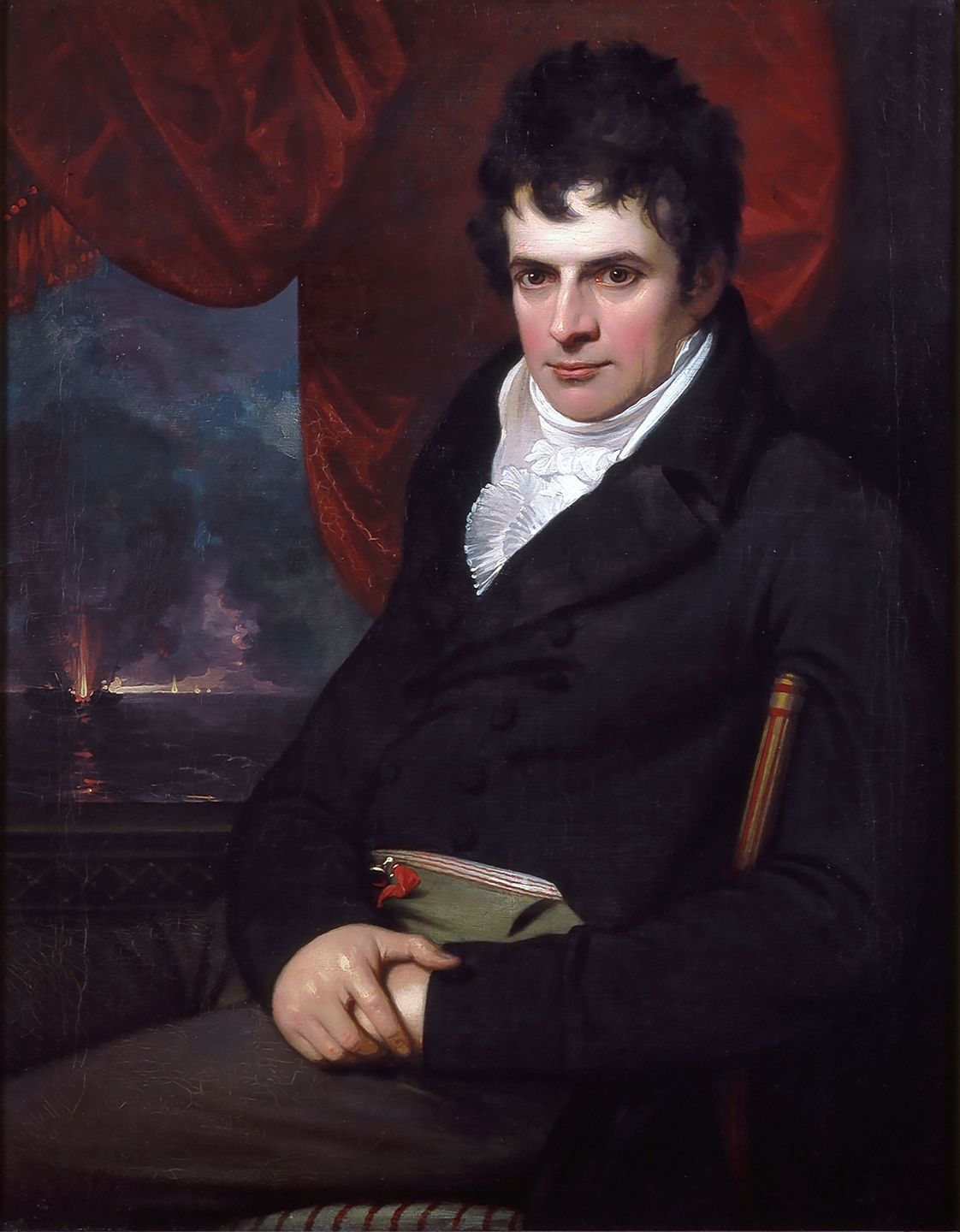
Robert Fulton, painted by Benjamin West in London in 1806, the year before his successful Hudson River Steamboat voyage. Public domain, via Wikimedia Commons
The Clermont's first voyage didn't just demonstrate technology. It demonstrated a principle that would drive the next century of American expansion: mobility is infrastructure, and infrastructure shapes civilization. When you can move people and goods reliably, you can connect markets, ideas, and populations. The steamboat did for rivers what railroads would later do for land and airplanes for the sky. It collapsed distance into schedule.
Fulton died in 1815, just eight years after that first trip. By then, steamboats were everywhere. The design had been refined, copied, and improved. But the core idea remained his: apply steam power to water transport, make it work consistently, and the river stops being an obstacle. It becomes a highway with no tolls and a current you can ignore.
studio / on-this-day / Aug 17