studio / on-this-day / Jul 4
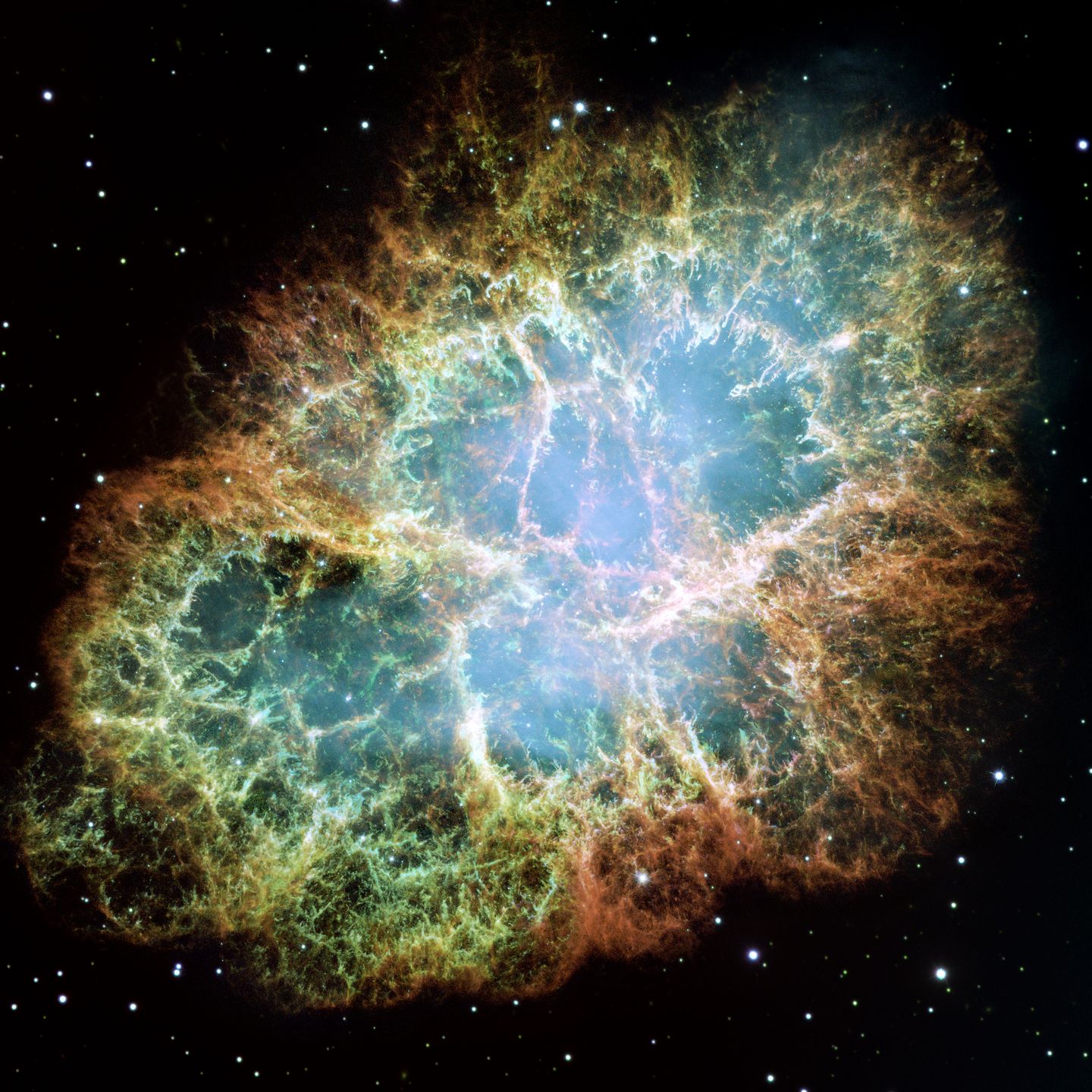
The Crab Nebula (m1), remnant of the supernova of 1054. NASA, ESA, J. Hester and A. Loll (Arizona State University), Public domain, via Wikimedia Commons
The Guest Star
On this day in 1054 — Chinese astronomers logged a guest star bright enough to see by day, the supernova that left behind the Crab Nebula.
3 min read
On July 4, 1054, Chinese astronomers observed what they called a "guest star" appear in the constellation Taurus. It was bright enough to be seen during the day for nearly a month, and remained visible at night for almost two years before fading below the threshold of naked-eye observation. They recorded its position with precision, noting it was near the star Tianguan, and described its color as reddish-white. No one alive at the time understood what they were watching. It was the death of a star, collapsing in on itself and then exploding outward with the energy of a hundred million suns.
The star that exploded was probably eight to twelve times the mass of our sun. It had burned through its nuclear fuel and could no longer sustain the outward pressure needed to balance gravity. In a matter of seconds, the core collapsed into a neutron star, a sphere about twelve miles across with the mass of the sun compressed into a space the size of a city. The collapse released so much energy that the outer layers of the star were blown away at speeds approaching ten percent the speed of light. The light from that explosion traveled 6,500 years across space before reaching Earth on that summer morning in 1054.
The Chinese were not the only ones to notice. Japanese and Arab astronomers also recorded the event. There are possible references in Native American rock art that may depict the bright star near a crescent moon, which would align with the historical position. But European records are silent. This was the height of the Middle Ages, and astronomy in Europe had declined from its classical heights. The sky was observed for calendrical and astrological purposes, but systematic record-keeping of transient phenomena had largely stopped. The knowledge was elsewhere.
For centuries, the observation was just a historical curiosity, a note in ancient Chinese records about a star that appeared and then vanished. It was not until 1731 that astronomer John Bevis noticed a faint, fuzzy patch of light in Taurus and added it to his star atlas. Charles Messier independently discovered it in 1758 and listed it as the first entry in his catalog of objects that might be confused with comets. It became known as M1. In 1844, William Parsons, using one of the largest telescopes in the world, observed the object and noted its filamentary structure, which reminded him of a crab. The name stuck.
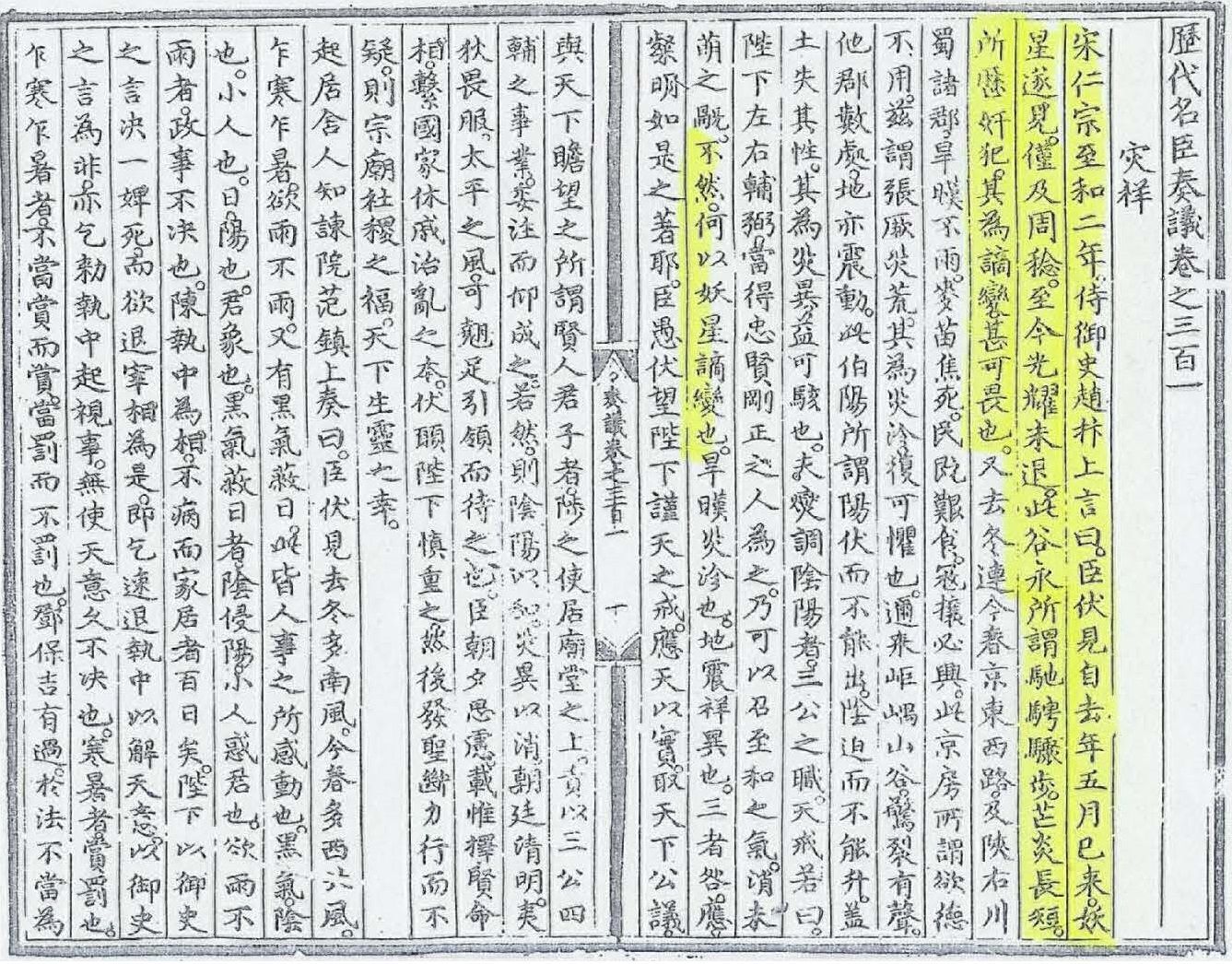
Chinese record of the 1054 supernova (sn 1054) from the lidai mingchen zouyi. Public domain, via Wikimedia Commons
The connection between the nebula and the guest star of 1054 was not made until the early twentieth century. In 1921, astronomer John Duncan compared photographs of the Crab Nebula taken years apart and noticed it was expanding. By measuring the rate of expansion and running the clock backward, he determined that the nebula would have been a single point roughly 900 years earlier, around the time of the Chinese observation. The guest star was not a visitor. It was an explosion, and the nebula was the debris field.
Modern telescopes have revealed extraordinary detail. The Crab Nebula is about eleven light-years across and still expanding. At its center is a pulsar, the collapsed core of the original star, spinning thirty times per second and emitting beams of radiation like a lighthouse. The nebula glows not from reflected light but from charged particles accelerated to near light speed by the pulsar's magnetic field. It is one of the most studied objects in the sky, a laboratory for understanding stellar death, neutron stars, and the physics of extreme environments.
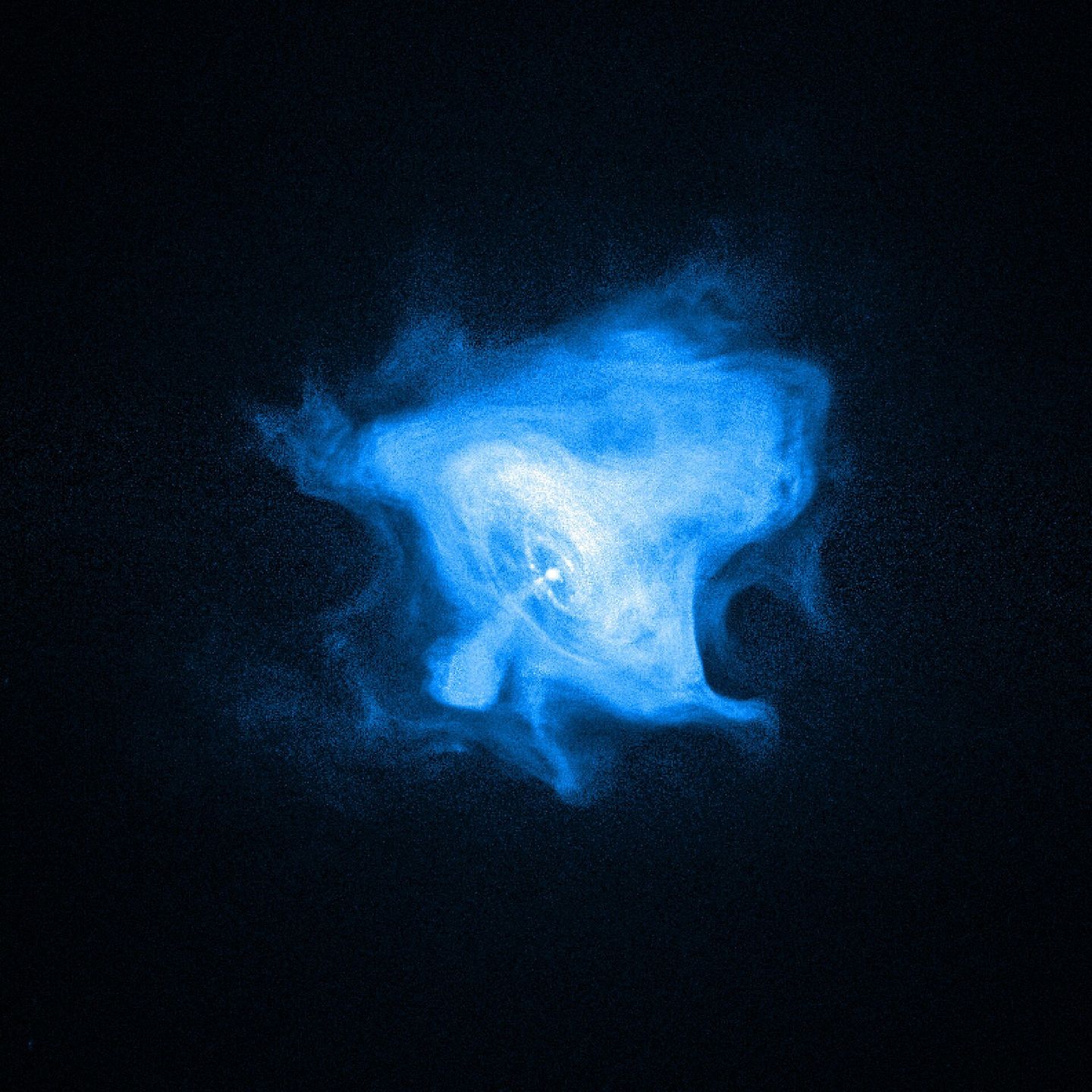
Chandra x-ray view of the Crab pulsar and its surrounding rings and jets. Smithsonian Institution from United States, No restrictions, via Wikimedia Commons
What makes the 1054 supernova remarkable is not just the event itself but the fact that it was recorded at all. The Chinese astronomers who noted the guest star had no idea what they were observing, but they wrote it down with enough precision that a millennium later, astronomers could connect their observations to an object in the sky. That continuity of attention, the idea that the sky is worth watching and recording even when you do not understand what you are seeing, is a kind of faith in the future. It assumes someone, someday, will be able to make sense of the pattern. In this case, they were right.
studio / on-this-day / Jul 4