studio / on-this-day / Jul 22
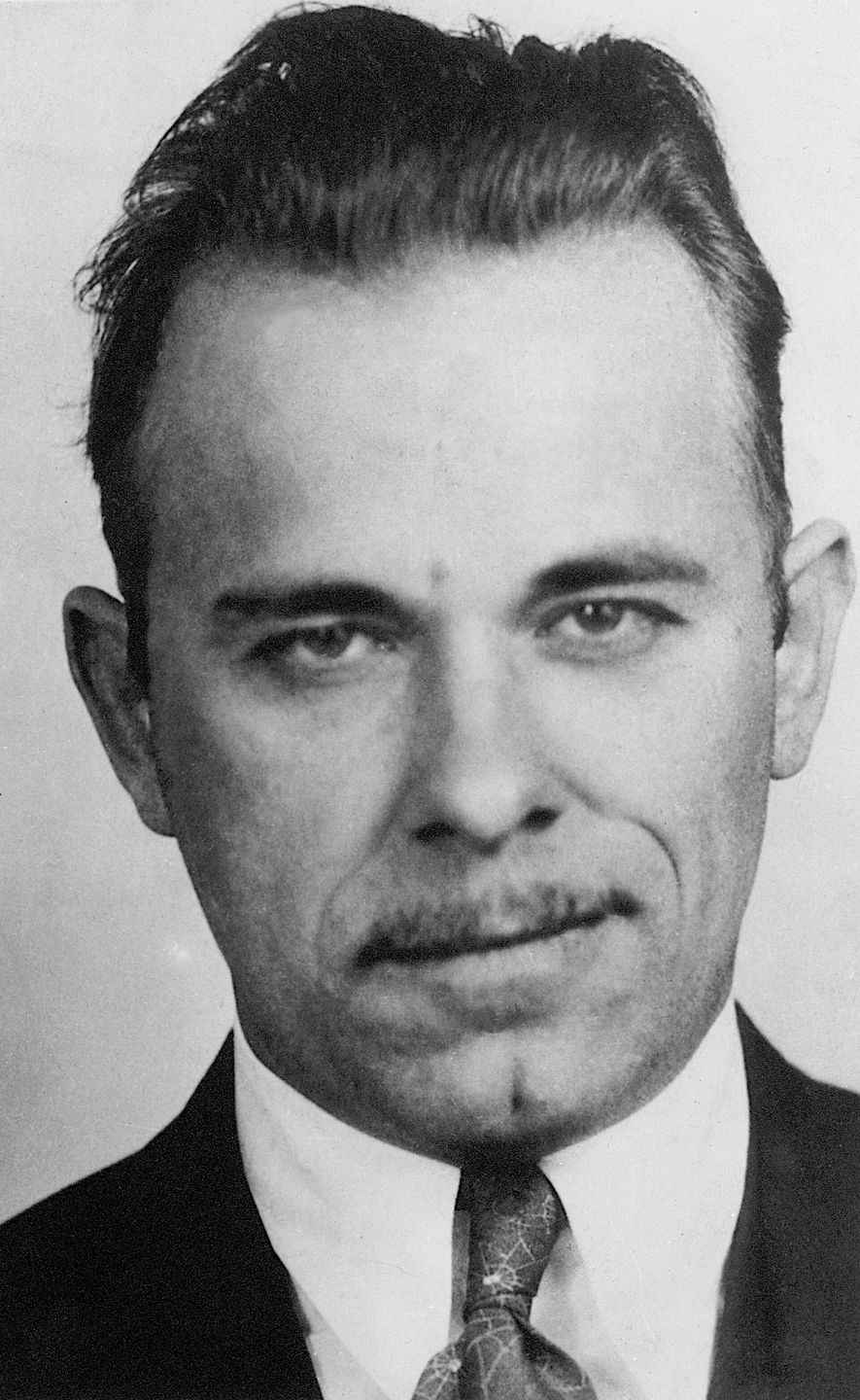
John Dillinger mugshot, 1933. FBI, Public domain, via Wikimedia Commons
The End of Public Enemy Number One
On this day in 1934 — FBI agents gunned down John Dillinger outside a movie theater, ending a manhunt that had gripped the country.
3 min read
John Dillinger left the Biograph Theater in Chicago at 10:30 PM on July 22, 1934. He had just watched "Manhattan Melodrama," a crime film about a gangster and a district attorney who grow up as friends. FBI agents waited outside. They had been tipped off by Ana Cumpănaș, a Romanian immigrant facing deportation who was with Dillinger that night. She wore an orange dress so agents could identify her in the crowd. Dillinger walked past the agents without recognizing them. One called out. Dillinger reached for a pistol. Three agents opened fire. He died on the pavement outside the theater, shot four times.
Dillinger had robbed at least two dozen banks in 14 months, making off with hundreds of thousands of dollars. He became famous not just for the robberies but for how he executed them. He moved fast, worked with a team, and planned meticulously. He studied bank layouts, timed police response, and drove stolen cars prepared in advance. Each robbery was a design problem: how to get in, get the money, and get out before law enforcement could react. He solved it repeatedly until the system adapted.
The FBI adapted through process. J. Edgar Hoover, still building the bureau's reputation, made Dillinger the face of a new kind of threat. The "public enemy" designation was created specifically for him. Hoover needed to demonstrate that federal law enforcement could operate across state lines, coordinate resources, and take down criminals who moved faster than local police. Dillinger was the test case. Stopping him required building a system as organized as the one he used to commit crimes.
Dillinger escaped from jail twice. The first time, he and his gang broke out using smuggled guns. The second time, in March 1934, he escaped from the supposedly escape-proof Lake County Jail in Indiana using a wooden pistol he had carved and painted to look real. He bluffed his way past guards, locked them in his cell, and drove away in the sheriff's car. The escape was audacious, theatrical, and humiliating for law enforcement. It also made him a folk hero in some circles, a Robin Hood figure robbing banks during the Depression.
That narrative was selective. Dillinger killed at least one police officer, possibly more. His gang murdered civilians during robberies. The romanticization ignored the violence and focused on the defiance. He represented a kind of freedom, the ability to operate outside the system, to move fast and take what you wanted. But systems have gravity. They pull back. The more visible Dillinger became, the more resources the FBI devoted to finding him.
Hoover used new tools. Fingerprint databases. Coordination between field offices. Wiretaps. Informants. The bureau approached the manhunt like an engineering problem. They tracked Dillinger's network, identified his associates, and applied pressure until someone broke. Ana Cumpănaș broke. The FBI offered to delay her deportation if she delivered Dillinger. She agreed. She took him to the movies. She wore orange. The system closed around him.
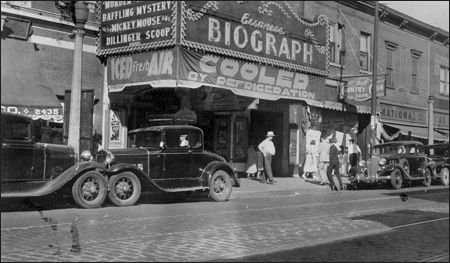
FBI agents outside the Biograph Theater, Chicago, July 22, 1934. FBI, Public domain, via Wikimedia Commons
After Dillinger was killed, the FBI took his fingerprints to confirm identity. Crowds gathered outside the Biograph Theater, some dipping handkerchiefs in his blood as souvenirs. The fascination persisted even in death. Myths accumulated. Some claimed he had undergone plastic surgery to change his appearance. Others said the FBI shot the wrong man. Conspiracy theories filled the gaps where facts were scarce. The person became legend, and the legend became harder to kill than the person ever was.
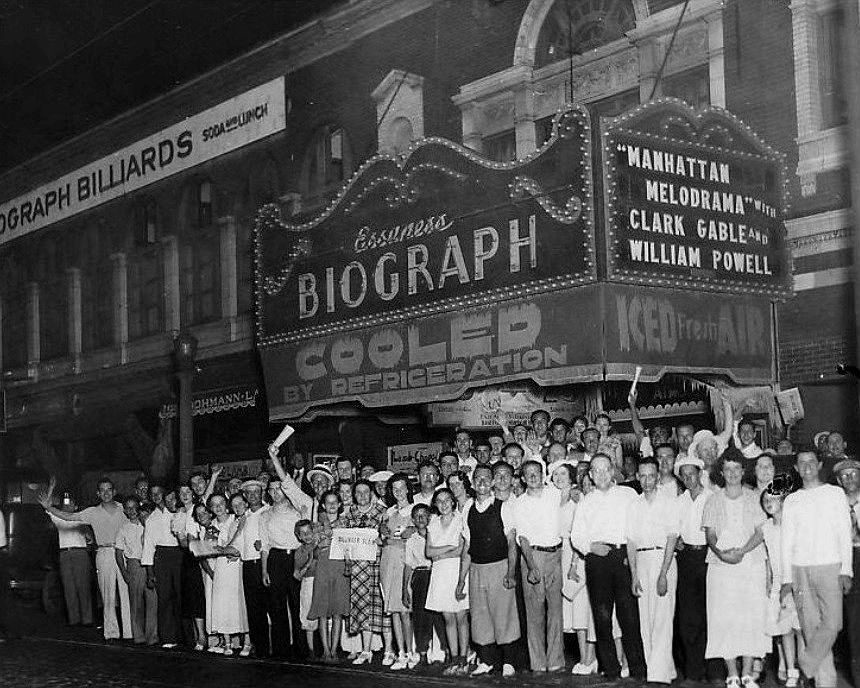
Crowds gather outside the Biograph Theater after Dillinger's death, July 1934. Public domain, via Wikimedia Commons
Hoover used Dillinger's death to argue for expanded federal powers. The FBI grew in size and authority. New laws gave agents more tools to pursue criminals across state lines. The logic was straightforward: if criminals could operate nationally, law enforcement needed to do the same. Dillinger's robberies became the justification for a redesign of American law enforcement. One man's crime spree became the blueprint for a new kind of policing.
The Biograph Theater still stands in Chicago. It closed in 2004 and later reopened as a live performance venue. A plaque marks the spot where Dillinger fell. People still visit. They take photographs. They want to stand where history happened. What they are really standing at is a point where two systems collided: one designed to evade capture, the other designed to guarantee it. On July 22, 1934, the second system won. It always does, eventually. You cannot outrun a system forever. You can only move fast enough to stay ahead until the system learns to move faster.
studio / on-this-day / Jul 22