studio / on-this-day / Jul 13
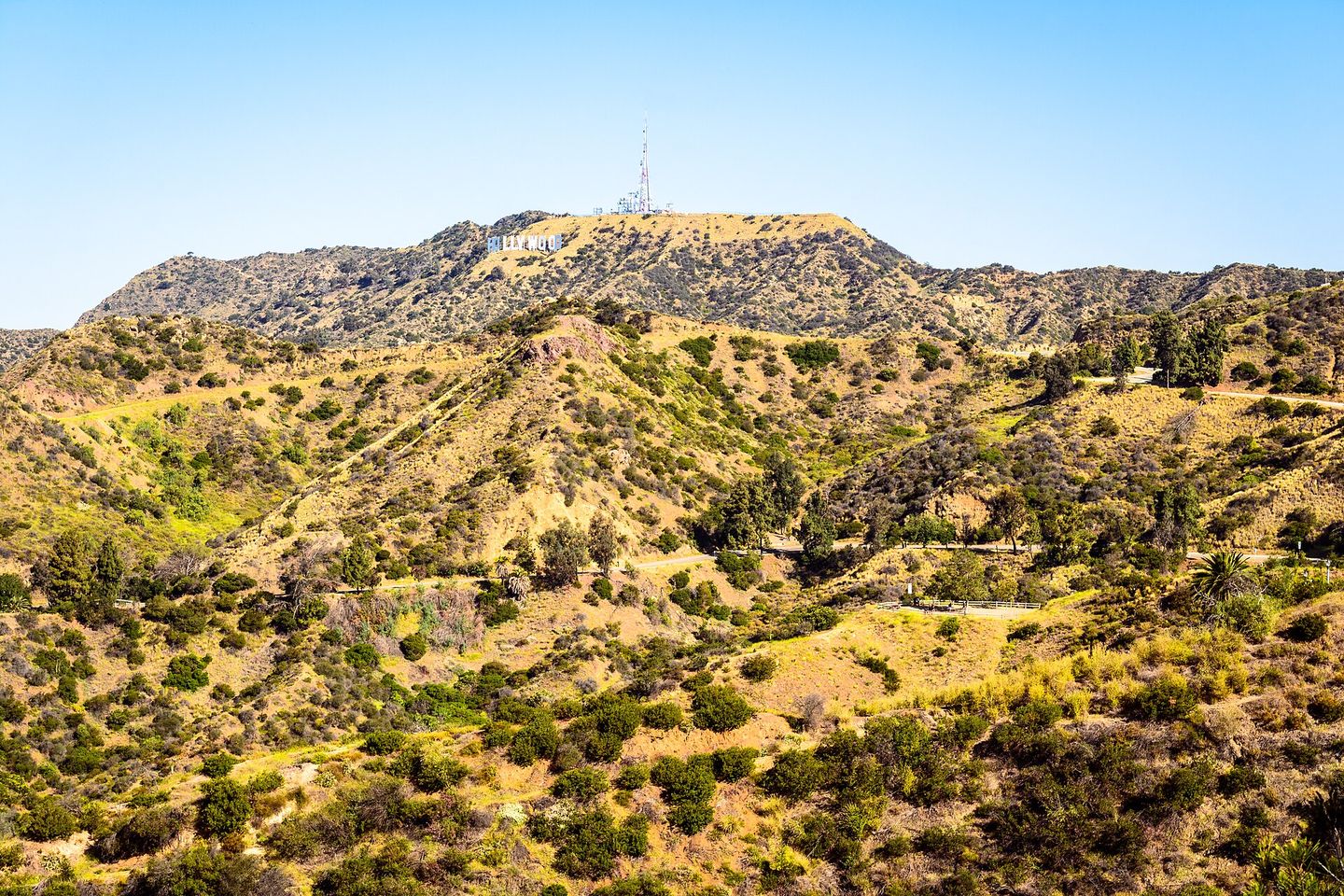
The Hollywood sign, Mount Lee, Santa Monica Mountains, Los Angeles. Dconvertini, CC BY-SA 2.0, via Wikimedia Commons
Branding as Landscape
On this day in 1923 — the Hollywood sign was erected. It originally said "Hollywoodland." Branding as landscape.
2 min read
The Hollywood sign went up on July 13, 1923, on the southern slope of Mount Lee in the Santa Monica Mountains. It did not say "Hollywood." It said "Hollywoodland," and it was an advertisement for a housing development. The letters were fifty feet tall, made of sheet metal and scaffolding, studded with 4,000 light bulbs that blinked in sequence at night. It was supposed to stand for eighteen months. It stayed for a century and became one of the most recognizable symbols in the world.
The housing development it advertised was a real estate venture, a tract of luxury homes in the hills above Los Angeles. The sign was designed to catch the eye of potential buyers. It worked, though not in the way intended. The development sold, the lights were turned off to save money during the Great Depression, and the sign began to deteriorate. By the 1940s, the "H" had fallen over. The structure was rusting and unstable. In 1949, the Hollywood Chamber of Commerce decided to restore it but removed the last four letters. "Hollywoodland" became "Hollywood," and the sign transformed from real estate marketing into something else entirely.
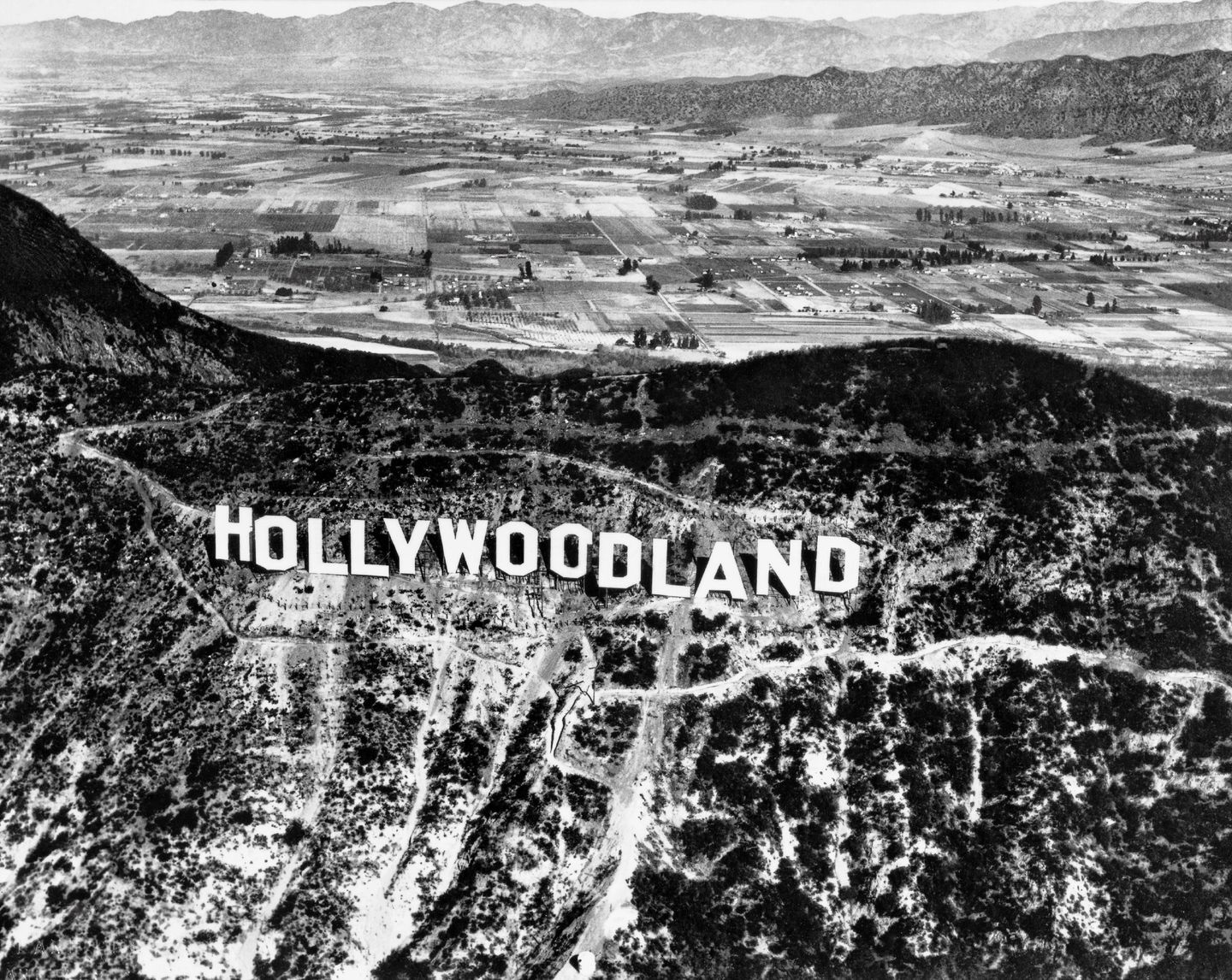
The original "Hollywoodland" sign in the 1920s, before the last four letters were removed. Public domain, via Wikimedia Commons
What the sign became was a symbol of ambition, illusion, and the entertainment industry. It represented not just a place but an idea: the dream factory, the place where people go to become stars. It appeared in countless films, usually as shorthand for Los Angeles or the movie business. It was repainted, rebuilt, and protected by landmark designations. When it started falling apart again in the 1970s, celebrities like Hugh Hefner and Alice Cooper donated money to replace the letters. The new sign, erected in 1978, used steel and concrete instead of wood and sheet metal. It was designed to last.
The Hollywood sign is not great architecture. It is not particularly beautiful or innovative. What it is, is effective. It occupies physical space in a way that makes it impossible to ignore, and it has been photographed from so many angles for so many decades that it exists as much in images as it does on the hillside. It is branding at landscape scale, a logo that you can see from miles away, a piece of corporate messaging that outlived its original purpose and became cultural infrastructure.
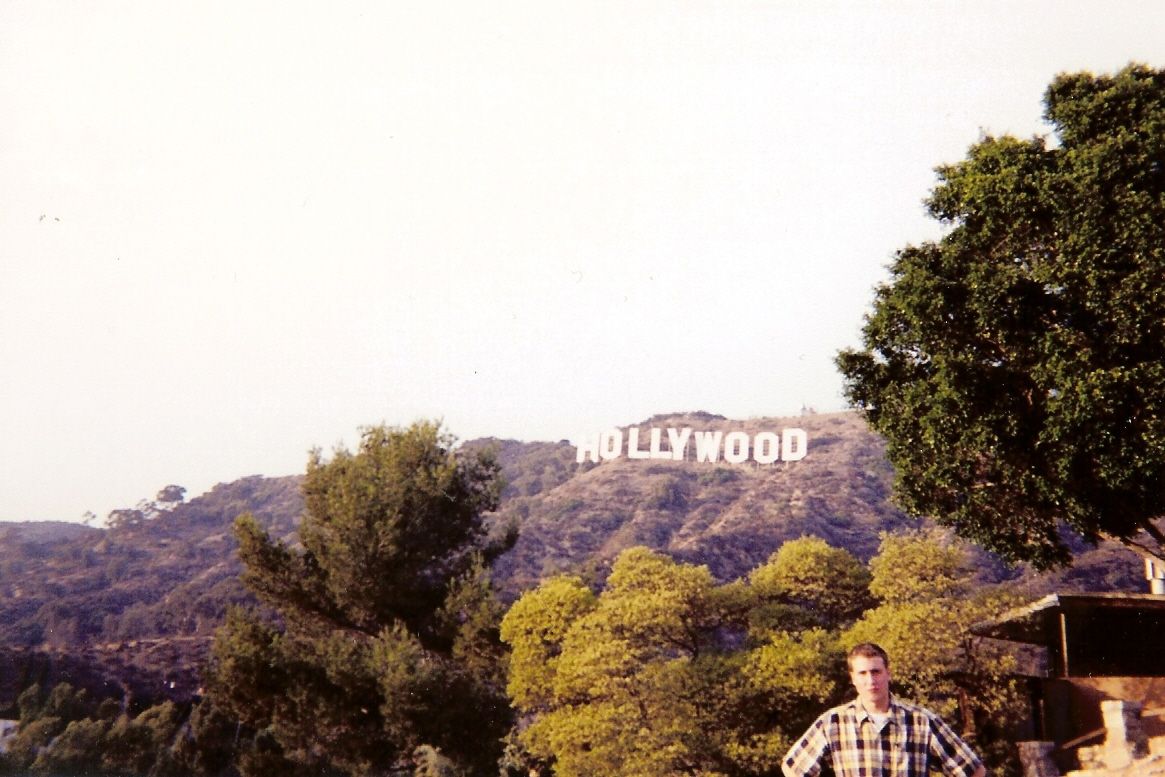
The Hollywood sign on the hillside above Los Angeles. Ken Lund from Reno, Nevada, USA, CC BY-SA 2.0, via Wikimedia Commons
This is the strange lifecycle of symbols. They start with specific intent, and if they are successful enough, they escape that intent and become something larger. The Hollywood sign was an ad. Now it is a landmark, a tourist destination, a visual shorthand for an entire industry. It is protected by law, monitored by cameras, and zealously defended against modification. The city that grew up around it now defines itself in part by its presence. A temporary structure, designed to sell houses, became permanent by accident. That is not design. That is survival.
studio / on-this-day / Jul 13