studio / on-this-day / Jul 11
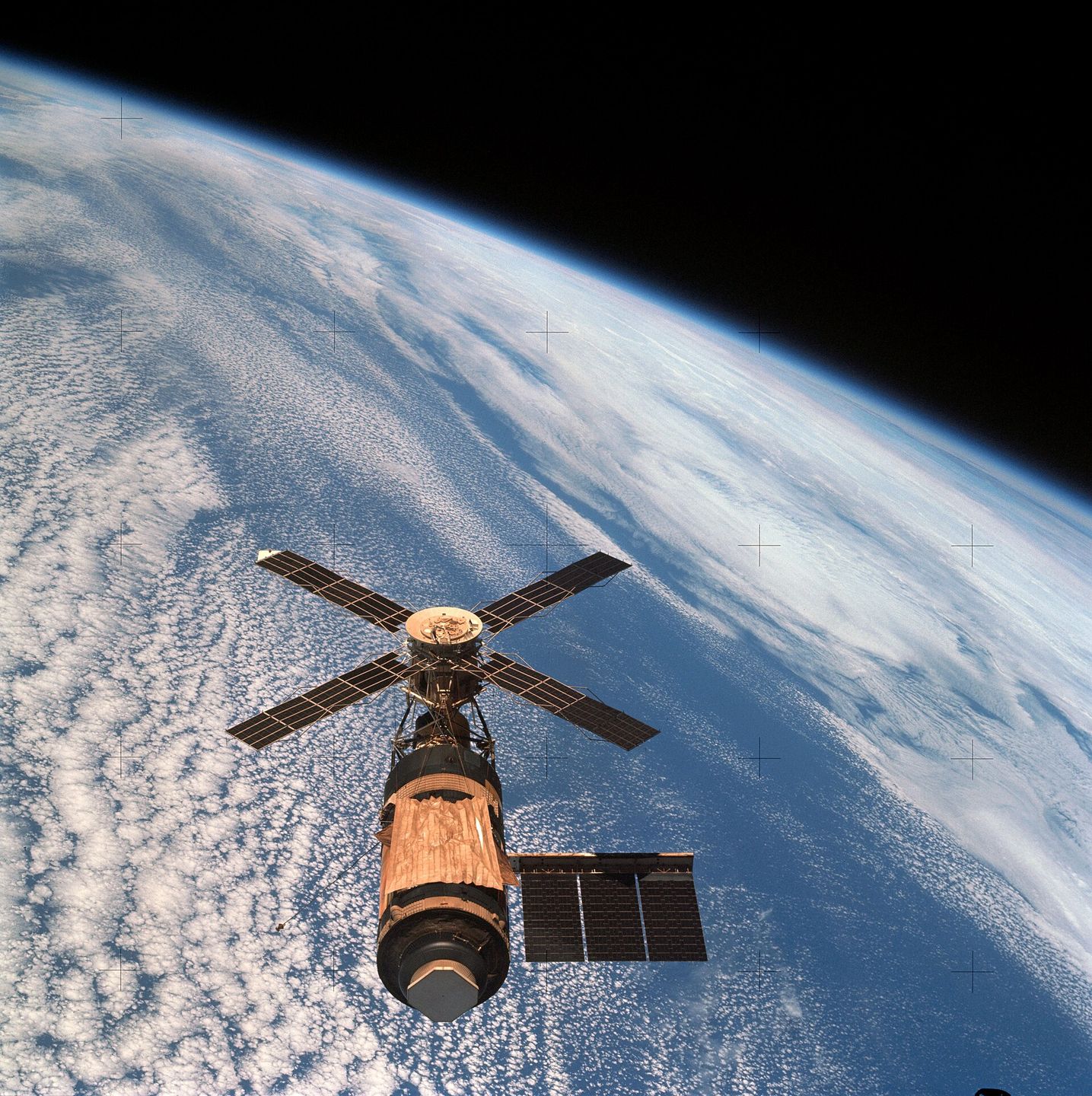
Skylab Space station in Earth orbit. NASA, Public domain, via Wikimedia Commons
The Station That Fell
On this day in 1979 — Skylab fell out of orbit, and America's first space station came down in pieces over Western Australia.
3 min read
Skylab reentered Earth's atmosphere on July 11, 1979, breaking apart over the Indian Ocean and scattering debris across a thousand-mile swath of Western Australia. Pieces of America's first space station, some weighing several tons, crashed into the Outback. A town called Esperance sent NASA a $400 invoice for littering. NASA never paid it, but a radio station in California did, years later, as a publicity stunt. The whole episode was both a technical failure and a very public embarrassment, the end of a project that had been improvised from the start.
Skylab was launched on May 14, 1973, aboard the last Saturn V rocket ever to fly. It was built from leftover Apollo hardware, a massive orbital workshop constructed inside the third stage of a rocket originally designed to go to the Moon. The station was 100 feet long and weighed 77 tons. It had more interior space than a small house. For a year and a half, three crews of astronauts lived aboard Skylab, conducting experiments in solar physics, Earth observation, and the effects of long-duration spaceflight on the human body. They proved that people could live and work in space for months at a time, which was essential groundwork for everything that came after.
But Skylab was never meant to last forever. Its orbit was decaying, slowly pulled down by atmospheric drag. NASA had planned to use the Space Shuttle to boost Skylab into a higher orbit or attach a propulsion module to control its reentry. The problem was that the Shuttle was not ready. Development delays pushed the first Shuttle flight to 1981, two years too late. By 1978, it was clear Skylab was coming down, and there was nothing NASA could do to stop it. The only question was where.
The uncertainty caused a media frenzy. Newspapers ran maps showing possible reentry trajectories. People threw Skylab parties, waiting to see if chunks of a space station would land in their backyard. NASA tried to reassure the public, noting that most of the station would burn up during reentry and that the odds of anyone being hit were extremely low. But they could not predict exactly when or where Skylab would come down. The atmosphere's density varies, and small changes in drag affect orbital decay in unpredictable ways.
In the final hours, NASA fired Skylab's attitude control thrusters to try to steer the debris field away from populated areas. It worked, mostly. The station came down over the Indian Ocean and a sparsely populated stretch of Australia. No one was hurt. A few people found fragments of the station in their fields. One piece of Skylab, a large oxygen tank, ended up in a museum in Esperance. The town later forgave NASA for the littering fine. It became part of the local lore, the day the sky fell.
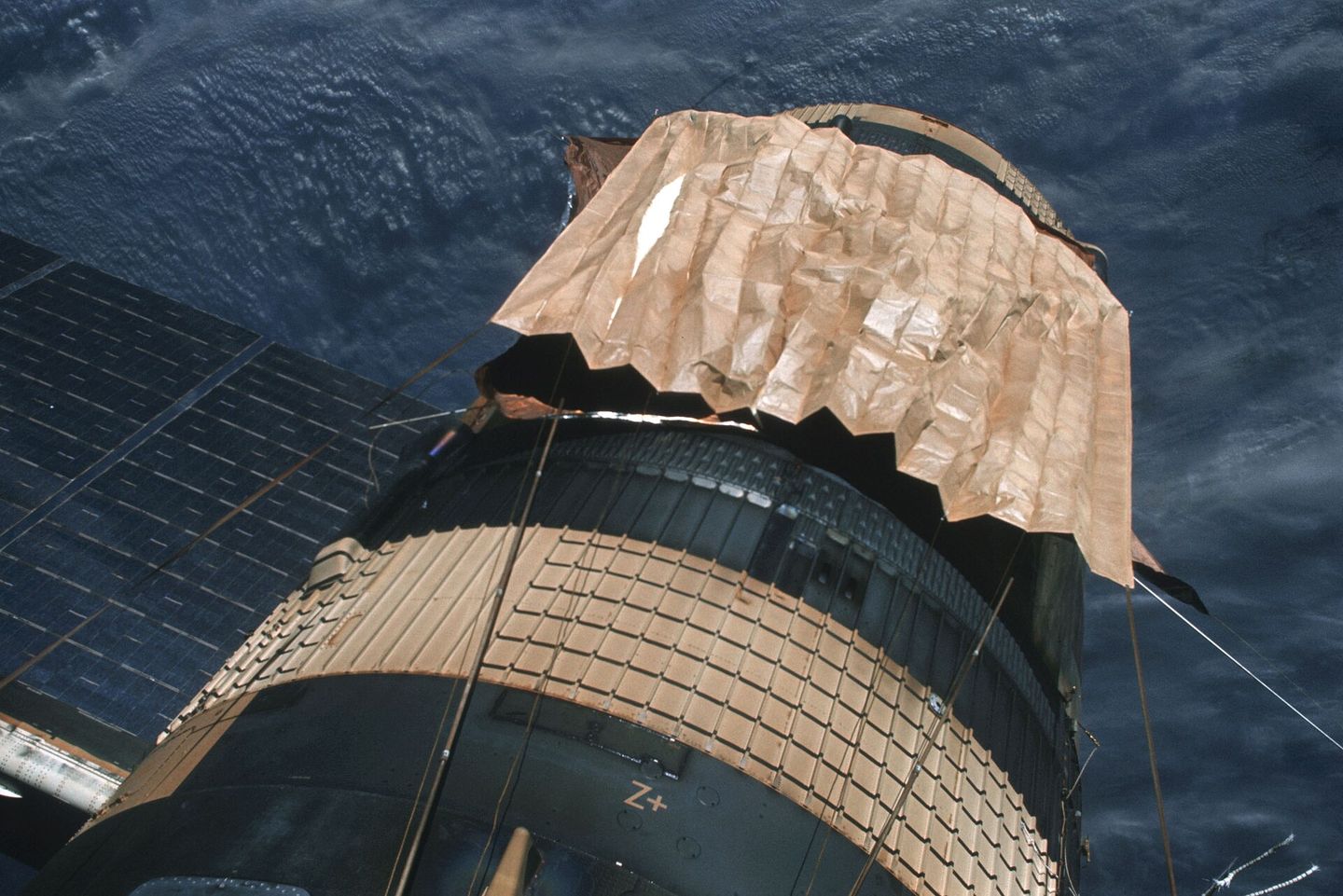
Skylab photographed by the Skylab 4 crew upon arrival, 1973. NASA, Public domain, via Wikimedia Commons
Skylab's uncontrolled reentry changed how we think about orbital debris. Every satellite and space station launched since has an end-of-life plan, a way to either boost it into a graveyard orbit or bring it down in a controlled manner over the ocean. The problem Skylab exposed, that what goes up must come down and we should probably have a plan for where, is now a fundamental part of spacecraft design. We launched thousands of objects into orbit without thinking about disposal, and we are still dealing with the consequences.
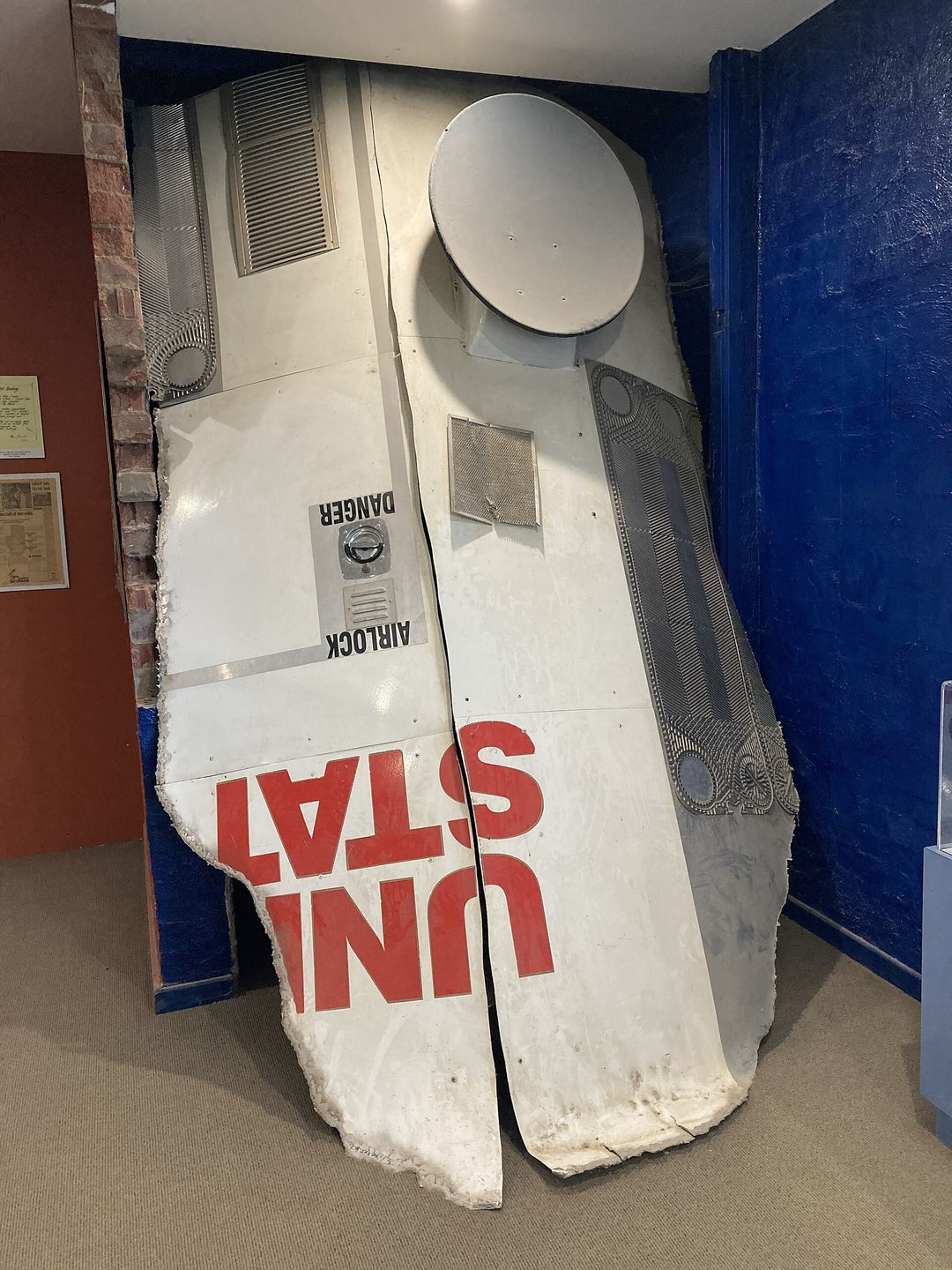
A piece of recovered Skylab wreckage at the balladonia museum, Western Australia. Chuq, CC BY-SA 4.0, via Wikimedia Commons
Skylab was improvised, underfunded, and abandoned before its time. But it proved that long-duration spaceflight was possible, that humans could adapt to living in orbit, that science could be done in weightlessness. The astronauts aboard Skylab took some of the most detailed images of the Sun ever captured at the time. They studied Earth's weather and geology from a perspective no one had sustained before. The station fell, but the work it enabled continued. Every space station since, from Mir to the ISS, owes something to Skylab's messy, unplanned success.
studio / on-this-day / Jul 11