studio / on-this-day / Jun 30
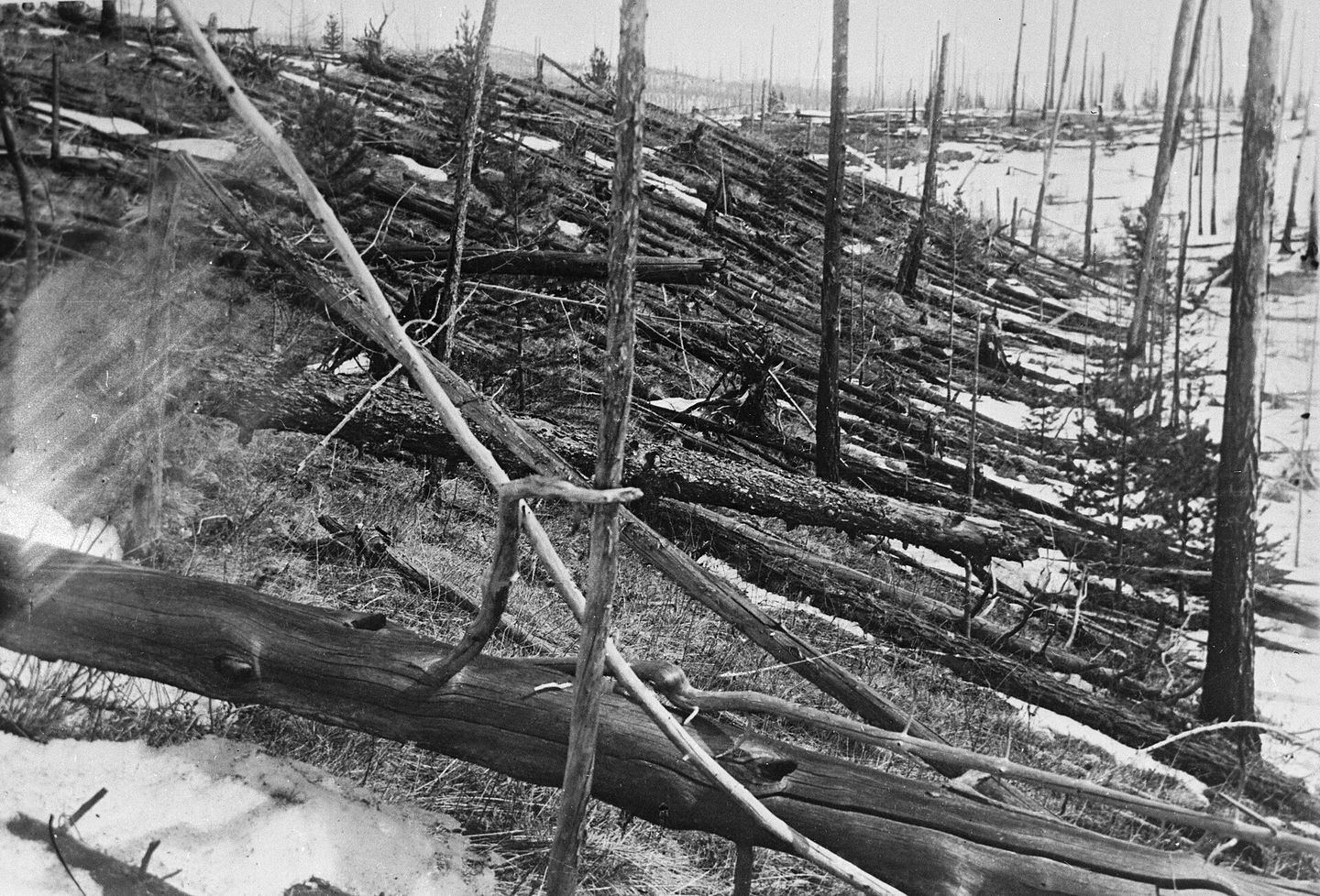
Fallen trees in the Tunguska region, photographed during the 1927 Kulik expedition — the first scientific survey of the 1908 impact site, nearly 20 years after the event. Leonid Kulik, the expedition to the Tunguska event, Public domain, via Wikimedia Commons
The Explosion Without a Crater
On this day in 1908 — something exploded over Tunguska and flattened eight hundred square miles of Siberian forest, leaving no crater at all.
3 min read
At 7:17 AM local time on June 30, 1908, something exploded in the sky above the Tunguska River in central Siberia. The blast flattened an estimated 80 million trees across 830 square miles of remote taiga forest. Witnesses hundreds of miles away reported seeing a fireball brighter than the sun streak across the sky, followed by a shockwave that shattered windows and knocked people off their feet. Seismographs across Europe and Asia recorded the event. The atmospheric pressure wave circled the globe twice. For several nights afterward, the skies over Europe and western Russia glowed so brightly that people could read newspapers outdoors at midnight.
No one investigated for nearly two decades. The site was remote, accessible only by boat or reindeer. Russia was in turmoil, first with World War I, then revolution, then civil war. It was not until 1927 that Soviet scientist Leonid Kulik led the first expedition to the impact zone. What he found was bizarre. Trees at the center were still standing, stripped of branches and bark, carbonized but upright. Beyond the center, trees were flattened in a radial pattern, all pointing away from the blast. There was no crater. No meteorite fragments. No obvious explanation for what had caused an explosion equivalent to 10 to 15 megatons of TNT, roughly a thousand times more powerful than the atomic bomb dropped on Hiroshima.
The Tunguska region, Siberia, photographed in 2014 — the remote area where an estimated 50-meter asteroid or comet fragment exploded in the atmosphere in 1908. Artyom Svetlov, CC BY 4.0, via Wikimedia Commons
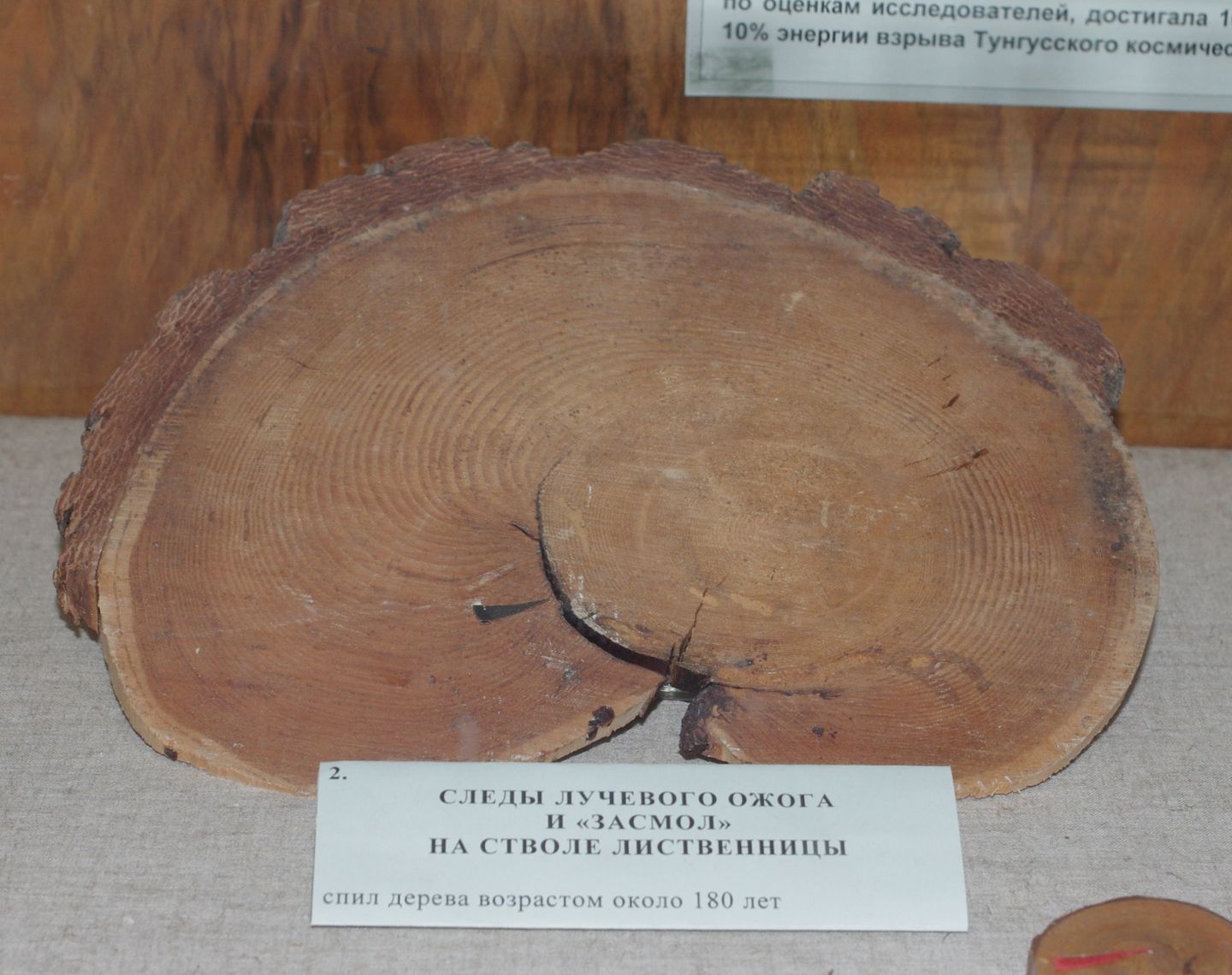
The lack of a crater was the key clue. If a large meteorite had struck the ground, it would have left a massive impact structure. The pattern of destruction suggested something else: an airburst, an explosion that occurred several miles above the surface. The current scientific consensus is that a rocky asteroid or comet, roughly 100 to 200 feet in diameter, entered the atmosphere at a steep angle and exploded at an altitude of 3 to 6 miles due to the intense heat and pressure of atmospheric compression. The object never reached the ground. It vaporized in mid-air, releasing its kinetic energy in a single catastrophic blast.
The energy release was enormous, but the location was fortunate. The Tunguska region was, and remains, one of the most sparsely populated areas on Earth. If the object had arrived a few hours later, the Earth's rotation would have placed a major city directly in the path. St. Petersburg, for example, lies on the same latitude. The difference between historical curiosity and mass casualty event was a matter of timing. The explosion was powerful enough to destroy a city. It just happened to explode over trees.
The Tunguska event remains the largest impact event in recorded history. It demonstrated that Earth is not immune to cosmic collisions, that the solar system is full of debris, and that objects capable of causing regional devastation can arrive without warning. The event spurred scientific interest in near-Earth objects and asteroid detection. Today, astronomers track thousands of asteroids that cross Earth's orbit, cataloging their size, trajectory, and potential threat. The goal is to ensure that the next Tunguska does not catch us by surprise.

Leonid Kulik, the Soviet mineralogist who led the first expedition to the Tunguska site in 1927, nearly two decades after the blast. Public domain, via Wikimedia Commons
There is no memorial at the site, no monument. Just trees, some of them regrown from the original forest, others descendants of the survivors. The area is difficult to reach and remains largely uninhabited. Scientists occasionally visit to study the soil, the remaining charred stumps, and the patterns of regrowth. The blast site itself is estimated to be near the Podkamennaya Tunguska River, though the exact epicenter is still debated. What is certain is that on June 30, 1908, something from space exploded over Siberia with enough force to remind us that the planet is not isolated. It is part of a dynamic system, and that system includes objects moving at tens of thousands of miles per hour, some of which intersect our orbit. The Tunguska event was a warning delivered to an empty forest. Next time, we may not be so lucky.
studio / on-this-day / Jun 30