studio / on-this-day / Jun 25
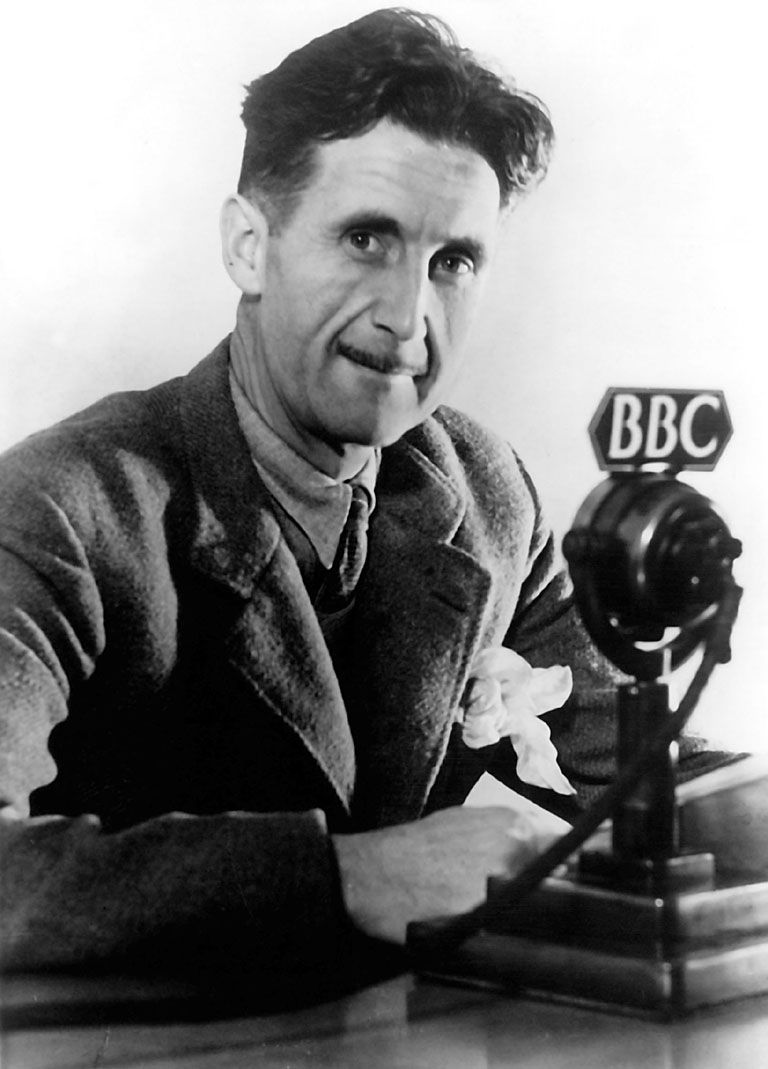
George Orwell, author of Nineteen Eighty-Four and Animal Farm, photographed by the BBC. BBC, Public domain, via Wikimedia Commons
The Architect of Dystopia
On this day in 1903 — George Orwell was born, and would design a dystopia so exact that its name became a warning label.
3 min read
Eric Arthur Blair was born on June 25, 1903, in Motihari, Bengal, India, where his father worked in the Indian Civil Service overseeing opium production for export to China. The family returned to England when Eric was young. He attended elite schools on scholarship, including Eton, where he was brilliant but poor, always aware of the class divide. He did not go to university. Instead, he joined the Indian Imperial Police in Burma, serving for five years before resigning in disgust at the brutality of colonial rule. The experience marked him. He saw what power does when no one is watching.
He began writing under the pen name George Orwell, a name chosen for its Englishness, its ordinariness. His early work documented poverty and working-class life with the precision of a social scientist. "Down and Out in Paris and London" described life as a dishwasher and vagrant. "The Road to Wigan Pier" examined coal miners in northern England. The writing was clear, direct, and unsentimental. Orwell believed that good prose should be like a windowpane, invisible, allowing the reader to see through to the subject. Fancy language was a form of dishonesty. Clarity was a moral obligation.
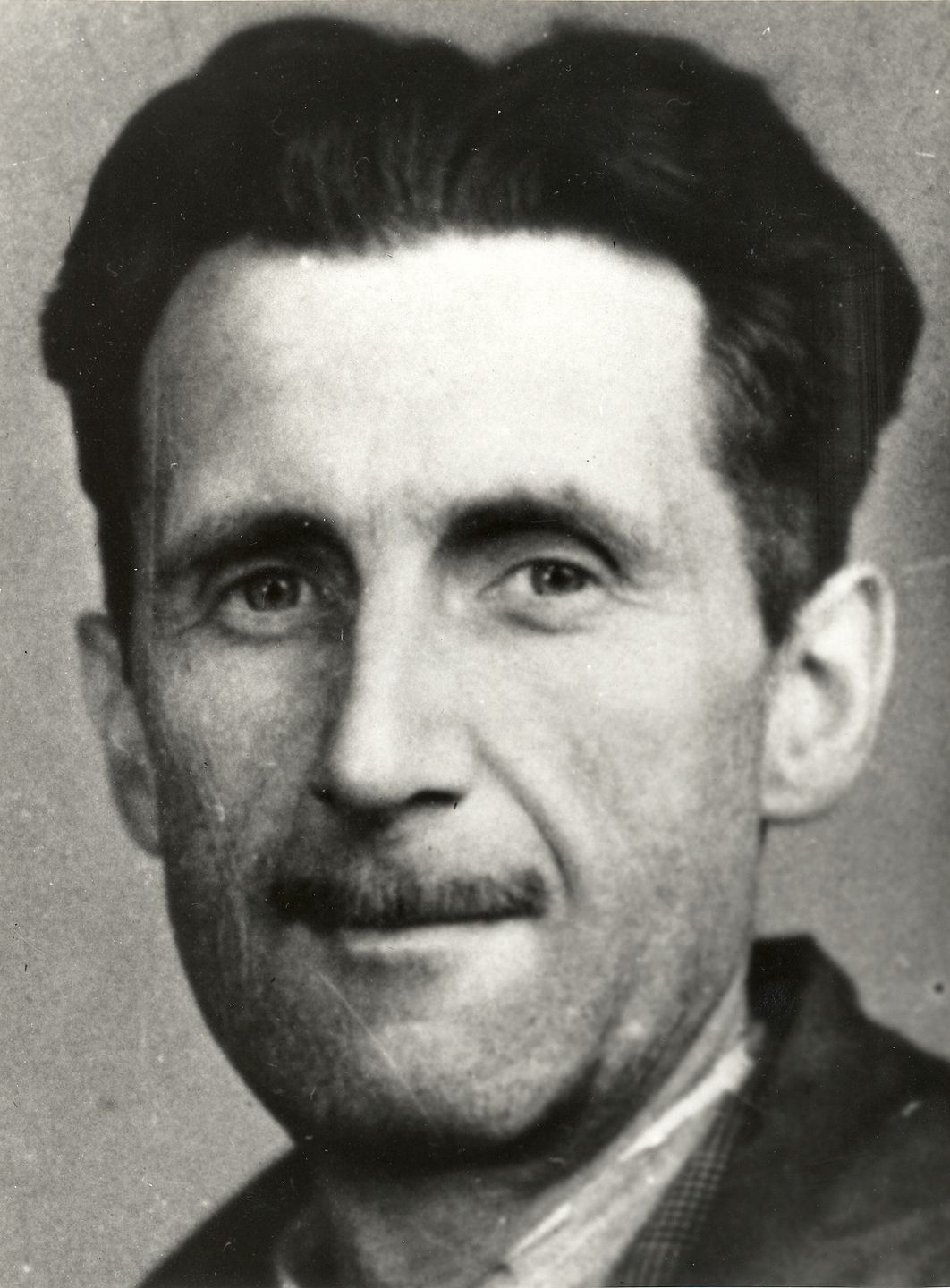
George Orwell, whose novels Nineteen Eighty-Four and Animal Farm defined the literary language of totalitarianism and surveillance. Branch of the National Union of Journalists (BNUJ)., Public domain, via Wikimedia Commons
In 1936, Orwell went to Spain to report on the civil war. He ended up fighting for the Republican side against Franco's fascists, joining a militia aligned with anarchists and Trotskyists. He was shot through the throat by a sniper. The bullet missed his carotid artery by millimeters. He survived but lost much of his voice permanently. More damaging was what he witnessed: the Republican factions turning on each other, Stalinists purging their allies, truth becoming whatever the party said it was. He saw the future in miniature. The experience became "Homage to Catalonia," a book that sold poorly but crystalized his understanding of how ideology devours itself.
That understanding fueled "Animal Farm," published in 1945, a fable about a farm where animals overthrow their human master only to be enslaved by their own leaders. The pigs who run the revolution become indistinguishable from the humans they replaced. The book was a direct allegory of the Soviet Union, written at a time when Stalin was still an allied wartime hero. Publishers rejected it as politically inconvenient. When it was finally published, it became a bestseller. Orwell had found a way to encode political critique in a structure simple enough for anyone to understand. The simplicity was the point. Totalitarianism thrives on complexity and jargon. Clarity is resistance.
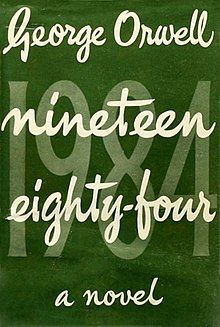
The dust jacket of the first edition of Nineteen Eighty-Four, published in 1949, the year before Orwell's death. Michael Kennard, Public domain, via Wikimedia Commons
"Nineteen Eighty-Four," published in 1949, went further. The novel described a world of perpetual war, mass surveillance, and enforced conformity, where language itself is redesigned to make dissent impossible. Newspeak reduces vocabulary to eliminate nuance. The Ministry of Truth rewrites history. Big Brother watches from every screen. The protagonist, Winston Smith, works for the state altering records to match current party doctrine. The past is whatever the party says it is. The novel was not a prediction. It was a blueprint, a worst-case scenario built from existing trends. Orwell had seen propaganda in Spain, totalitarianism in the Soviet Union, and mass media manipulation in wartime Britain. He assembled the pieces into a system.
Orwell died of tuberculosis on January 21, 1950, at age 46, less than a year after "Nineteen Eighty-Four" was published. He had been ill for years, writing through fevers and coughing fits, finishing the novel in a state of near collapse. The book became one of the most influential works of the 20th century, its concepts entering common language. Orwellian. Thought police. Doublethink. Big Brother. Whenever surveillance expands or language is corrupted for political ends, Orwell is invoked. His dystopia became a reference point, a design pattern to avoid.
What Orwell understood, and what makes his work endure, is that oppression is not just physical. It is linguistic, structural, psychological. It redesigns reality at the level of perception. The task of the writer, he believed, is to defend clarity, to insist that words mean something, to resist the slow drift into meaninglessness. Every lie unchallenged, every euphemism accepted, every fact rewritten is a step toward the world he described. The warning is not that dystopia might arrive. It is that it arrives quietly, one redefinition at a time, until no one remembers what the words used to mean.
studio / on-this-day / Jun 25