studio / on-this-day / Jun 20
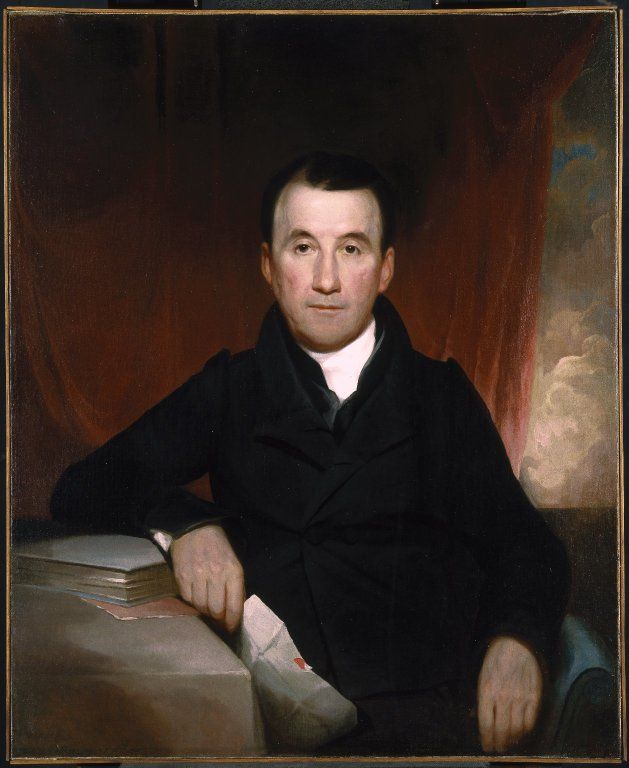
Samuel f.b. Morse, inventor and artist, painted by Jonas Platt — he patented the telegraph in 1840. Samuel Finley Breese Morse, Public domain, via Wikimedia Commons
Language in Electrical Pulses
On this day in 1840 — Samuel Morse received his telegraph patent, and dots and dashes became the first network to shrink a continent.
3 min read
On June 20, 1840, Samuel Morse was granted U.S. Patent No. 1,647 for his telegraph system. The patent covered an apparatus that could transmit messages across distances using electrical impulses sent through a wire. Morse had spent years refining the design, but the real innovation was not the hardware. It was the code, a system for encoding language into a binary stream of short and long signals, dots and dashes, that could be transmitted, decoded, and understood at the other end of a wire. It was the first digital communication protocol.
Morse was not an engineer. He was a painter, trained at the Royal Academy of Arts in London, and a moderately successful portrait artist. The idea for the telegraph came to him in 1832 during a transatlantic voyage when he overheard a conversation about electromagnetism. He became obsessed with the possibility of using electricity to send messages. He had no background in physics or electrical theory. He taught himself by reading, experimenting, and collaborating with others who did understand the science, including Leonard Gale and Alfred Vail, who contributed critical refinements to the design and code.
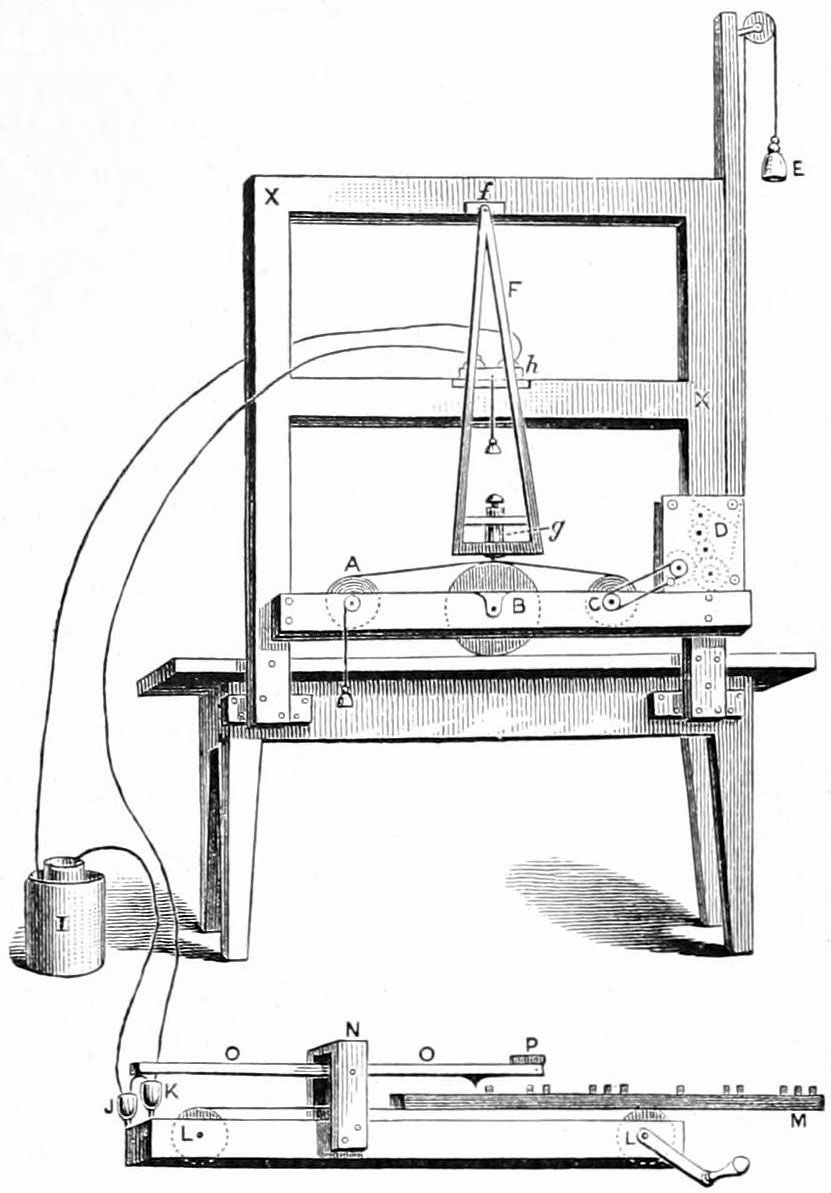
Morse's telegraph apparatus — the system of electromagnets, keys, and paper tape that translated electrical pulses into recorded messages. Public domain, via Wikimedia Commons
The system Morse developed used an electromagnet to move a stylus that pressed marks onto a moving strip of paper. A short press produced a dot. A longer press produced a dash. By assigning combinations of dots and dashes to letters, numbers, and punctuation, any message could be encoded, transmitted, and decoded. The code was not arbitrary. Morse analyzed the frequency of letters in the English language and assigned shorter sequences to more common letters. E, the most frequent letter, became a single dot. Less common letters like Q and Z required longer sequences. The design was optimized for speed and efficiency. It was information theory before information theory had a name.
The first public demonstration of the telegraph took place in 1838, but it took years to secure funding and build the infrastructure needed to make it practical. In 1843, Congress allocated $30,000 to build an experimental telegraph line between Washington, D.C., and Baltimore. On May 24, 1844, Morse sent the first long-distance message over the line. The message, suggested by the daughter of a patent commissioner, was a biblical quotation: "What hath God wrought." It was both a question and a statement. The telegraph had arrived, and it would change everything.
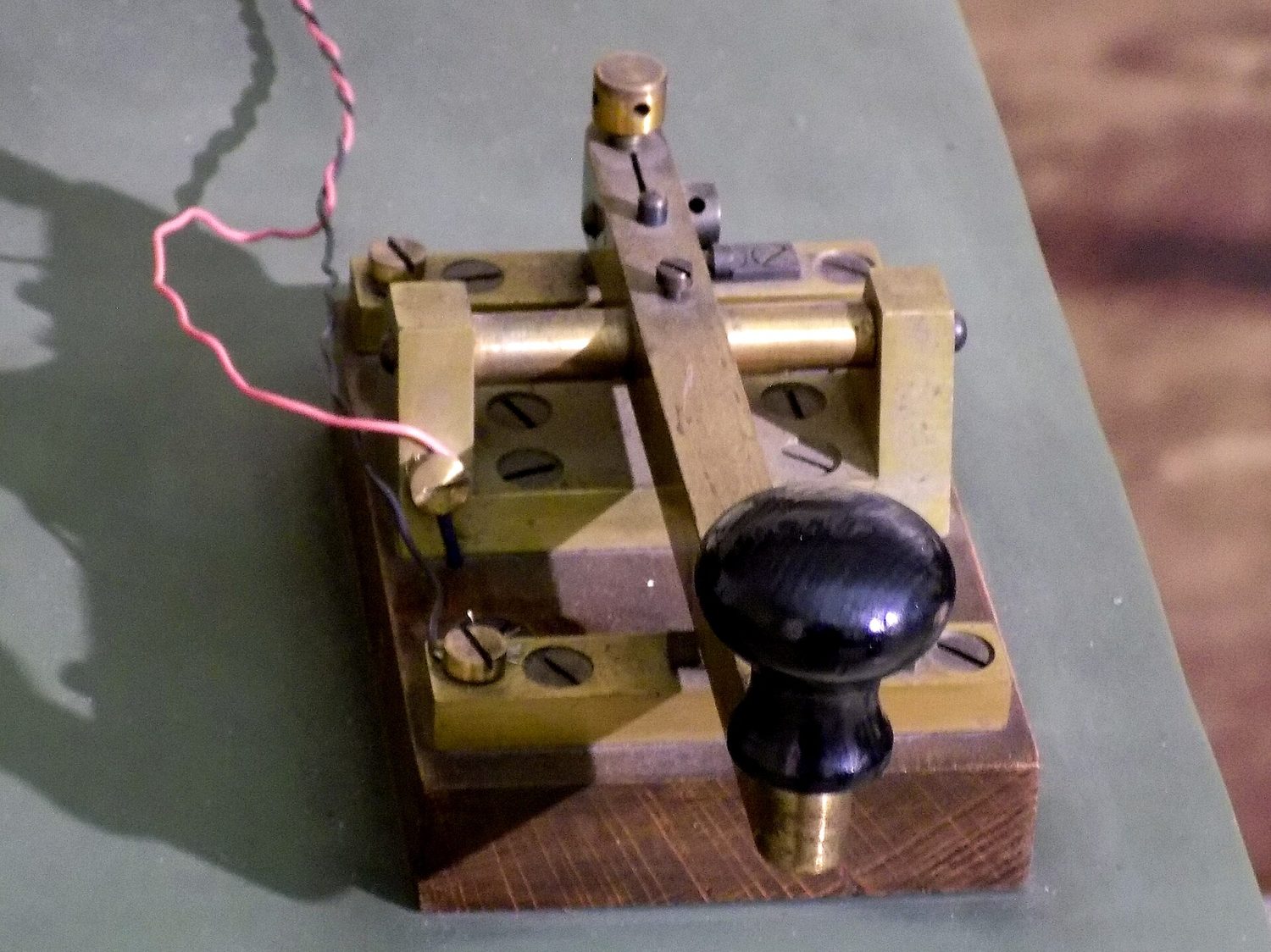
A telegraph key, used to tap out messages in Morse code. Milica Buha, CC BY-SA 4.0, via Wikimedia Commons
Within a decade, telegraph lines crisscrossed the United States. In 1866, the first successful transatlantic cable was laid, connecting North America to Europe. News that once took weeks to cross the ocean now arrived in minutes. Stock prices, weather reports, military orders, and personal messages moved at the speed of electricity. Time zones were standardized to coordinate train schedules that relied on telegraph signals. The modern notion of real-time communication began with the telegraph. The world became smaller, not in distance but in latency.
Morse code outlasted the telegraph itself. It was used in maritime communication well into the 20th century. The international distress signal, SOS, is three dots, three dashes, three dots, chosen not because the letters stand for anything in particular but because the pattern is simple and unmistakable. During World War II, resistance fighters used Morse to communicate in occupied territories. Even today, amateur radio operators use it. The protocol endures because it is elegantly simple. It reduces language to timing and presence, something that can be transmitted with a flashlight, a whistle, or a finger tapping on a table.
Samuel Morse lived long enough to see his invention transform global communication. He died in 1872, wealthy and celebrated. The telegraph made him a symbol of American ingenuity, though much of the technical work had been done by others. What mattered was the system, not the individual. The telegraph was the first technology to separate the message from the medium, to encode thought as signal, to turn language into something that could travel faster than any physical carrier. Every text message, every email, every packet of data crossing the internet today follows the same principle. Information is a pattern. Distance is irrelevant. The message moves.
studio / on-this-day / Jun 20